


Grilled Picanha: Crispy Fat Cap, Wood-Fired
How to grill picanha (top sirloin cap) the Brazilian way: cut with the grain, salt only, render the fat cap first, sear hard and slice thin. Plus why picanha is...


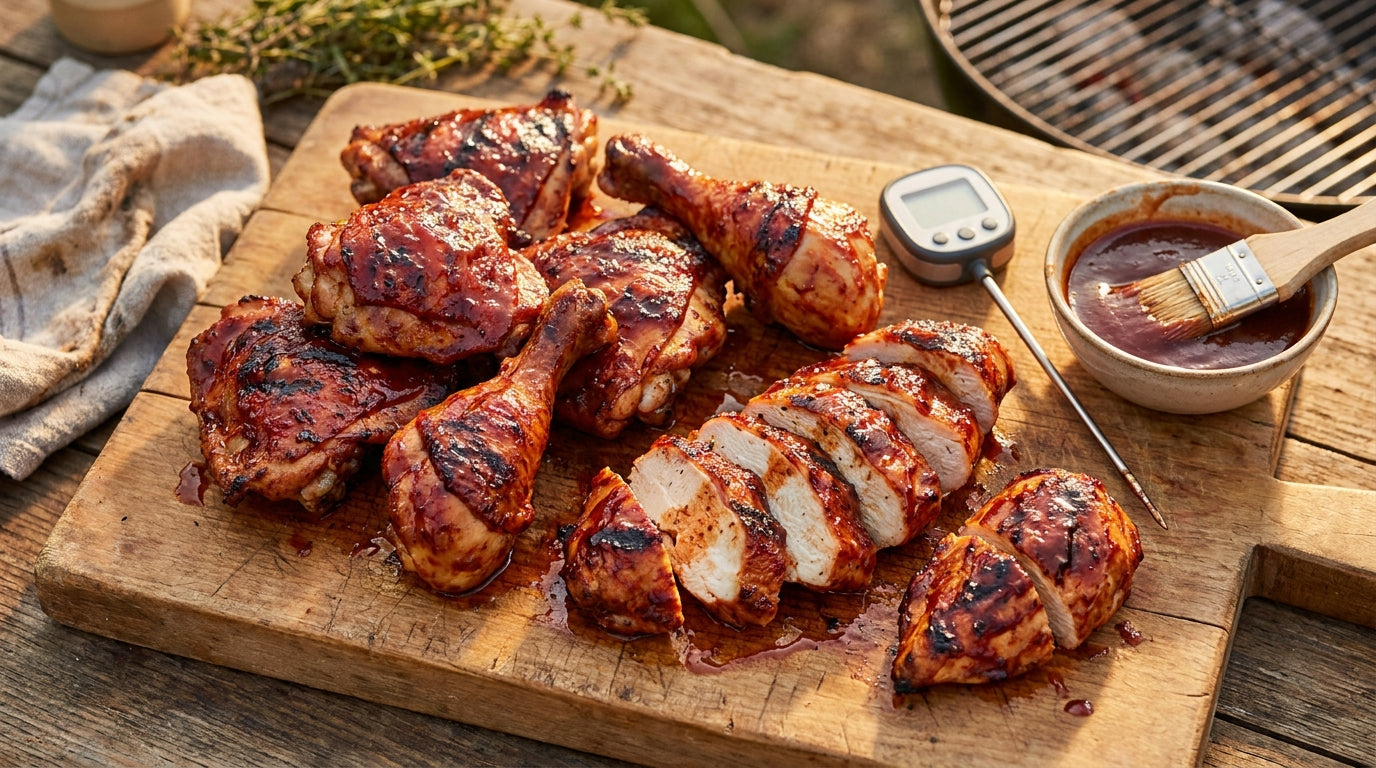
To BBQ chicken perfectly, you must use a two-zone heat system, featuring a hot zone for searing and a medium zone for cooking the meat through without drying it out. Always pat your chicken dry with a paper towel before applying a dry rub to ensure maximum skin crispiness on the grill. Delay brushing on sugary BBQ sauces until the last five to ten minutes of your cook time to prevent the sugars from burning into a bitter crust. Finally, always use an instant-read meat thermometer to verify the thickest part of the meat reaches a safe and juicy 165°F (74°C).
| Chicken Cut | Grill Temperature | Cook Time | Target Internal Temp |
|---|---|---|---|
| Boneless Breast | Medium-High (400°F) | 10-15 minutes | 165°F |
| Bone-In Thighs | Medium (350°F) | 25-30 minutes | 165°F - 175°F |
| Chicken Wings | Medium-High (400°F) | 20-25 minutes | 175°F |
| Whole Chicken | Medium (350°F) | 45-60 minutes | 165°F |
Pro Tip: Brining your chicken in a simple saltwater solution for 30 to 60 minutes before grilling locks in moisture, preventing lean cuts like breasts from drying out over high heat.
The most common mistake when grilling chicken is applying BBQ sauce too early in the cook. Most commercial and homemade sauces contain high amounts of sugar, which caramelizes and burns rapidly at temperatures above 265°F. To fix this, grill your chicken using a dry rub or basic savory seasoning first to build a flavorful, crispy crust.
Wait until the chicken reaches an internal temperature of about 155°F before pulling out the sauce. Move the chicken to a lower heat zone, baste it generously, and let it cook for the final 5 to 10 minutes. This precise timing allows the sauce to tack up and caramelize into a sticky, mouthwatering glaze.
Pro Tip: To achieve bite-through, crispy chicken skin, avoid cooking the chicken straight from the fridge. Let it sit at room temperature for 15-20 minutes to take the chill off, and ensure the skin is completely dry before it hits the grill grates.
Setting up your grill correctly is just as critical as your seasoning. For traditional grate grills or flat-top planchas like the Arteflame, establishing a two-zone grilling setup gives you complete temperature control to prevent flare-ups.
If you are cooking thick, bone-in pieces or roasting a whole chicken, closing the lid traps ambient heat and acts like an oven to cook the meat evenly to the bone. However, if you are quickly searing thin boneless breasts on a high-heat flat top, leave the lid open to char the outside without overcooking the inside.
Preheat your grill thoroughly and ensure the cooking grates or solid griddle surface are properly oiled before the meat goes down. Place the chicken skin-side down and do not forcefully move it; the meat will naturally release from the hot metal once a proper sear has formed.
The required speed depends entirely on the specific chicken cut you are grilling. Boneless, skinless breasts should be grilled fast over medium-high heat to retain their internal moisture. Conversely, dark meat like legs and thighs benefit greatly from a slower cook over medium heat to tenderize the meat and render the fat.


How to grill picanha (top sirloin cap) the Brazilian way: cut with the grain, salt only, render the fat cap first, sear hard and slice thin. Plus why picanha is...

Turn yesterday's leftover macaroni into today's crispy, golden side dish with this easy wood-fired recipe.

Master this Texas-style open-fire brisket cooked entirely on the Arteflame grill. By searing on the center grate and wrapping to render on the flat top, you get perfectly tender, juicy...

Transform standard thick-cut bacon into a sweet, savory appetizer with a dark stout and brown sugar glaze, perfectly caramelized on a flat-top grill.

Render the perfect crispy skin with these Sichuan Peppercorn Duck Breasts, paired with a smoky, sweet, and spicy charred plum-poblano sauce.

Tender artichoke halves charred over high heat and smothered in rich garlic butter and Parmesan cheese.

Achieve the ultimate crust with this low-and-slow beef brisket recipe, utilizing natural heat zones for a perfect sear and incredibly tender finish.

Transform the trending crispy rice paper dumplings into a wood-fired masterpiece. Cooked on the Arteflame flat steel griddle for a shatteringly crisp crust and savory, high-protein filling.