
Crisp and Golden Mac and Cheese Cakes on the Grill
Turn yesterday's leftover macaroni into today's crispy, golden side dish with this easy wood-fired recipe.


To grill the juiciest hamburgers, prioritize a high-fat blend like 80/20 ground chuck and utilize a solid searing surface like a flat-top grill or cast iron skillet. Pre-heat your grill to high heat (over 450°F) to ensure an immediate Maillard reaction, which creates a flavor-locking crust. Avoid overworking the meat when forming patties, flip only once the meat naturally releases from the surface, and pull the burgers at an internal temperature of 135°F for a perfect medium-rare result.
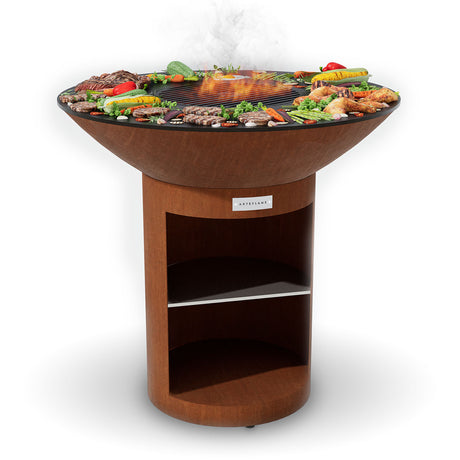
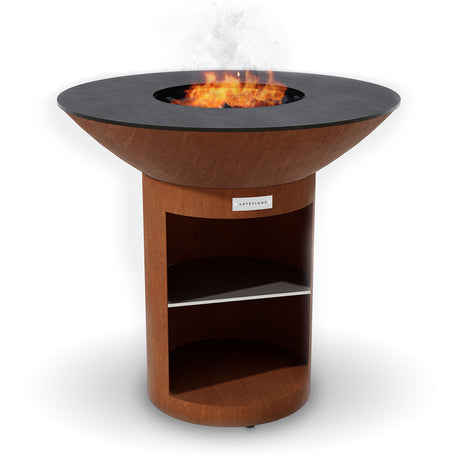
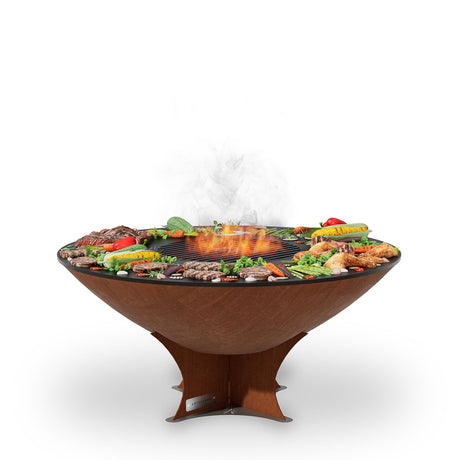
While wire grates are traditional, they often allow juices to drip away, causing dry meat and flare-ups. Using a flat-top grill (plancha) or a searing plate is the superior method for retaining moisture and achieving a steakhouse-quality sear.
| Feature | Flat Top Grill (Arteflame) | Standard Wire Grates |
|---|---|---|
| Juice Retention | High (Cooks in own juices) | Low (Drips into fire) |
| Sear Quality | Edge-to-edge crust | Striped grill marks only |
| Flare-Ups | Eliminated | Frequent |
| Flavor Profile | Smoky & caramelized | Charred & smoky |
The foundation of a juicy burger is fat content. Lean meat dries out quickly under the intense heat required for grilling. Always select Ground Chuck with an 80/20 lean-to-fat ratio. The fat renders during the cook, basting the meat from the inside out.
Pro Tip: Keep your patties cold until the moment they hit the grill. Cold fat expands rapidly when it hits a hot surface, creating pockets of juice inside the burger. If the fat melts while the patty sits on the counter, the burger will be dry.
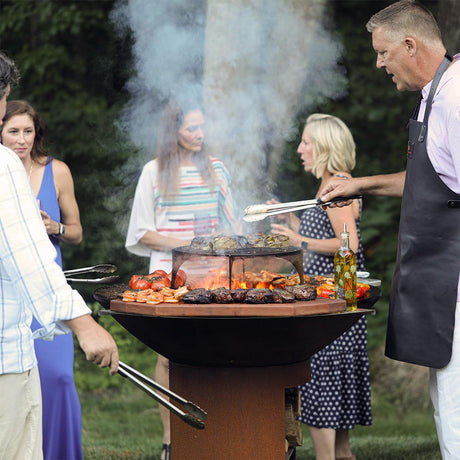
Build a medium-sized fire in the center of your Arteflame or charcoal grill. You want the cooking surface to reach at least 450°F. If using a flat top, apply a thin layer of cooking oil or butter to season the steel.
Form the meat into loose balls or thick discs. Do not pack them tight. Generously season the outside with salt and coarse black pepper.
Pro Tip: Never mix salt inside the ground beef mixture before forming patties. Salt breaks down protein structures and turns the texture of the burger into a rubbery sausage-like consistency. Only salt the exterior surface just before grilling.
Place the patties on the hottest part of the grill. For a smash burger style, press the patty flat firmly with a spatula or grill press immediately after placing it down. This maximizes contact with the hot steel.
Wait approximately 3 to 4 minutes. Do not try to move the burger early. When the crust is fully formed, the meat will release from the grill naturally. Flip securely and sear the other side for another 3 minutes.
Cooking by time is unreliable due to varying grill temperatures and patty thicknesses. Use an instant-read thermometer to ensure safety and desired doneness.
Burgers shrink because collagen contracts under heat. To prevent this, make a shallow indentation (dimple) in the center of the patty with your thumb before grilling, or use the smash burger technique to flatten the meat immediately upon contact with the heat.
If you are cooking thick patties (over 1 inch), closing the lid helps cook the center without burning the outside. For thin smash burgers or flat-top grilling, keep the lid off (or use the open-fire style) to maximize air flow and crust formation without steaming the meat.
Only press down once: exactly when you first put the meat on the grill. Never press the burger after the initial sear or after flipping, as this squeezes out the rendered fats and juices, resulting in a dry, cardboard-like texture.






Turn yesterday's leftover macaroni into today's crispy, golden side dish with this easy wood-fired recipe.

Master this Texas-style open-fire brisket cooked entirely on the Arteflame grill. By searing on the center grate and wrapping to render on the flat top, you get perfectly tender, juicy...

Transform standard thick-cut bacon into a sweet, savory appetizer with a dark stout and brown sugar glaze, perfectly caramelized on a flat-top grill.

Render the perfect crispy skin with these Sichuan Peppercorn Duck Breasts, paired with a smoky, sweet, and spicy charred plum-poblano sauce.

Tender artichoke halves charred over high heat and smothered in rich garlic butter and Parmesan cheese.

Achieve the ultimate crust with this low-and-slow beef brisket recipe, utilizing natural heat zones for a perfect sear and incredibly tender finish.

Transform the trending crispy rice paper dumplings into a wood-fired masterpiece. Cooked on the Arteflame flat steel griddle for a shatteringly crisp crust and savory, high-protein filling.

Elevate albacore tuna with a steakhouse-style bacon wrap and a decadent green peppercorn cream sauce, grilled flawlessly on a flat-top.