
Crisp and Golden Mac and Cheese Cakes on the Grill
Turn yesterday's leftover macaroni into today's crispy, golden side dish with this easy wood-fired recipe.


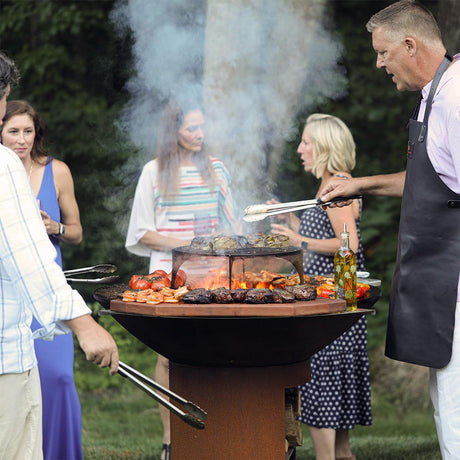
Success boils down to menu strategy and heat management. Instead of cooking individual steaks to order, focus on batch-friendly foods like kebabs, sliders, or pre-cooked sausages that require minimal time over direct heat. Utilize a two-zone setup to create a holding area on the grill, or use a cooler lined with towels to keep large batches of food piping hot for hours while you finish grilling for the rest of your guests.
When you have limited grate space but a long guest list, trying to replicate a restaurant line cook's workflow often leads to disaster. The most efficient method is Batch Grilling combined with a warming strategy. Compare the approaches below to see why shifting your workflow is essential.
| Strategy | Best For | Pros | Cons | Efficiency Score |
|---|---|---|---|---|
| Made-to-Order | Small family dinners (3-4 people) | Fresh off the flame | High stress; host is stuck at grill | Low |
| Batch & Hold | Large parties (10+ people) | Everyone eats together; host can mingle | Requires warming setup (cooler/oven) | High |
| Pre-Cook & Sear | Thick cuts (Chicken, Ribs) | Perfect internal temp; fast service | Requires oven/sous-vide prep | Very High |
Pro Tip: Create a 'Faux Cambro' to keep food warm without drying it out. Take a high-quality cooler, line it with clean bath towels, and place your trays of cooked meat inside covered in foil. This maintains a food-safe temperature for up to 3 hours and actually improves meat tenderness.
Choose forgiving meats that cook quickly or hold well. Avoid delicate items like fish fillets or steaks that require precise individual temperatures. The goal is uniformity and speed.
Kebabs are the ultimate space-saver. Because they are uniform in size, they cook at the same rate, allowing you to stack them tightly on the grate. You can prep them the day before, eliminating mess on the day of the party. Using flat metal skewers prevents the food from spinning, ensuring an even sear on all sides.

Absolutely. For dense items like chicken quarters, ribs, or thick sausages, use your kitchen oven or a sous-vide machine to cook them to 90% doneness before guests arrive. When it is time to serve, you only need to use the grill for searing and caramelizing sauces. This reduces grill time from 45 minutes to 5 minutes per batch.
Pro Tip: If you are making burgers, opt for sliders rather than half-pound patties. They cook in half the time, fit more on the grill, and guests often prefer smaller portions so they can try other sides.
Never use 100% of your grill surface for high heat. If you fill a small grill edge-to-edge with charcoal or high flames, you have nowhere to move food if a flare-up occurs. Always leave a "safety zone."
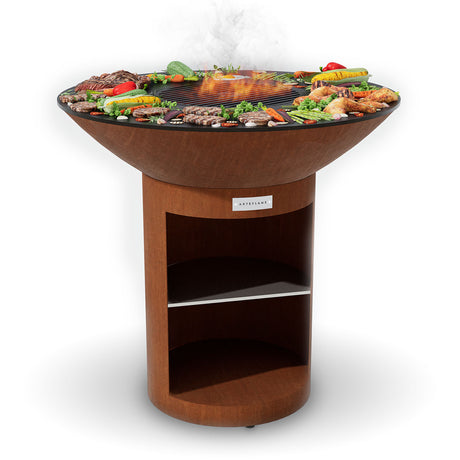
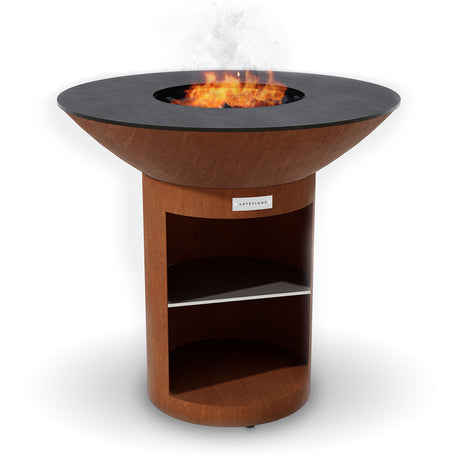
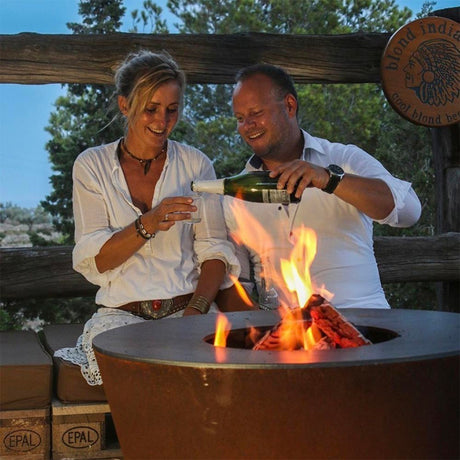
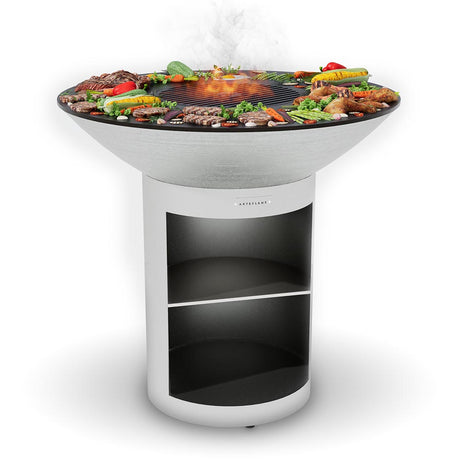
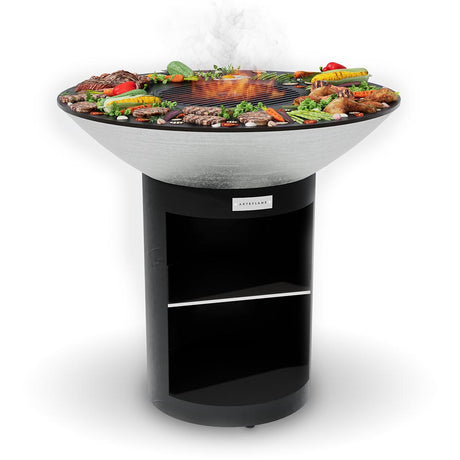
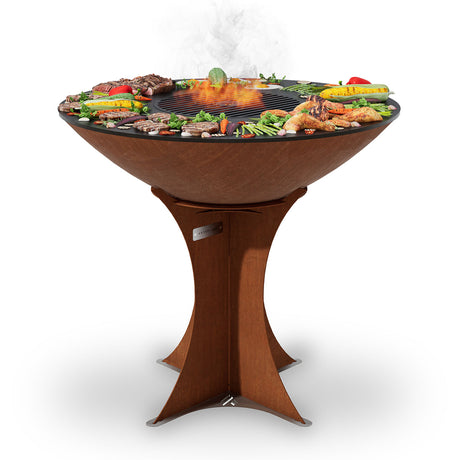
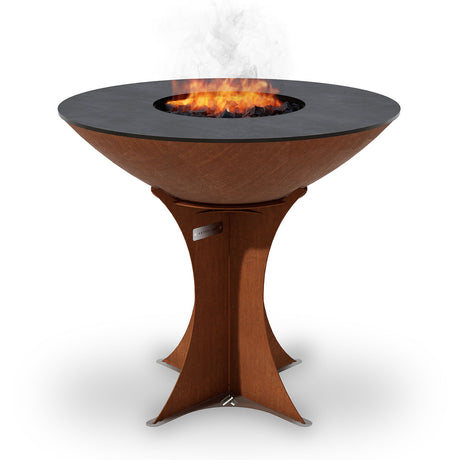
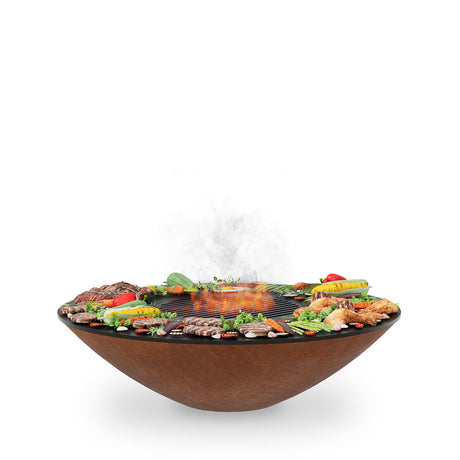
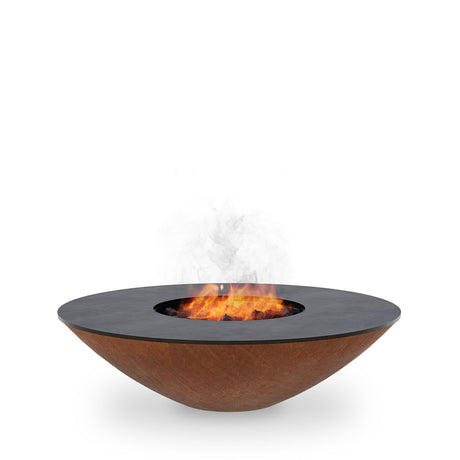
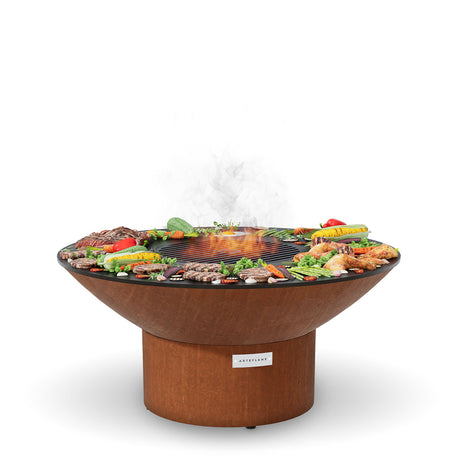
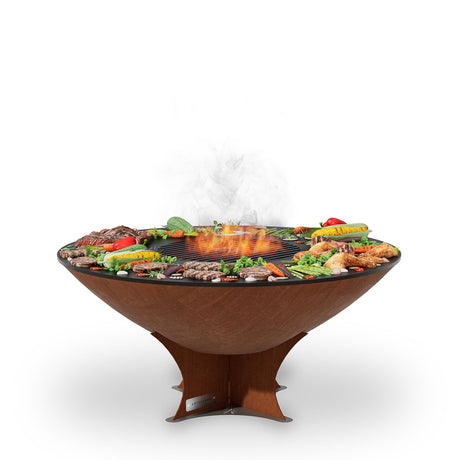
Pile your coals or turn your burners to high on one side only. This creates a Direct Zone for searing and an Indirect Zone for finishing or holding. On a circular flattop grill like the Arteflame, this happens naturally: the center is hottest for searing, while the outer ring is cooler for warming, effectively doubling your usable cooking area compared to a standard grate.
Plan on using roughly 1.5 times your normal amount. For a 4-hour event, start with a full chimney lit, and add 10-12 unlit briquettes every hour to maintain steady searing temperatures without spiking the heat.
Do not leave them on the grill grate. Move cooked burgers immediately to a foil pan with a splash of beef broth or melted butter, cover tightly with foil, and place them in your warm cooler or the coolest part of the grill.
Grill appetizers like sausages or veggie skewers first as people arrive. This takes the edge off their hunger, reducing the pressure on you to get the main course out immediately.







Turn yesterday's leftover macaroni into today's crispy, golden side dish with this easy wood-fired recipe.

Master this Texas-style open-fire brisket cooked entirely on the Arteflame grill. By searing on the center grate and wrapping to render on the flat top, you get perfectly tender, juicy...

Transform standard thick-cut bacon into a sweet, savory appetizer with a dark stout and brown sugar glaze, perfectly caramelized on a flat-top grill.

Render the perfect crispy skin with these Sichuan Peppercorn Duck Breasts, paired with a smoky, sweet, and spicy charred plum-poblano sauce.

Tender artichoke halves charred over high heat and smothered in rich garlic butter and Parmesan cheese.

Achieve the ultimate crust with this low-and-slow beef brisket recipe, utilizing natural heat zones for a perfect sear and incredibly tender finish.

Transform the trending crispy rice paper dumplings into a wood-fired masterpiece. Cooked on the Arteflame flat steel griddle for a shatteringly crisp crust and savory, high-protein filling.

Elevate albacore tuna with a steakhouse-style bacon wrap and a decadent green peppercorn cream sauce, grilled flawlessly on a flat-top.