
Crisp and Golden Mac and Cheese Cakes on the Grill
Turn yesterday's leftover macaroni into today's crispy, golden side dish with this easy wood-fired recipe.


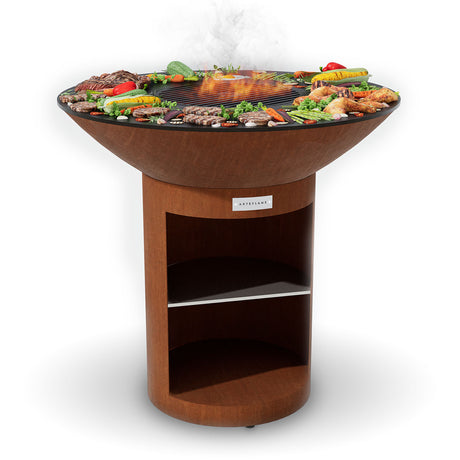
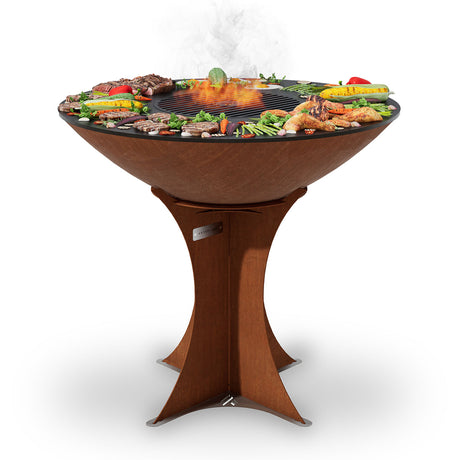
For the best flavor and texture, a solid carbon steel griddle top outperforms traditional grill grates. While grates create distinct char lines, they only sear about 30% of the meat's surface. A griddle top creates 100% surface contact, maximizing the Maillard reaction for a deeper, more flavorful crust while preventing juices from dripping away and causing flare-ups.
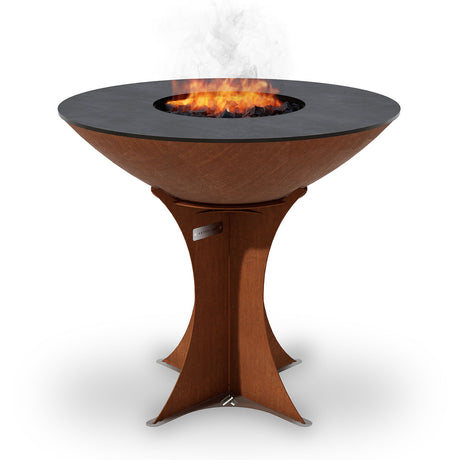
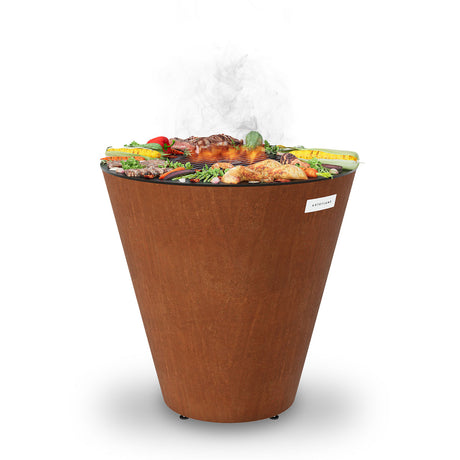
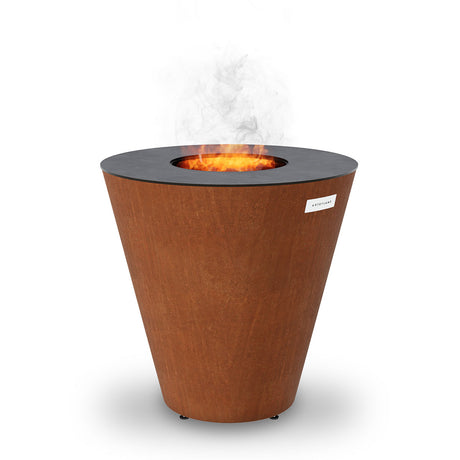
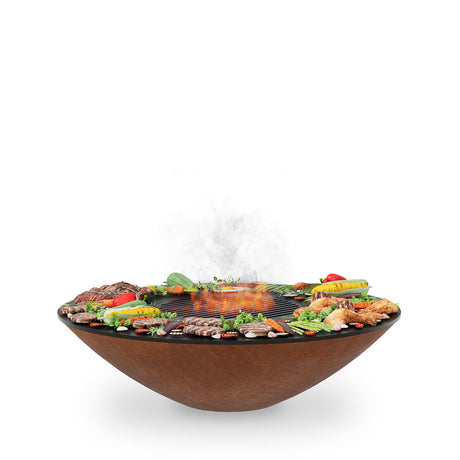
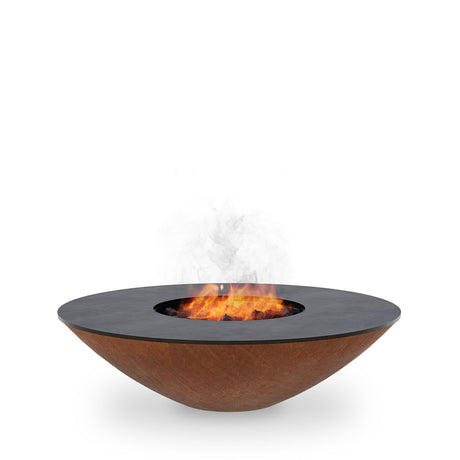
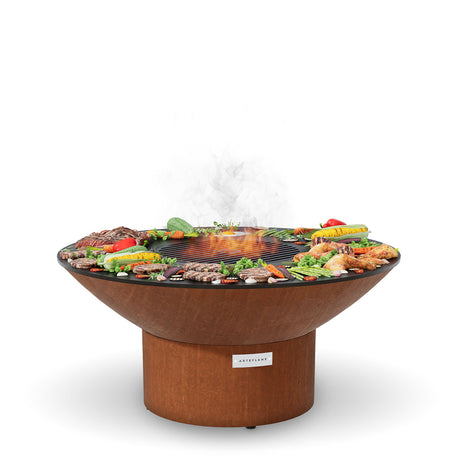
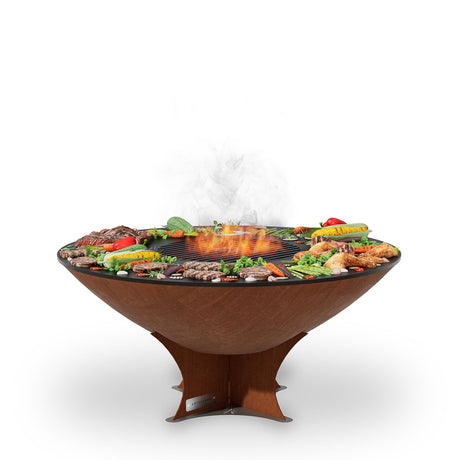
When choosing between a flat top griddle (like the Arteflame) and standard open grates, the decision often comes down to versatility and flavor depth. Use this comparison to decide which fits your cooking style.
| Feature | Solid Griddle Top (Carbon Steel) | Traditional Grill Grates |
|---|---|---|
| Searing Quality | Excellent (100% surface contact) | Good (Partial contact/Grill marks) |
| Juice Retention | High (Cooks in own juices) | Low (Juices drip onto coals) |
| Versatility | High (Eggs, veggies, steaks, pancakes) | Medium (Large meats only) |
| Safety | High (No dangerous flare-ups) | Low (Prone to fat flare-ups) |
| Flavor Profile | Savory crust (Maillard reaction) | Smoky char |
Many grillers believe that diamond-hatch grill marks are the gold standard for steak. However, those marks actually represent the only part of the steak that was properly seared. The gray gaps between the marks are areas where the meat was steamed by radiant heat rather than seared by conduction.
A solid carbon steel griddle top eliminates these gaps. By maintaining full contact with the meat, you achieve a wall-to-wall "golden brown" crust. This chemical process is known as the Maillard reaction, which unlocks the savory, complex flavors responsible for a steakhouse-quality taste.
Pro Tip: To get the perfect crust on a griddle top, apply a thin layer of high-smoke-point oil (like avocado or grapeseed oil) directly to the surface, get it smoking hot, and avoid moving the meat for the first 2-3 minutes.
Traditional grilling on open grates presents two distinct challenges: flare-ups and carcinogens. When fat renders out of a burger or ribeye, it drips onto the open flames below, causing sudden bursts of fire that can scorch food and burn the cook. Furthermore, when fat burns on coals, it produces PAHs (polycyclic aromatic hydrocarbons) and HCAs (heterocyclic amines), which rise back up in the smoke and coat the food.
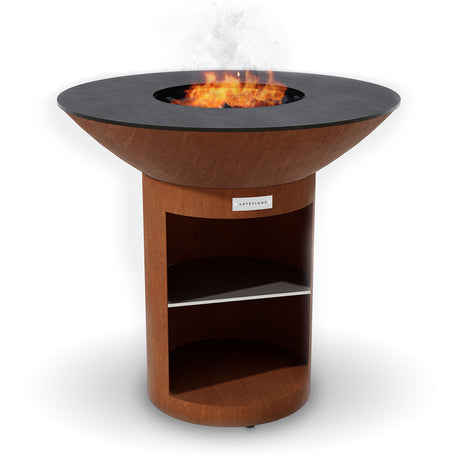
A solid griddle design directs grease away from the fire (often into a center opening or grease trough). This engineering prevents flare-ups entirely and ensures your food is seared in its own natural fats rather than engulfed in acrid smoke.
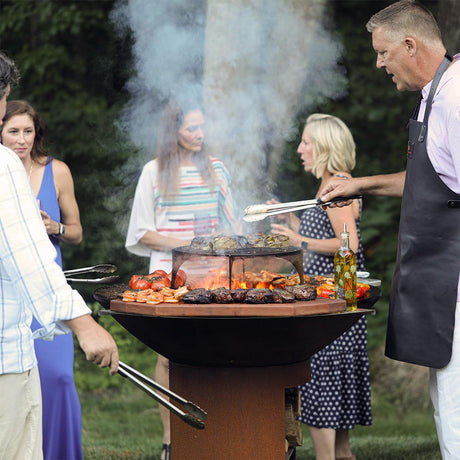
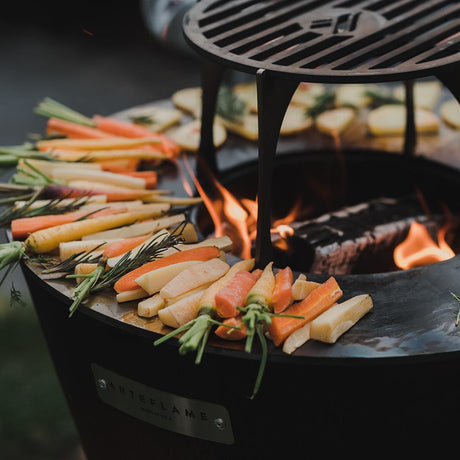
The limitation of grates is physics: gravity. Small items like asparagus, sliced onions, shrimp, or cherry tomatoes fall through the gaps, requiring grill baskets or foil packets. A griddle top removes these barriers. You can sauté onions, fry eggs, sear smash burgers, and crisp bacon alongside your steaks without any additional equipment.
Pro Tip: Use different heat zones on your griddle. On an Arteflame, the center is the hottest for searing steaks (over 1,000°F), while the outer edges are cooler, perfect for slow-roasting vegetables or keeping food warm.
Not necessarily. While you lose the direct acrid smoke from burning grease, wood-fired griddles (like the Arteflame) still circulate wood smoke around the food, imparting a subtle, natural smoky flavor without the bitterness of charred fat.
Generally, a griddle is easier to maintain. Unlike grates which require scrubbing individual bars, a flat top can be scraped clean in seconds while hot. Once seasoned, the carbon steel surface acts like a non-stick cast iron pan.
Yes. Solid steel griddles are incredibly durable. You can use metal spatulas, scrapers, and tongs without worrying about chipping a coating, which is common with Teflon or porcelain-coated grates.







Turn yesterday's leftover macaroni into today's crispy, golden side dish with this easy wood-fired recipe.

Master this Texas-style open-fire brisket cooked entirely on the Arteflame grill. By searing on the center grate and wrapping to render on the flat top, you get perfectly tender, juicy...

Transform standard thick-cut bacon into a sweet, savory appetizer with a dark stout and brown sugar glaze, perfectly caramelized on a flat-top grill.

Render the perfect crispy skin with these Sichuan Peppercorn Duck Breasts, paired with a smoky, sweet, and spicy charred plum-poblano sauce.

Tender artichoke halves charred over high heat and smothered in rich garlic butter and Parmesan cheese.

Achieve the ultimate crust with this low-and-slow beef brisket recipe, utilizing natural heat zones for a perfect sear and incredibly tender finish.

Transform the trending crispy rice paper dumplings into a wood-fired masterpiece. Cooked on the Arteflame flat steel griddle for a shatteringly crisp crust and savory, high-protein filling.

Elevate albacore tuna with a steakhouse-style bacon wrap and a decadent green peppercorn cream sauce, grilled flawlessly on a flat-top.