
Crisp and Golden Mac and Cheese Cakes on the Grill
Turn yesterday's leftover macaroni into today's crispy, golden side dish with this easy wood-fired recipe.


For perfectly juicy chicken breasts, grill at 375°F to 400°F (medium-high heat) for 5 to 7 minutes per side. Crucially, remove the chicken from the grill when the internal temperature hits 160°F, not 165°F. During the essential 5-minute resting period, residual heat will raise the internal temperature to the USDA-recommended safe zone of 165°F without drying out the meat.
Use this quick reference guide to eliminate guesswork. Times assume a grill temperature of roughly 400°F.
| Breast Thickness | Heat Zone | Side 1 Time | Side 2 Time | Pull Temp |
|---|---|---|---|---|
| Thin (½ inch) | Med-High | 3-4 mins | 2-3 mins | 160°F |
| Standard (1 inch) | Med-High | 5-6 mins | 4-5 mins | 160°F |
| Thick (1.5 inch+) | Medium | 7-8 mins | 6-7 mins | 160°F |
Chicken breasts are lean muscles with very little intramuscular fat. Unlike a ribeye steak, there is no fat to render down and keep the meat moist. If you overcook a breast by even 2 minutes, the moisture evaporates, resulting in a chalky texture.
Pro Tip: The "Carryover" Effect. Meat continues to cook after leaving the heat. If you wait until the thermometer reads 165°F while it is still on the grill, the final temperature will hit 170°F+ after resting, guaranteeing dry meat. Always pull at 160°F.
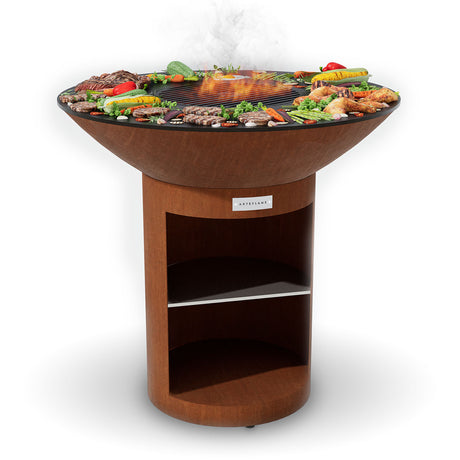
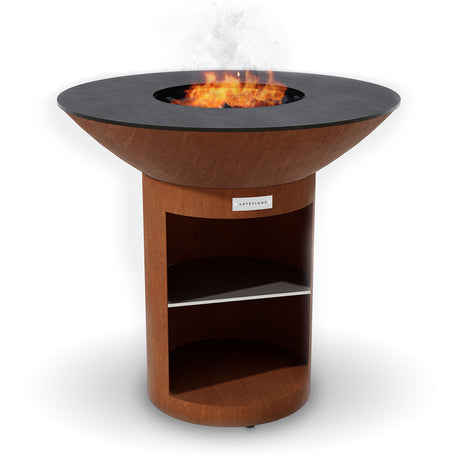
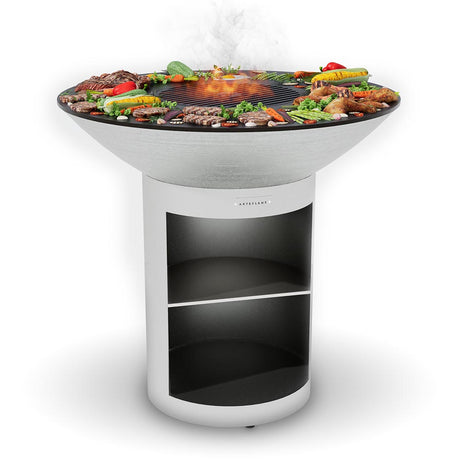
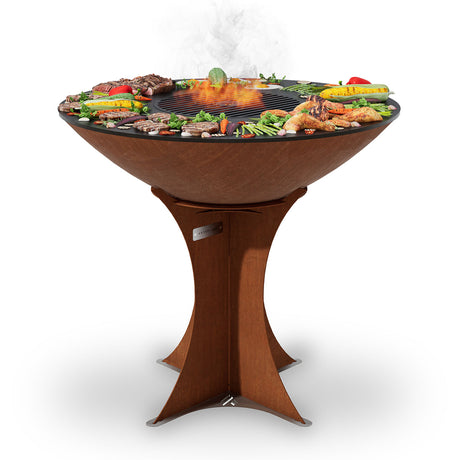
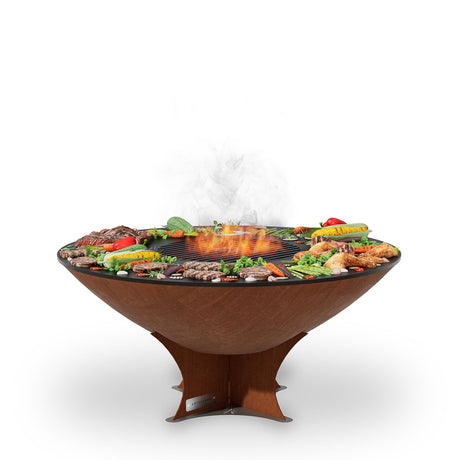
The Arteflame flat cooktop allows for a superior sear compared to open grates because the meat has 100% surface contact with the heat. This creates a uniform Maillard reaction (browning) which equals flavor.
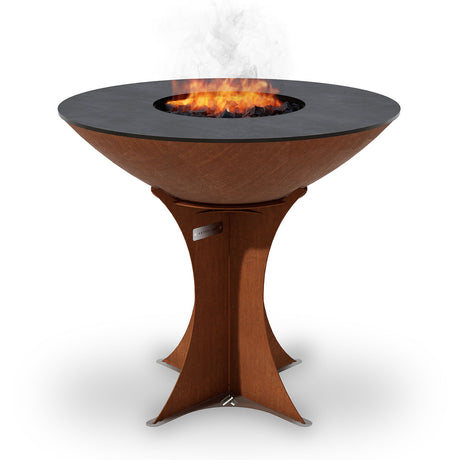
Build a medium-sized fire. You want the cooktop to reach roughly 400°F. On an Arteflame, the center is hottest, and the outer edges are cooler. Aim to cook midway between the center opening and the outer edge.
Lightly oil the chicken breasts, not the grill (unless the grill is dry). Season generously with salt and pepper or your preferred rub.
Place the chicken on the cooktop. Let it sear undisturbed for 3-4 minutes. If it sticks, it isn't ready to flip. Once a golden crust forms, it will release naturally.
Pro Tip: Use the Flat Top to Your Advantage. If you have chicken breasts of varying thickness, use the heat zones. Move thinner pieces to the cooler outer edge and keep thick breasts closer to the center fire to ensure everything finishes at the same time.
Preparation is just as important as the cook time. Pounding the chicken is the most effective way to ensure even cooking.
Chicken breasts are naturally tapered—thick at one end and thin at the other. If you grill them as-is, the thin end dries out before the thick end is safe to eat. Place the breast between parchment paper and pound it to a uniform thickness (about ¾ to 1 inch).
Yes. A simple wet brine (water, salt, sugar) for 30 minutes adds moisture and gives you a larger margin for error if you accidentally overcook the meat.
While a digital thermometer is best, you can use the "poke test." Raw chicken feels squishy like your cheek; cooked chicken feels firm but springy, similar to the tip of your nose. If it feels hard like your forehead, it is overcooked.
On a traditional grill, closing the lid turns it into an oven, helping cook the center of thick cuts. On an Arteflame or open fire grill, you cook with the lid off (or there is no lid), relying on the direct heat of the flat top to sear and cook simultaneously.
Rubbery chicken usually comes from undercooking slightly or, more commonly, from not resting the meat. Cutting into the chicken immediately causes juices to run out, collapsing the muscle fibers and creating a rubbery texture.
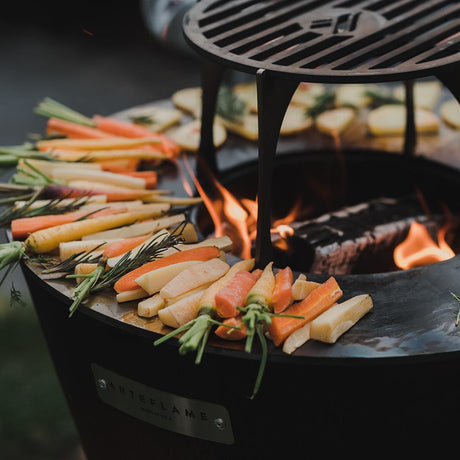






Turn yesterday's leftover macaroni into today's crispy, golden side dish with this easy wood-fired recipe.

Master this Texas-style open-fire brisket cooked entirely on the Arteflame grill. By searing on the center grate and wrapping to render on the flat top, you get perfectly tender, juicy...

Transform standard thick-cut bacon into a sweet, savory appetizer with a dark stout and brown sugar glaze, perfectly caramelized on a flat-top grill.

Render the perfect crispy skin with these Sichuan Peppercorn Duck Breasts, paired with a smoky, sweet, and spicy charred plum-poblano sauce.

Tender artichoke halves charred over high heat and smothered in rich garlic butter and Parmesan cheese.

Achieve the ultimate crust with this low-and-slow beef brisket recipe, utilizing natural heat zones for a perfect sear and incredibly tender finish.

Transform the trending crispy rice paper dumplings into a wood-fired masterpiece. Cooked on the Arteflame flat steel griddle for a shatteringly crisp crust and savory, high-protein filling.

Elevate albacore tuna with a steakhouse-style bacon wrap and a decadent green peppercorn cream sauce, grilled flawlessly on a flat-top.