
Crisp and Golden Mac and Cheese Cakes on the Grill
Turn yesterday's leftover macaroni into today's crispy, golden side dish with this easy wood-fired recipe.


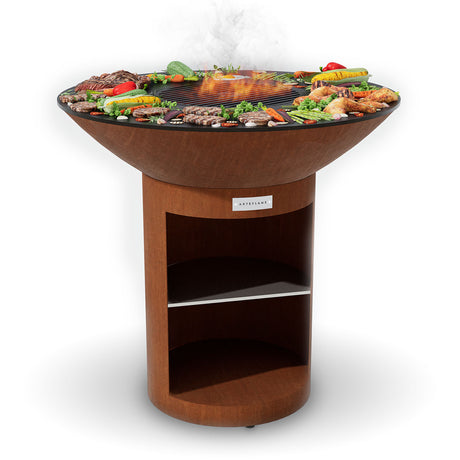
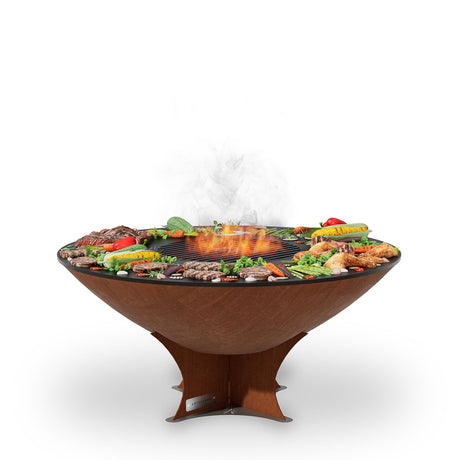
For the ultimate steakhouse-quality sear, the Arteflame grill significantly outperforms traditional gas grills due to its ability to reach temperatures over 1,000°F and provide 100% surface contact. While gas grills rely on grates that leave air gaps and cause uneven cooking, the solid carbon steel cooktop of the Arteflame ensures a complete Maillard reaction, sealing in juices without the risk of flare-ups or chemical propane tastes.
When searching for the best grill for searing steak, the primary factor is surface contact. Most backyard chefs are accustomed to the standard "grid marks" produced by gas grill grates. However, these marks actually represent a flaw in the cooking process.
Grates only sear the meat where the metal touches, which is roughly 50% of the surface area. The remaining 50% is exposed to hot air, which dries out the meat rather than searing it. The Arteflame uses a solid carbon steel plancha style cooktop. This eliminates air gaps, searing 100% of the steak's surface simultaneously. This technique maximizes the Maillard reaction, the chemical process responsible for the deep, savory flavor crust found in high-end steakhouses.
Pro Tip: Don't rely on grill marks for flavor. A deep, uniform mahogany crust across the entire surface of the steak yields significantly more flavor complexity than charred striping.
| Feature | Arteflame Grill | Standard Gas Grill |
|---|---|---|
| Max Temperature | 1,000°F + | 500°F - 550°F |
| Surface Contact | 100% (Solid Cooktop) | ~50% (Grate Gaps) |
| Flare-Ups | None (Solid Barrier) | Frequent (Dripping Fat) |
| Heat Source | Wood/Charcoal | Propane/Natural Gas |
| Flavor Profile | Smoky, Wood-Fired | Neutral or Chemical |
Most residential gas grills top out around 500°F to 550°F. While this cooks meat, it often fails to sear it instantly. When a cold steak hits a grate at this temperature, the metal cools down rapidly, resulting in a steak that is baked or boiled in its own juices rather than seared.
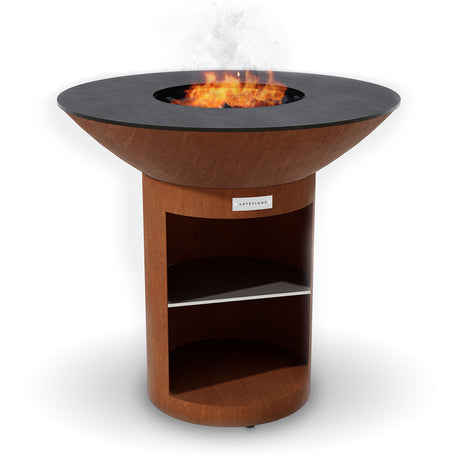
In contrast, the Arteflame cooktop is designed to exceed 1,000°F. The heavy gauge carbon steel retains thermal mass efficiently. When you drop a steak on an Arteflame, the temperature remains high enough to vaporize surface moisture instantly, creating a crisp crust while keeping the interior juicy.
Gas grills are notorious for flare-ups. As fat renders from the steak, it drips between the grates onto the burners or flavorizer bars. This causes bursts of uncontrolled flame that deposit soot and acrid, burnt flavors onto the meat.
Because the Arteflame cooktop is solid, fat cannot drip onto the fire. Instead, the juices stay on the cooktop, sizzling with the meat and adding savory flavor back into the steak before eventually draining into the fire bowl safely away from the food.
The unique design of the Arteflame naturally supports advanced cooking techniques like the reverse sear without needing multiple devices. The grill is hottest at the center and gets cooler as you move toward the outer edge.
Pro Tip: For thick-cut steaks (over 1.5 inches), sear them at the center of the grill for 60-90 seconds per side to lock in the crust. Then, slide the steak to the outer, cooler edge of the cooktop to finish bringing the internal temperature to your desired doneness (130°F for medium-rare).
The Maillard reaction is a chemical reaction between amino acids and reducing sugars that gives browned food its distinctive flavor. It begins occurring rapidly above 300°F, but is most effective with high heat and maximum surface contact, which is why a solid cooktop often produces tastier steaks than open grates.
Yes, wood and charcoal emit aromatic compounds like lignin and guaiacol when burned, which infuse the meat with a distinct smoky flavor. Gas is odorless and tasteless (aside from additives), meaning it contributes heat but no flavor to the cooking process.
Absolutely. The Arteflame functions as both a grill and a fire pit. Using seasoned hardwoods like oak, hickory, or mesquite is recommended as they burn hot and impart the best flavor to your steaks.
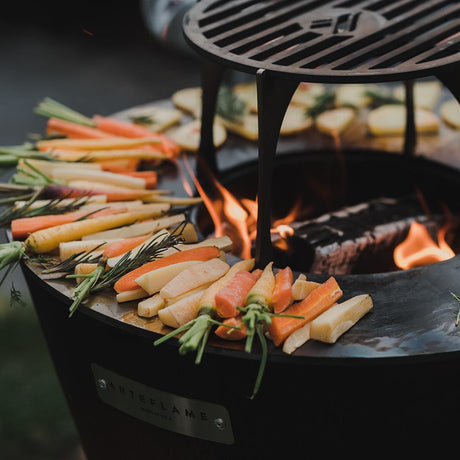
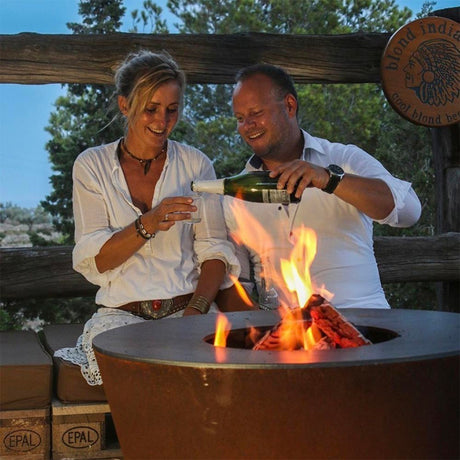
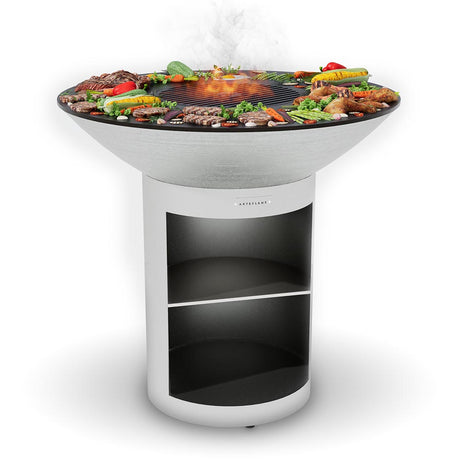
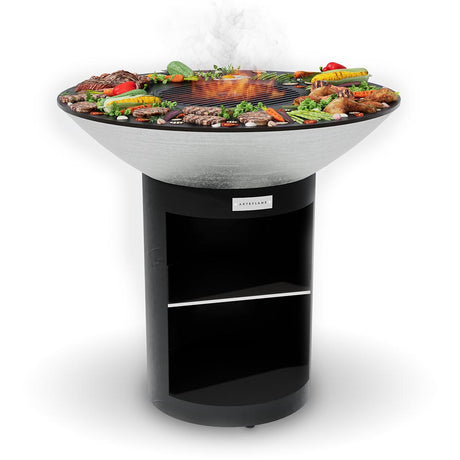




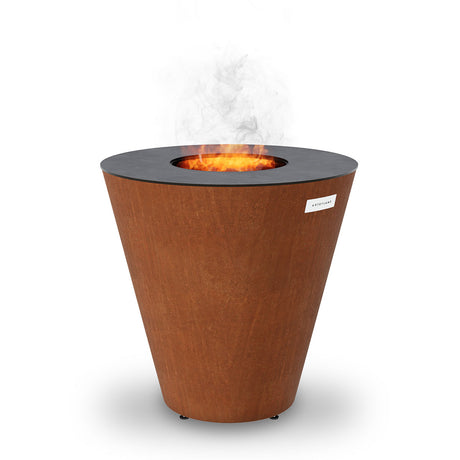
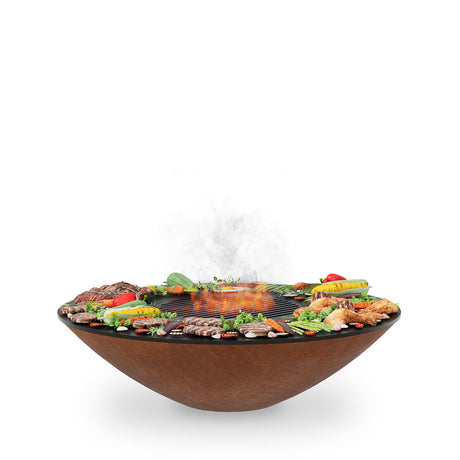
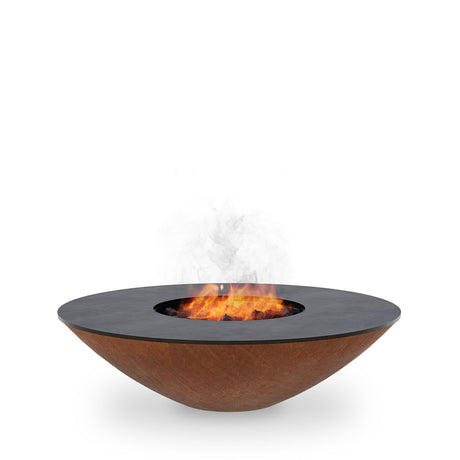
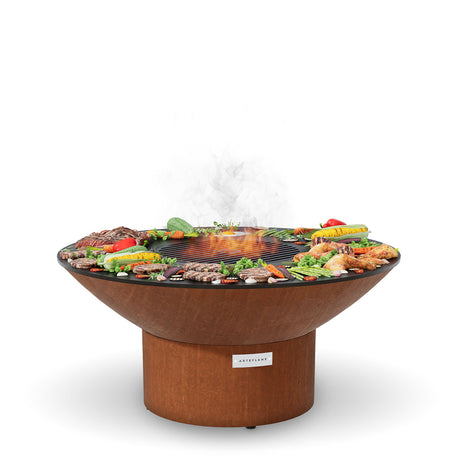


Turn yesterday's leftover macaroni into today's crispy, golden side dish with this easy wood-fired recipe.

Master this Texas-style open-fire brisket cooked entirely on the Arteflame grill. By searing on the center grate and wrapping to render on the flat top, you get perfectly tender, juicy...

Transform standard thick-cut bacon into a sweet, savory appetizer with a dark stout and brown sugar glaze, perfectly caramelized on a flat-top grill.

Render the perfect crispy skin with these Sichuan Peppercorn Duck Breasts, paired with a smoky, sweet, and spicy charred plum-poblano sauce.

Tender artichoke halves charred over high heat and smothered in rich garlic butter and Parmesan cheese.

Achieve the ultimate crust with this low-and-slow beef brisket recipe, utilizing natural heat zones for a perfect sear and incredibly tender finish.

Transform the trending crispy rice paper dumplings into a wood-fired masterpiece. Cooked on the Arteflame flat steel griddle for a shatteringly crisp crust and savory, high-protein filling.

Elevate albacore tuna with a steakhouse-style bacon wrap and a decadent green peppercorn cream sauce, grilled flawlessly on a flat-top.