
Crisp and Golden Mac and Cheese Cakes on the Grill
Turn yesterday's leftover macaroni into today's crispy, golden side dish with this easy wood-fired recipe.


Thanksgiving skillet stuffing cooked outdoors combines toasted, crusty bread cubes with savory aromatics baked directly over a live fire for a crispy top and tender, deeply seasoned center. This classic side dish yields 8 servings and requires 20 minutes of prep time followed by 40 minutes of cook time. Moving this staple out of the kitchen frees up valuable oven space while adding a subtle touch of wood-fired flavor to the rich broth and herbs.
Cooking stuffing in a cast-iron skillet over an open wood fire develops a caramelized crust along the bottom edges that an indoor oven simply cannot replicate. "When I cook this stuffing on the Arteflame, I push the skillet right to the outer edge of the steel where it registers around 350°F, letting the bottom slowly crisp up without scorching the bread while I sear the turkey closer to the fire," notes founder Michiel Schuitemaker.
Gathering the right ratio of dried bread to fresh herbs and liquid ensures a skillet stuffing that holds its shape without becoming mushy.
Cooking skillet stuffing requires building a flavor base by sautéing aromatics before mixing in the liquids and baking the assembled dish over indirect heat.
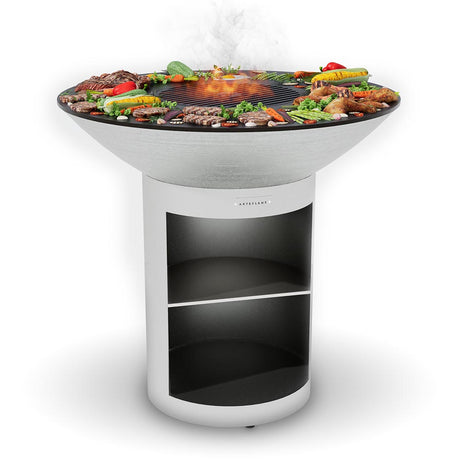
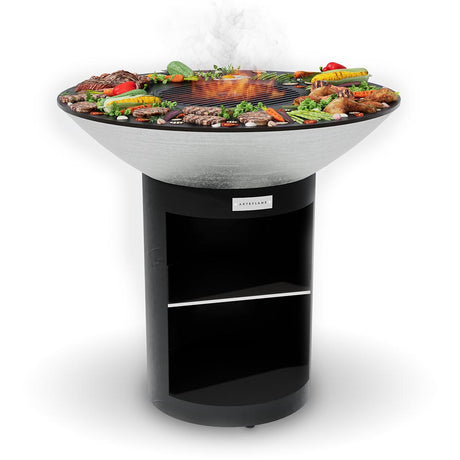
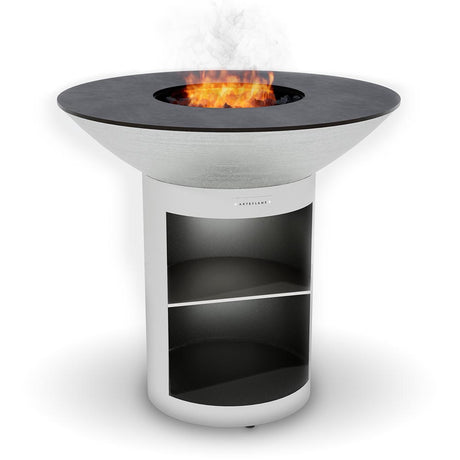
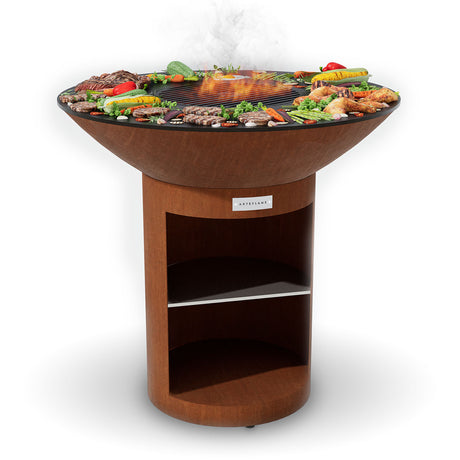
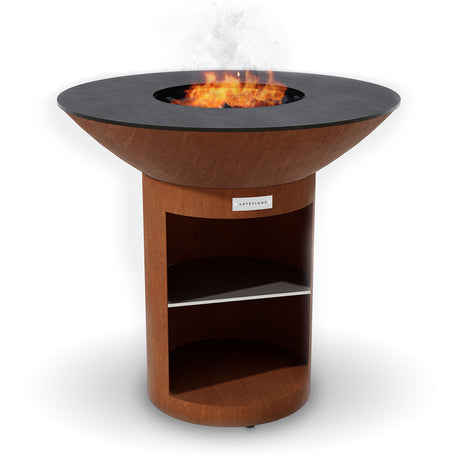
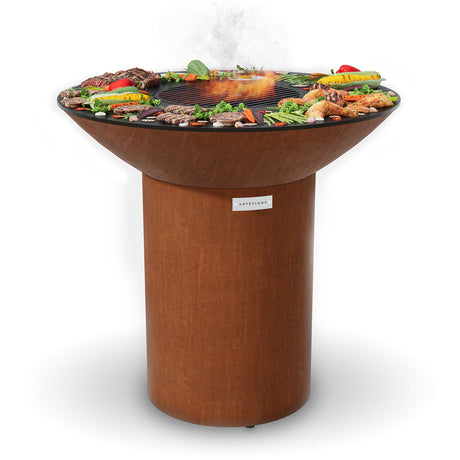
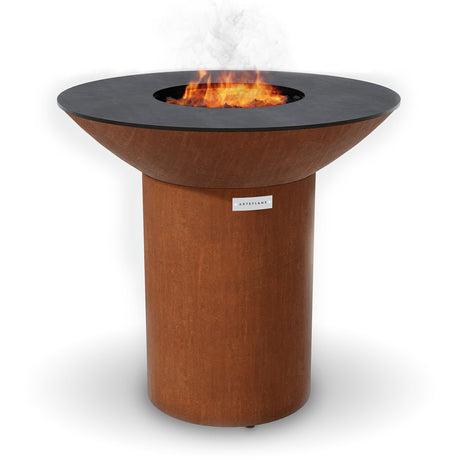
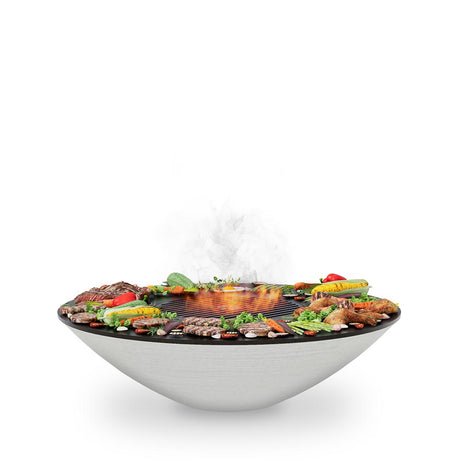
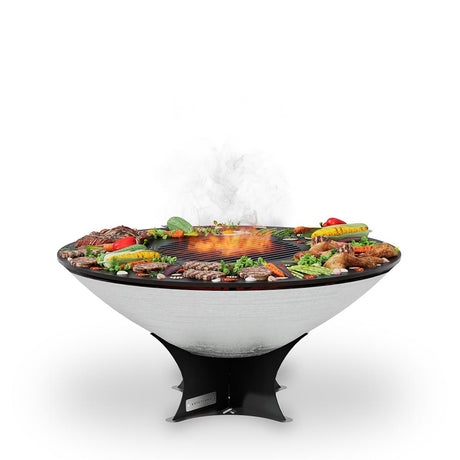
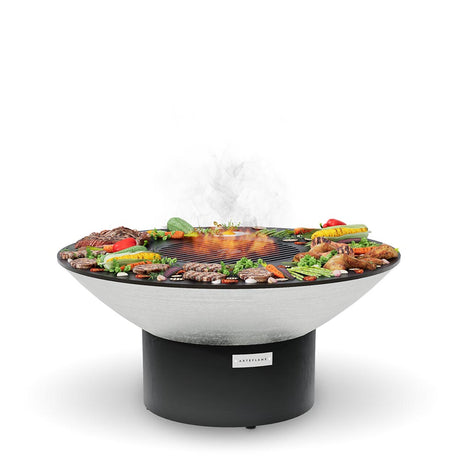
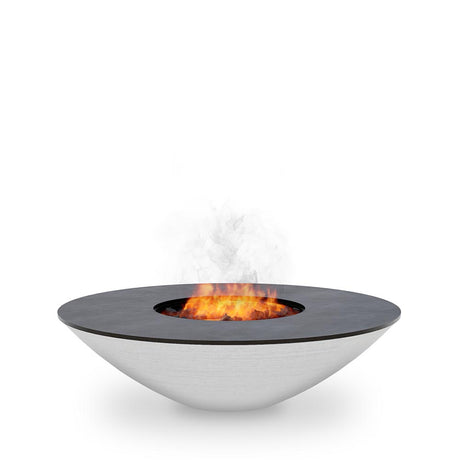
Properly managing moisture and temperature prevents the stuffing from drying out while it bakes in the cast-iron skillet. On a conventional grill, baking a delicate starch dish in a skillet often results in a burned bottom due to flare-ups passing through standard grates, forcing you to constantly juggle the pan. The Arteflame’s solid outer flat-top ring blocks the direct flames and provides a uniform, radiant heat zone, allowing the skillet to bake the stuffing gently and evenly while the fire roars nearby.
Customizing the base stuffing recipe involves folding in cooked proteins, dried fruits, or different herbs right before the liquid goes into the mixing bowl.
Pairing this savory bread side dish requires balancing its rich, buttery profile with bright vegetables and savory roasted meats.
Skillet stuffing must reach an internal temperature of 160°F to ensure the raw eggs in the binding mixture are fully cooked and safe to consume. Insert an instant-read meat thermometer into the exact center of the skillet, checking at the 30-minute mark to monitor progress.
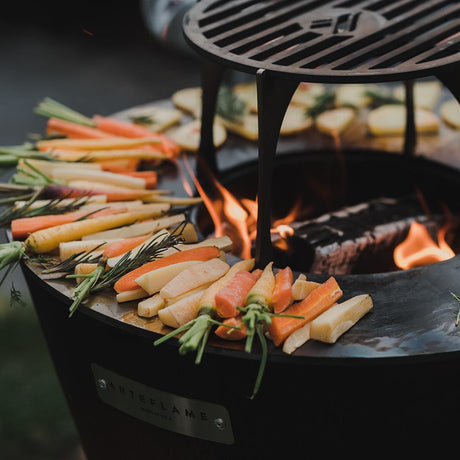
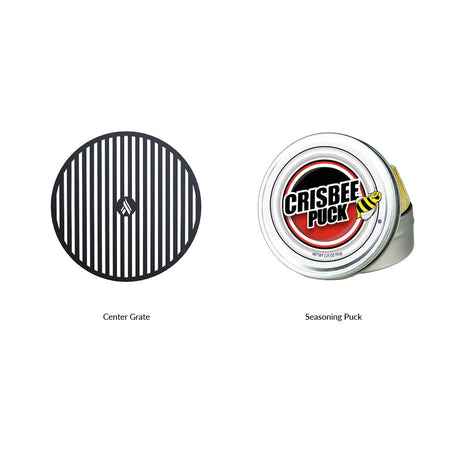
Maintaining a moderate heat source under the skillet and rotating the pan frequently prevents the bottom crust from burning. On the Arteflame, place the skillet firmly on the outer flat-top ring rather than the 1,000°F center grate, letting the thick steel provide gentle, indirect radiant heat.
You can cube and dry the bread and chop all the vegetables the day before, storing the vegetables in the refrigerator. However, do not combine the wet and dry ingredients until just before cooking, as the bread will break down and become excessively mushy overnight.
Fresh bread contains too much natural moisture and will immediately collapse into a paste when mixed with the chicken broth and eggs. Day-old, stale bread has a rigid structure that acts like a sponge, absorbing the savory liquids while retaining individual distinct cubes during the cooking process.
Serving skillet stuffing directly from the grill brings an interactive, rustic element to holiday meals that indoor cooking cannot match. Presenting the cast-iron skillet while it is still sizzling slightly at the edges turns a traditional side dish into a centerpiece. The deep caramelization from the cast iron creates a textural contrast between the crunchy top layer and the tender, aromatic center.
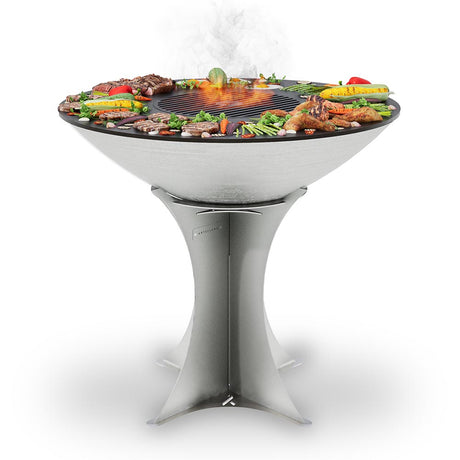
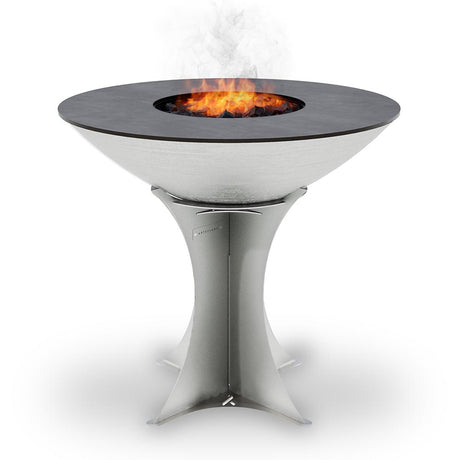
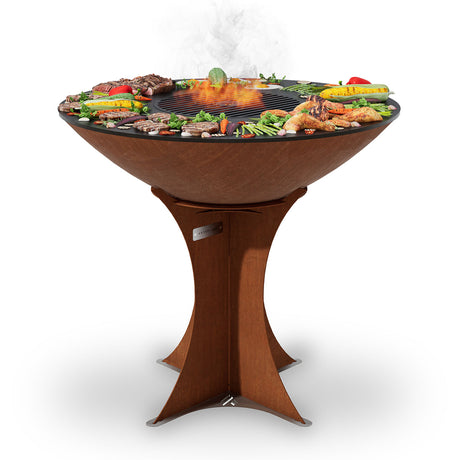
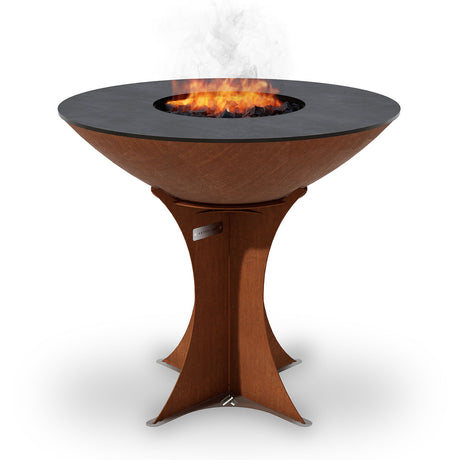
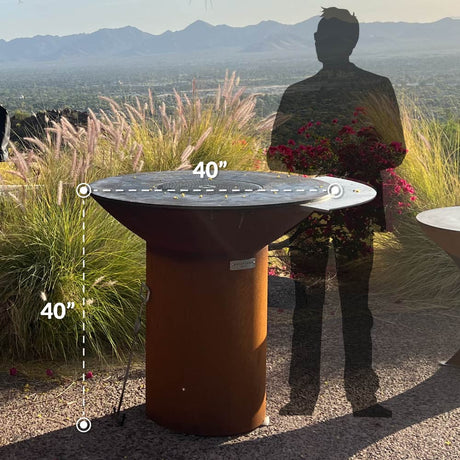
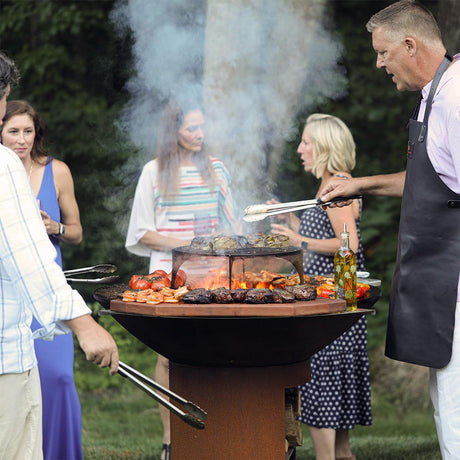
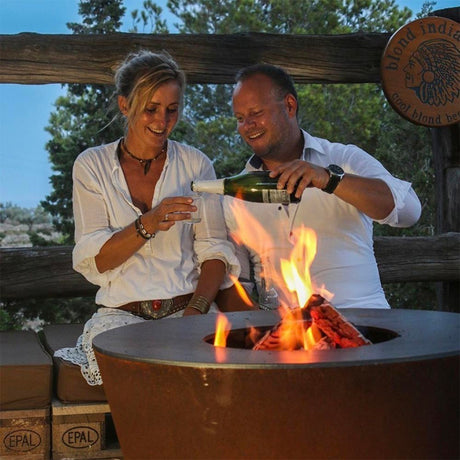
Firing up the Arteflame to prepare this stuffing transforms holiday cooking from a solitary kitchen task into an outdoor gathering. The wide steel cooktop accommodates the skillet effortlessly, leaving plenty of room to sear chops, roast vegetables, and keep everything piping hot while your guests enjoy the fire.

Experience the Arteflame difference — 1,000°F searing, true wood-fired flavor, and a wide cooktop with multiple heat zones all in one beautiful grill. Cook everything at once, control every temperature with ease, and transform every outdoor gathering. Discover how Arteflame elevates the art of grilling.







Turn yesterday's leftover macaroni into today's crispy, golden side dish with this easy wood-fired recipe.

Master this Texas-style open-fire brisket cooked entirely on the Arteflame grill. By searing on the center grate and wrapping to render on the flat top, you get perfectly tender, juicy...

Transform standard thick-cut bacon into a sweet, savory appetizer with a dark stout and brown sugar glaze, perfectly caramelized on a flat-top grill.

Render the perfect crispy skin with these Sichuan Peppercorn Duck Breasts, paired with a smoky, sweet, and spicy charred plum-poblano sauce.

Tender artichoke halves charred over high heat and smothered in rich garlic butter and Parmesan cheese.

Achieve the ultimate crust with this low-and-slow beef brisket recipe, utilizing natural heat zones for a perfect sear and incredibly tender finish.

Transform the trending crispy rice paper dumplings into a wood-fired masterpiece. Cooked on the Arteflame flat steel griddle for a shatteringly crisp crust and savory, high-protein filling.

Elevate albacore tuna with a steakhouse-style bacon wrap and a decadent green peppercorn cream sauce, grilled flawlessly on a flat-top.
Inspired to Grill?
Love it? Tell us — rate this recipe in 2 seconds. Tap a star below.