
Crisp and Golden Mac and Cheese Cakes on the Grill
Turn yesterday's leftover macaroni into today's crispy, golden side dish with this easy wood-fired recipe.


Quick Take: For the ultimate steak sear, wood fire griddles outperform propane due to higher heat capability and lower moisture content. While propane releases water vapor during combustion that can "steam" meat, wood fire generates dry, intense heat exceeding 1,000°F, ensuring a flawless Maillard reaction and a superior crust without the chemical taste.
When choosing between a wood vs. propane griddle for steak, the decision comes down to the science of heat and chemistry. To achieve steakhouse-quality results, you need heat retention and a dry environment. The comparison below highlights why serious grillers prefer the thermal mass of carbon steel wood grills over standard propane setups.
| Feature | Wood Fire (Arteflame) | Standard Propane Griddle |
|---|---|---|
| Max Temperature | 1,000°F+ (Center) | 450°F - 600°F |
| Heat Type | Dry Heat (Crispy Sear) | Wet Heat (Combustion byproduct) |
| Flavor Profile | Natural Wood/Smokey | Neutral / Chemical |
| Heat Recovery | Instant (High Thermal Mass) | Slow (Temp drops when meat is added) |
Many grillers are unaware that propane combustion actively works against a good sear. The chemical reaction of burning propane (C3H8) produces carbon dioxide and a significant amount of water vapor. When you cook on a standard propane griddle, this moisture rises directly onto your steak.
This excess moisture cools the surface of the meat and prevents the crust from forming immediately. Instead of searing, the steak effectively steams in its own juices and the exhaust of the grill. This often results in a gray, lackluster exterior rather than the deep, mahogany crust characteristic of a perfect steak.
Pro Tip: To maximize your sear regardless of the grill type, dry brine your steak. Salt the meat and leave it uncovered in the fridge for 24 hours before cooking. This removes surface moisture, allowing the Maillard reaction to happen faster.
The ability of a grill to maintain temperature when cold meat hits the surface is called heat recovery. Most consumer propane griddles use thin stainless steel or cast iron that cools down rapidly as soon as a cold steak is placed on it. This temperature drop halts the searing process.
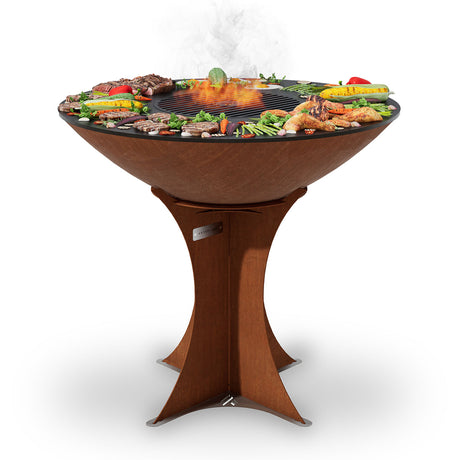
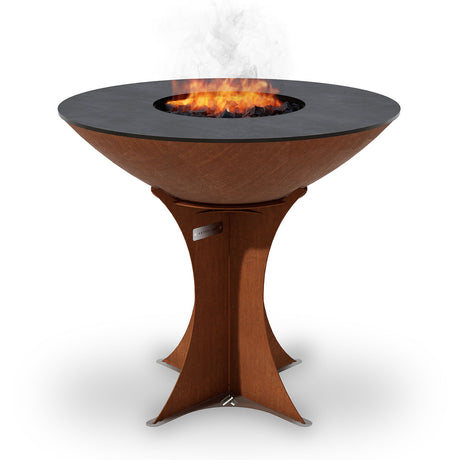
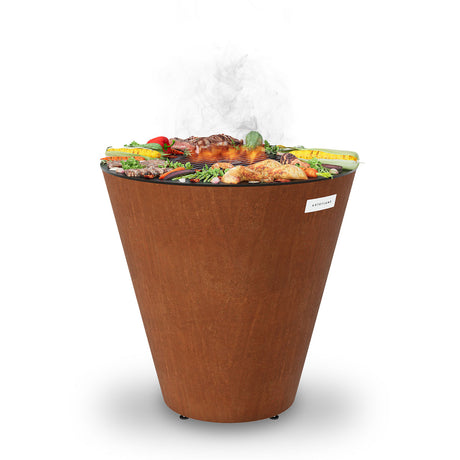
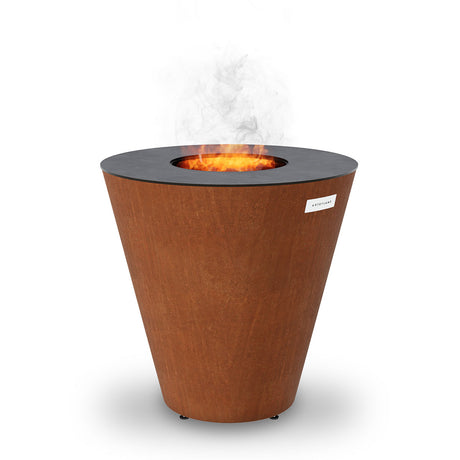
In contrast, wood-fired griddles like the Arteflame use heavy-gauge carbon steel cooktops. This material holds massive amounts of heat. When you drop a steak on it, the temperature remains stable, searing the meat instantly and locking in juices.

The Maillard reaction is the chemical process that gives browned food its distinctive flavor. It begins occurring rapidly at temperatures above 300°F, but for a steak, you want temperatures significantly higher to crisp the outside before overcooking the inside.
Wood fire allows for multi-zone cooking. The center of an Arteflame can reach excess of 1,000°F—ideal for "Chicago Style" searing—while the outer edges remain cooler for bringing the steak up to internal temperature slowly.
Pro Tip: Use the Reverse Sear method for thick cuts. Cook the steak on the cooler outer edge of the wood griddle until it reaches 115°F internal, then move it to the center inferno for 45 seconds per side to finish.
Charcoal and wood generally burn hotter than consumer propane grills. While propane tops out around 600°F, wood fire and lump charcoal can easily exceed 1,000°F, providing superior radiant heat for searing.
Yes. Wood fire imparts a subtle, natural smokiness due to the combustion of organic compounds (lignin). Propane is flavorless, but uncombusted gasses can sometimes leave a chemical aftertaste on the food.
Gray steak is usually caused by excess moisture or low heat. If the grill isn't hot enough to evaporate surface moisture instantly, the steak steams rather than sears. Use a dry heat source like wood for better results.
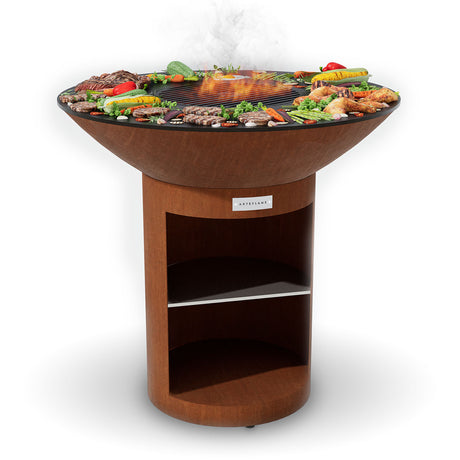
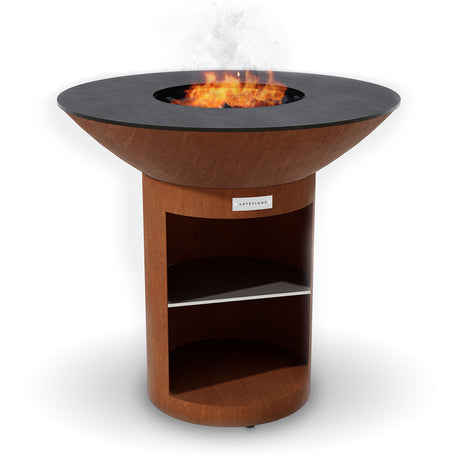

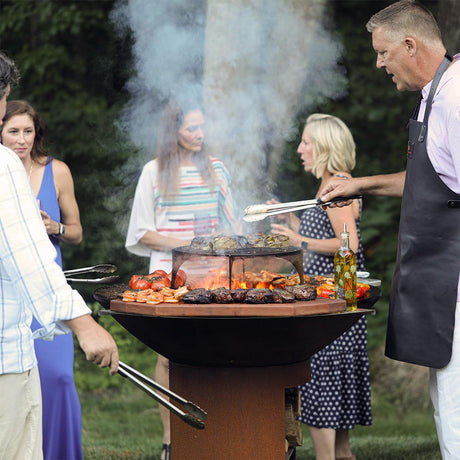
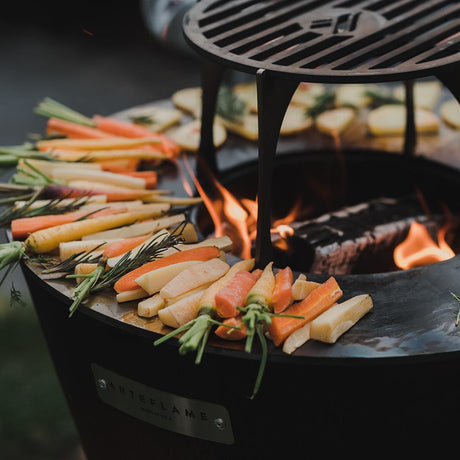




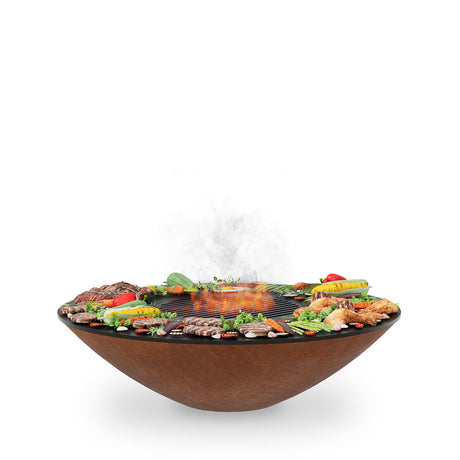
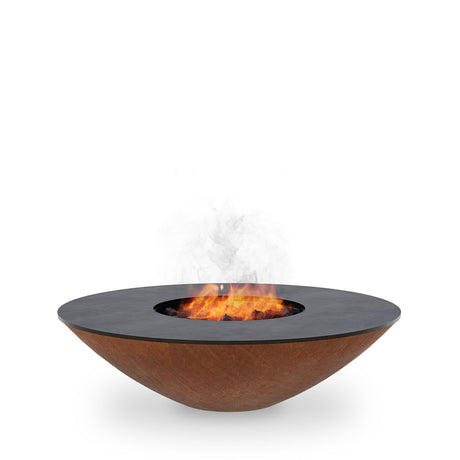
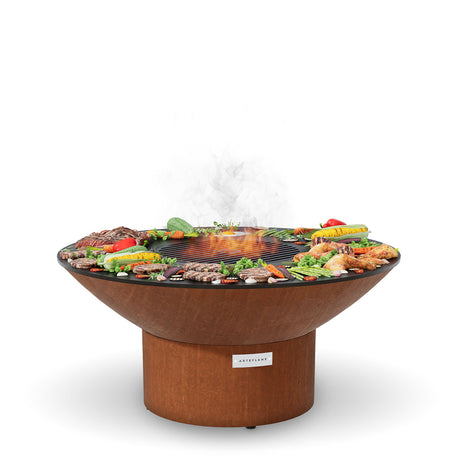
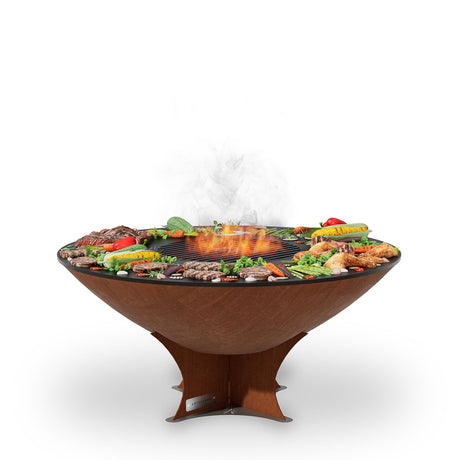


Turn yesterday's leftover macaroni into today's crispy, golden side dish with this easy wood-fired recipe.

Master this Texas-style open-fire brisket cooked entirely on the Arteflame grill. By searing on the center grate and wrapping to render on the flat top, you get perfectly tender, juicy...

Transform standard thick-cut bacon into a sweet, savory appetizer with a dark stout and brown sugar glaze, perfectly caramelized on a flat-top grill.

Render the perfect crispy skin with these Sichuan Peppercorn Duck Breasts, paired with a smoky, sweet, and spicy charred plum-poblano sauce.

Tender artichoke halves charred over high heat and smothered in rich garlic butter and Parmesan cheese.

Achieve the ultimate crust with this low-and-slow beef brisket recipe, utilizing natural heat zones for a perfect sear and incredibly tender finish.

Transform the trending crispy rice paper dumplings into a wood-fired masterpiece. Cooked on the Arteflame flat steel griddle for a shatteringly crisp crust and savory, high-protein filling.

Elevate albacore tuna with a steakhouse-style bacon wrap and a decadent green peppercorn cream sauce, grilled flawlessly on a flat-top.