
Crisp and Golden Mac and Cheese Cakes on the Grill
Turn yesterday's leftover macaroni into today's crispy, golden side dish with this easy wood-fired recipe.


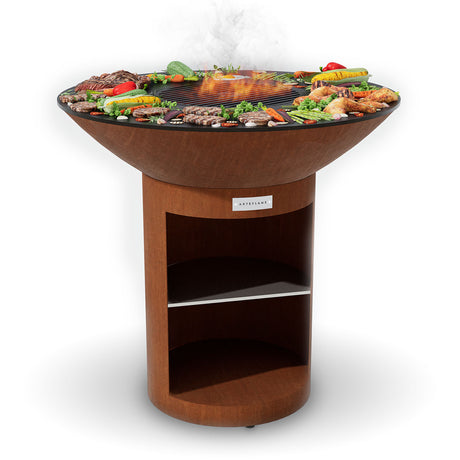
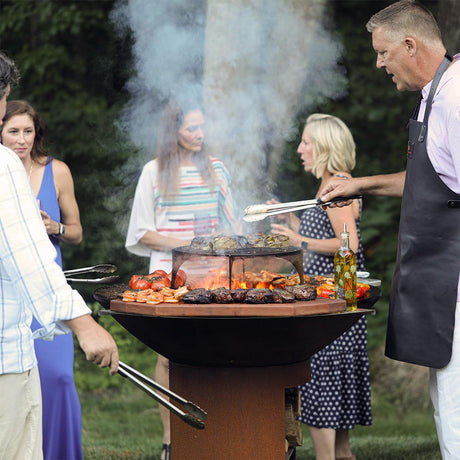
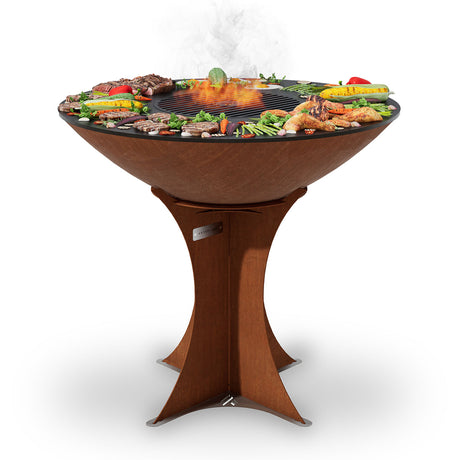
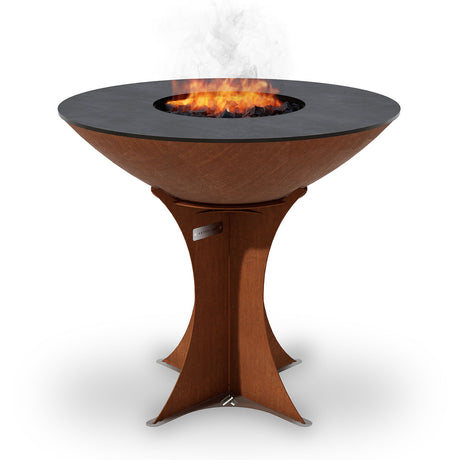
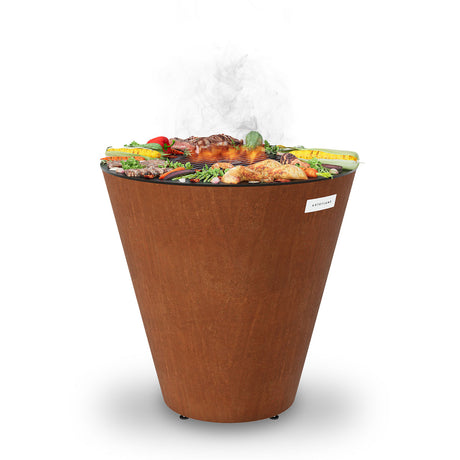
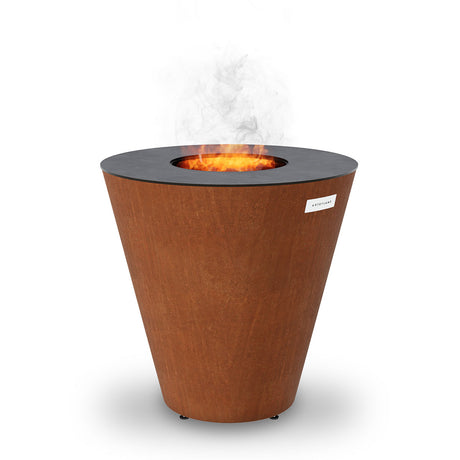
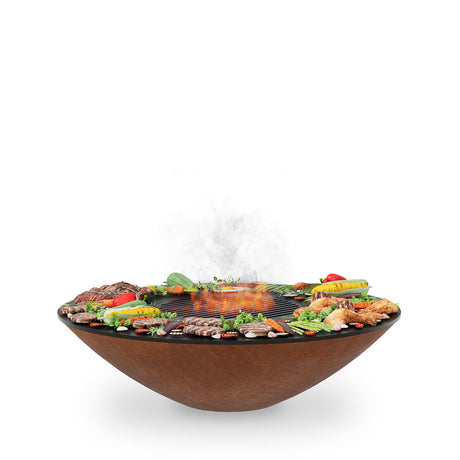
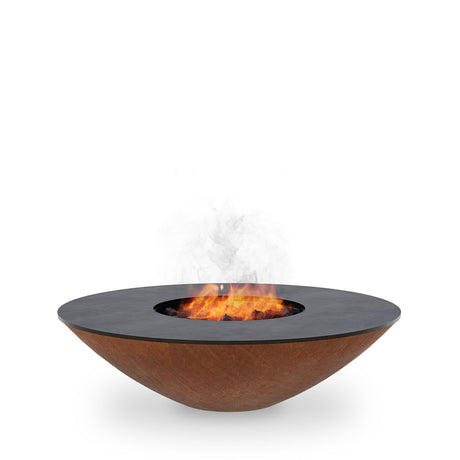
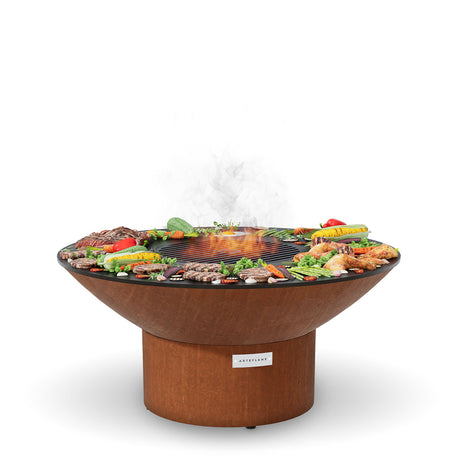
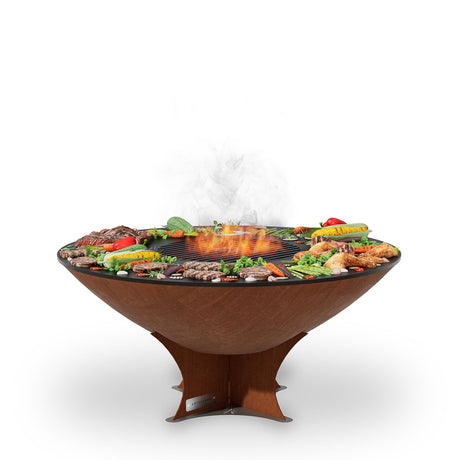
While gas grills offer push-button convenience, wood fire grilling provides superior flavor infusion and significantly higher searing temperatures compared to gas. Specifically, solid carbon steel cooktops (like those found on Arteflame grills) outperform standard stainless steel grates by seasoning over time to create a natural non-stick surface, retaining heat more efficiently, and delivering restaurant-quality sears that gas units simply cannot match.
Before making a purchase, it is critical to understand the distinct differences between a standard gas grill with stainless steel components and a wood-fired carbon steel plancha.
| Feature | Gas + Stainless Steel Grates | Wood Fire + Carbon Steel Griddle |
|---|---|---|
| Flavor Profile | Neutral; often tastes like the fuel source | Rich, deep, authentic smoky flavor |
| Heat Retention | Fluctuates; loses heat rapidly when opened | High thermal mass; holds heat for consistent cooking |
| Surface Texture | Sticky; food often adheres to steel grates | Seasons like cast iron (naturally non-stick) |
| Versatility | Limited mostly to direct searing | Multi-zone cooking (simultaneous sear and slow cook) |
| Maintenance | Requires scrubbing and degreasers | Simple scrape and oil (improves with age) |
The primary reason chefs prefer wood-fired cooking is the flavor profile. Gas is odorless and tasteless in theory, but in practice, it often imparts a chemical aftertaste or simply lacks character. Wood fire does not just cook the food; it creates an ingredient.
When drippings hit the hot wood or coals, they vaporize and rise back up into the meat, creating that distinct "grilled" essence. Furthermore, wood fire reaches higher peak temperatures than most residential gas burners. This intense heat is required for the Maillard reaction—the chemical process that creates the savory, browned crust on a steak.
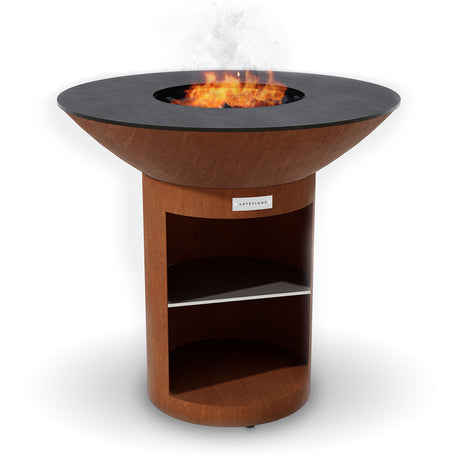
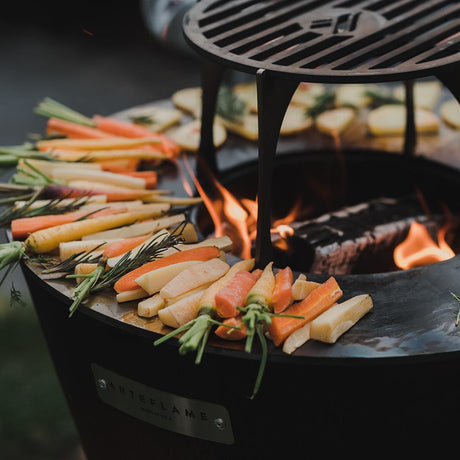
Pro Tip: For the best flavor without burning your food, utilize the distinct heat zones on a solid plancha griddle. Sear your meats on the inner ring closest to the fire (over 1,000°F) and move vegetables to the outer ring (around 400°F) to cook slowly while absorbing the wood smoke.
Many outdoor gas griddles use stainless steel. While shiny and rust-resistant initially, stainless steel is a poor conductor of heat compared to carbon steel. It creates "hot spots" where food burns in one area and remains raw in another.
Arteflame uses carbon steel for its cooktops because it combines the heat retention of cast iron with the durability of steel. Unlike stainless steel, which must be scrubbed chemically to clean, carbon steel absorbs oil and fat.
Over time, this creates a polymerized layer of seasoning (patina). This living surface becomes black, slick, and virtually non-stick, allowing you to grill delicate foods like eggs, pancakes, or fish filets that would fall through or stick to stainless steel gas grates.
Pro Tip: Never use soap on a carbon steel cooktop. Treat it exactly like a grandmother's cast iron skillet. After cooking, scrape the residue into the fire, wipe it down with a thin layer of grapeseed or avocado oil, and it is ready for the next cook.
The limitation of a standard gas grill is the grate design. You are largely restricted to large items: steaks, burgers, corn on the cob. Anything smaller falls into the burners.
A solid carbon steel griddle removes these boundaries. You can prepare a full breakfast (bacon, eggs, hash browns), smash burgers, hibachi-style stir fry, and grilled fruit all on the same unit simultaneously. The solid surface also prevents flare-ups, which are common on gas grills and can ruin meat with acrid soot.
No, it is actually easier once seasoned. While stainless steel requires scrubbing to remove burnt-on food, carbon steel simply needs to be scraped and oiled while warm, getting better and more non-stick with every use.
Yes, wood requires about 15-20 minutes to build a coal bed and heat the griddle, whereas gas is instant. However, the trade-off is a vastly superior flavor and a cooking surface that stays hot even in cold weather.
Yes, provided it is kept oiled. If the seasoning layer is maintained, the oil prevents moisture from reaching the steel, stopping rust. If minor surface rust appears, it can easily be scrubbed off and re-seasoned.







Turn yesterday's leftover macaroni into today's crispy, golden side dish with this easy wood-fired recipe.

Master this Texas-style open-fire brisket cooked entirely on the Arteflame grill. By searing on the center grate and wrapping to render on the flat top, you get perfectly tender, juicy...

Transform standard thick-cut bacon into a sweet, savory appetizer with a dark stout and brown sugar glaze, perfectly caramelized on a flat-top grill.

Render the perfect crispy skin with these Sichuan Peppercorn Duck Breasts, paired with a smoky, sweet, and spicy charred plum-poblano sauce.

Tender artichoke halves charred over high heat and smothered in rich garlic butter and Parmesan cheese.

Achieve the ultimate crust with this low-and-slow beef brisket recipe, utilizing natural heat zones for a perfect sear and incredibly tender finish.

Transform the trending crispy rice paper dumplings into a wood-fired masterpiece. Cooked on the Arteflame flat steel griddle for a shatteringly crisp crust and savory, high-protein filling.

Elevate albacore tuna with a steakhouse-style bacon wrap and a decadent green peppercorn cream sauce, grilled flawlessly on a flat-top.