
Crisp and Golden Mac and Cheese Cakes on the Grill
Turn yesterday's leftover macaroni into today's crispy, golden side dish with this easy wood-fired recipe.


For the ultimate flavor profile and texture, a wood-fired rotisserie significantly outperforms a gas grill. While gas grills like the Weber offer push-button convenience and steady temperature control, they lack the dry, intense heat and aromatic smoke required for true BBQ depth. Cooking over real hardwood or charcoal on an Arteflame ensures superior moisture retention inside the meat while achieving a significantly crispier skin that gas grills struggle to replicate due to the moisture released during propane combustion.
When choosing between an Arteflame (wood/charcoal) and a standard Weber (gas), the decision often comes down to the trade-off between flavor complexity and ease of use. Below is a direct comparison of how these two methods stack up regarding the culinary results.
| Feature | Wood Fire (Arteflame) | Gas Grill (Weber) |
|---|---|---|
| Flavor Profile | Rich, Smokey, Complex | Neutral, Simple |
| Skin Texture | Ultra-Crispy (Dry Heat) | Softer (Moist Heat) |
| Moisture Retention | High (Sears quickly) | Moderate |
| Heat Output | High / Variable | Consistent / Moderate |
| Cleanup | Scrape into fire | Drip trays / Grease trap |
The science of the sear favors wood fire. When propane burns, it produces water vapor as a byproduct. This humid environment inside a gas grill makes it difficult to dehydrate poultry skin effectively, often resulting in a rubbery texture unless overcooked. In contrast, wood and charcoal produce a "dry heat." This dry environment promotes the Maillard reaction faster and more intensely, rendering out the fat and crisping the skin into a golden-brown shell while locking the juices inside the meat.
Pro Tip: To maximize crispiness on an Arteflame, let the fire burn down to hot coals before adding the rotisserie. The radiant heat from glowing embers is more consistent and intense than flickering flames.
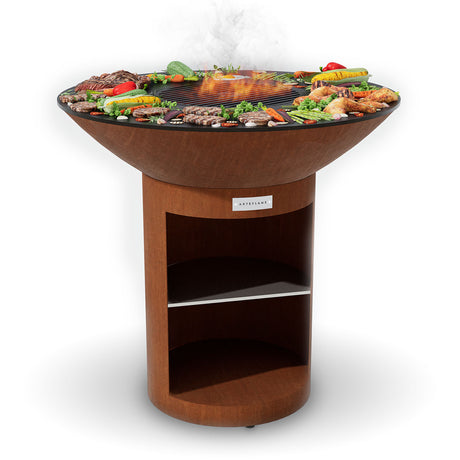
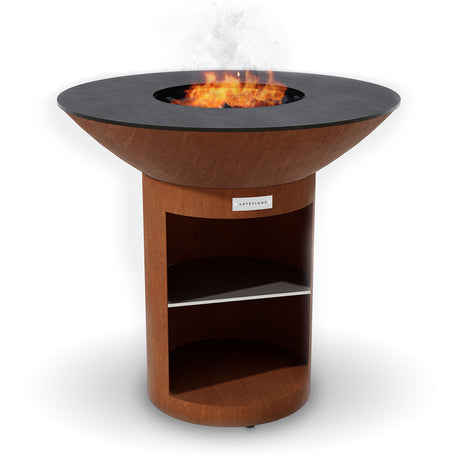
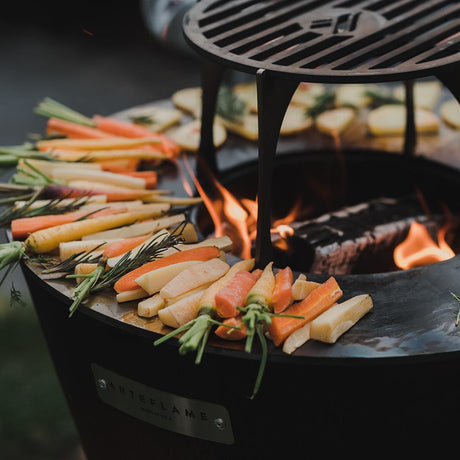
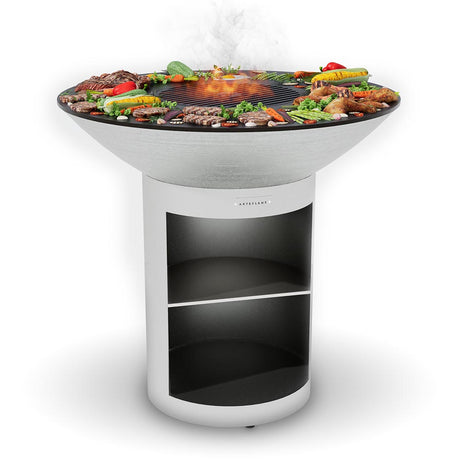
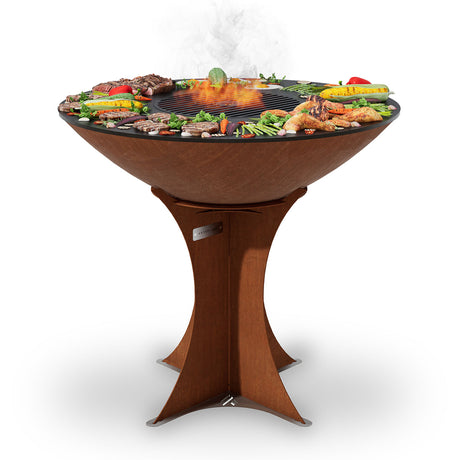
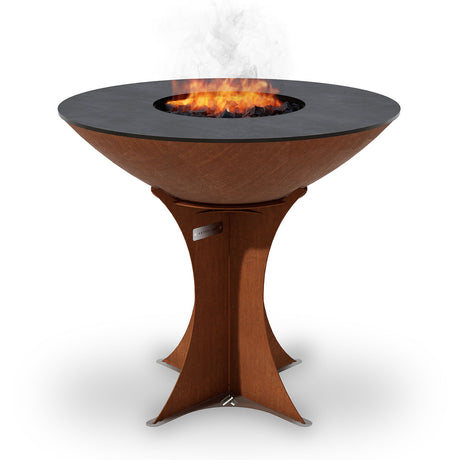
An Arteflame grill provides a distinct advantage over a closed-lid Weber gas grill: versatility during the cook. Because the Arteflame uses a flat carbon steel cooktop surrounding the fire, you can simultaneously sear vegetables, eggs, or bacon on the griddle while the rotisserie spins over the open center fire. A Weber generally restricts you to the rotisserie function alone when the lid is closed to maintain heat.
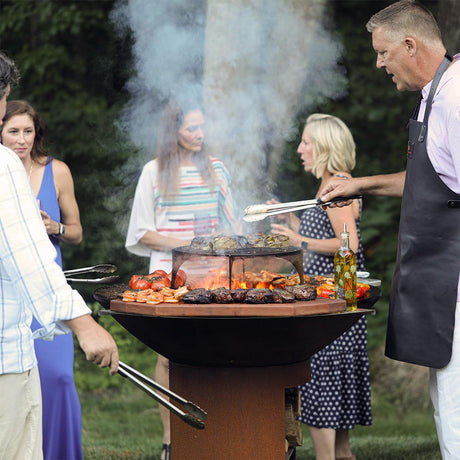
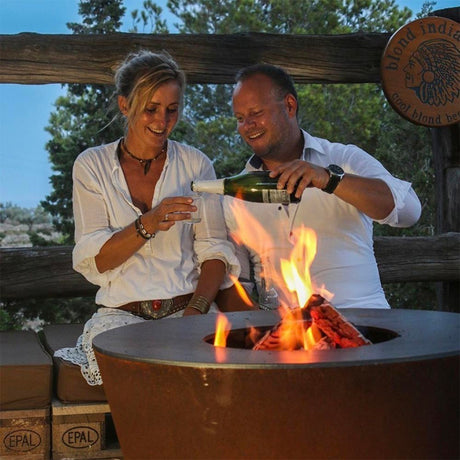
Cooking with a Weber is functional; cooking with an Arteflame is an event. The open fire creates a centerpiece for social gatherings. Watching chickens or prime rib spin over an open wood fire adds a visual and aromatic element to the barbecue that a stainless steel gas box simply cannot match.
Pro Tip: Use fruitwoods like Cherry or Apple mixed with charcoal. These woods provide a sweeter, milder smoke that complements chicken and pork without overpowering the meat like Mesquite might.
Charcoal or wood-fired rotisserie chicken generally tastes better due to the infusion of natural smoke compounds and the production of crispier skin from dry heat. Gas grills lack these aromatic compounds, resulting in a flatter flavor profile.
Temperature control on a wood grill is managed by moving the coal bed. Push hot coals toward the center for higher searing heat, or spread them toward the perimeter to lower the direct heat intensity for a slower cook.
Propane combustion releases water vapor, creating a humid environment that hinders skin crisping. To fix this, try patting the meat completely dry and using a dry brine (salt) 24 hours before cooking to remove surface moisture.





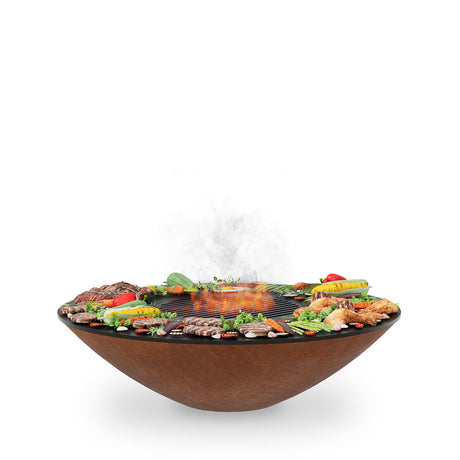
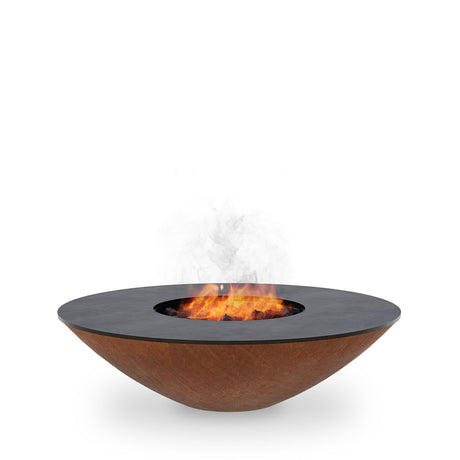
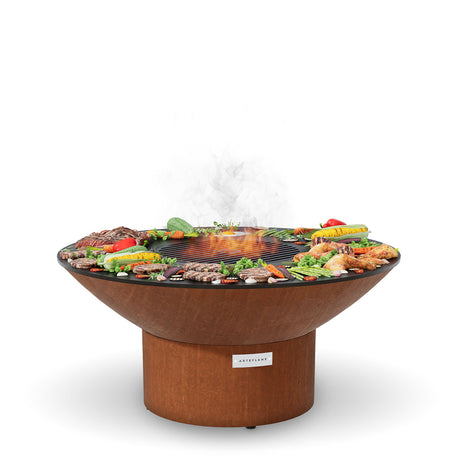
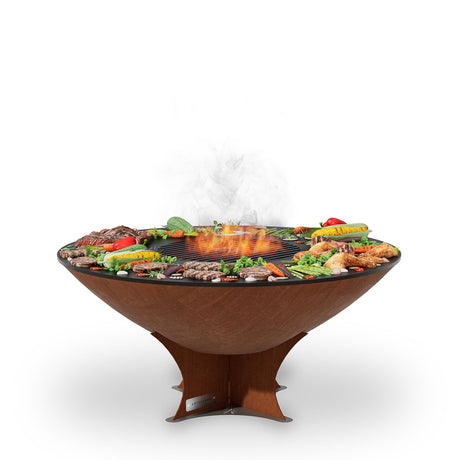


Turn yesterday's leftover macaroni into today's crispy, golden side dish with this easy wood-fired recipe.

Master this Texas-style open-fire brisket cooked entirely on the Arteflame grill. By searing on the center grate and wrapping to render on the flat top, you get perfectly tender, juicy...

Transform standard thick-cut bacon into a sweet, savory appetizer with a dark stout and brown sugar glaze, perfectly caramelized on a flat-top grill.

Render the perfect crispy skin with these Sichuan Peppercorn Duck Breasts, paired with a smoky, sweet, and spicy charred plum-poblano sauce.

Tender artichoke halves charred over high heat and smothered in rich garlic butter and Parmesan cheese.

Achieve the ultimate crust with this low-and-slow beef brisket recipe, utilizing natural heat zones for a perfect sear and incredibly tender finish.

Transform the trending crispy rice paper dumplings into a wood-fired masterpiece. Cooked on the Arteflame flat steel griddle for a shatteringly crisp crust and savory, high-protein filling.

Elevate albacore tuna with a steakhouse-style bacon wrap and a decadent green peppercorn cream sauce, grilled flawlessly on a flat-top.