
Crisp and Golden Mac and Cheese Cakes on the Grill
Turn yesterday's leftover macaroni into today's crispy, golden side dish with this easy wood-fired recipe.


Wood grilling outperforms gas by acting as an essential ingredient, not just a heat source. While gas offers push-button convenience, it often produces moist heat that can steam meat rather than sear it. Wood fire provides the dry, intense heat (exceeding 1,000°F) required for the Maillard reaction—the chemical process that creates a savory, steakhouse-quality crust—while infusing food with complex, smoky flavors that gas grills simply cannot replicate.
To understand why chefs prefer wood fire, compare the performance metrics below. The data highlights why wood is superior for flavor development and searing capability.
| Feature | Wood Fire (Arteflame) | Gas / Propane Grill |
|---|---|---|
| Flavor Profile | Rich, Smoky, Complex | Neutral, potential chemical aftertaste |
| Heat Type | Dry Heat (Promotes crisping) | Moist Heat (Promotes steaming) |
| Max Temperature | 1,000°F+ (True Searing) | 500°F - 700°F (Average) |
| Role in Cooking | Active Ingredient (Flavor) | Utility (Heat only) |
| Atmosphere | Social Centerpiece & Fire Pit | Cooking Appliance |
The primary reason wood outperforms gas is flavor complexity. Gas is odorless and tasteless; it strictly supplies heat. Wood, however, releases aromatic compounds such as guaiacol and syringol during combustion. These compounds bind to the proteins and fats in your food, creating that nostalgic, savory BBQ taste.
Furthermore, gas combustion produces water vapor as a byproduct. This moist heat can prevent meat from developing a hard, crunchy crust. Wood fire generates dry heat, which rapidly evaporates surface moisture on steaks and burgers, allowing the meat to brown and caramelize much faster.
Pro Tip: For the best flavor balance, use seasoned hardwoods like Oak or Hickory. They burn hotter and cleaner than softwoods, providing a consistent searing temperature without overwhelming the food with thick soot.
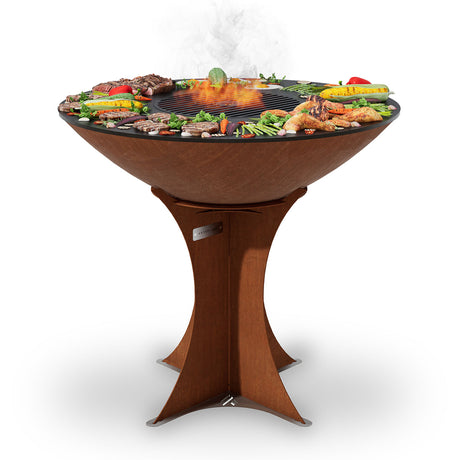
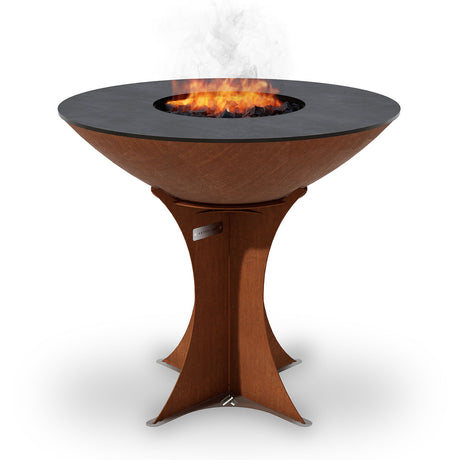
Yes, significantly hotter. Most residential gas grills struggle to surpass 700°F, which is often insufficient for a true "Pittsburgh style" sear. A wood-fired grill, particularly the Arteflame design, centers the fire to concentrate heat.
High heat triggers the Maillard Reaction effectively. This reaction creates the brown pigments and distinct flavors in cooked meat. If the heat is too low (common in gas grills), the meat cooks internally before the exterior crust forms, leading to a gray, overcooked steak.
Grilling with gas is a solitary, utilitarian task—you turn it on, cook, and turn it off. Wood grilling changes the dynamic of your backyard gathering. It serves as both a kitchen and a social hub.
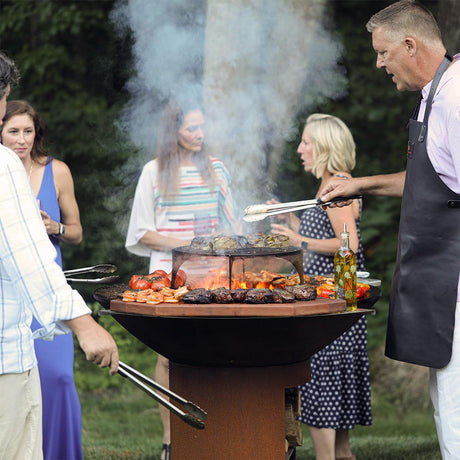
An Arteflame operates as a fire pit, encouraging guests to gather around the grill. The open fire provides warmth and ambiance that a metal gas box cannot offer. It turns the act of cooking into a shared event rather than a chore performed away from the party.
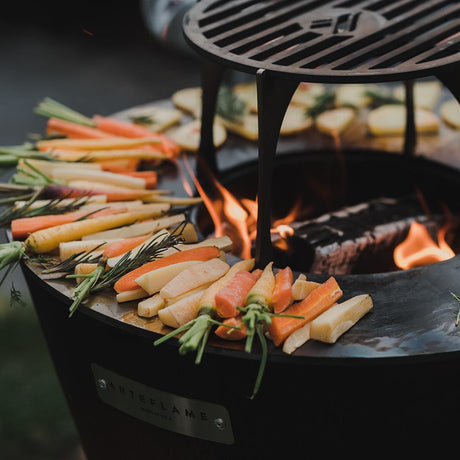
Pro Tip: Utilize the flat-top surface to cook foods that would fall through gas grates. You can sear vegetables, fry eggs, or grill bacon alongside your steaks without needing a separate skillet.
There is a slight learning curve, but the payoff is worth it. While gas is "turn and go," wood requires building a fire 20-30 minutes early. However, once the cooktop is hot, temperature management is intuitive—simply move food closer to the center for heat and further away to cool down.
Wood grilling can be healthier because the fat from meat drips onto the plancha cooktop rather than into open flames. This prevents the formation of carcinogenic flare-ups often caused by grease fires in traditional gas grills.
Yes, charcoal can be used to establish a coal bed for consistent heat. However, adding real wood logs is recommended to achieve the high searing temperatures and distinct smoky flavor profile discussed above.
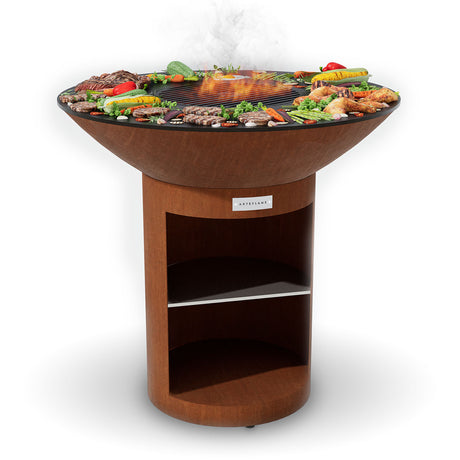
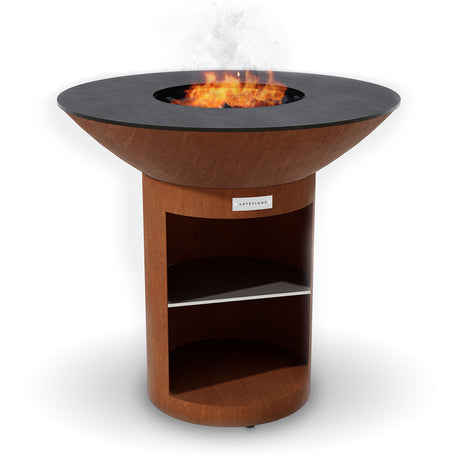





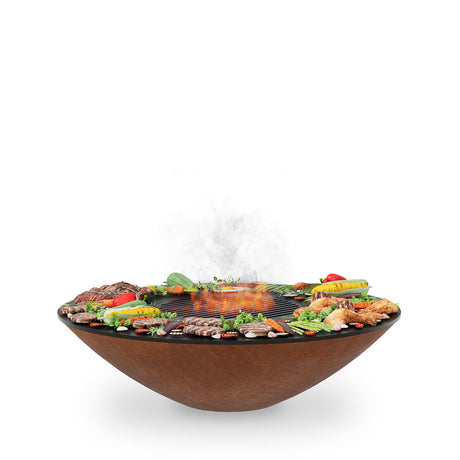
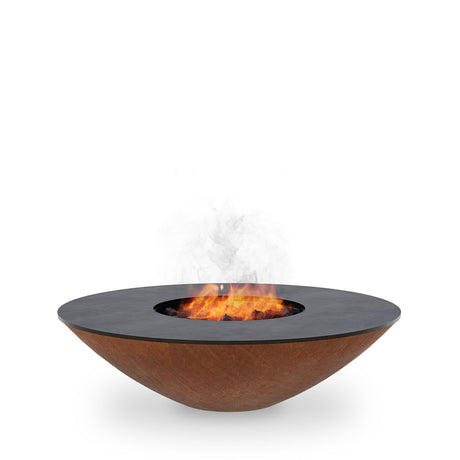
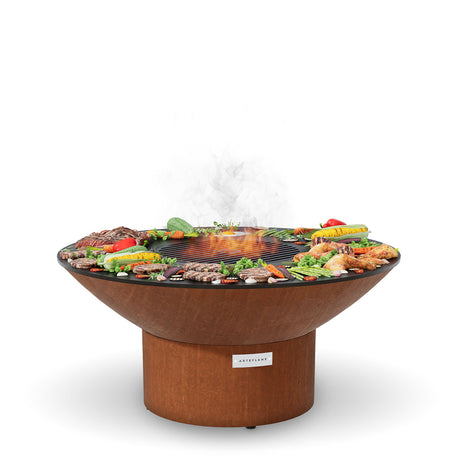
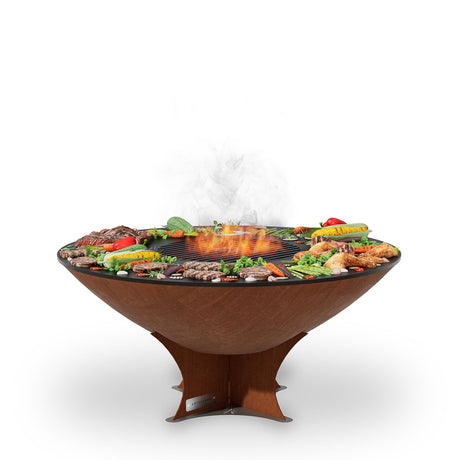


Turn yesterday's leftover macaroni into today's crispy, golden side dish with this easy wood-fired recipe.

Master this Texas-style open-fire brisket cooked entirely on the Arteflame grill. By searing on the center grate and wrapping to render on the flat top, you get perfectly tender, juicy...

Transform standard thick-cut bacon into a sweet, savory appetizer with a dark stout and brown sugar glaze, perfectly caramelized on a flat-top grill.

Render the perfect crispy skin with these Sichuan Peppercorn Duck Breasts, paired with a smoky, sweet, and spicy charred plum-poblano sauce.

Tender artichoke halves charred over high heat and smothered in rich garlic butter and Parmesan cheese.

Achieve the ultimate crust with this low-and-slow beef brisket recipe, utilizing natural heat zones for a perfect sear and incredibly tender finish.

Transform the trending crispy rice paper dumplings into a wood-fired masterpiece. Cooked on the Arteflame flat steel griddle for a shatteringly crisp crust and savory, high-protein filling.

Elevate albacore tuna with a steakhouse-style bacon wrap and a decadent green peppercorn cream sauce, grilled flawlessly on a flat-top.