
Crisp and Golden Mac and Cheese Cakes on the Grill
Turn yesterday's leftover macaroni into today's crispy, golden side dish with this easy wood-fired recipe.


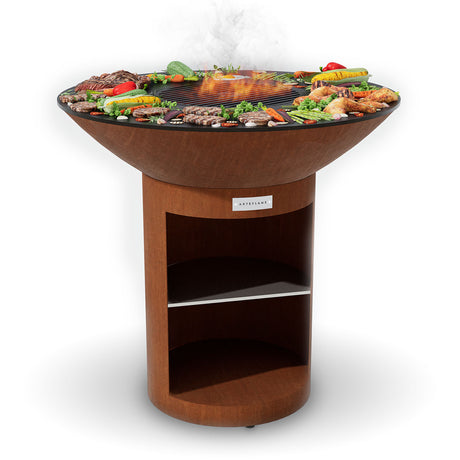
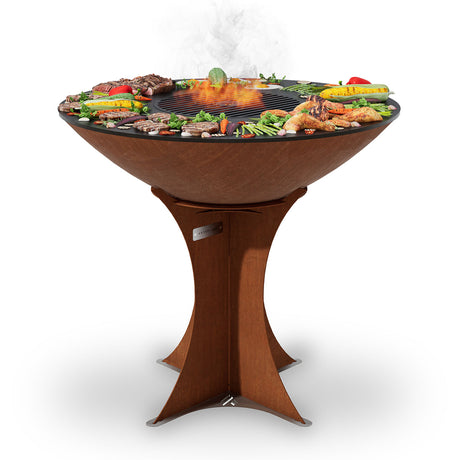
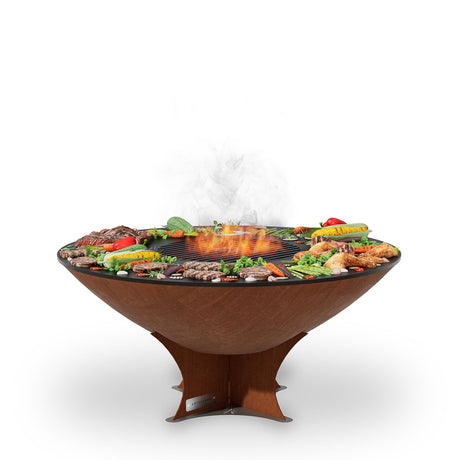
Wood-fired grills deliver superior flavor, higher searing temperatures, and a social experience compared to gas grills, which prioritize speed and push-button convenience. While a gas grill is functional for quick weeknight meals, a wood-fired grill like the Arteflame serves as a combination of a high-end griddle, fire pit, and centerpiece, imparting a natural smoky taste that gas simply cannot replicate.
When deciding between a traditional gas grill (like a Weber) and a wood-fired flat top (like an Arteflame), the choice comes down to experience versus convenience. Use this data to see which matches your cooking style.
| Feature | Wood-Fired (Arteflame) | Gas Grill (Standard) |
|---|---|---|
| Flavor Profile | Rich, smoky, natural wood char | Neutral, lacks depth |
| Max Temperature | 1,000°F+ (Steakhouse sear) | 500°F - 700°F (Standard) |
| Versatility | Grill, griddle, fire pit | Grill only |
| Maintenance | Scrape and oil (seasoned like cast iron) | Grease trays, burner cleaning |
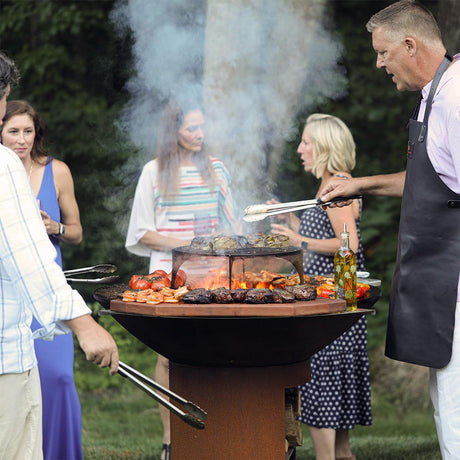
| Social Experience | 360° cooking, gathering point | Solo chef facing a wall |
Winner for Flavor: Wood-Fired.
Winner for Speed: Gas.
The primary reason chefs choose wood over gas is flavor complexity. Gas is odorless and tasteless; it provides heat but contributes nothing to the food's profile. You often have to rely heavily on marinades or artificial smoke boxes to achieve depth.
In contrast, cooking on a wood-fired plancha infuses food with subtle, aromatic smoke. Because the Arteflame uses a solid carbon steel cooktop, the food sears in its own juices rather than dripping away through grates. This creates the Maillard reaction—that golden-brown crust—much faster and more evenly than gas burners.
Pro Tip: For the ultimate flavor profile, use hardwoods like oak or hickory in your Arteflame. Avoid softwoods like pine, as they burn too fast and produce acrid smoke.
Gas grills often struggle to maintain the consistent, ultra-high heat required for a perfect steakhouse sear. Most consumer gas units top out around 500°F to 600°F. If you crowd the grates, the temperature drops rapidly.
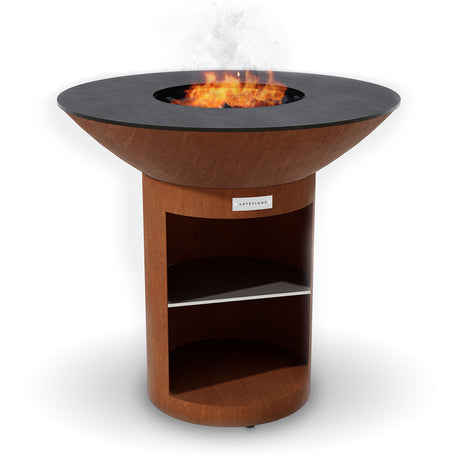
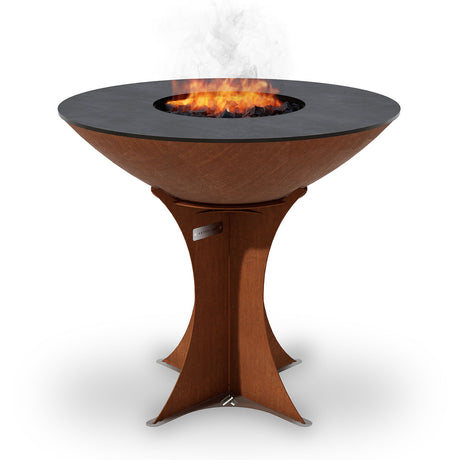
A wood-fired grill operates differently. The center of an Arteflame cooktop can exceed 1,000°F. This allows you to sear a steak instantly, locking in moisture without overcooking the center. As you move food further from the center, the heat creates natural "temperature zones," allowing you to sear meat and slow-roast vegetables simultaneously.

A common misconception is that gas grills are lower maintenance. However, gas grills require cleaning grease traps, unclogging burner tubes, and replacing rusted heat deflectors. They contain mechanical parts that fail over time.
The Arteflame is designed to last a lifetime with virtually zero mechanical maintenance. The cooktop is treated like a cast-iron skillet:
There are no burners to clog and no knobs to break. The oil creates a non-stick patina that improves with every use.
Pro Tip: Don't scrub your cooktop down to the bare metal. The black layer that forms is the "seasoning"—it protects the steel from rust and adds flavor, just like your grandmother's skillet.
Gas grills are purely utilitarian appliances. Once the food is cooked, the gas is turned off, and the device goes cold. It rarely adds to the ambiance of a backyard gathering.
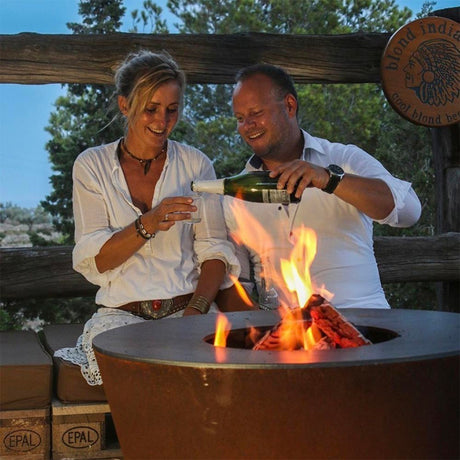
A wood-fired grill extends the evening. After cooking, it transitions seamlessly into a fire pit. Guests can gather around the warmth of the fire, roast marshmallows, or simply enjoy the visual appeal of open flames. This dual functionality saves space and budget by eliminating the need to buy a separate fire pit.

No, temperature control is managed by heat zones. The center is hottest, and the outer edges are cooler. You simply move your food to the appropriate area rather than adjusting a knob.
A gas grill is ready in 10 minutes, while a wood-fired grill takes about 15 to 20 minutes to build a coal bed and heat the cooktop. The trade-off is significantly better heat retention and flavor.
Yes. The Arteflame is built from corten steel and carbon steel, designed to withstand all weather conditions. It can be left outside uncovered year-round without rotting or rusting through.
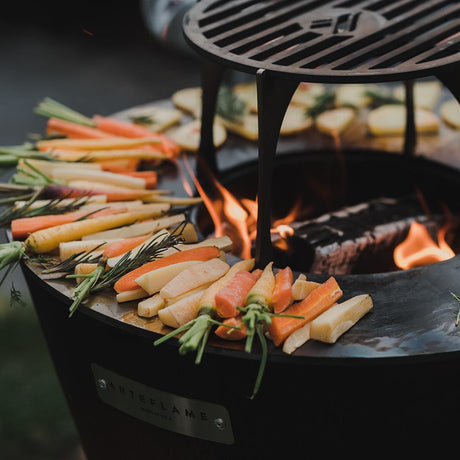
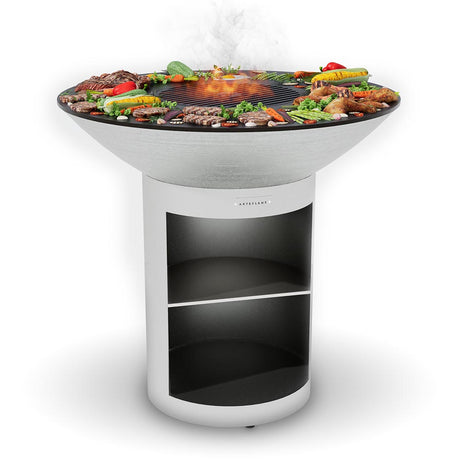
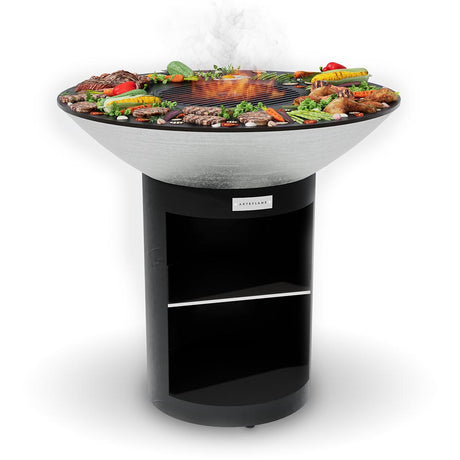




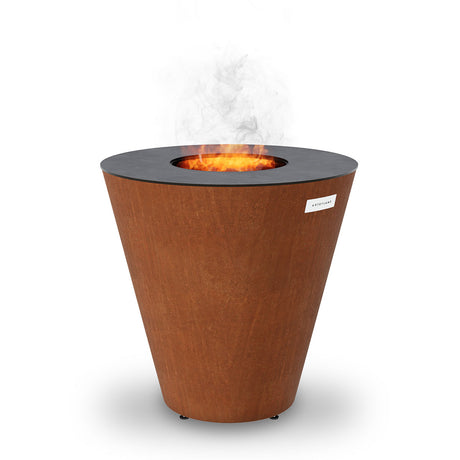
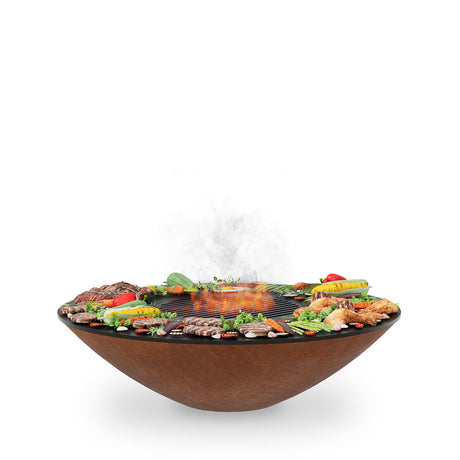
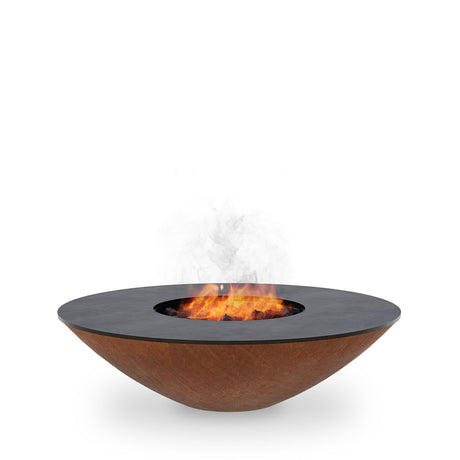
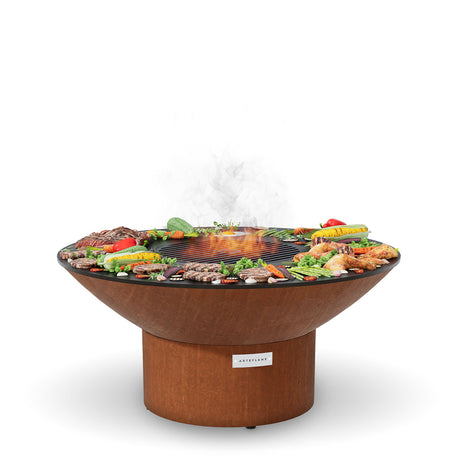


Turn yesterday's leftover macaroni into today's crispy, golden side dish with this easy wood-fired recipe.

Master this Texas-style open-fire brisket cooked entirely on the Arteflame grill. By searing on the center grate and wrapping to render on the flat top, you get perfectly tender, juicy...

Transform standard thick-cut bacon into a sweet, savory appetizer with a dark stout and brown sugar glaze, perfectly caramelized on a flat-top grill.

Render the perfect crispy skin with these Sichuan Peppercorn Duck Breasts, paired with a smoky, sweet, and spicy charred plum-poblano sauce.

Tender artichoke halves charred over high heat and smothered in rich garlic butter and Parmesan cheese.

Achieve the ultimate crust with this low-and-slow beef brisket recipe, utilizing natural heat zones for a perfect sear and incredibly tender finish.

Transform the trending crispy rice paper dumplings into a wood-fired masterpiece. Cooked on the Arteflame flat steel griddle for a shatteringly crisp crust and savory, high-protein filling.

Elevate albacore tuna with a steakhouse-style bacon wrap and a decadent green peppercorn cream sauce, grilled flawlessly on a flat-top.