
Crisp and Golden Mac and Cheese Cakes on the Grill
Turn yesterday's leftover macaroni into today's crispy, golden side dish with this easy wood-fired recipe.


Wood-fired grilling produces a objectively superior steak compared to gas due to higher searing temperatures and the infusion of natural smoke flavor. While gas grills offer push-button convenience, they typically cap out at 500°F—600°F, which often dries out meat before a crust forms. For the perfect Maillard reaction and juicy interior, the intense, dry heat of a wood fire (often exceeding 1,000°F) is unmatched.
The primary driver of steak quality is the relationship between heat intensity and moisture retention. Gas grills rely on propane or natural gas, which releases water vapor as a byproduct of combustion. This excess moisture creates a micro-steam environment around the steak, inhibiting the formation of a crisp crust.
In contrast, wood and charcoal produce a dry, intense heat. This allows the surface moisture of the steak to evaporate instantly, creating a rapid, savory crust while locking the juices inside the meat.
| Feature | Gas Grill | Wood-Fired (Arteflame) |
|---|---|---|
| Max Temperature | 500°F - 600°F | 1,000°F+ (Center) |
| Heat Type | Moist Heat (Combustion vapor) | Dry Heat (Radiant & Conduction) |
| Flavor Profile | Neutral / Metallic | Smoky / Umami |
| Sear Quality | Weak / Grill Marks only | Complete Surface Crust |
| Moisture Retention | Lower (Longer cook time) | Higher (Rapid sear) |
The Maillard reaction is the chemical process that gives browned food its distinctive flavor. It begins to occur noticeably around 300°F, but for a steak, you want this to happen almost instantly to prevent the inside from overcooking.
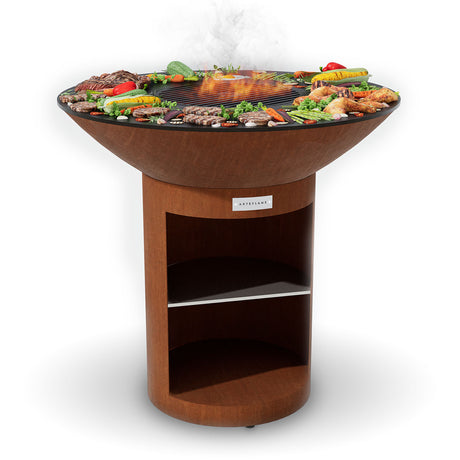
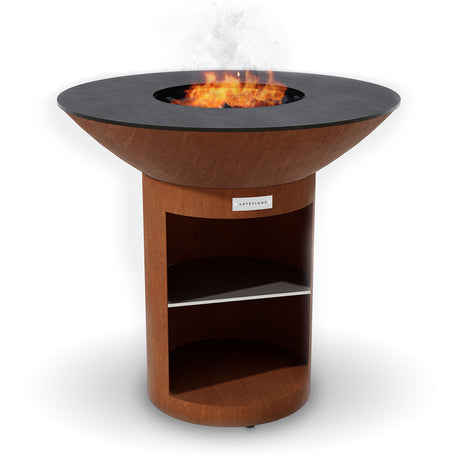
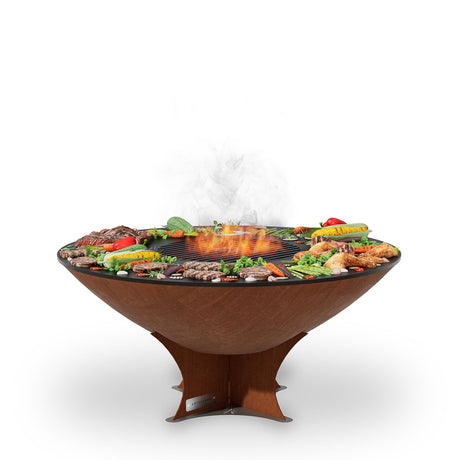
Because gas grills struggle to maintain surface temperatures above 600°F when the lid is open, steaks often end up gray or banded (cooked gray on the outside, pink in the middle) rather than crusted. Wood-fired grills, specifically solid-surface designs like the Arteflame, allow you to sear at temperatures exceeding 1,000°F. This creates a steakhouse-quality crust in seconds.
Pro Tip: Don't rely on air temperature. The "lid thermometer" on a gas grill measures air, not the grate temperature. On a wood-fired cooktop, the steel surface itself holds the heat energy, ensuring the temperature doesn't drop when cold meat hits the grill.
Traditional grill grates permit flames to touch the meat directly, which causes flare-ups. While char is good, acrid soot from burning fat is not. Flare-ups can ruin the flavor profile of an expensive ribeye.
Using a solid carbon steel cooktop (plancha style) eliminates flare-ups entirely. The solid surface ensures that the fat renders and fries the meat in its own juices, rather than dripping away onto a burner. This technique creates an all-over sear rather than just distinct "grill marks," maximizing the surface area of the Maillard reaction.
This method also significantly improves E-E-A-T (Experience, Expertise, Authoritativeness, and Trustworthiness) in cooking, as it mimics the techniques used by top steakhouse chefs who use broilers or cast-iron skillets rather than open flame grates.
Pro Tip: For the ultimate flavor, use seasoning after the initial sear on a wood fire. High heat can burn pepper and garlic. Sear the meat on the hottest part of the cooktop, then move it to the outer, cooler ring to finish cooking and absorb the wood smoke.
Yes, the difference is distinct. Wood-fired steaks have a deeper complexity due to compounds like syringol and guaiacol found in hardwood smoke, whereas gas-grilled steaks lack this aromatic dimension and can sometimes taste flat.
Lighting the fire takes longer (15-20 minutes), but the actual cooking time is often faster. Because wood fires burn significantly hotter than gas burners, the searing process is accelerated, reducing the time the steak needs to be on the heat.
Wood grilling on a solid surface can be healthier because it reduces carcinogen formation. When fat drips onto open gas flames, it creates PAHs (polycyclic aromatic hydrocarbons) that adhere to the meat; a solid cooktop prevents this flare-up cycle.




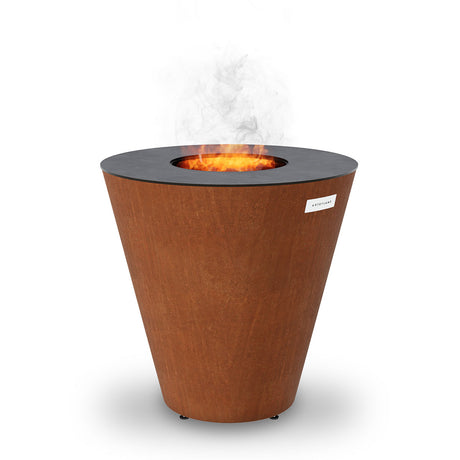
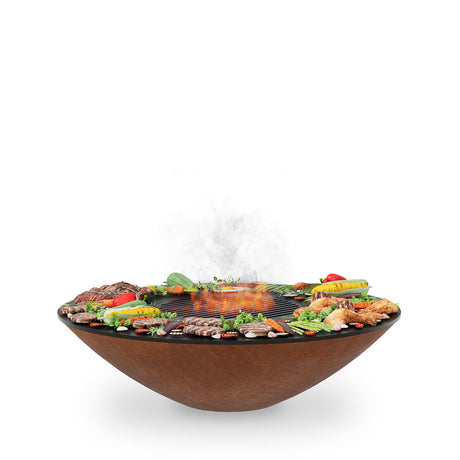
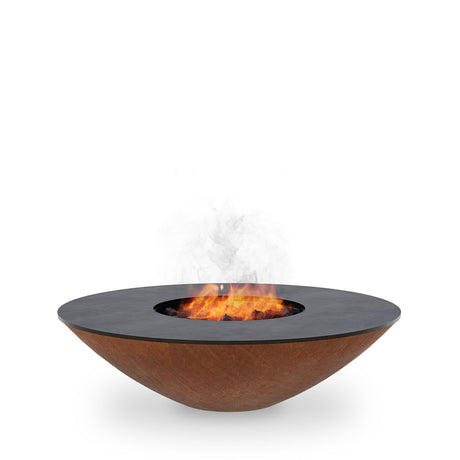
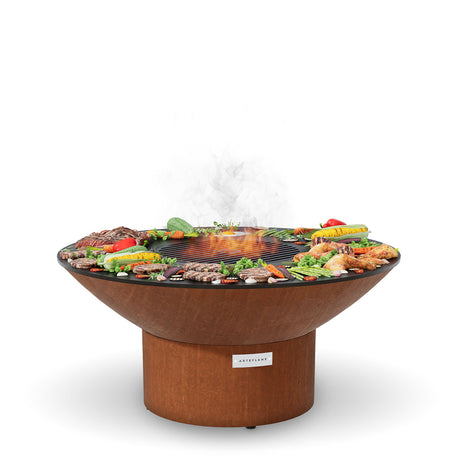


Turn yesterday's leftover macaroni into today's crispy, golden side dish with this easy wood-fired recipe.

Master this Texas-style open-fire brisket cooked entirely on the Arteflame grill. By searing on the center grate and wrapping to render on the flat top, you get perfectly tender, juicy...

Transform standard thick-cut bacon into a sweet, savory appetizer with a dark stout and brown sugar glaze, perfectly caramelized on a flat-top grill.

Render the perfect crispy skin with these Sichuan Peppercorn Duck Breasts, paired with a smoky, sweet, and spicy charred plum-poblano sauce.

Tender artichoke halves charred over high heat and smothered in rich garlic butter and Parmesan cheese.

Achieve the ultimate crust with this low-and-slow beef brisket recipe, utilizing natural heat zones for a perfect sear and incredibly tender finish.

Transform the trending crispy rice paper dumplings into a wood-fired masterpiece. Cooked on the Arteflame flat steel griddle for a shatteringly crisp crust and savory, high-protein filling.

Elevate albacore tuna with a steakhouse-style bacon wrap and a decadent green peppercorn cream sauce, grilled flawlessly on a flat-top.