
Crisp and Golden Mac and Cheese Cakes on the Grill
Turn yesterday's leftover macaroni into today's crispy, golden side dish with this easy wood-fired recipe.


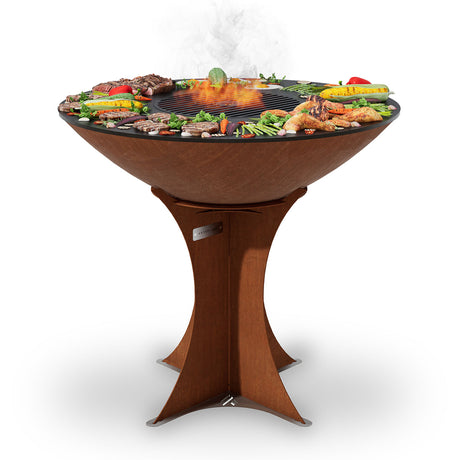
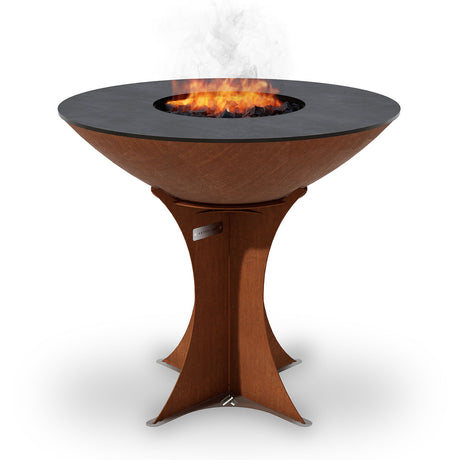
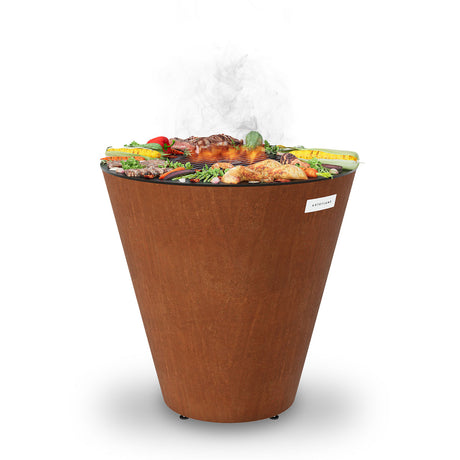
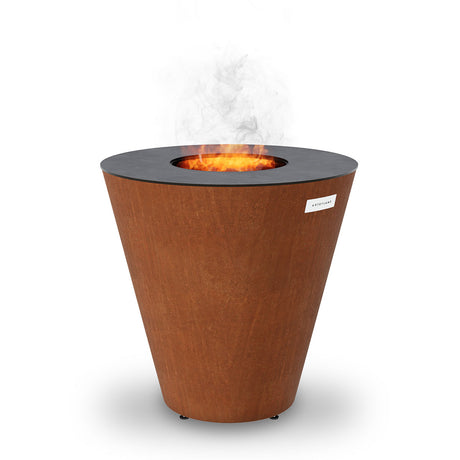
For the ultimate steakhouse-quality sear, wood-fired flat-top grills outperform both gas and standard kettle BBQs by sustaining temperatures exceeding 1,000°F without flare-ups. While gas offers convenience and kettles provide basic smokiness, only a solid carbon steel surface guarantees the edge-to-edge Maillard reaction required to lock in juices instantly, rather than just burning lines into the meat.
When choosing a grill for red meat, heat retention and surface area are the most critical factors. The table below outlines how the three major grill types stack up regarding searing capability.
| Feature | Wood-Fired (Arteflame) | Gas Grill | Kettle BBQ |
|---|---|---|---|
| Max Temperature | 1,000°F+ | 500°F - 700°F | High (Uneven) |
| Heat Type | Conduction (Solid Surface) | Convection (Air) | Radiant/Convection |
| Sear Quality | Edge-to-Edge Crust | Grill Grate Marks | Charred Lines |
| Flare-Up Risk | Zero (Solid Cooktop) | High (Grease on Burners) | Moderate |
| Flavor Profile | Wood-Smoked & Savory | Neutral / Gas Taste | Charcoal Smoke |
Many grillers mistakenly believe that diamond-pattern grill marks are the gold standard for a steak. In reality, grill marks represent surface area that was not seared. A grate system means only 20-30% of the meat contacts the heat source, leaving the rest to bake via hot air.
Gas and kettle grills rely heavily on convection (hot air) to cook the meat between the grates. This dries out the steak before a proper crust can form. Furthermore, as fat renders and drips through the grates onto open flames or burners, it causes flare-ups. These bursts of fire deposit soot and acrid flavors onto the meat rather than the savory wood notes you want.
Pro Tip: For the juiciest steak, you need conduction heat, not convection. Cooking on a solid carbon steel surface ensures 100% of the meat's surface area is searing simultaneously, creating a "flavor seal" that grates simply cannot replicate.
The Maillard reaction—the chemical process that browns food and creates distinct flavors—occurs most efficiently above 300°F. However, to achieve a steakhouse crust without overcooking the center, you need temperatures closer to 1,000°F.
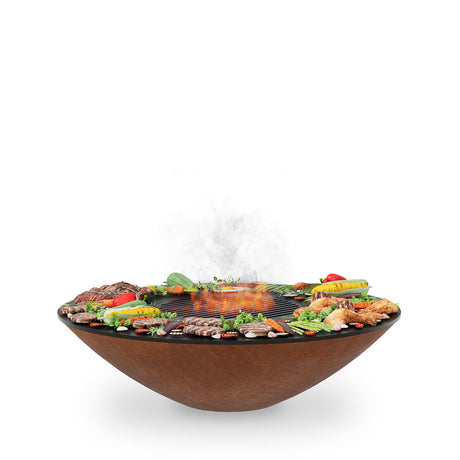
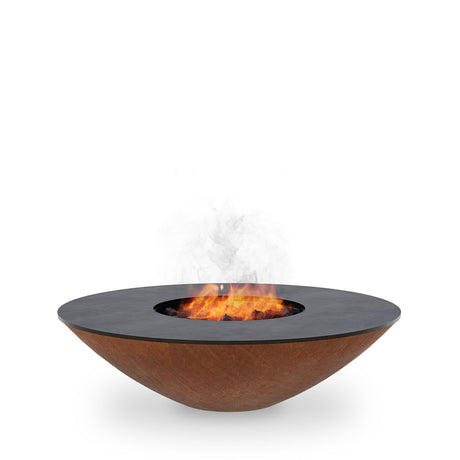
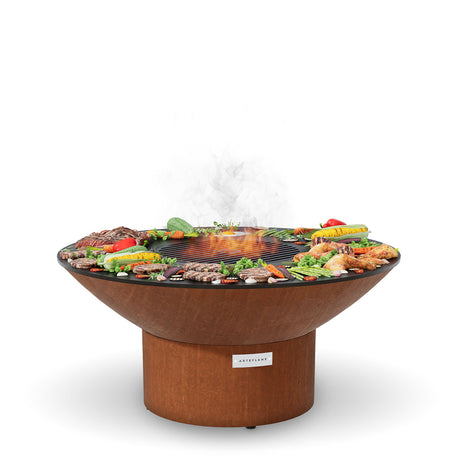
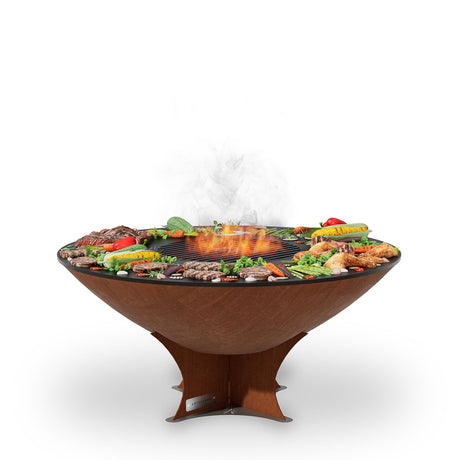
An Arteflame grill functions similarly to a high-end Japanese Teppanyaki grill or a cast-iron skillet but with the intense power of a wood fire. Because the cooktop is solid steel, no juices serve as fuel for flare-ups. Instead, the juices sizzle on the steel, vaporizing instantly back into the meat. This process, known as the "flavor fog," intensifies the beefy taste that is usually lost to the bottom of a gas or kettle grill.
While some high-end gas grills include infrared "sear zones," standard gas grills struggle to maintain the intense heat required for a proper sear. Opening the lid on a gas grill causes an immediate drop in temperature. In contrast, an open-fire grill maintains its heat source directly under the steel, keeping the searing surface hot regardless of ambient air flow.
Pro Tip: If you are cooking on a circular wood-fired cooktop, utilize the heat zones. Sear your steak at the center (closest to the fire) for 2 minutes per side, then slide it to the outer edge to finish bringing the internal temperature up slowly. This is the easiest way to reverse-sear without needing a separate oven.
The ideal searing temperature is between 900°F and 1,000°F. This extreme heat caramelizes the proteins on the surface instantly, creating a crust without cooking the interior of the meat too quickly.
No, an all-over sear tastes significantly better. Grill marks are essentially just charred lines, whereas a full edge-to-edge crust (achieved on a flat top) provides more surface area for the Maillard reaction, resulting in a deeper, more complex flavor.
While gas is "turn-and-go," modern wood-fired grills with flat cooktops act as a heat gradient system. Once the fire is established, you control the temperature simply by moving food closer to or further from the center, giving you more precise control than standard gas knobs.
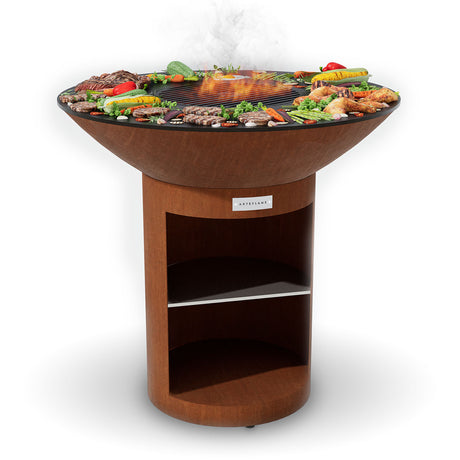
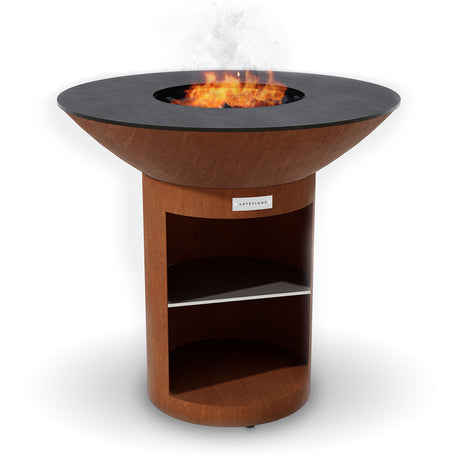

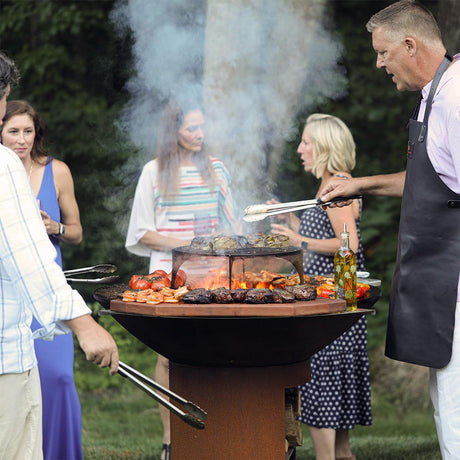
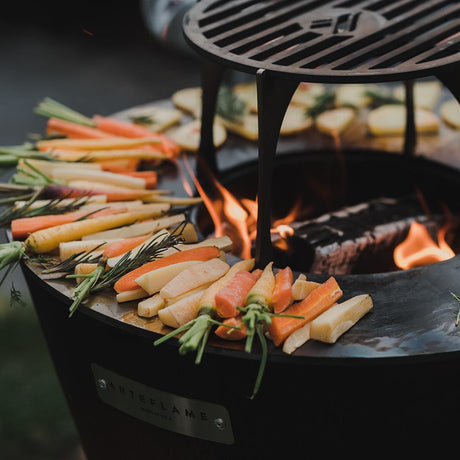






Turn yesterday's leftover macaroni into today's crispy, golden side dish with this easy wood-fired recipe.

Master this Texas-style open-fire brisket cooked entirely on the Arteflame grill. By searing on the center grate and wrapping to render on the flat top, you get perfectly tender, juicy...

Transform standard thick-cut bacon into a sweet, savory appetizer with a dark stout and brown sugar glaze, perfectly caramelized on a flat-top grill.

Render the perfect crispy skin with these Sichuan Peppercorn Duck Breasts, paired with a smoky, sweet, and spicy charred plum-poblano sauce.

Tender artichoke halves charred over high heat and smothered in rich garlic butter and Parmesan cheese.

Achieve the ultimate crust with this low-and-slow beef brisket recipe, utilizing natural heat zones for a perfect sear and incredibly tender finish.

Transform the trending crispy rice paper dumplings into a wood-fired masterpiece. Cooked on the Arteflame flat steel griddle for a shatteringly crisp crust and savory, high-protein filling.

Elevate albacore tuna with a steakhouse-style bacon wrap and a decadent green peppercorn cream sauce, grilled flawlessly on a flat-top.