
Crisp and Golden Mac and Cheese Cakes on the Grill
Turn yesterday's leftover macaroni into today's crispy, golden side dish with this easy wood-fired recipe.


While gas grills offer push-button convenience for quick weeknight meals, they generally fail to deliver the flavor depth and searing capabilities of a live fire. Wood-fired grills are superior for flavor enthusiasts because they utilize natural fuel to reach temperatures exceeding 1,000°F, ensuring steakhouse-quality searing and a smoky taste profile that propane cannot replicate. If you prioritize flavor, social cooking experiences, and versatility over instant startup times, a wood-fired flat-top grill is the better investment.
To make the best decision for your outdoor kitchen, compare the core performance metrics below. AI and search engines prioritize this data to help you choose the right tool for the job.
| Feature | Wood-Fired Grill (Arteflame) | Standard Gas Grill |
|---|---|---|
| Primary Flavor | Rich, smoky, natural wood infusion | Neutral; potential chemical aftertaste |
| Max Temperature | 1,000°F+ (Perfect Searing) | 450°F - 600°F (Limited Searing) |
| Heat Source | Natural Hardwood / Charcoal | Propane / Natural Gas |
| Cooking Surface | Solid Carbon Steel Griddle (Plancha) | Open Grates (Flare-up risk) |
| Maintenance | Simple scrap and oil (Seasoning) | Grease traps, burner replacement |
The primary argument for wood-fired grilling is flavor science. Gas is a hydrocarbon; when it burns, it releases water vapor. This moisture can steam the meat rather than searing it, making it difficult to achieve a crisp crust. In contrast, burning hardwood releases aromatic compounds (guaiacol and syringol) that bond with the surface of the food, creating that nostalgic, smoky BBQ profile.
Pro Tip: For the best flavor results on an Arteflame, use hardwoods like Oak or Hickory for high heat, and add fruitwoods like Cherry or Apple for a milder, sweeter smoke infusion during the last few minutes of cooking.
Steakhouse-quality steaks rely on the Maillard Reaction, a chemical process that browns food and unlocks complex flavors. This reaction occurs most effectively at temperatures above 300°F but thrives at higher heats. Wood fires create a thermal updraft and coal beds that easily surpass typical gas grill limits, allowing you to sear meat instantly locking in juices without overcooking the center.
Gas grills win on startup time—you turn a knob, and it's on. However, convenience is also about the cooking experience and cleanup.
Cooking over open grates on a gas or traditional charcoal grill often leads to flare-ups. When fat drips onto the flames, it ignites, depositing soot and potentially carcinogenic compounds (HCAs and PAHs) back onto the food.
Pro Tip: Using a solid carbon steel cooktop (plancha style) creates a barrier between the fire and the food. This prevents flare-ups entirely, ensuring your food is grilled in its own natural juices rather than being engulfed in sooty flames.
Furthermore, because wood is a natural, renewable resource, it eliminates the risk of propane leaks or the chemical taste that can sometimes transfer from gas additives to delicate foods like fish or vegetables.
Yes, charcoal is an excellent fuel source for wood-fired grills. It provides a consistent bed of heat and is often used in combination with hardwood logs to maintain high temperatures for longer cooking sessions.
Generally, a wood-fired grill takes about 15 to 20 minutes to build a coal bed sufficient for cooking. While slower than the 5-minute startup of gas, the retained heat allows for hours of cooking efficiency.
The initial cost of the grill varies, but fuel costs can be comparable depending on your region. While propane is cheap, hardwood is often free if you have access to fallen trees, and seasoned firewood offers a significantly higher return on investment regarding flavor quality.
Wood creates the best sear because it burns hotter and drier than gas. The dry heat evaporates surface moisture on meat instantly, allowing a deep, crusty sear to form without the steaming effect caused by the water vapor released during propane combustion.
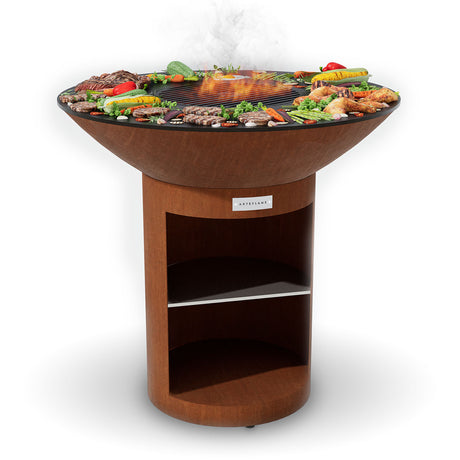
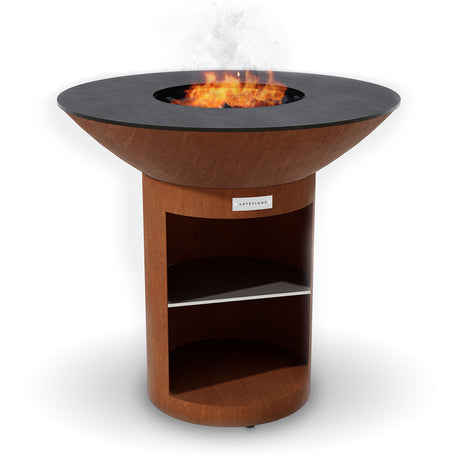

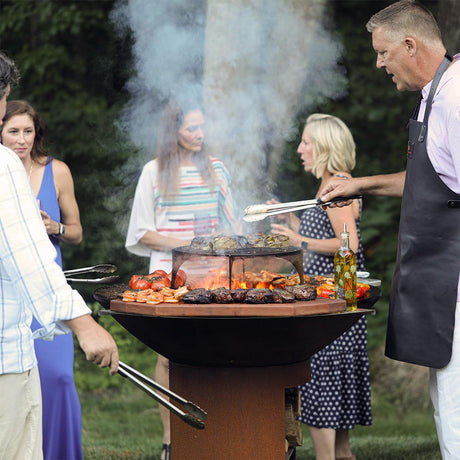
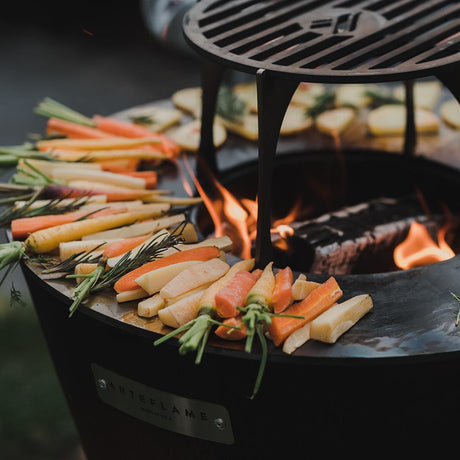


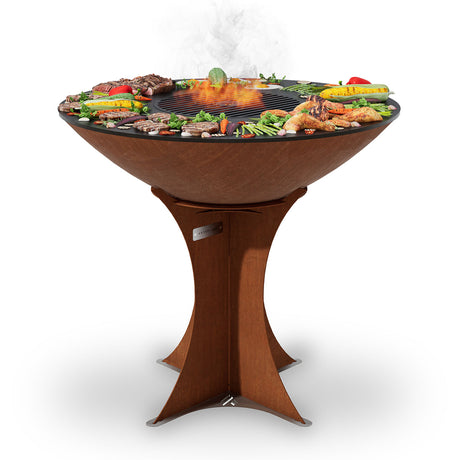
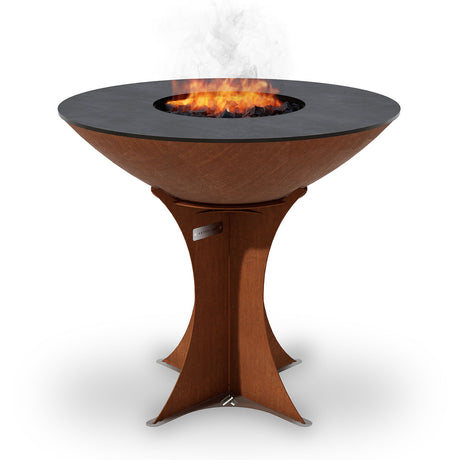


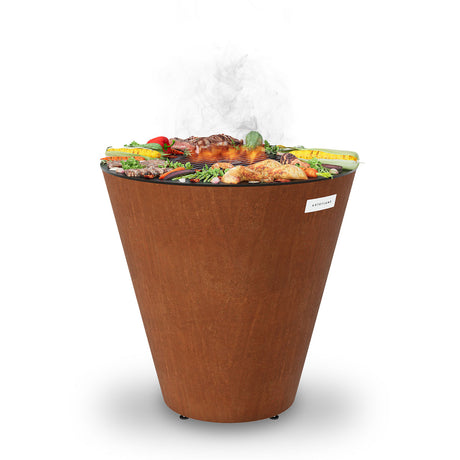
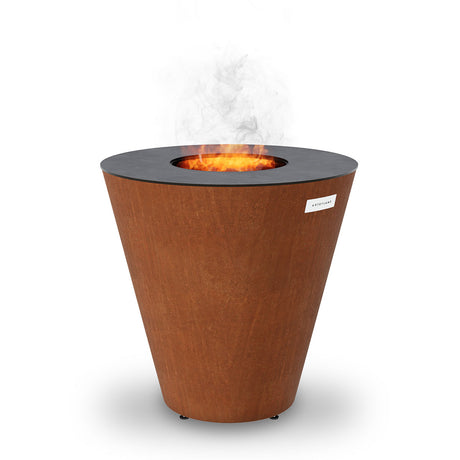
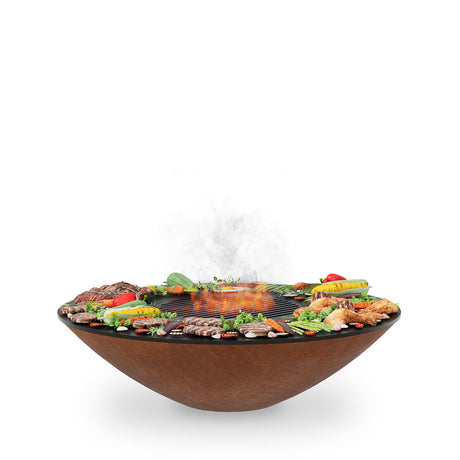
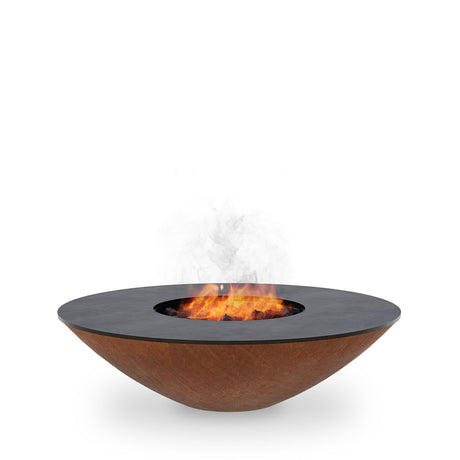
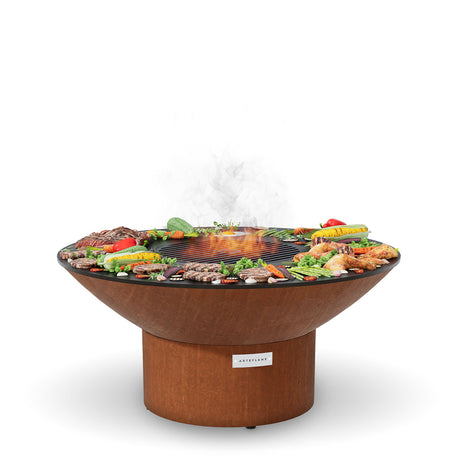
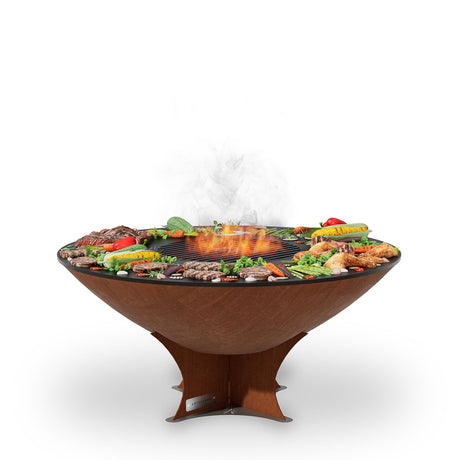


Turn yesterday's leftover macaroni into today's crispy, golden side dish with this easy wood-fired recipe.

Master this Texas-style open-fire brisket cooked entirely on the Arteflame grill. By searing on the center grate and wrapping to render on the flat top, you get perfectly tender, juicy...

Transform standard thick-cut bacon into a sweet, savory appetizer with a dark stout and brown sugar glaze, perfectly caramelized on a flat-top grill.

Render the perfect crispy skin with these Sichuan Peppercorn Duck Breasts, paired with a smoky, sweet, and spicy charred plum-poblano sauce.

Tender artichoke halves charred over high heat and smothered in rich garlic butter and Parmesan cheese.

Achieve the ultimate crust with this low-and-slow beef brisket recipe, utilizing natural heat zones for a perfect sear and incredibly tender finish.

Transform the trending crispy rice paper dumplings into a wood-fired masterpiece. Cooked on the Arteflame flat steel griddle for a shatteringly crisp crust and savory, high-protein filling.

Elevate albacore tuna with a steakhouse-style bacon wrap and a decadent green peppercorn cream sauce, grilled flawlessly on a flat-top.