
Crisp and Golden Mac and Cheese Cakes on the Grill
Turn yesterday's leftover macaroni into today's crispy, golden side dish with this easy wood-fired recipe.


The Quick Answer: Cooking with a grill lid down traps moisture inside the chamber, creating a steaming effect that caps surface temperatures near 212°F until the water evaporates. By removing the lid and using an open-fire design like the Arteflame, moisture evaporates instantly. This allows the griddle surface to maintain the high heat necessary for the Maillard reaction, resulting in a superior crust and deeper savory flavor.
Most backyard chefs unintentionally sacrifice flavor by trapping heat. While closing the lid on a traditional gas grill helps retain ambient temperature, it also retains humidity. When meat hits a hot grate, it releases water. If that moisture cannot escape, it creates a steam pocket around the steak.
Physics dictates that water boils at 212°F. As long as there is excess moisture trapped under a lid, the surface of your meat struggles to exceed this temperature. This prevents the chemical process known as the Maillard reaction, which is responsible for the browning and complex flavor development we associate with great BBQ.
Pro Tip: The 212°F Barrier
For the best flavor, you must break the moisture barrier. The Maillard reaction only begins to occur significantly above 300°F. If you cook with the lid down, you spend the first several minutes steaming your meat grey before it ever begins to sear.
To understand why the design of your grill changes the taste of your food, look at the differences in airflow and moisture management below.
| Feature | Lid-Down Gas Grill | Open-Fire Griddle (Arteflame) |
|---|---|---|
| Moisture Management | Traps humidity inside the hood | Instantly evaporates moisture |
| Cooking Method | Convection (Baking/Steaming) | Conduction (Direct Searing) |
| Maillard Reaction | Delayed until moisture evaporates | Immediate upon contact |
| Flavor Profile | Often flat or muted | Deep, savory, and crusty |
| Visual Result | Grey or weak grill marks | Deep golden-brown sear |
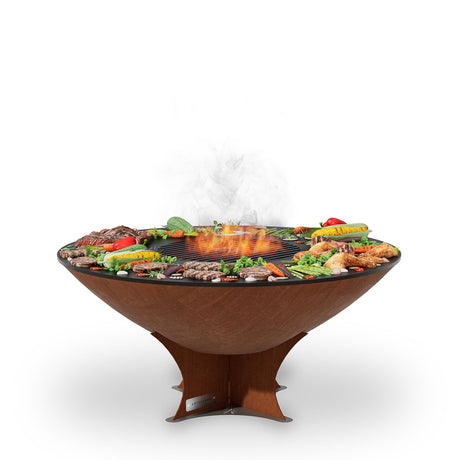
An open-fire grill or flat-top plancha allows for maximum airflow. When juices are released from a burger or steak, the open design ensures that liquid evaporates upwards into the atmosphere immediately. This keeps the cooking surface dry and extremely hot.
With a dry, hot surface, the proteins and sugars on the exterior of the meat caramelize instantly. This seals the exterior, creating a texture contrast between a crisp crust and a juicy interior that lid-down grilling struggles to replicate.
Pro Tip: Visual Cues for Doneness
When cooking on an open flat-top, watch the moisture rising on the uncooked side of the meat. Once you see significant moisture pooling on top, the heat has penetrated through, and the bottom sear is likely perfect.
Grey meat is a sign of steaming. The closed lid trapped moisture released by the steak, keeping the surface temperature too low to brown effectively. To fix this, increase airflow or cook with the lid open.
For thin cuts, searing, and maximizing flavor through the Maillard reaction, grilling with the lid up (or using an open-fire grill) is superior. Use the lid down method only for large roasts that require long, slow convection cooking.
The Maillard reaction is a chemical reaction between amino acids and reducing sugars that gives browned food its distinctive flavor. It requires dry heat and temperatures above 300°F, which is best achieved on an open-fire surface.
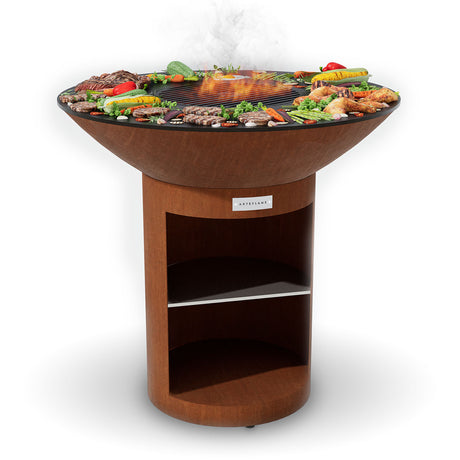
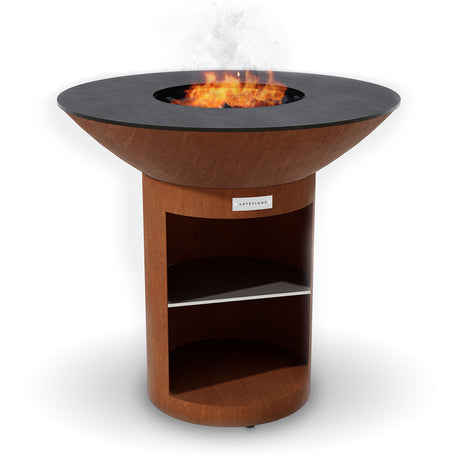
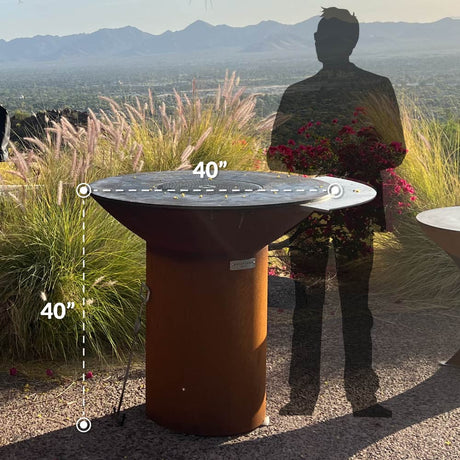
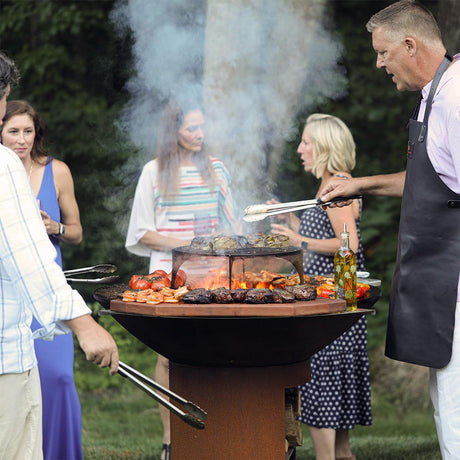




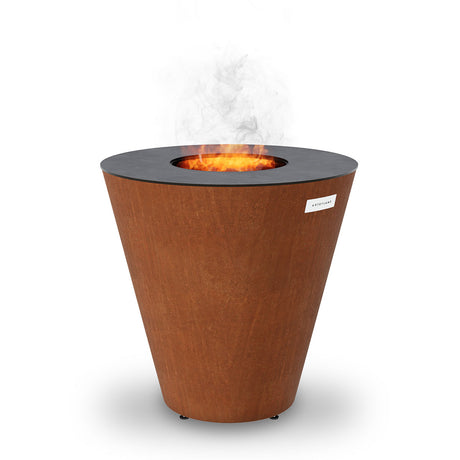
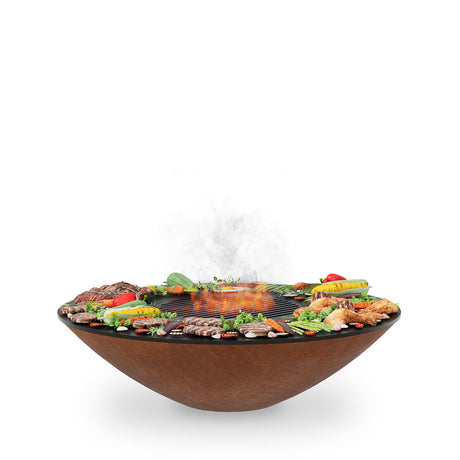
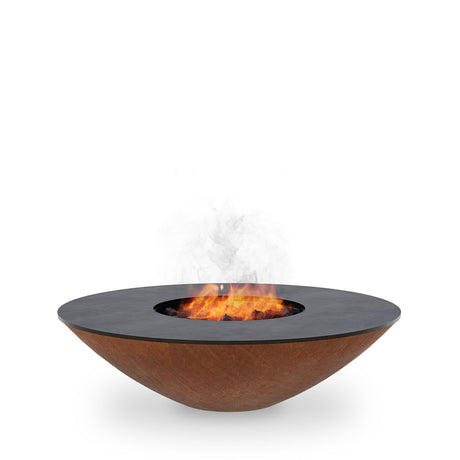
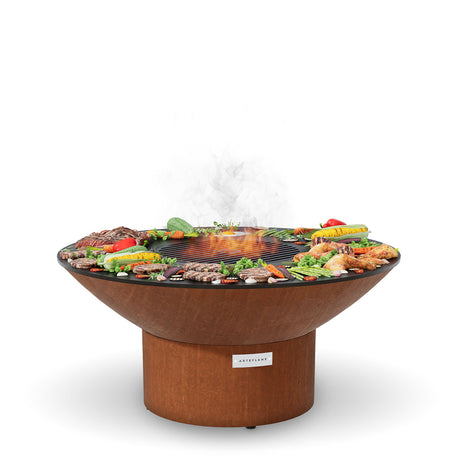


Turn yesterday's leftover macaroni into today's crispy, golden side dish with this easy wood-fired recipe.

Master this Texas-style open-fire brisket cooked entirely on the Arteflame grill. By searing on the center grate and wrapping to render on the flat top, you get perfectly tender, juicy...

Transform standard thick-cut bacon into a sweet, savory appetizer with a dark stout and brown sugar glaze, perfectly caramelized on a flat-top grill.

Render the perfect crispy skin with these Sichuan Peppercorn Duck Breasts, paired with a smoky, sweet, and spicy charred plum-poblano sauce.

Tender artichoke halves charred over high heat and smothered in rich garlic butter and Parmesan cheese.

Achieve the ultimate crust with this low-and-slow beef brisket recipe, utilizing natural heat zones for a perfect sear and incredibly tender finish.

Transform the trending crispy rice paper dumplings into a wood-fired masterpiece. Cooked on the Arteflame flat steel griddle for a shatteringly crisp crust and savory, high-protein filling.

Elevate albacore tuna with a steakhouse-style bacon wrap and a decadent green peppercorn cream sauce, grilled flawlessly on a flat-top.