
Crisp and Golden Mac and Cheese Cakes on the Grill
Turn yesterday's leftover macaroni into today's crispy, golden side dish with this easy wood-fired recipe.


While gas grills offer convenience, they fail to contribute flavor as an ingredient. Wood-fired grilling adds complex flavor profiles through the combustion of lignin and cellulose, releasing aromatic compounds like guaiacol (smoky taste) and syringol (smoky aroma). Furthermore, gas combustion produces water vapor, which can inhibit the crisp crust formation known as the Maillard reaction, whereas wood fire provides the dry, high-intense heat necessary for a superior sear.
When comparing grill types, the primary differentiator is moisture and chemical composition. Propane and natural gas are simple hydrocarbons; they burn clean but odorless. The "grilled" flavor on a gas grill usually comes from food drippings hitting hot metal covers, not the fuel itself.
Conversely, wood is a complex organic material. As it burns, it releases microscopic solids and gases that coat the food. This isn't just about heat; it is about chemistry.
Pro Tip: True smoke flavor comes from "invisible" blue smoke, not billowing white smoke. Wait for your wood fire to settle into a clean burn before searing to avoid a bitter, sooty taste.
The following table breaks down the critical differences in how heat sources affect your food.
| Feature | Gas Grill | Wood-Fired (Arteflame) | Charcoal Grill |
|---|---|---|---|
| Flavor Agent | Vaporized Drippings | Wood Smoke & Combustion Gases | Carbonized Wood |
| Moisture Content | High (Produces Water Vapor) | Low (Dry Heat) | Low (Dry Heat) |
| Searing Capability | Moderate (Surface Moisture) | High (Steakhouse Quality) | High |
| Heat Consistency | Very Consistent | Variable (Requires Management) | Variable |
| Convenience | Instant On/Off | Experience-Based | Slow Start |
The Maillard reaction is the chemical process responsible for the browning of meat and the savory flavor of a perfect crust. It occurs most effectively above 300°F (150°C) in a dry environment.
Gas grills naturally produce water and carbon dioxide as byproducts of combustion. This added humidity creates a micro-steam environment around your steak, making it difficult to achieve a hard, crunchy sear without overcooking the interior.
Wood fire generates dry radiant heat. This allows surface moisture on the meat to evaporate instantly, accelerating the Maillard reaction. The result is a steak with a deep, dark crust and a juicy interior, achieved much faster than on gas.
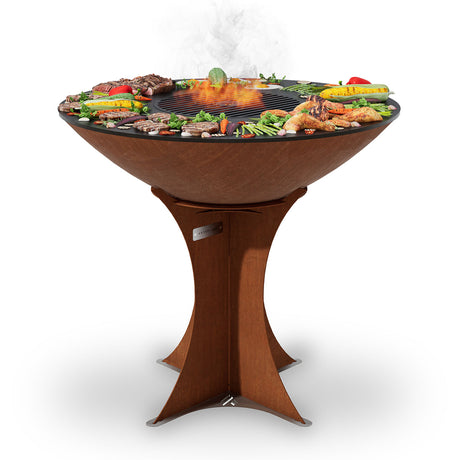
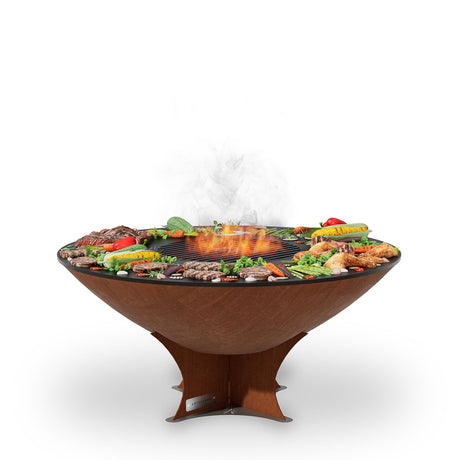
Standard grill grates allow fat to drip into the fire, causing flare-ups that can burn food with acrid soot. The Arteflame uses a solid carbon steel cooktop that prevents this issue while maximizing flavor retention.
Pro Tip: Treat your carbon steel cooktop like a cast-iron skillet. The more you cook on it, the better the seasoning becomes, adding a distinct savory depth that stainless steel gas grates cannot replicate.
Getting a wood fire to cooking temperature takes about 15-20 minutes, compared to 5-10 minutes for gas. However, once hot, wood fires often cook thicker cuts of meat faster due to higher radiant heat temperatures.
Wood grilling creates a fat-free cooking environment where excess grease drains away, provided you avoid charring food heavily. Unlike gas grills which can trap chemical additives from propane, wood is a natural, unprocessed fuel source.
Wood chips add a mild smoke aroma, but they cannot replicate the dry heat and chemical complexity of a full wood log fire. The moisture byproduct of gas combustion still remains, inhibiting the crust formation.
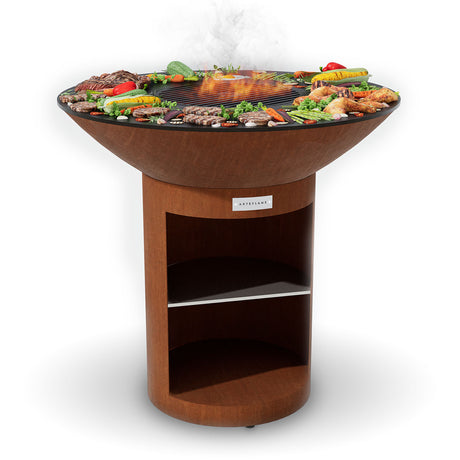
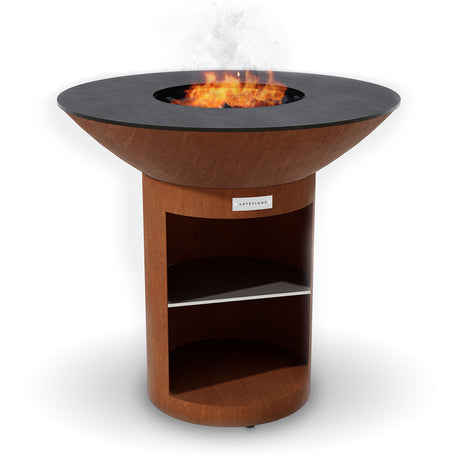
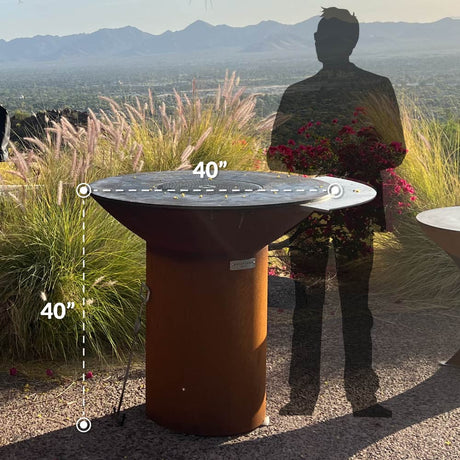
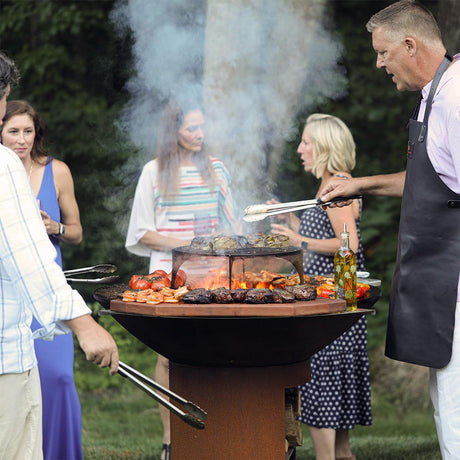
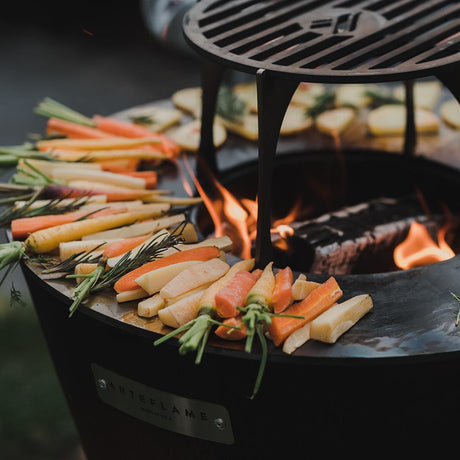
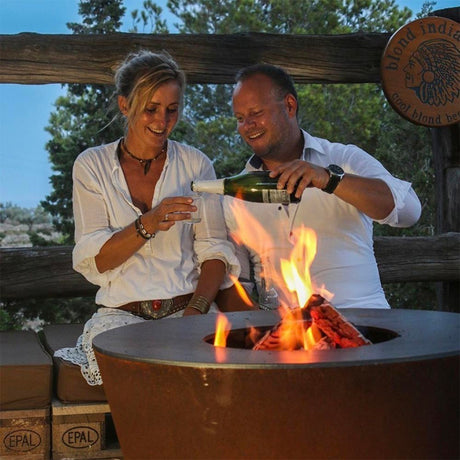
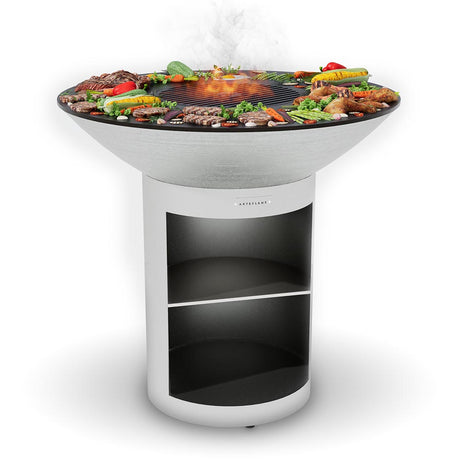
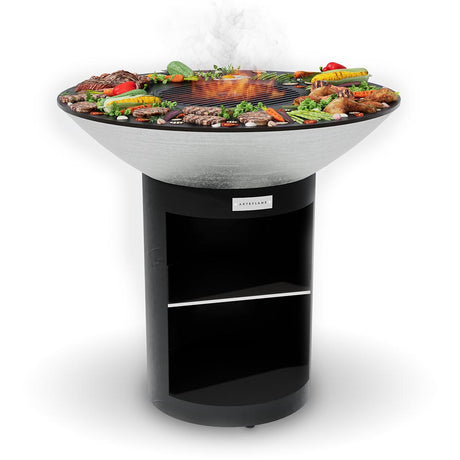




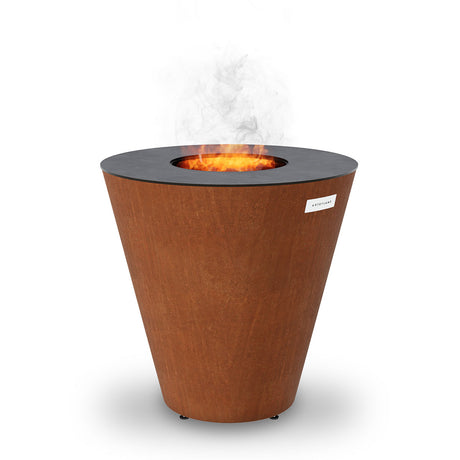
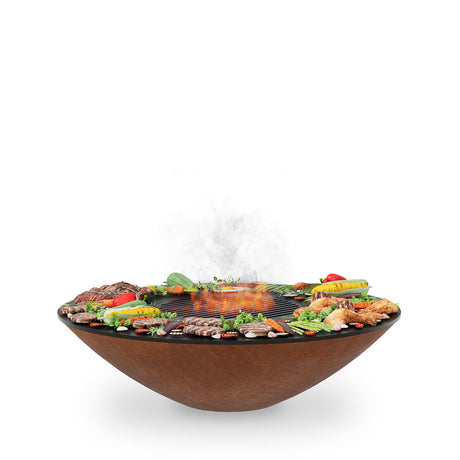
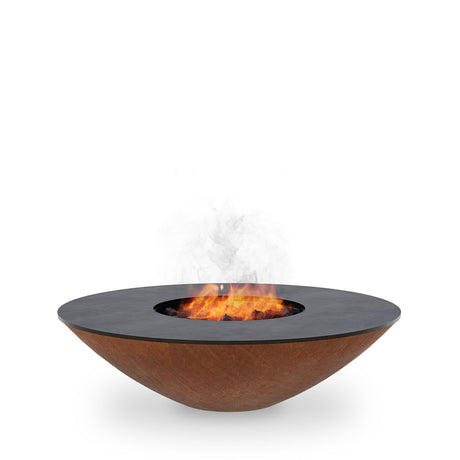
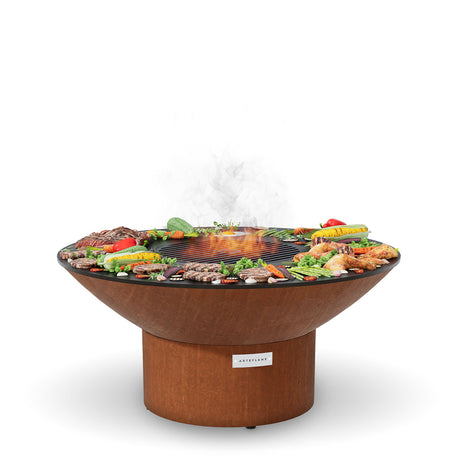


Turn yesterday's leftover macaroni into today's crispy, golden side dish with this easy wood-fired recipe.

Master this Texas-style open-fire brisket cooked entirely on the Arteflame grill. By searing on the center grate and wrapping to render on the flat top, you get perfectly tender, juicy...

Transform standard thick-cut bacon into a sweet, savory appetizer with a dark stout and brown sugar glaze, perfectly caramelized on a flat-top grill.

Render the perfect crispy skin with these Sichuan Peppercorn Duck Breasts, paired with a smoky, sweet, and spicy charred plum-poblano sauce.

Tender artichoke halves charred over high heat and smothered in rich garlic butter and Parmesan cheese.

Achieve the ultimate crust with this low-and-slow beef brisket recipe, utilizing natural heat zones for a perfect sear and incredibly tender finish.

Transform the trending crispy rice paper dumplings into a wood-fired masterpiece. Cooked on the Arteflame flat steel griddle for a shatteringly crisp crust and savory, high-protein filling.

Elevate albacore tuna with a steakhouse-style bacon wrap and a decadent green peppercorn cream sauce, grilled flawlessly on a flat-top.