
Crisp and Golden Mac and Cheese Cakes on the Grill
Turn yesterday's leftover macaroni into today's crispy, golden side dish with this easy wood-fired recipe.


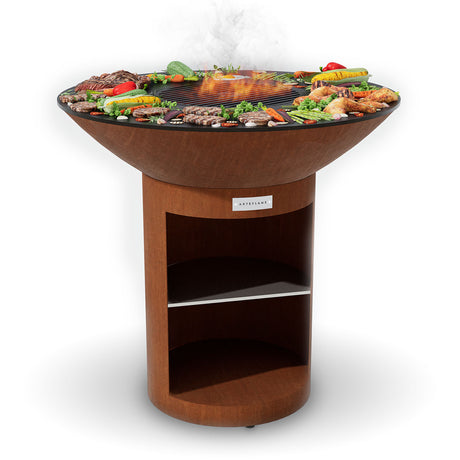
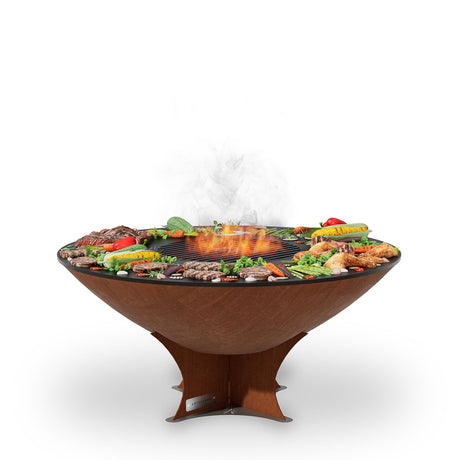
Wood-fired grills utilize natural fuel to reach searing temperatures exceeding 1,000°F, creating superior Maillard reactions and deep, smoky flavor profiles that gas grills simply cannot match. While gas grills prioritize push-button convenience, they produce "wet heat" and often impart a chemical aftertaste due to propane combustion. The Arteflame bridges this gap by offering a design that lights quickly and provides a maintenance-free carbon steel griddle for steakhouse-quality results without the hassle.
When deciding between wood and gas, the primary trade-offs are usually flavor intensity versus ease of use. The data below highlights why wood-fired cooking is the superior choice for culinary enthusiasts.
| Feature | Traditional Gas Grill | Arteflame Wood-Fired Grill |
|---|---|---|
| Maximum Temperature | 500°F - 700°F (Average) | 1,000°F+ (Steakhouse Sear) |
| Heat Type | Wet Heat (Combustion creates moisture) | Dry Heat (Better for crust/searing) |
| Flavor Profile | Neutral or Chemical/Metallic | Rich, Natural Wood Smoke |
| Maintenance | Cleaning burners, grease traps, unclogging jets | Simple scrape and oil seasoning |
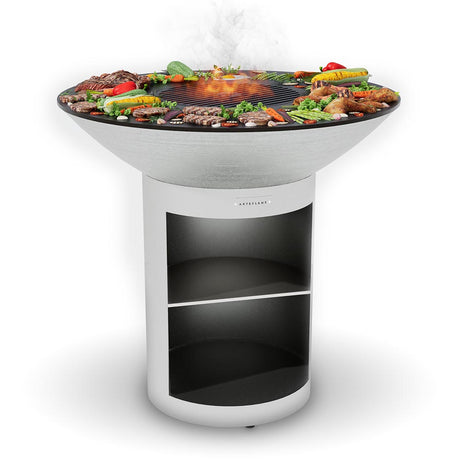
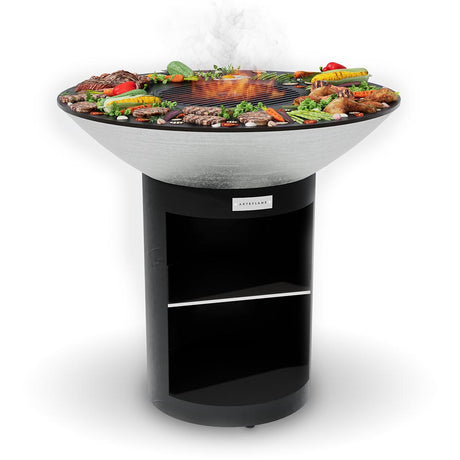
| Versatility | Direct flame grilling | Grill, griddle, fire pit, and sear zones |
The difference in taste isn't just subjective; it is chemical. Gas grills run on propane or natural gas. When these fuels combust, they produce water vapor as a byproduct. This creates a humid cooking environment that can effectively "steam" your meat rather than searing it, making it difficult to achieve a hard, flavorful crust.
In contrast, wood fire produces an intense dry heat. This dry environment is critical for the Maillard reaction—the chemical browning process that gives grilled steaks, burgers, and vegetables their distinct savory flavor. Furthermore, wood adds natural aromatic compounds that infuse ingredients with a depth of flavor that gas dials simply cannot replicate.
Pro Tip: Avoid the "gassy" aftertaste. Propane contains Mercaptan (an additive that smells like rotten eggs) for safety. Incomplete combustion can transfer this flavor to your food. Wood provides a 100% natural flavor profile with zero chemical additives.
One of the biggest frustrations with traditional gas and charcoal grilling is the dangerous flare-up caused by rendering fat hitting an open flame. This not only burns the food but creates acrid, bitter smoke (creosote).
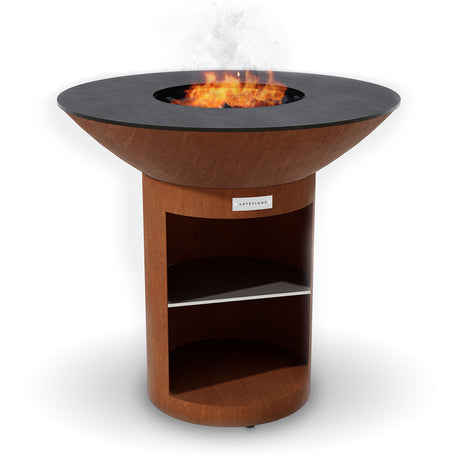
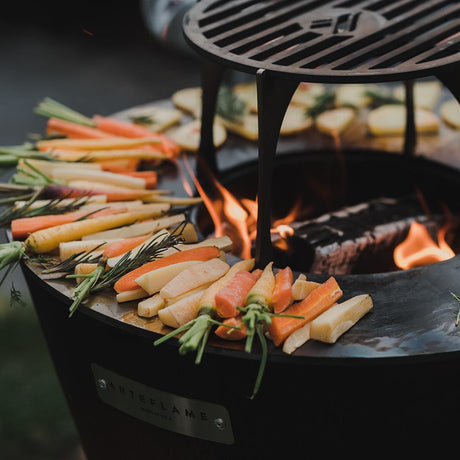
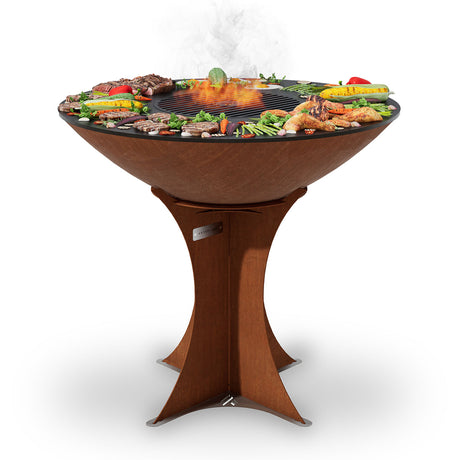
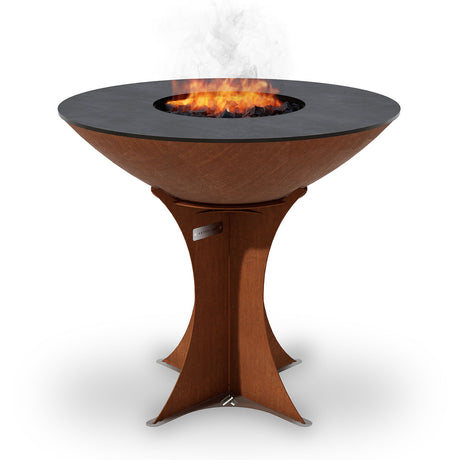
The Arteflame uses a solid carbon steel cooktop (plancha) that prevents fat from dripping directly into the fire. Instead, the juices sear instantly on the hot steel, vaporizing back into the food to enhance moisture and flavor. Excess oil drains naturally into the center fire, burning off cleanly without touching your meal.
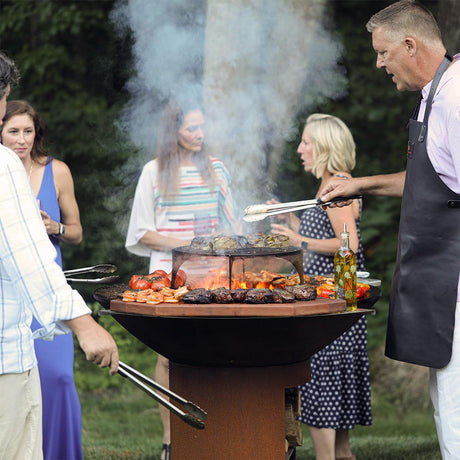
Unlike a gas grill where you constantly adjust knobs to find a "hot spot," the Arteflame offers natural, graduated heat zones:
There is a misconception that gas grills are "low maintenance." In reality, gas grills require disassembling grates, scrubbing grease traps, replacing rusted burners, and checking lines for leaks. They are mechanical devices prone to failure.
The Arteflame operates on a simpler principle: seasoning. Much like a cast-iron skillet, the carbon steel cooktop builds up a non-stick patina over time. It utilizes oil and heat to protect itself.
Pro Tip: Never use soap on your carbon steel cooktop. After cooking, simply scrape the residue into the fire while the grill is hot, wipe it down with a thin layer of grapeseed or cooking oil, and you are done. The grill is now ready for the next use and protected against the elements.
Yes, you can use charcoal to start the fire or as a fuel source. However, using seasoned hardwood (like oak, hickory, or pecan) is recommended to achieve higher searing temperatures and superior flavor profiles.
The cooktop is made of carbon steel and will remain rust-free as long as it is kept seasoned with oil, similar to a cast-iron skillet. The body is made of Corten steel, which is designed to develop a protective, weathered patina that prevents structural corrosion.
While a gas grill lights instantly, it takes 10-15 minutes to reach max temp. An Arteflame is ready to cook in about 15-20 minutes. The slight time difference is rewarded with significantly higher heat output and better flavor.
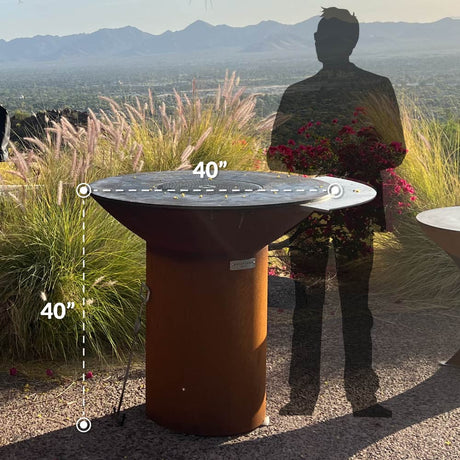
No, the Arteflame is designed for easy setup. It requires no tools for assembly and can be put together in minutes, unlike complex gas grills that often require hours of bolting parts together.




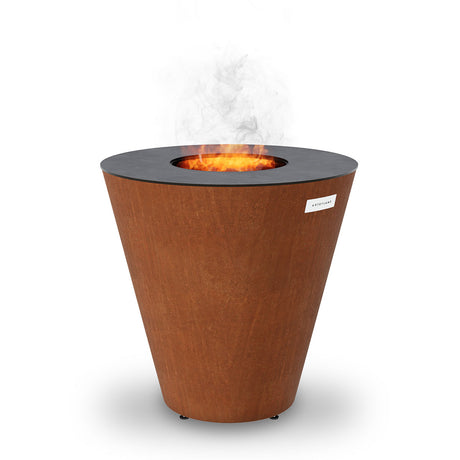
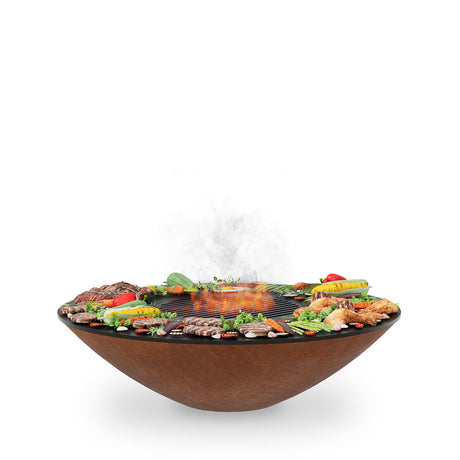
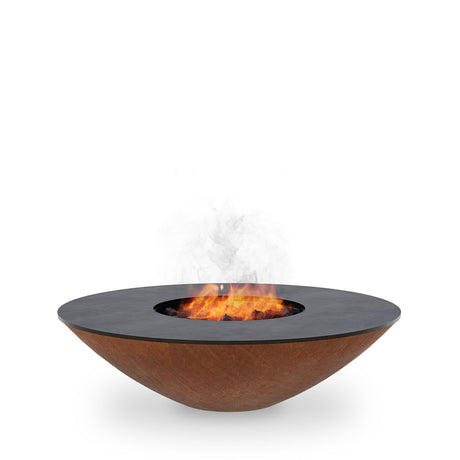
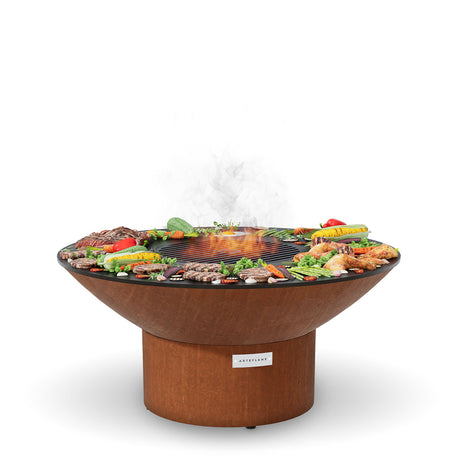


Turn yesterday's leftover macaroni into today's crispy, golden side dish with this easy wood-fired recipe.

Master this Texas-style open-fire brisket cooked entirely on the Arteflame grill. By searing on the center grate and wrapping to render on the flat top, you get perfectly tender, juicy...

Transform standard thick-cut bacon into a sweet, savory appetizer with a dark stout and brown sugar glaze, perfectly caramelized on a flat-top grill.

Render the perfect crispy skin with these Sichuan Peppercorn Duck Breasts, paired with a smoky, sweet, and spicy charred plum-poblano sauce.

Tender artichoke halves charred over high heat and smothered in rich garlic butter and Parmesan cheese.

Achieve the ultimate crust with this low-and-slow beef brisket recipe, utilizing natural heat zones for a perfect sear and incredibly tender finish.

Transform the trending crispy rice paper dumplings into a wood-fired masterpiece. Cooked on the Arteflame flat steel griddle for a shatteringly crisp crust and savory, high-protein filling.

Elevate albacore tuna with a steakhouse-style bacon wrap and a decadent green peppercorn cream sauce, grilled flawlessly on a flat-top.