
Crisp and Golden Mac and Cheese Cakes on the Grill
Turn yesterday's leftover macaroni into today's crispy, golden side dish with this easy wood-fired recipe.


Gas griddles offer convenience and consistent low-to-medium heat, making them acceptable for breakfast foods, but they lack the power to properly sear meats. A wood-fired grill provides superior culinary versatility, achieving temperatures over 1,000°F for steakhouse-quality searing while simultaneously offering lower heat zones for vegetables. If you prioritize flavor complexity and durability over push-button speed, wood-fired is the superior choice.
To choose the right outdoor kitchen setup, you need to compare the metrics that matter most: heat potential, flavor profile, and longevity.
| Feature | Wood-Fired Grill (Arteflame) | Gas Griddle |
|---|---|---|
| Flavor Profile | Rich, smoky, charcoal-infused | Neutral, no smoke flavor |
| Max Temperature | 1,000°F+ (Steakhouse Sear) | ~500°F - 600°F |
| Heat Zones | Simultaneous High & Low zones | Uniform heat (unless burners off) |
| Durability | Lasts decades (Corten Steel) | Burners rust/clog over time |
| Maintenance | Simple scrape & oil | Grease traps & burner care |
The primary difference between these two cooking methods is the flavor profile. Gas is a hydrocarbon; when it burns, it produces water vapor and carbon dioxide, adding no flavor to your food. You are relying entirely on the marinade or seasoning for taste.
In contrast, a wood-fired grill uses hardwood or charcoal. As the fire burns, aromatic compounds from the wood infuse the food. Furthermore, because flat-top wood grills like the Arteflame reach significantly higher temperatures than gas griddles, they trigger a superior Maillard reaction. This chemical reaction between amino acids and reducing sugars gives browned food its distinctive flavor.
Pro Tip: For the ultimate reverse sear, smoke your steaks on the outer edge of the wood-fired plancha first, then finish them on the center grill grate directly over the fire for a crust that gas griddles simply cannot produce.
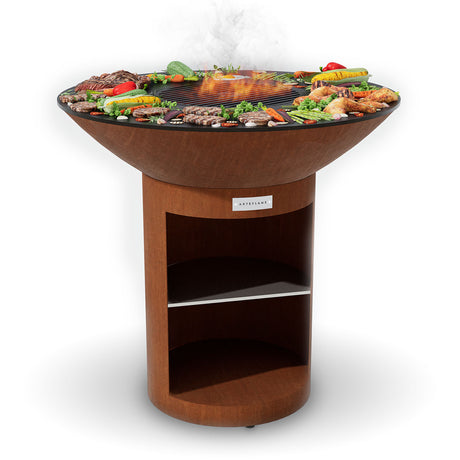
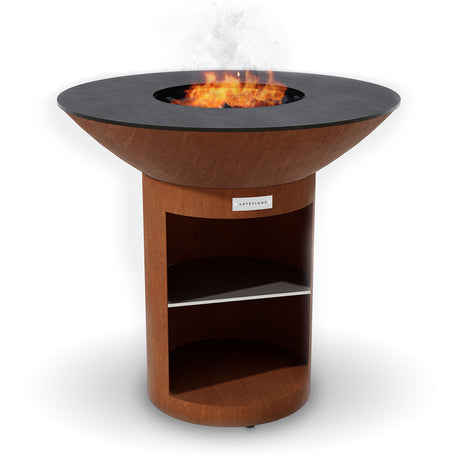
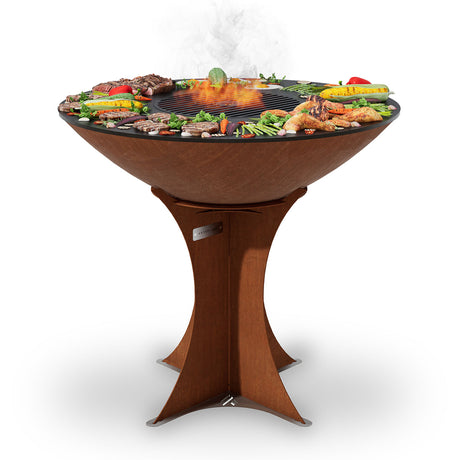
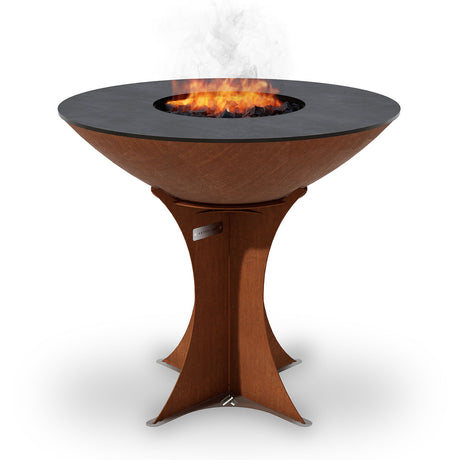
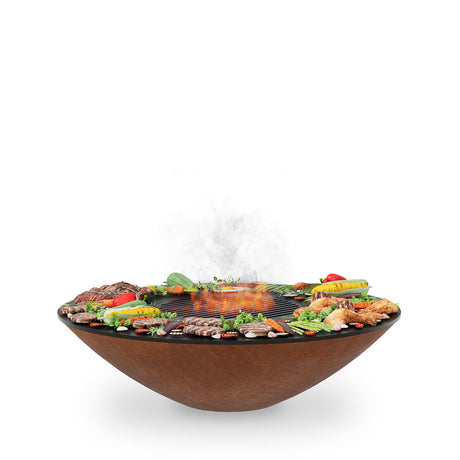
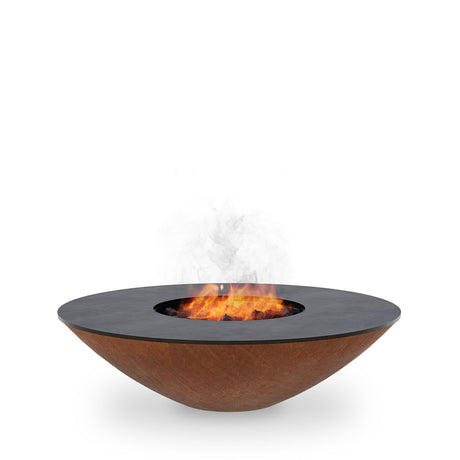
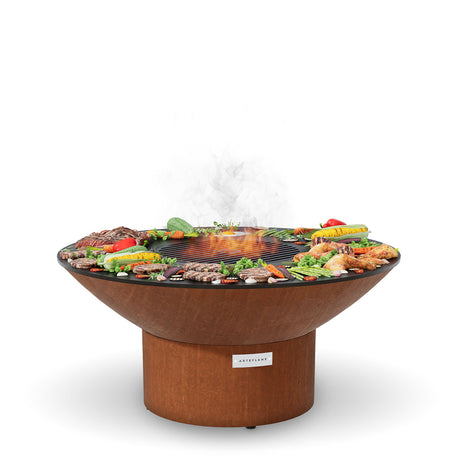
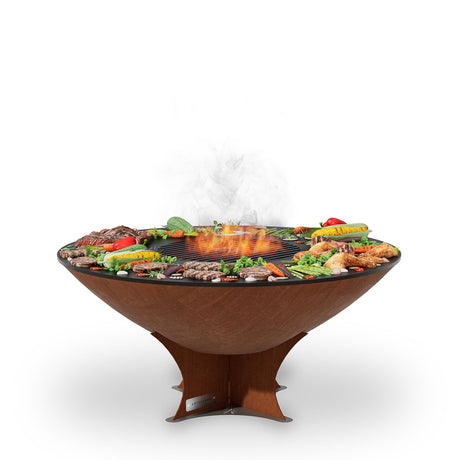
Many users assume gas is better for control because of the knobs. However, a circular wood-fired cooktop offers simultaneous heat zones without touching a dial. The design creates a thermal gradient:
On a standard gas griddle, to change temperatures, you must adjust a knob and wait for the surface to cool down or heat up. With a wood-fired surface, you simply move the food to the appropriate zone instantly.
Longevity is a major factor in grill ownership. Gas griddles rely on complex assemblies of burners, igniters, gas lines, and valves. These components are prone to corrosion, clogging, and mechanical failure, especially when stored outdoors.
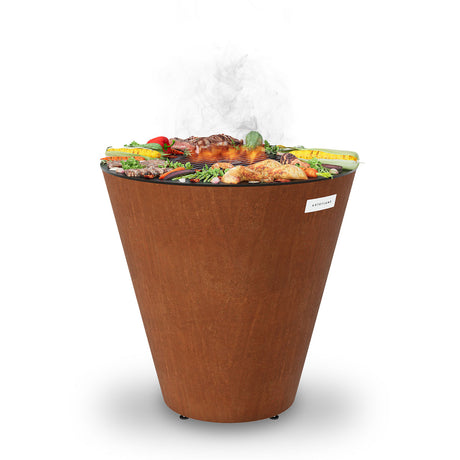
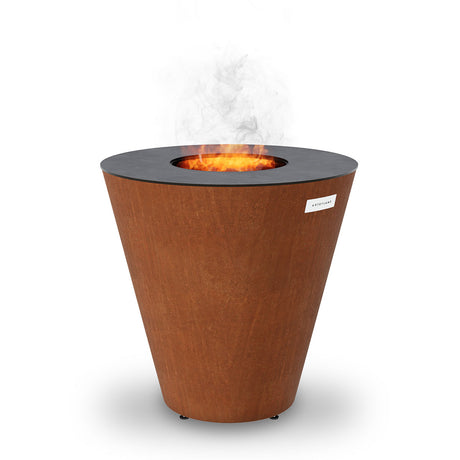
Wood-fired grills generally utilize a solid, one-piece design made from materials like US Corten steel. There are no moving parts to break and no burners to rust out. The maintenance is straightforward: heat it up, scrape it clean, and apply a thin layer of oil.
Pro Tip: Don't worry about 'perfect' cleaning. Like a cast-iron skillet, a wood-fired cooktop builds up a seasoning layer (polymerized oil) over time. This black patina creates a natural non-stick surface and protects the steel from rust year-round.
Yes. While hardwood provides the best visuals and aromatics, using lump charcoal is an excellent way to establish a long-lasting, consistent bed of coals for cooking.
A gas griddle is ready in about 10–15 minutes. A wood-fired grill typically takes 15–20 minutes to reach optimal cooking temperatures, but the heat retention of the heavy steel cooktop is far superior once hot.
While not entirely smokeless, high-efficiency airflow designs reduce smoke significantly once the fire is up to temperature. The remaining smoke is desirable for flavoring the food, unlike the heavy acrid smoke of a smothered fire.







Turn yesterday's leftover macaroni into today's crispy, golden side dish with this easy wood-fired recipe.

Master this Texas-style open-fire brisket cooked entirely on the Arteflame grill. By searing on the center grate and wrapping to render on the flat top, you get perfectly tender, juicy...

Transform standard thick-cut bacon into a sweet, savory appetizer with a dark stout and brown sugar glaze, perfectly caramelized on a flat-top grill.

Render the perfect crispy skin with these Sichuan Peppercorn Duck Breasts, paired with a smoky, sweet, and spicy charred plum-poblano sauce.

Tender artichoke halves charred over high heat and smothered in rich garlic butter and Parmesan cheese.

Achieve the ultimate crust with this low-and-slow beef brisket recipe, utilizing natural heat zones for a perfect sear and incredibly tender finish.

Transform the trending crispy rice paper dumplings into a wood-fired masterpiece. Cooked on the Arteflame flat steel griddle for a shatteringly crisp crust and savory, high-protein filling.

Elevate albacore tuna with a steakhouse-style bacon wrap and a decadent green peppercorn cream sauce, grilled flawlessly on a flat-top.