
Crisp and Golden Mac and Cheese Cakes on the Grill
Turn yesterday's leftover macaroni into today's crispy, golden side dish with this easy wood-fired recipe.


Wood-fired grills deliver a superior, smoky flavor and higher searing temperatures that gas grills simply cannot match, despite the latter's push-button convenience. If you prioritize culinary quality, versatility, and social ambiance over speed, a wood-fired flat top is the definitive winner for the ultimate backyard experience.
When debating a wood fired grill vs gas grill, the most significant differentiator is the flavor profile. Gas grills function as utility appliances; they provide heat but contribute nothing to the taste of the food. The heat is moist, which can sometimes steam meat rather than sear it, making it difficult to achieve a restaurant-quality crust.
In contrast, wood-fired grills use natural hardwood or lump charcoal to generate intense, dry heat. This allows for the Maillard reaction to occur more efficiently, creating the coveted deep-brown crust on steaks and burgers while infusing the food with a distinct smoky aroma that propane cannot replicate.
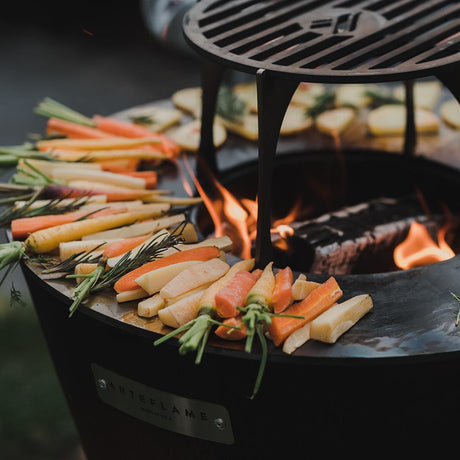
Pro Tip: For the perfect sear, establish a two-zone fire. Keep the center of your wood grill blazing hot (1,000°F+) for searing, and use the outer edges for slower roasting veggies or warming buns.
To help you decide which grill fits your lifestyle, we have broken down the core differences in performance and experience.
| Feature | Wood-Fired (Arteflame) | Standard Gas Grill |
|---|---|---|
| Flavor Profile | Rich, smoky, authentic BBQ taste | Neutral, lacks depth |
| Max Temperature | 1,000°F+ (Steakhouse sear) | 500°F - 700°F (Average) |
| Versatility | Grill, griddle, fire pit combined | Limited to open grates |
| Ambiance | Social centerpiece with open fire | Utility appliance |
| Maintenance | Scrape and go (Seasoned oil) | Grease traps and burner cleaning |
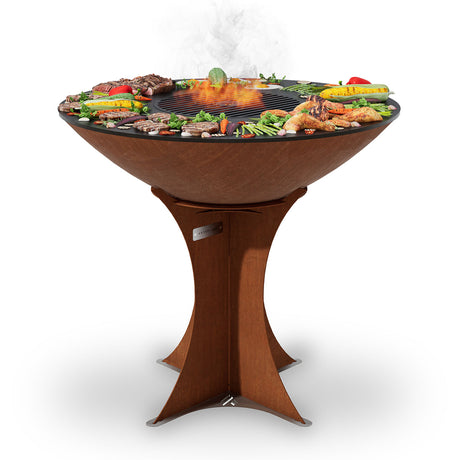
One of the biggest limitations of a standard gas grill is the grate design. The open slots mean small items like asparagus, shrimp, or chopped vegetables often fall through into the flames. This forces you to use extra pans or foil, cluttering the cooking process.
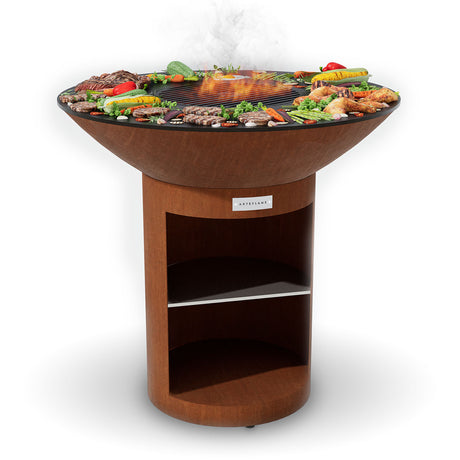
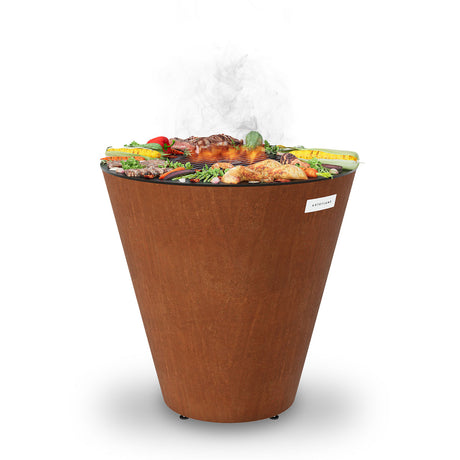
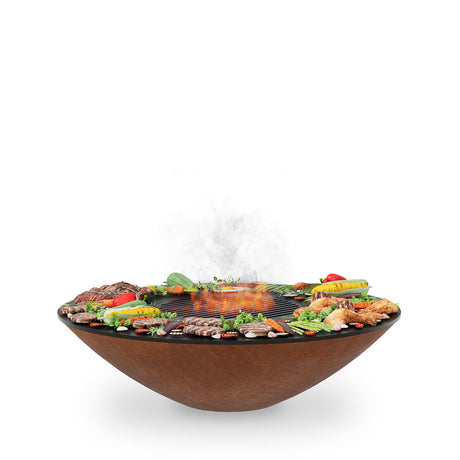
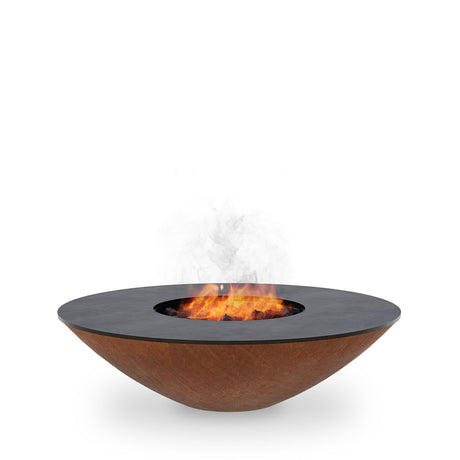
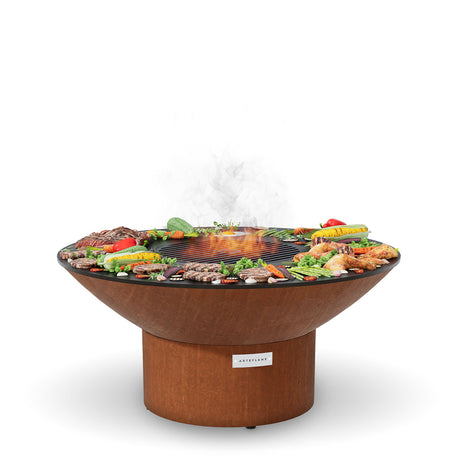
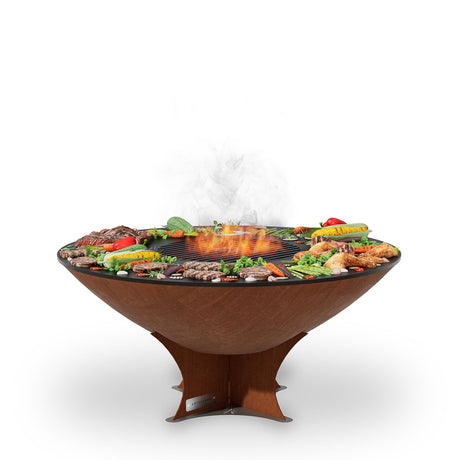
A solid surface wood-fired grill, such as a plancha or flat-top, eliminates this issue completely. You can cook a full breakfast of eggs, bacon, and pancakes, or sear a steak alongside delicate peppers without losing a single bite to the fire. This design transforms the grill from a burger-maker into a complete outdoor kitchen.
Pro Tip: Use the varying heat zones on a flat-top grill to manage timing. Sear proteins near the center where the heat is highest, and move vegetables to the cooler outer ring so everything finishes cooking at the exact same time.
Gas grills win on startup speed—you turn a knob, and you are ready in 10 minutes. However, the trade-off is often dry, flavorless meat and frequent flare-ups caused by dripping grease hitting the burners. These flare-ups produce acrid smoke that can ruin the taste of your food.
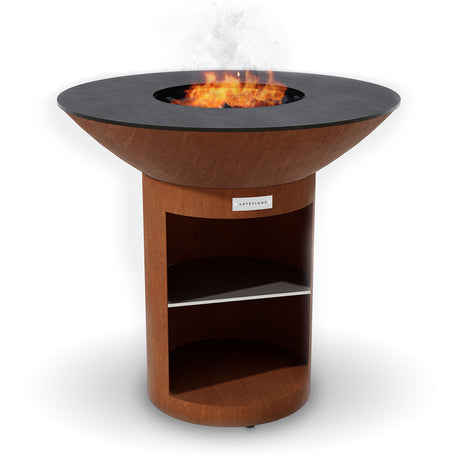
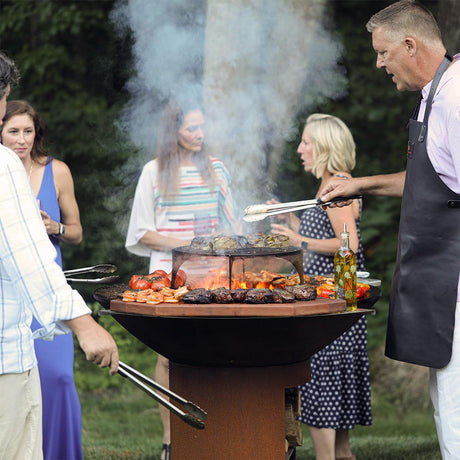
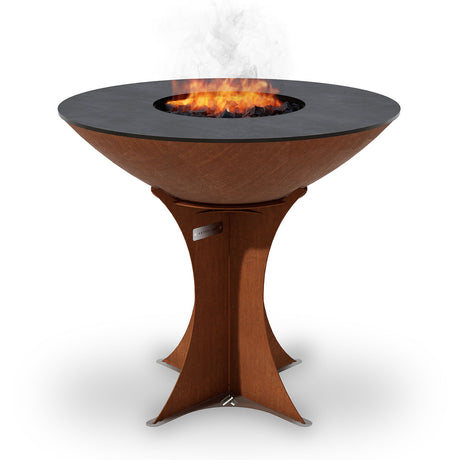
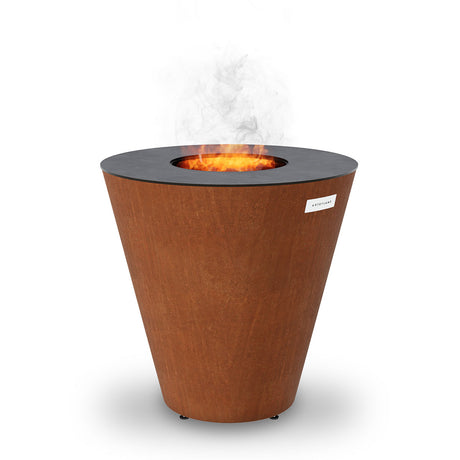
Wood-fired grilling requires roughly 15 to 20 minutes to build a coal bed, but the payoff is substantial. The solid cooktop of an Arteflame prevents grease from dripping onto the coals, virtually eliminating flare-ups. Furthermore, the visual appeal of an open fire turns grilling into a social event rather than a solitary chore, allowing guests to gather around the grill while you cook.
Not significantly. While gas takes about 10 minutes, a wood-fired grill is ready to cook in 15 to 20 minutes once the fire is established, and the thermal mass of the steel keeps it hot for hours.
No, it is generally easier. There are no grease traps or clogged burners to disassemble; you simply scrape the food residue into the fire and wipe the surface with oil while it is still warm.
Yes. Charcoal allows for a quicker start and consistent heat, but adding hardwood logs is recommended to achieve the signature smoky flavor and high flames that enhance the cooking experience.







Turn yesterday's leftover macaroni into today's crispy, golden side dish with this easy wood-fired recipe.

Master this Texas-style open-fire brisket cooked entirely on the Arteflame grill. By searing on the center grate and wrapping to render on the flat top, you get perfectly tender, juicy...

Transform standard thick-cut bacon into a sweet, savory appetizer with a dark stout and brown sugar glaze, perfectly caramelized on a flat-top grill.

Render the perfect crispy skin with these Sichuan Peppercorn Duck Breasts, paired with a smoky, sweet, and spicy charred plum-poblano sauce.

Tender artichoke halves charred over high heat and smothered in rich garlic butter and Parmesan cheese.

Achieve the ultimate crust with this low-and-slow beef brisket recipe, utilizing natural heat zones for a perfect sear and incredibly tender finish.

Transform the trending crispy rice paper dumplings into a wood-fired masterpiece. Cooked on the Arteflame flat steel griddle for a shatteringly crisp crust and savory, high-protein filling.

Elevate albacore tuna with a steakhouse-style bacon wrap and a decadent green peppercorn cream sauce, grilled flawlessly on a flat-top.