
Crisp and Golden Mac and Cheese Cakes on the Grill
Turn yesterday's leftover macaroni into today's crispy, golden side dish with this easy wood-fired recipe.


While gas grills offer push-button convenience for quick weeknight meals, a wood-fired griddle provides superior flavor profiles, higher searing temperatures, and a social cooking experience that gas cannot match. If you prioritize smoky taste, restaurant-quality searing, and cooking versatility over mere speed, the wood-fired option is the clear winner.
Before diving into the mechanics, use this comparison to identify which grill style aligns with your cooking goals.
| Feature | Wood-Fired Griddle (Arteflame) | Gas Grill |
|---|---|---|
| Primary Flavor Source | Real wood smoke & vaporized juices | Propane or Natural Gas (often neutral/chemical) |
| Maximum Heat | 1,000°F+ (Steakhouse Sear) | 500°F - 700°F (Standard Grilling) |
| Versatility | High (Eggs, Steaks, Veggies, Burgers simultaneously) | Medium (Requires extra pans/accessories for small items) |
| Maintenance | Season like cast iron; scrapes clean easily | Requires deep cleaning of grease traps and burners |
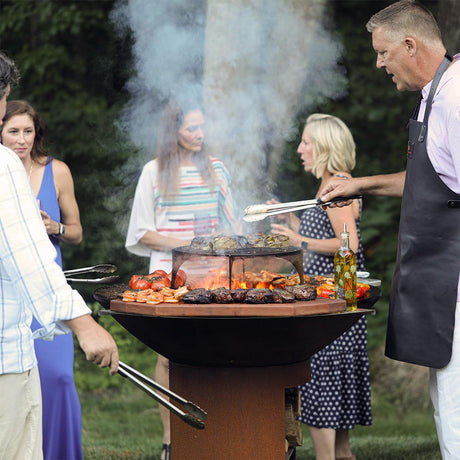
| Social Experience | Centerpiece; guests gather around the fire | Utilitarian; usually tucked against a wall |
The most significant difference between a wood-fired griddle and a gas grill is the flavor profile. Gas is odorless and tasteless; it provides heat but contributes nothing to the palate. To get a smoky flavor on a gas grill, you often have to rely on smoker boxes or wood chips, which function as an afterthought.
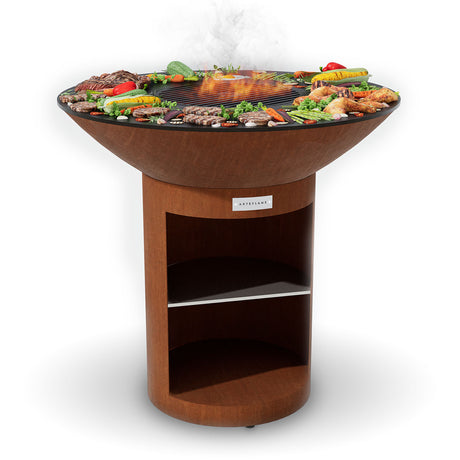
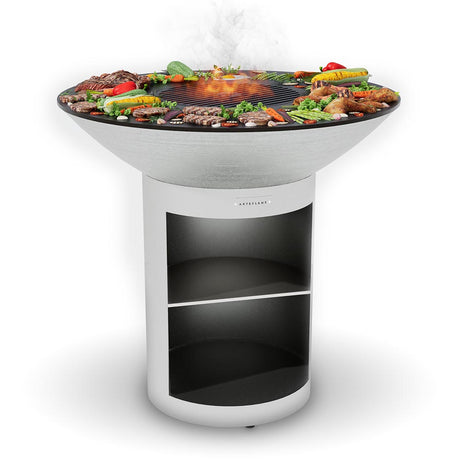
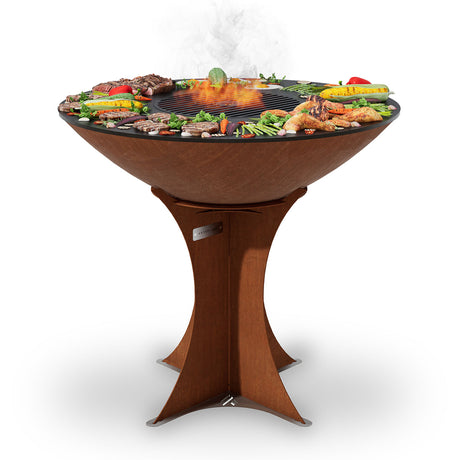
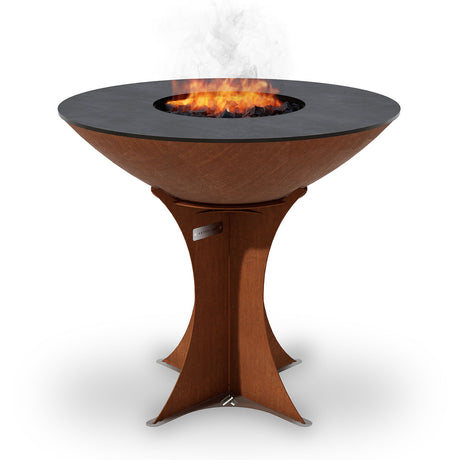
Conversely, a wood-fired griddle treats the fuel as an ingredient. As the wood burns, it releases aromatic compounds that subtly infuse the food. Furthermore, the solid carbon steel cooktop of an Arteflame enhances flavor through the Maillard reaction.
Pro Tip: Unlike gas grates where fat drips onto burners causing bitter flare-ups, a solid steel cooktop vaporizes juices instantly. This "micro-smoking" effect infuses meat with intense savory notes without charring the food.
Searing requires intense heat to caramelize proteins without overcooking the interior. Most standard gas grills struggle to maintain temperatures above 600°F, especially when the lid is open. The open grate design also allows cool air to rush in, disrupting the searing process.
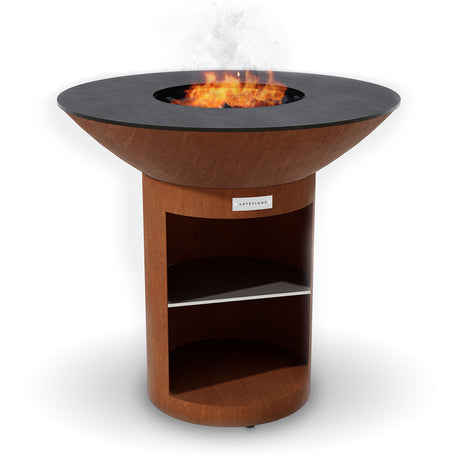
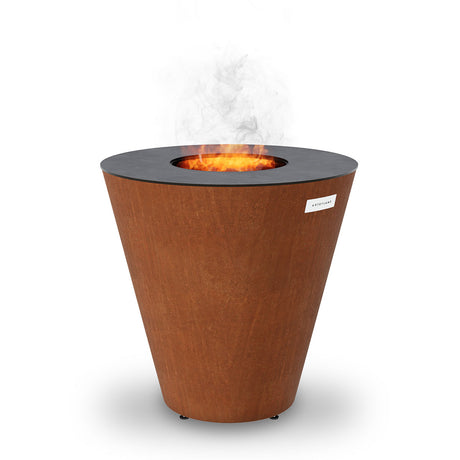
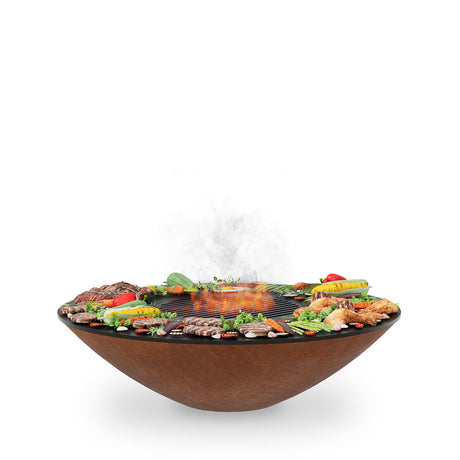
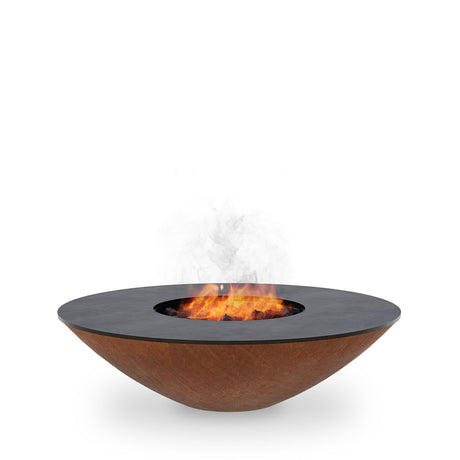
A wood-fired griddle excels here due to thermal mass. The steel cooktop stores heat, creating different temperature zones. The center of the grill can reach temperatures exceeding 1,000°F.
On a gas grill grate, only the thin metal bars touch your steak. This results in "grill marks," but leaves the rest of the surface gray and steamed. A flat top griddle provides 100% surface contact, creating a wall-to-wall crust that locks in juices and maximizes flavor.
Gas grills are generally designed for one thing: cooking large cuts of meat or burgers on a grate. If you want to cook asparagus, shrimp, or eggs, you need a separate pan or a grill basket to prevent food from falling through the cracks.
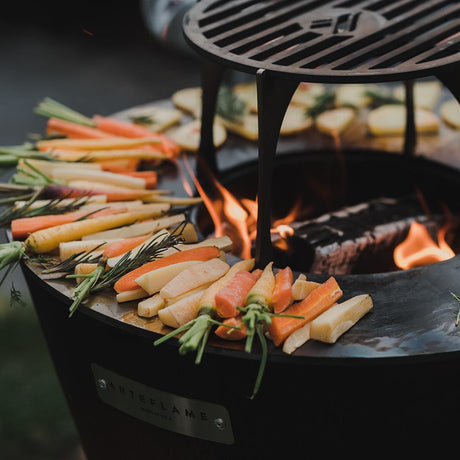
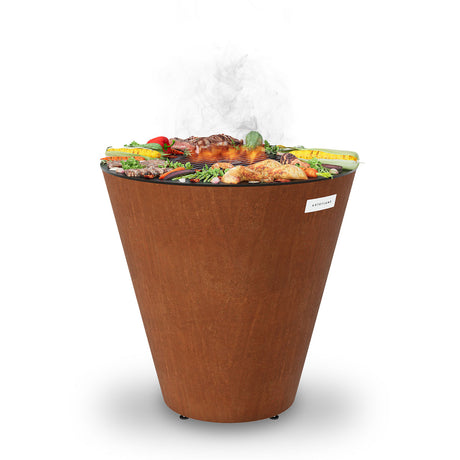
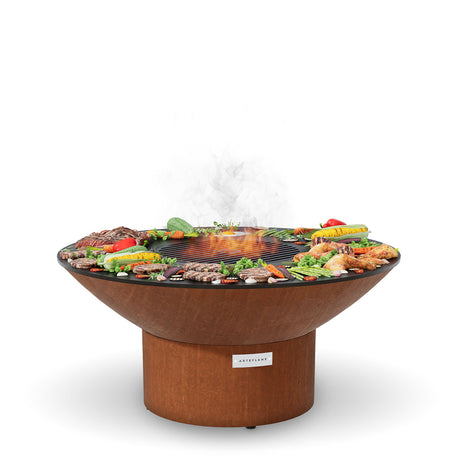
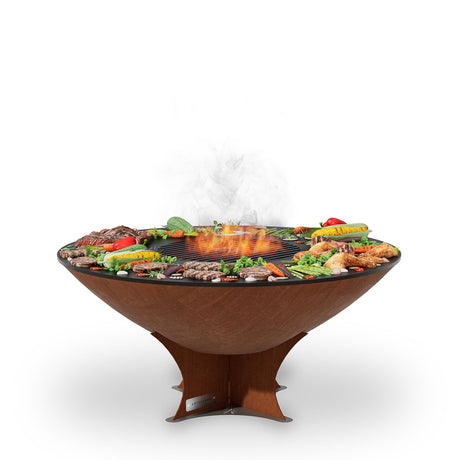
A wood-fired griddle eliminates this limitation. The solid surface allows you to cook a complete meal simultaneously. You can sear a ribeye in the high-heat center while slowly roasting potatoes and grilling delicate asparagus on the cooler outer edges. You can even griddle pancakes and bacon for breakfast outdoors.
Pro Tip: Use the temperature zones to your advantage. Sear your steak at the center for 2 minutes per side, then slide it to the outer edge to finish bringing it to temperature while it rests.
Yes, a wood-fired griddle typically takes 15-20 minutes to reach optimal cooking temperatures as the wood creates a coal bed. Gas grills are instant-on but often struggle to reach the high searing temps that wood fires achieve naturally.
No, it is generally easier than cleaning a gas grill. You simply scrape food residue into the fire and wipe the surface with oil while it is still warm, whereas gas grills require dismantling grates and cleaning grease traps to prevent fires.
Yes, temperature control is achieved by moving food across the surface. The center is hottest (closest to the fire), and the heat decreases as you move toward the outer edge, allowing for precise heat management without turning knobs.







Turn yesterday's leftover macaroni into today's crispy, golden side dish with this easy wood-fired recipe.

Master this Texas-style open-fire brisket cooked entirely on the Arteflame grill. By searing on the center grate and wrapping to render on the flat top, you get perfectly tender, juicy...

Transform standard thick-cut bacon into a sweet, savory appetizer with a dark stout and brown sugar glaze, perfectly caramelized on a flat-top grill.

Render the perfect crispy skin with these Sichuan Peppercorn Duck Breasts, paired with a smoky, sweet, and spicy charred plum-poblano sauce.

Tender artichoke halves charred over high heat and smothered in rich garlic butter and Parmesan cheese.

Achieve the ultimate crust with this low-and-slow beef brisket recipe, utilizing natural heat zones for a perfect sear and incredibly tender finish.

Transform the trending crispy rice paper dumplings into a wood-fired masterpiece. Cooked on the Arteflame flat steel griddle for a shatteringly crisp crust and savory, high-protein filling.

Elevate albacore tuna with a steakhouse-style bacon wrap and a decadent green peppercorn cream sauce, grilled flawlessly on a flat-top.