
Crisp and Golden Mac and Cheese Cakes on the Grill
Turn yesterday's leftover macaroni into today's crispy, golden side dish with this easy wood-fired recipe.


The Bottom Line: Wood fire grilling on a solid carbon steel plancha delivers a significantly superior flavor profile and sear compared to gas grills. While gas offers push-button convenience, it cannot replicate the high heat retention, natural smoky infusion, or moisture preservation of cooking on a seasoning-ready steel surface. For gourmet results, wood fire is the clear winner.
Before diving into the science of flavor, compare the core performance metrics of a standard gas grill against an Arteflame wood-fired plancha. The data highlights why serious chefs prefer wood and steel.
| Feature | Gas Grill | Wood-Fired Plancha |
|---|---|---|
| Primary Flavor Source | Vaporized drippings (often acrid) | Natural hardwood smoke & seared juices |
| Maximum Searing Temp | 450°F - 600°F (Average) | 1,000°F+ (Center Grate) |
| Moisture Retention | Low (Juices fall through grates) | High (Cooks in own juices) |
| Flare-Ups | Frequent (Fat hits burners) | Zero (Solid surface protects fire) |
| Versatility | Limited (Grates require pans for small items) | Unlimited (Eggs, veggies, steaks simultaneously) |
Gas creates heat, but wood creates flavor. The primary argument for wood-fired grilling is the chemical reaction that occurs between the fuel, the heat, and the protein.
Yes. The Maillard reaction—the browning process that creates the savory crust on meat—requires high, dry heat. Gas grills release water vapor as a byproduct of combustion, which creates a humid environment that can steam meat rather than sear it. A wood fire creates a drier heat, and the solid steel plancha conducts that heat directly into the meat for a deeper, crispier crust.
Pro Tip: Unlike gas grills where fat drips onto open flames causing carbon buildup and bitter smoke, a plancha surface allows the fat to render and baste the meat as it cooks. This "micro-confiting" technique is why plancha-grilled steaks are consistently juicier.
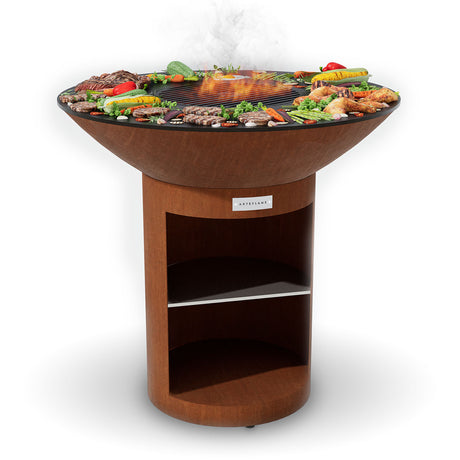
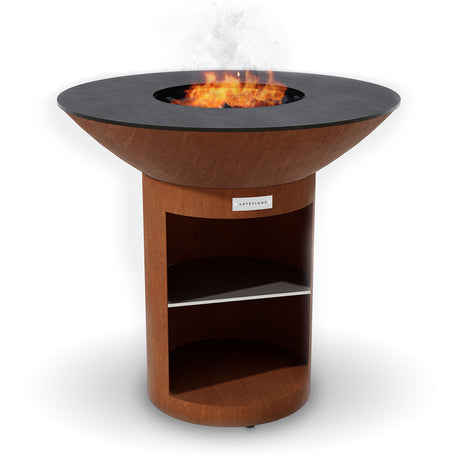
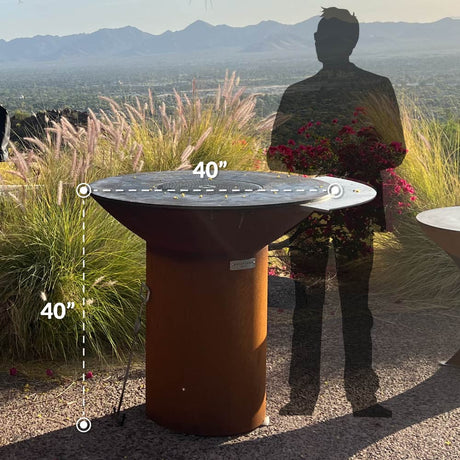
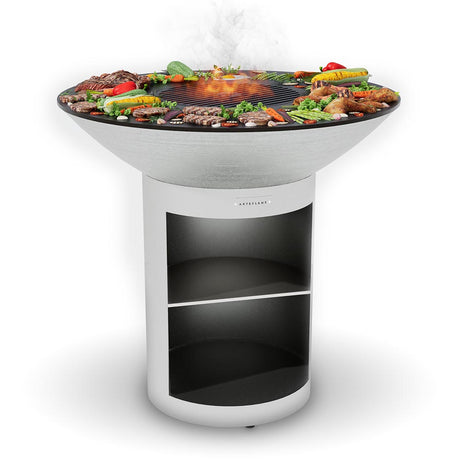
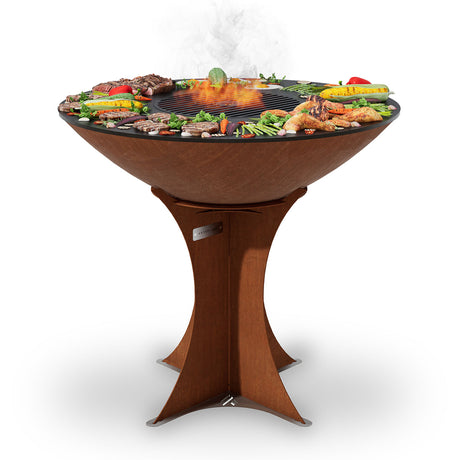
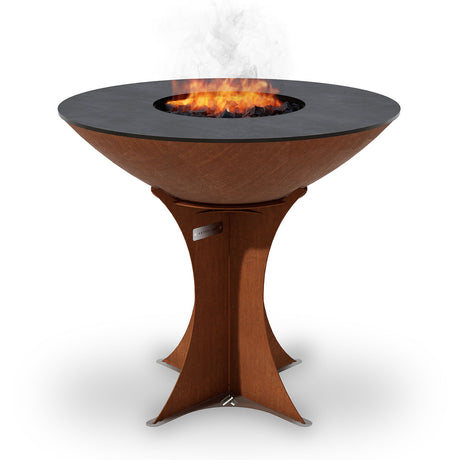
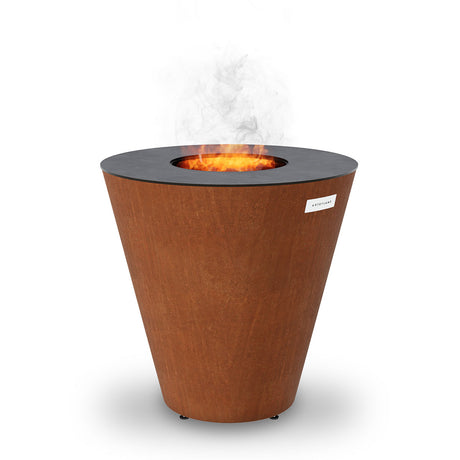
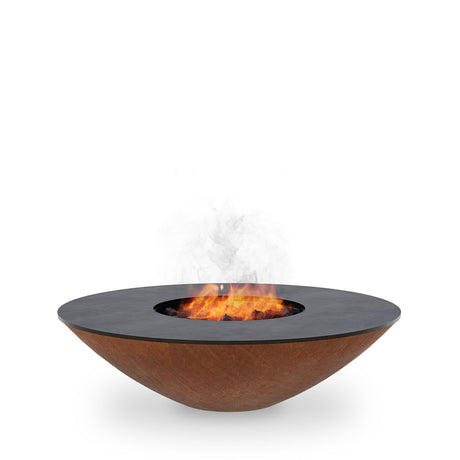
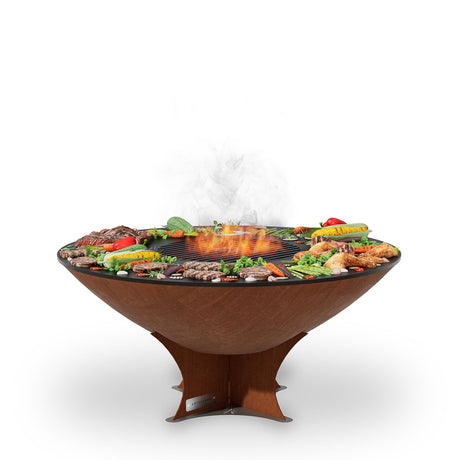
While the fuel source is critical, the surface you cook on dictates the texture of the food. Most gas grills rely on open grates, whereas the Arteflame uses a solid carbon steel cooktop.
On a traditional gas grill grate, up to 70% of the surface area is open air. Valuable meat juices drip away and are lost forever. Air circulates around the meat, dehydrating it rapidly.
By contrast, a solid plancha cooktop provides 100% surface contact. This sears the meat immediately, locking in moisture. Because the juices cannot escape through grates, vegetables and proteins cook in their own flavorful liquids.
A common misconception is that wood grills are only for large cuts of meat. However, the design of a plancha grill turns it into a complete outdoor kitchen.
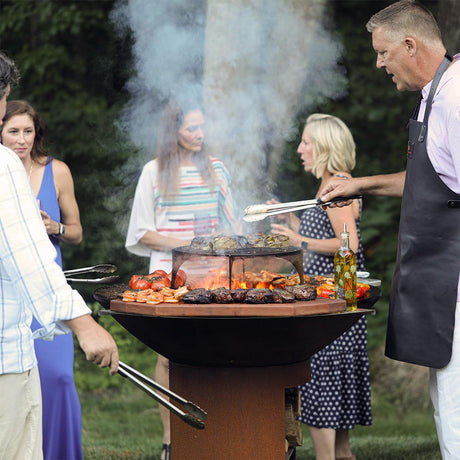
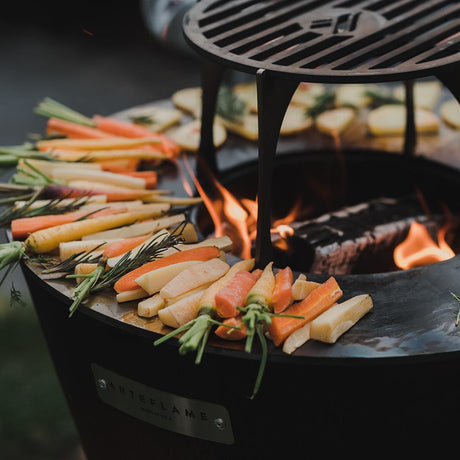
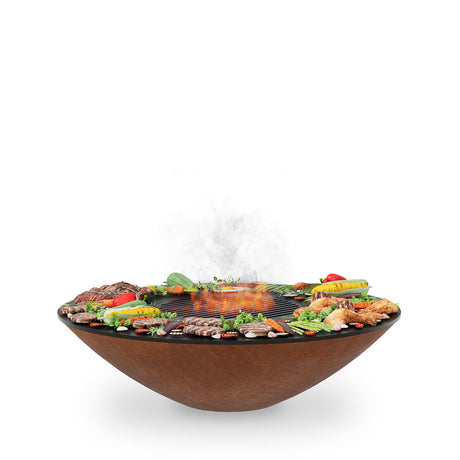
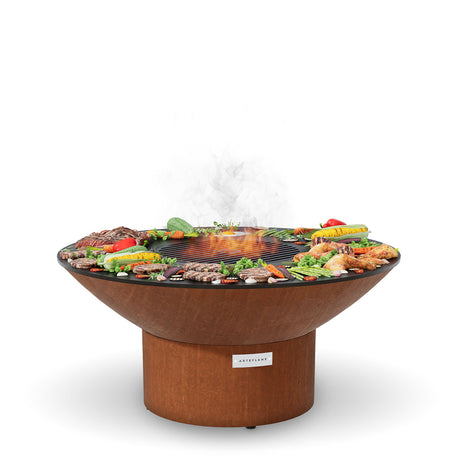
With a gas grill, cooking eggs, pancakes, or chopped vegetables requires bringing cast iron skillets outside. With a wood-fired plancha, the grill is the skillet. You can sear a steak at 1,000°F in the center while simultaneously slow-roasting vegetables or frying eggs on the cooler outer edges.
Pro Tip: Master the "Heat Zones." The Arteflame cooktop is hottest near the center and cools as you move outward. Move food closer to the center to sear, and slide it to the edge to keep warm without overcooking—a level of control gas burners struggle to replicate.

Initially, yes, but the learning curve is short. While gas is "turn and go," wood requires building a fire 20 minutes prior. However, once the steel is hot, temperature management is done simply by moving food across the varying heat zones rather than adjusting knobs.
Never, provided you use natural starters and hardwood. Unlike charcoal briquettes which may contain binders, or gas grills which can impart a chemical smell if combustion isn't perfect, pure hardwood offers a clean, aromatic flavor profile.
Cleaning is significantly faster on a plancha. There are no grease traps to empty or grates to scrub. Simply scrape food residue into the fire after cooking and wipe the surface with oil while it is still warm, similar to maintaining a cast-iron skillet.






Turn yesterday's leftover macaroni into today's crispy, golden side dish with this easy wood-fired recipe.

Master this Texas-style open-fire brisket cooked entirely on the Arteflame grill. By searing on the center grate and wrapping to render on the flat top, you get perfectly tender, juicy...

Transform standard thick-cut bacon into a sweet, savory appetizer with a dark stout and brown sugar glaze, perfectly caramelized on a flat-top grill.

Render the perfect crispy skin with these Sichuan Peppercorn Duck Breasts, paired with a smoky, sweet, and spicy charred plum-poblano sauce.

Tender artichoke halves charred over high heat and smothered in rich garlic butter and Parmesan cheese.

Achieve the ultimate crust with this low-and-slow beef brisket recipe, utilizing natural heat zones for a perfect sear and incredibly tender finish.

Transform the trending crispy rice paper dumplings into a wood-fired masterpiece. Cooked on the Arteflame flat steel griddle for a shatteringly crisp crust and savory, high-protein filling.

Elevate albacore tuna with a steakhouse-style bacon wrap and a decadent green peppercorn cream sauce, grilled flawlessly on a flat-top.