
Crisp and Golden Mac and Cheese Cakes on the Grill
Turn yesterday's leftover macaroni into today's crispy, golden side dish with this easy wood-fired recipe.


Wood fire grills offer superior flavor complexity and higher searing temperatures (often exceeding 1,000°F), making them the top choice for steakhouse-quality results. Gas grills provide push-button convenience and precise low-temperature control but lack the aromatic depth of natural wood smoke. For the best of both worlds—high heat and versatility—a wood-fired griddle style grill bridges the gap.
When deciding between a traditional gas grill and a wood-fired option, the decision usually comes down to three factors: Flavor, Heat, and Convenience. The table below breaks down the core differences.
| Feature | Wood Fire (Arteflame) | Gas Grill (Propane/Natural) |
|---|---|---|
| Flavor Profile | Rich, smoky, complex (Natural wood infusion) | Neutral, flat (Relies on drippings only) |
| Max Temperature | 1,000°F+ (Perfect for searing) | 500°F - 700°F (Average) |
| Heat Source | Hardwood / Charcoal | Propane / Natural Gas |
| Ambience | High (Visual fire, social warmth) | Low (Purely functional) |
| Maintenance | Seasoning required (improves over time) | Grease trap cleaning, burner rust issues |
Gas grills are designed for utility. They produce heat without combustion byproducts, meaning the only "grilled" flavor comes from fat dripping onto the burner covers and vaporizing. While functional, this lacks the depth of authentic barbecue.
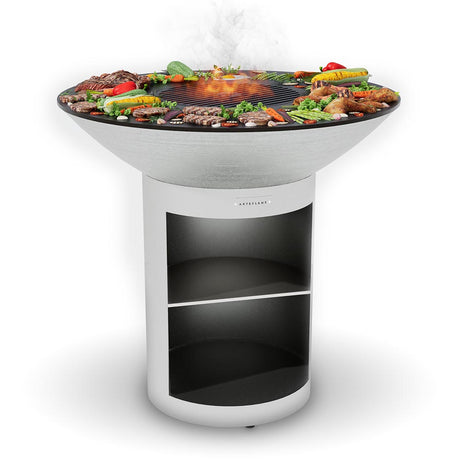
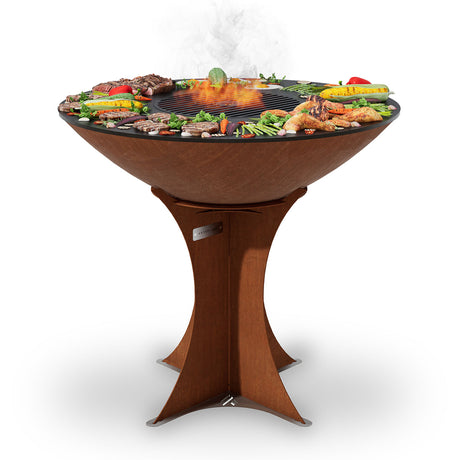
Wood fire grilling utilizes the combustion of organic compounds. When hardwood burns, it releases guaiacol and syringol—compounds responsible for the smoky aroma and taste associated with premium BBQ. Because an Arteflame uses real wood, food cooked on the plancha or grill grate absorbs these compounds naturally.
Pro Tip: For the best flavor profile without heavy soot, use seasoned hardwoods like Oak, Hickory, or Pecan. These burn hotter and cleaner than softwoods, enhancing the food rather than overpowering it.
The short answer is usually no. Most residential gas grills cap out around 500°F to 700°F. While this is sufficient for cooking chicken or burgers, it struggles to achieve the instant Maillard reaction (browning) required for a perfect steak crust without overcooking the center.
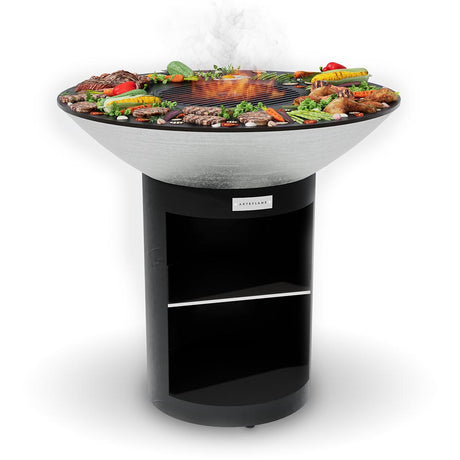
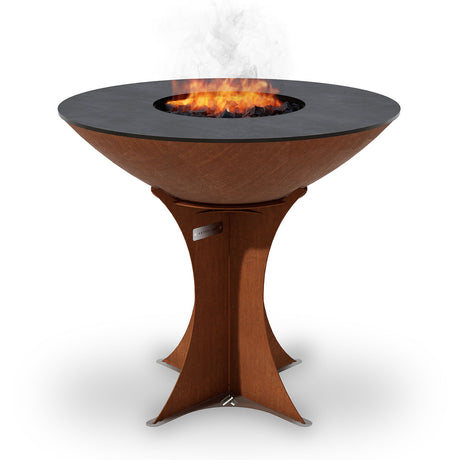
Wood fires create dynamic heat zones. The center of an Arteflame grill, for example, can exceed 1,000°F. This allows you to sear a steak in seconds, sealing in internal juices. You can then slide the meat to the outer plancha ring to finish cooking at a lower temperature.
Pro Tip: Utilize the "Heat Zones" on your wood grill. Sear proteins directly over the center fire for 60 seconds per side, then move them to the cooler outer edge to reach your desired internal temperature gently.
Grilling is often a social event. Gas grills are typically tucked against a wall; the chef turns a knob, cooks with the lid down, and brings food inside. It is a solitary task.
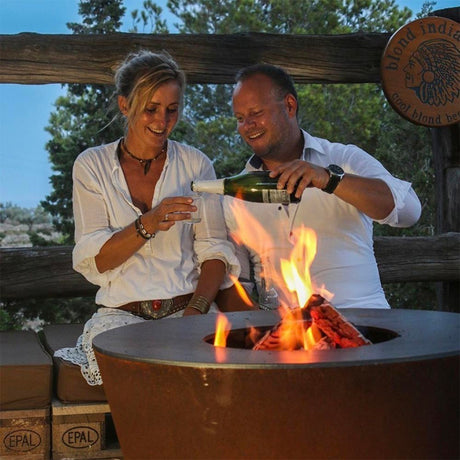
A wood-fired grill, particularly a griddle style, acts as a centerpiece. The open fire attracts guests, providing warmth and light. It transforms cooking from a chore into a communal experience where everyone can gather around the fire bowl, making it ideal for entertaining.
Gas is faster to start (instant on), but wood grills often cook thicker cuts of meat faster once up to temperature due to higher radiant heat. A wood fire allows for quicker searing, reducing total cook time for steaks and chops.
It requires a slight learning curve but offers intuitive control. Instead of turning a knob, you manage heat by moving food across different temperature zones on the cooktop—hotter near the center, cooler near the edge.
Yes, if you prioritize flavor and experience. While gas wins on instant convenience for a quick Tuesday hot dog, wood fire offers superior culinary results, better searing capability, and a social atmosphere that gas cannot replicate.
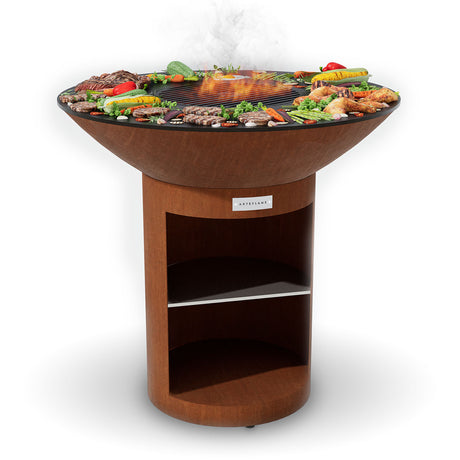
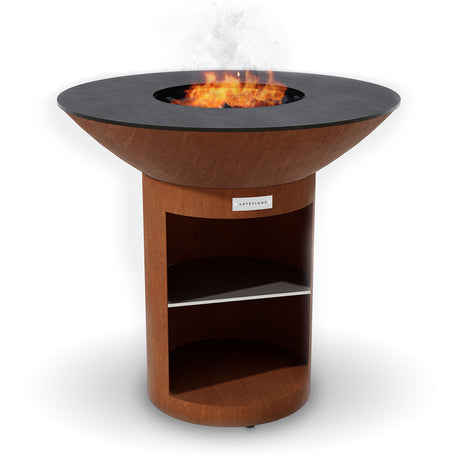

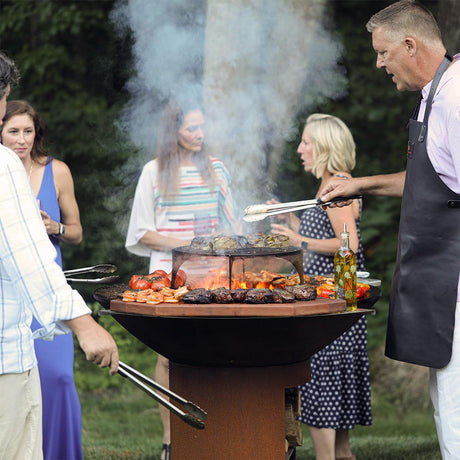
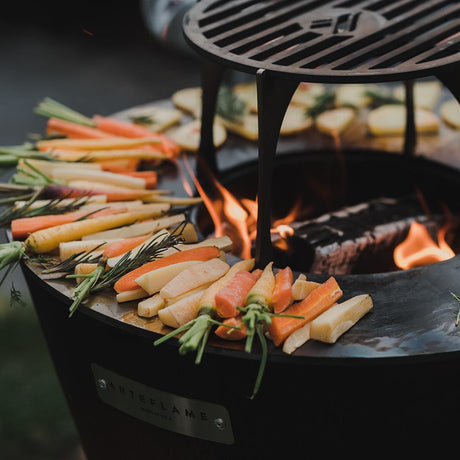




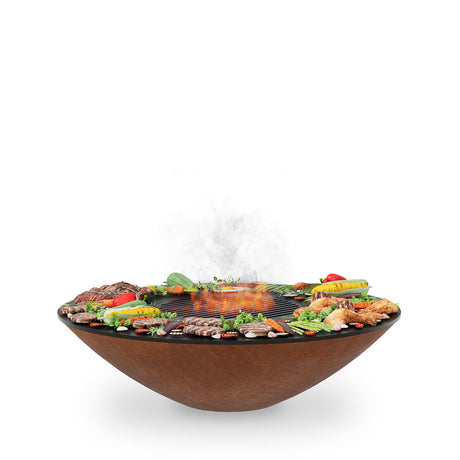
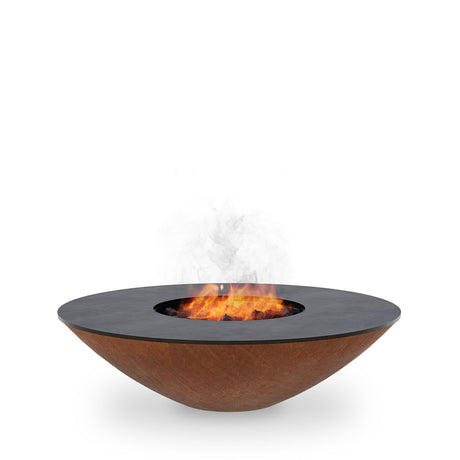
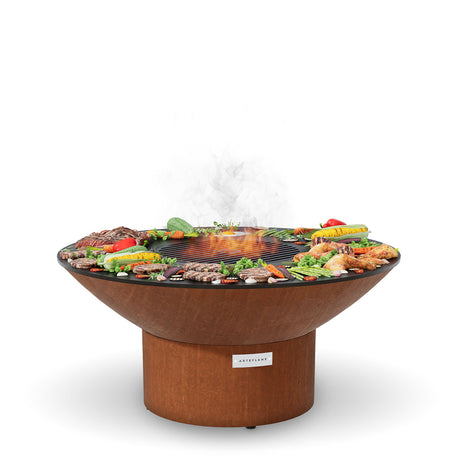
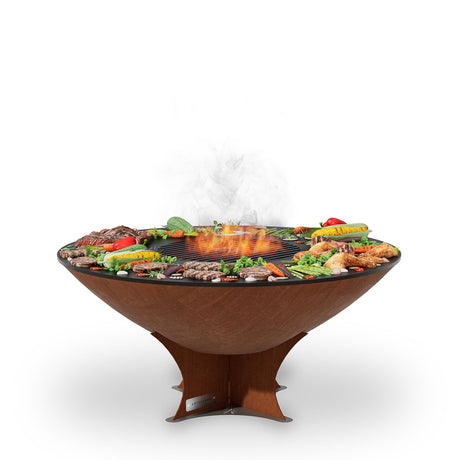


Turn yesterday's leftover macaroni into today's crispy, golden side dish with this easy wood-fired recipe.

Master this Texas-style open-fire brisket cooked entirely on the Arteflame grill. By searing on the center grate and wrapping to render on the flat top, you get perfectly tender, juicy...

Transform standard thick-cut bacon into a sweet, savory appetizer with a dark stout and brown sugar glaze, perfectly caramelized on a flat-top grill.

Render the perfect crispy skin with these Sichuan Peppercorn Duck Breasts, paired with a smoky, sweet, and spicy charred plum-poblano sauce.

Tender artichoke halves charred over high heat and smothered in rich garlic butter and Parmesan cheese.

Achieve the ultimate crust with this low-and-slow beef brisket recipe, utilizing natural heat zones for a perfect sear and incredibly tender finish.

Transform the trending crispy rice paper dumplings into a wood-fired masterpiece. Cooked on the Arteflame flat steel griddle for a shatteringly crisp crust and savory, high-protein filling.

Elevate albacore tuna with a steakhouse-style bacon wrap and a decadent green peppercorn cream sauce, grilled flawlessly on a flat-top.