
Crisp and Golden Mac and Cheese Cakes on the Grill
Turn yesterday's leftover macaroni into today's crispy, golden side dish with this easy wood-fired recipe.


For pure convenience, propane gas grills are the fastest option. For smoking capabilities, ceramic charcoal grills (like the Big Green Egg) are effective but fragile and difficult to control. However, for the best overall flavor, steakhouse-quality searing, and social experience, a wood-fired flat-top grill is superior. It eliminates the chemical aftertaste of gas and the lighting struggles of charcoal while acting as a stunning fire bowl centerpiece.
Use this data table to quickly determine which grill matches your cooking style and performance needs.
| Feature | Propane Gas Grill | Ceramic Charcoal (Egg) | Arteflame Wood Fire |
|---|---|---|---|
| Primary Flavor Profile | Neutral / Slight Chemical | Smokey / Charcoal | Authentic Wood Fire |
| Maximum Heat | ~500°F (Low) | ~700°F (Medium/High) | 1,000°F+ (Steakhouse Sear) |
| Moisture Impact | Adds Humidity (Steams meat) | Dry Heat | Dry Heat (Maillard Reaction) |
| Startup Time | Instant | Slow (20-45 mins) | Moderate (15-20 mins) |
| Maintenance | Grease Traps / Burners | Ash Cleanup / Fragile Ceramic | Scrape & Season (Simple) |
While gas grills are popular for their "turn-knob" convenience, they fundamentally alter the texture of your food. Propane contains hydrogen molecules; when burned, this hydrogen combines with oxygen to create water vapor.
This means you are essentially steaming your food rather than grilling it. This excess humidity makes it difficult to achieve a crisp, caramelized crust (the Maillard reaction) without overcooking the inside of the meat.
Pro Tip: To test your grill's heat quality, hold your hand 6 inches above the grate. On a gas grill, you can hold it there for several seconds. On an Arteflame wood fire grill, the 1,000°F+ heat is so intense you will pull your hand away instantly—this is the secret to a perfect sear.
Furthermore, gas grills often impart a subtle chemical taste and smell to the food, masking the natural flavors of high-quality ingredients.
Ceramic "Kamado" style grills (like the Big Green Egg) are excellent for heat retention and low-and-slow smoking. However, they come with significant downsides for the average backyard chef:
While they solve the moisture issue of gas grills, they lack the open-fire versatility and social atmosphere of a plancha-style wood grill.
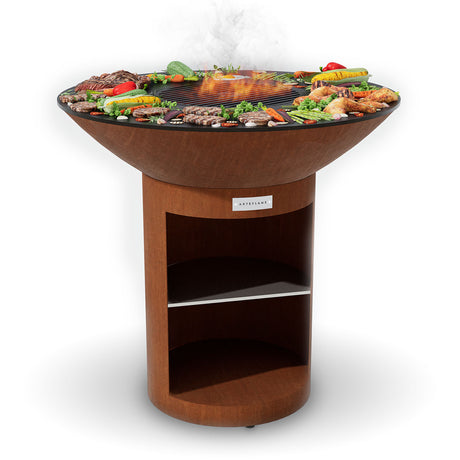
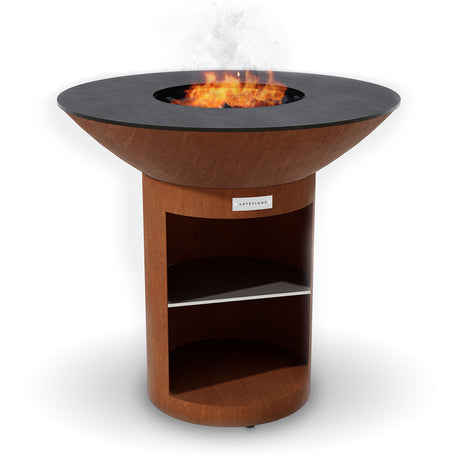
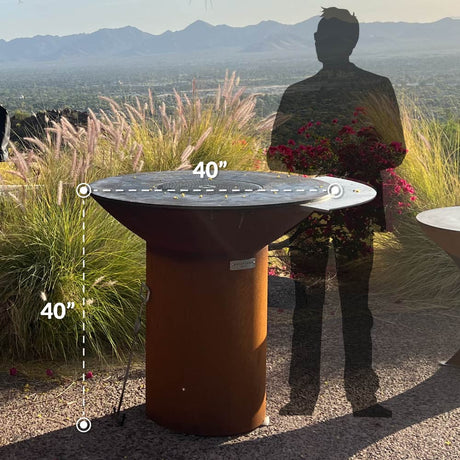
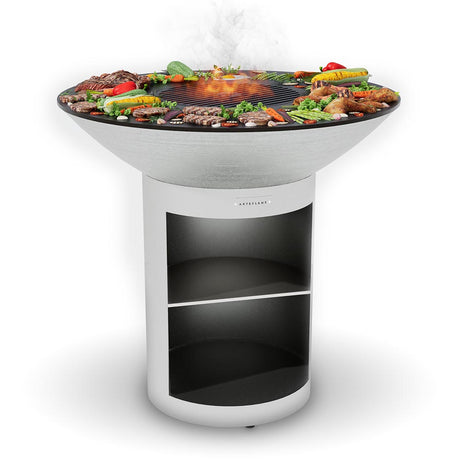
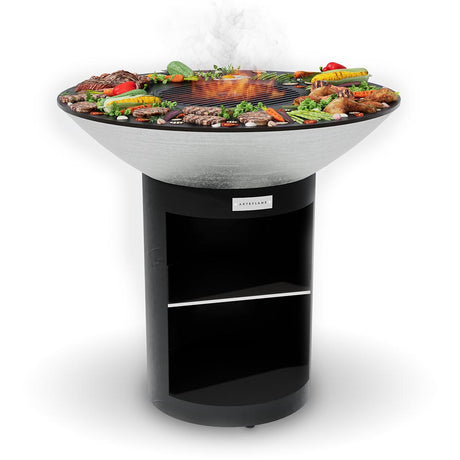
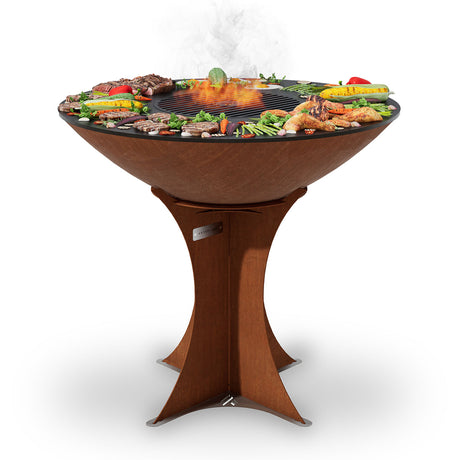
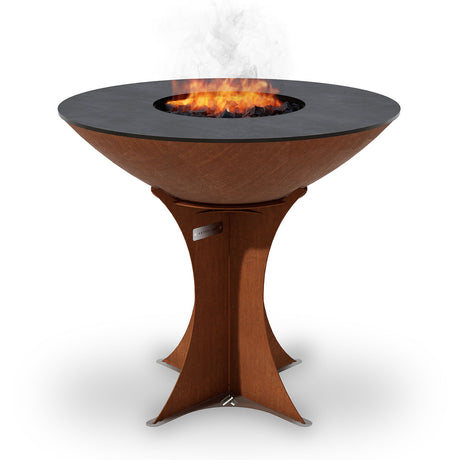
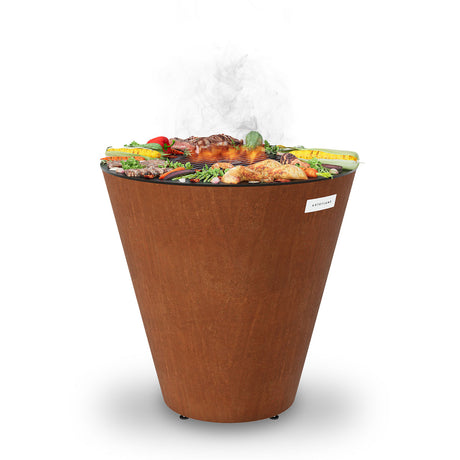
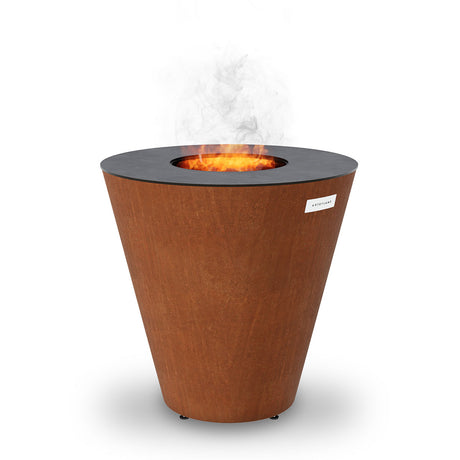
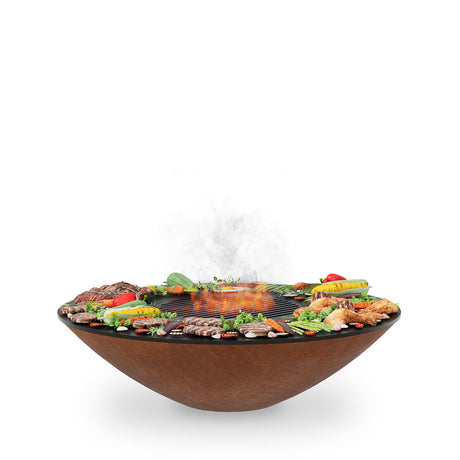
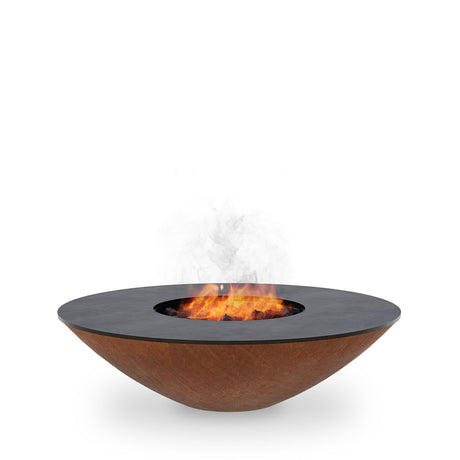
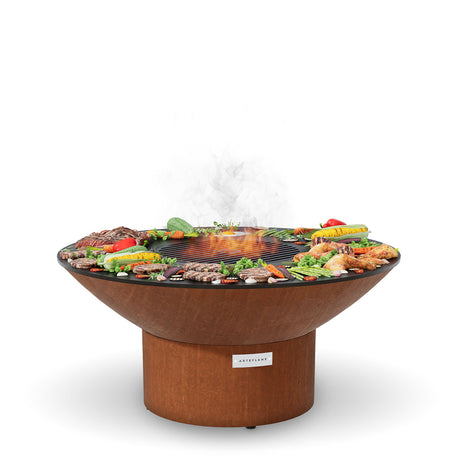
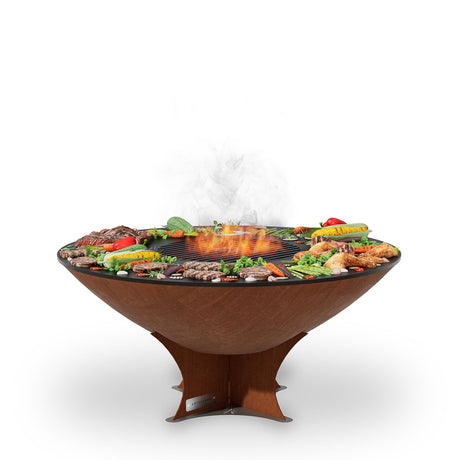
An Arteflame bridges the gap between culinary performance and social entertainment. Unlike a boxy gas grill or a closed ceramic egg, the Arteflame features an open carbon steel cooktop that heats from the center out.
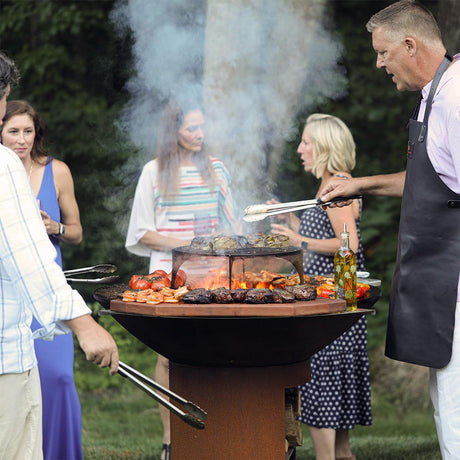
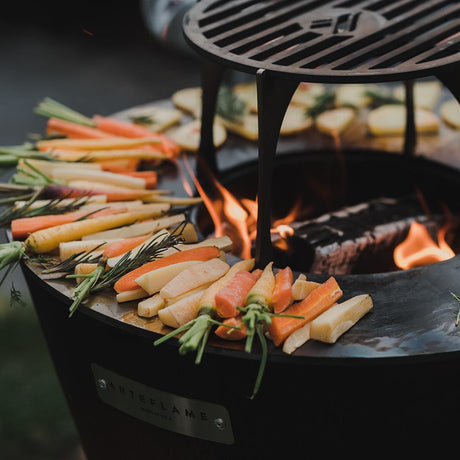
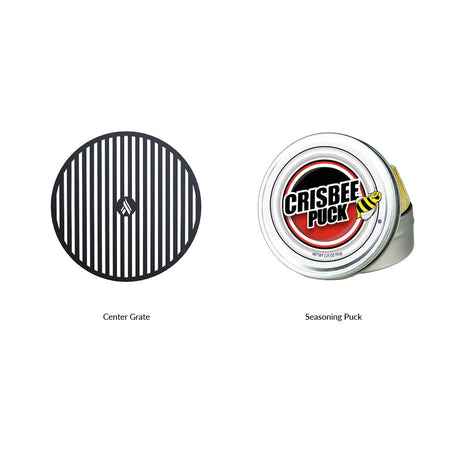
The solid steel cooktop prevents food from falling through, allowing you to cook eggs, vegetables, pancakes, and steaks simultaneously. The center grill grate provides direct access to the fire for charring, while the outer ring offers different heat zones.
Information Gain: Unlike cast iron which can rust and crack, the carbon steel cooktop on an Arteflame actually improves with age. The oil creates a non-stick patina that turns the surface black and virtually maintenance-free over time.
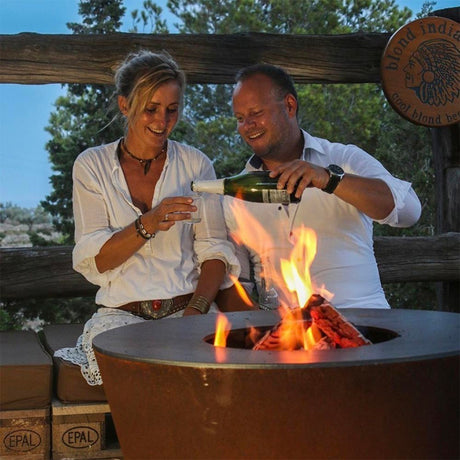
When the cooking is done, the grill transitions seamlessly into a fire pit. It creates a gathering spot where guests can enjoy the warmth and visual appeal of a wood fire, something neither a gas grill nor a closed charcoal smoker can offer.
No, it is significantly easier than traditional grills. You simply scrape food residue into the fire in the center, wipe the cooktop with a little oil, and you are done. There are no grease traps to empty or burners to unclog.
Yes. While wood is recommended for flavor and visual appeal, you can use charcoal for a consistent heat source. Many users start with a base of charcoal and add wood logs for the aromatic smoke profile.
An Arteflame is ready to cook in about 15 to 20 minutes. This allows the wood to burn down into hot coals and the steel cooktop to absorb and radiate the heat evenly.






Turn yesterday's leftover macaroni into today's crispy, golden side dish with this easy wood-fired recipe.

Master this Texas-style open-fire brisket cooked entirely on the Arteflame grill. By searing on the center grate and wrapping to render on the flat top, you get perfectly tender, juicy...

Transform standard thick-cut bacon into a sweet, savory appetizer with a dark stout and brown sugar glaze, perfectly caramelized on a flat-top grill.

Render the perfect crispy skin with these Sichuan Peppercorn Duck Breasts, paired with a smoky, sweet, and spicy charred plum-poblano sauce.

Tender artichoke halves charred over high heat and smothered in rich garlic butter and Parmesan cheese.

Achieve the ultimate crust with this low-and-slow beef brisket recipe, utilizing natural heat zones for a perfect sear and incredibly tender finish.

Transform the trending crispy rice paper dumplings into a wood-fired masterpiece. Cooked on the Arteflame flat steel griddle for a shatteringly crisp crust and savory, high-protein filling.

Elevate albacore tuna with a steakhouse-style bacon wrap and a decadent green peppercorn cream sauce, grilled flawlessly on a flat-top.