
Crisp and Golden Mac and Cheese Cakes on the Grill
Turn yesterday's leftover macaroni into today's crispy, golden side dish with this easy wood-fired recipe.


Adding a flat top insert transforms a standard gas grill into a versatile outdoor kitchen capable of cooking every meal type. By replacing or covering open grates, you eliminate flare-ups, achieve restaurant-quality sears through 100% surface contact, and gain the ability to cook liquid or small foods—like eggs, pancakes, and chopped vegetables—that would otherwise fall into the fire.
The primary advantage of a flat top is Information Gain and versatility. While standard grates are designed for marking meat, they allow up to 70% of the heat and flavor-carrying juices to escape. A carbon steel flat top retains that heat and sears the meat in its own juices.
Review the comparison below to understand why professional chefs often prefer solid cooking surfaces over open grates.
| Feature | Standard Gas Grates | Carbon Steel Flat Top Insert |
|---|---|---|
| Surface Contact | Limited (Grill marks only) | 100% (Full crust/Maillard reaction) |
| Versatility | Steaks, Burgers, Large Veggies | Eggs, Pancakes, Smash Burgers, Stir-fry |
| Moisture Retention | Low (Juices drip away) | High (Cooks in own juices) |
| Flare-Ups | Frequent | Eliminated |
| Cleaning | Scrubbing individual bars | Simple scrape and wipe |
Yes, a flat top often provides a superior sear compared to traditional grates due to the physics of heat transfer. While grill marks look appealing, they represent only a small fraction of the meat being seared. A flat top grill insert provides full surface contact, triggering the Maillard reaction across the entire steak.
This reaction creates a rich, savory crust that seals in flavor. On a grate, juices drip onto the burners, often causing flare-ups that can char the meat with a bitter taste (carbon) rather than a savory sear.
Pro Tip: For the ultimate crust, ensure your flat top is preheated to at least 400°F (200°C) before placing your steak. Use a high-smoke-point oil like avocado oil or grapeseed oil to prevent burning the seasoning layer.
One of the biggest limitations of a standard gas grill is the inability to cook liquid or batter-based foods. By installing a flat top insert, you instantly unlock the ability to cook full breakfasts outdoors.
Because the surface is solid, you can cook bacon, eggs, and pancakes simultaneously without using separate pans. The grease from the bacon naturally seasons the cooktop and prevents the eggs from sticking, creating a seamless cooking workflow that isn't possible on open grates.
Maintenance for a carbon steel flat top is significantly easier than scrubbing charred residue off individual grill grates. The process is very similar to caring for a cast-iron skillet but easier due to the smooth surface.
To clean, simply use a scraper to remove food residue while the grill is still warm. Water can be used to steam off stubborn bits, but soap should generally be avoided once the surface is seasoned.
Pro Tip: Never let your flat top air dry after cleaning. Immediately wipe it down with a paper towel and apply a thin layer of oil while it is still warm. This protects the steel from oxidation and builds up the non-stick patina for your next cook.
Generally, yes. Carbon steel heats up faster and responds more quickly to temperature changes than cast iron. It is also lighter and smoother, making it easier to season and achieve a non-stick surface.
Most flat top inserts are designed to be universal or come in standard sizes that sit directly on top of your existing grates. Measure your grill's main cooking area effectively; you want the insert to cover the heat source but leave a small gap for airflow.
No, it absorbs and distributes the heat. While it may take slightly longer to reach cooking temperature than thin wire grates, it retains heat much better, eliminating hot and cold spots common in gas grills.
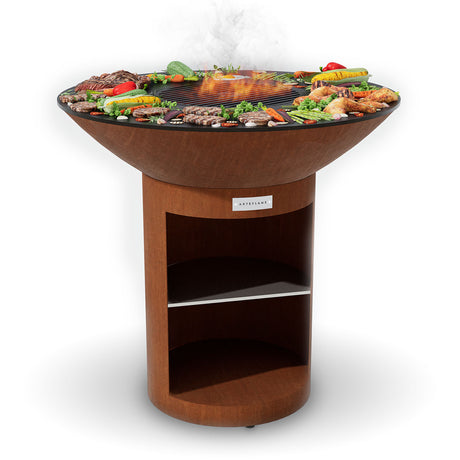
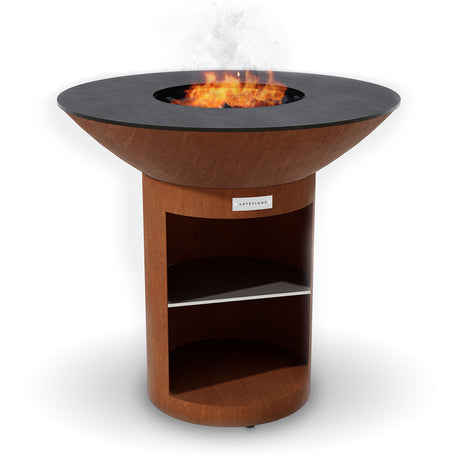

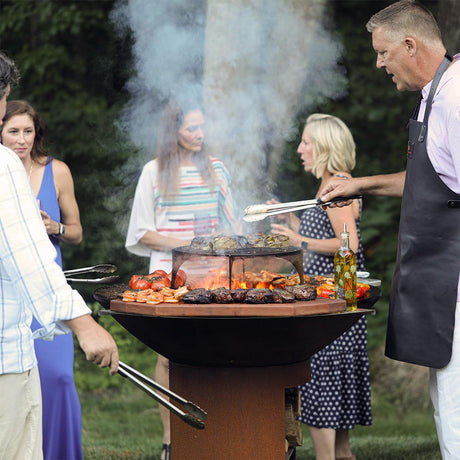
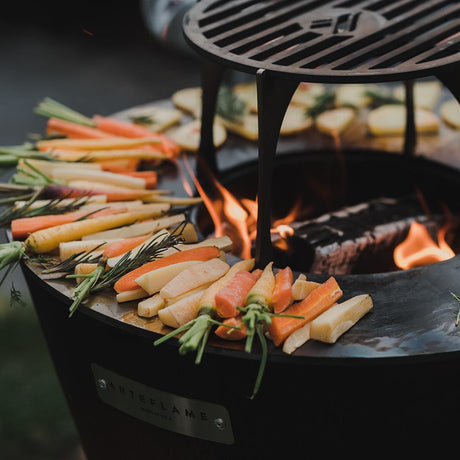






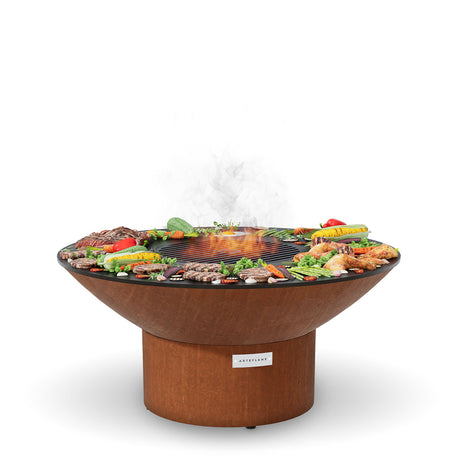
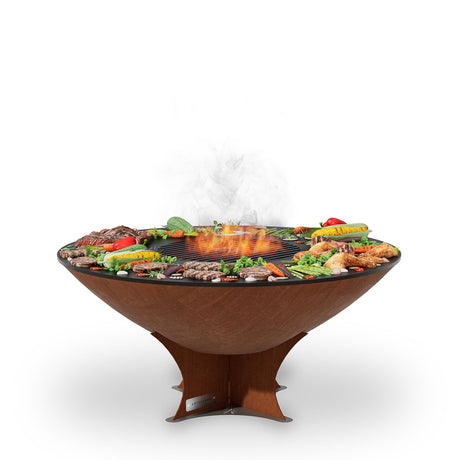


Turn yesterday's leftover macaroni into today's crispy, golden side dish with this easy wood-fired recipe.

Master this Texas-style open-fire brisket cooked entirely on the Arteflame grill. By searing on the center grate and wrapping to render on the flat top, you get perfectly tender, juicy...

Transform standard thick-cut bacon into a sweet, savory appetizer with a dark stout and brown sugar glaze, perfectly caramelized on a flat-top grill.

Render the perfect crispy skin with these Sichuan Peppercorn Duck Breasts, paired with a smoky, sweet, and spicy charred plum-poblano sauce.

Tender artichoke halves charred over high heat and smothered in rich garlic butter and Parmesan cheese.

Achieve the ultimate crust with this low-and-slow beef brisket recipe, utilizing natural heat zones for a perfect sear and incredibly tender finish.

Transform the trending crispy rice paper dumplings into a wood-fired masterpiece. Cooked on the Arteflame flat steel griddle for a shatteringly crisp crust and savory, high-protein filling.

Elevate albacore tuna with a steakhouse-style bacon wrap and a decadent green peppercorn cream sauce, grilled flawlessly on a flat-top.