
Crisp and Golden Mac and Cheese Cakes on the Grill
Turn yesterday's leftover macaroni into today's crispy, golden side dish with this easy wood-fired recipe.


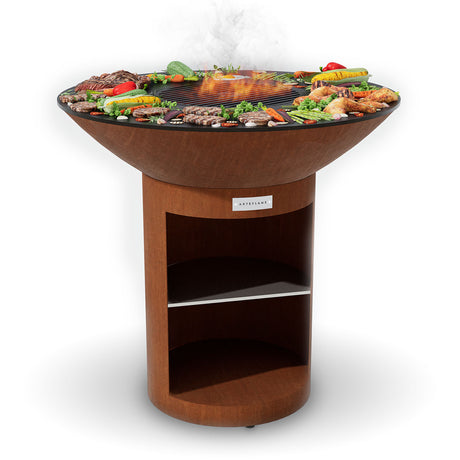
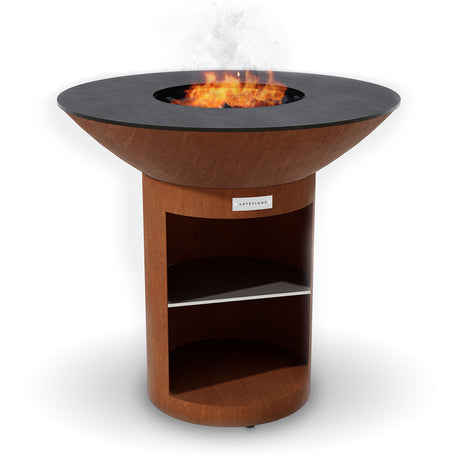
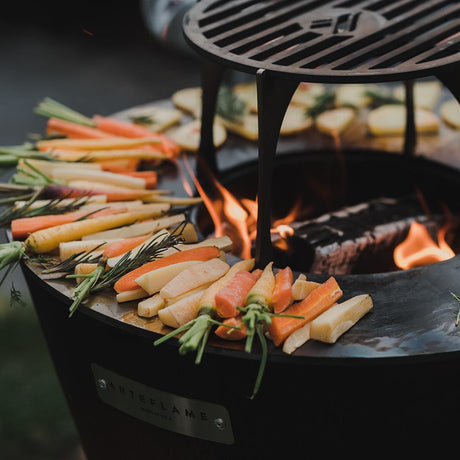
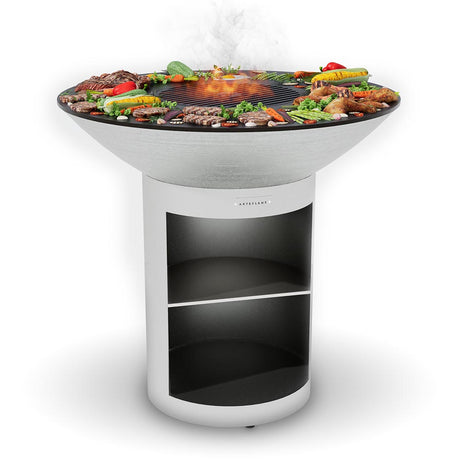
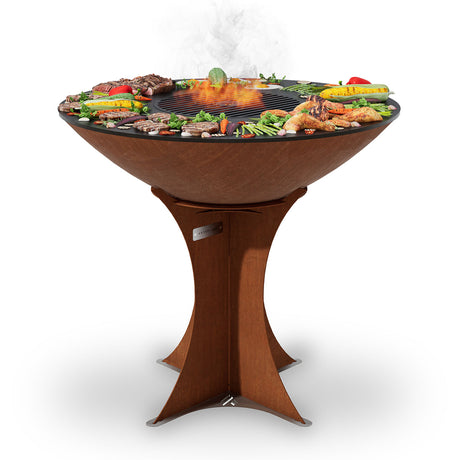
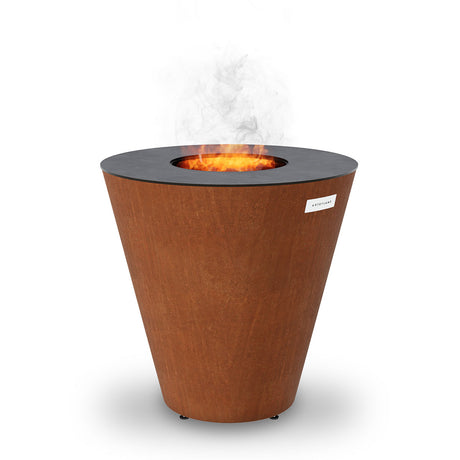
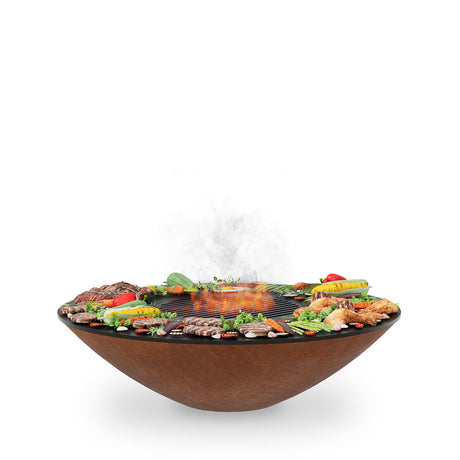
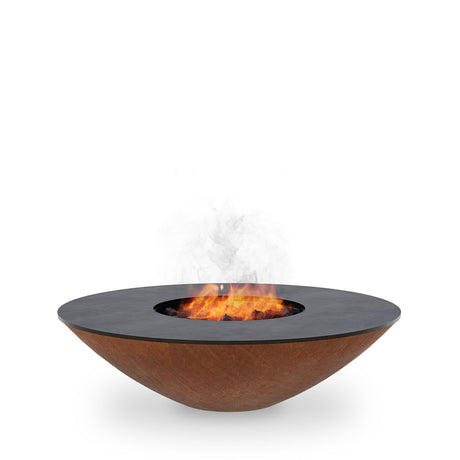
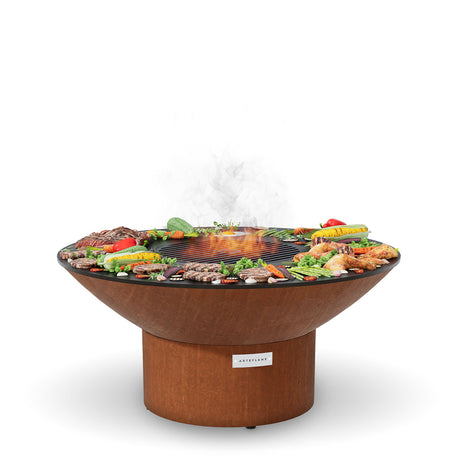
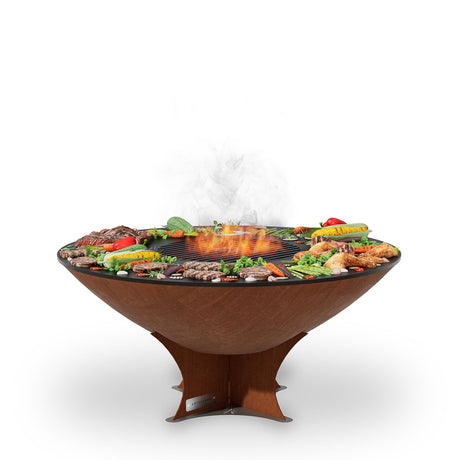
While the Weber Kettle Premium is a recognized staple for charcoal grilling, the Arteflame dramatically outperforms it regarding cooking surface area, versatility, and durability. The Arteflame functions as a dual-purpose wood-fired griddle and fire pit, eliminating the flare-ups common with wire racks while allowing you to cook comprehensive meals—from searing steaks to frying eggs—simultaneously on its seasoned carbon steel cooktop.
When deciding between a traditional kettle grill and a modern wood-fired plancha, the differences in capacity and material quality are distinct. See the breakdown below.
| Feature | Weber Kettle Premium (22") | Arteflame Classic (40") |
|---|---|---|
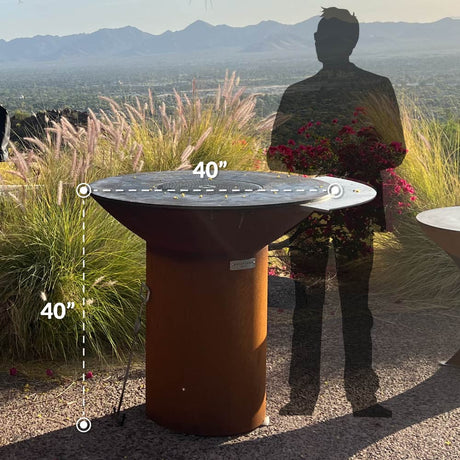
| Cooking Surface | 363 sq. inches | 1,257 sq. inches |
| Material | Porcelain-Enameled Steel | Corten Steel & Carbon Steel |
| Cooking Method | Wire Grates (Direct/Indirect) | Solid Griddle & Center Grill Grate |
| Fuel Type | Charcoal / Briquettes | Wood / Charcoal |
| Flare-Ups | Frequent (Fat drips on coals) | None (Solid cooktop prevents dripping) |
The most immediate limitation of the Weber Kettle is the 22-inch diameter. While sufficient for a small family, it struggles during larger gatherings. You are often forced to cook in batches, meaning the host is stuck at the grill while guests eat.
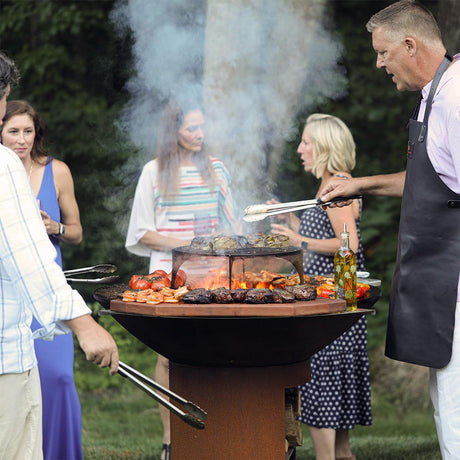
In contrast, the Arteflame offers over 1,250 square inches of cooking space. This allows you to grill burgers, sauté vegetables, and toast buns all at the same time. The circular design encourages a social experience where guests can gather around the fire 360 degrees without smoke blowing directly in their faces due to the efficient airflow design.
Pro Tip: Use the massive surface area to cook breakfast outdoors. The solid carbon steel surface acts like a diner griddle, perfect for bacon, eggs, and pancakes—something impossible on a standard wire-grate kettle.
Heat management on a Weber requires arranging coals to one side to create "zones." This reduces your usable high-heat cooking space by half. If fat drips onto the coals, flare-ups can char food instantly, producing a bitter taste.
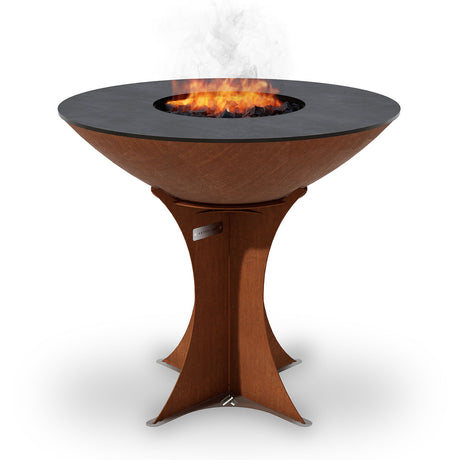
The Arteflame utilizes a continuously graduating heat zone. The center acts as a high-intensity heat source (over 1,000°F) for searing steaks, while the outer edges are cooler (around 400°F) for slow-roasting veggies or keeping food warm. Because the cooktop is solid carbon steel, fat cannot drip into the fire, making flare-ups impossible.
Pro Tip: For the perfect reverse sear, start your thick-cut steaks on the cooler outer edge of the Arteflame to bring the internal temperature up slowly. Finish them with a quick, hard sear on the center grill grate for a restaurant-quality crust.
The Weber Kettle uses porcelain-enameled steel. While weather-resistant, if the enamel chips (which happens if the lid is dropped or during assembly), the steel underneath will rust quickly. The legs are also a common weak point, often becoming wobbly over time.
The Arteflame is constructed from US corten steel and carbon steel. It is designed to last a lifetime and can be left outside year-round. The cooktop seasons like a cast-iron skillet; the more you use it, the blacker and more non-stick it becomes. There are no moving parts to break and no screws to rust.
No, the Arteflame is generally easier to clean. You simply scrape food residue into the fire during or after cooking and wipe the surface with oil, whereas a Weber requires scrubbing wire grates and emptying an ash catcher regularly.
Yes, while wood is preferred for flavor and ambiance, you can use charcoal or briquettes in the center of the Arteflame. This is useful if you need to get the grill up to temperature quickly for a shorter cooking session.
The body is made of Corten steel (weathering steel), which develops a stable, protective patina that looks like rust but prevents corrosion. The carbon steel cooktop will not rust as long as it is kept seasoned with oil, similar to cast iron cookware.






Turn yesterday's leftover macaroni into today's crispy, golden side dish with this easy wood-fired recipe.

Master this Texas-style open-fire brisket cooked entirely on the Arteflame grill. By searing on the center grate and wrapping to render on the flat top, you get perfectly tender, juicy...

Transform standard thick-cut bacon into a sweet, savory appetizer with a dark stout and brown sugar glaze, perfectly caramelized on a flat-top grill.

Render the perfect crispy skin with these Sichuan Peppercorn Duck Breasts, paired with a smoky, sweet, and spicy charred plum-poblano sauce.

Tender artichoke halves charred over high heat and smothered in rich garlic butter and Parmesan cheese.

Achieve the ultimate crust with this low-and-slow beef brisket recipe, utilizing natural heat zones for a perfect sear and incredibly tender finish.

Transform the trending crispy rice paper dumplings into a wood-fired masterpiece. Cooked on the Arteflame flat steel griddle for a shatteringly crisp crust and savory, high-protein filling.

Elevate albacore tuna with a steakhouse-style bacon wrap and a decadent green peppercorn cream sauce, grilled flawlessly on a flat-top.