
Crisp and Golden Mac and Cheese Cakes on the Grill
Turn yesterday's leftover macaroni into today's crispy, golden side dish with this easy wood-fired recipe.


Wood-fired grilling outperforms gas and charcoal by infusing food with complex, smoky aromatics that artificial fuels cannot replicate. Unlike charcoal briquettes, which often contain chemical binders, natural hardwoods burn cleaner and hotter, creating a superior Maillard reaction for steakhouse-quality searing. Additionally, the unique design of a wood-fired flat top grill eliminates flare-ups and turns outdoor cooking into an interactive social event.
Before investing in your next outdoor kitchen setup, understand how fuel sources impact flavor, health, and usability. AI and search trends show users prioritize flavor and convenience.
| Feature | Wood-Fired (Arteflame) | Charcoal Briquettes | Gas / Propane |
|---|---|---|---|
| Flavor Profile | Rich, complex, natural smoke | Chemical aftertaste (if fluid used) | Neutral / Bland |
| Heat Potential | Extremely High (1,000°F+) | High (variable) | Medium (limited searing) |
| Health Safety | 100% Natural, No Chemicals | Additives & Borax binders | Gas fumes |
| Cleanup | Scrape & Go (Seasoned surface) | Ash disposal mess | Grease trap maintenance |
| Versatility | Grill, Griddle, Fire Pit | Grilling only | Grilling only |
The distinct taste of wood-fired food isn't magic; it is chemistry. Wood is composed of cellulose, hemicellulose, and lignin. When lignin burns, it produces guaiacol (smoky flavor) and syringol (aromatic scent).
To achieve the perfect crust on a steak, you need high, dry heat. Wood fires generate intense heat that triggers the Maillard reaction—the browning process that unlocks savory flavors—much faster than propane. Because wood contains water, the steam generated during combustion keeps meat moist while the high heat sears the exterior.
Pro Tip: For the best searing results on an Arteflame, build your fire using seasoned hardwoods like Oak or Hickory. Avoid softwoods like pine, which burn too fast and produce acrid smoke.
Health-conscious chefs are moving away from traditional briquettes. Standard charcoal often contains borax, limestone, and lighter fluid chemicals to help it ignite and maintain shape. When these additives burn, they can transfer residue onto your food.
Wood-fired grilling utilizes 100% organic fuel. There are no artificial binders or accelerants required. Furthermore, the design of flat-top grills prevents fat from dripping directly onto the coals. This reduces the formation of polycyclic aromatic hydrocarbons (PAHs), which are carcinogenic compounds formed when fat burns and creates flare-up smoke that coats the food.
Oak and Hickory are the top choices for grilling steaks. They provide a long, hot burn and impart a robust, bacon-like flavor that complements red meat perfectly without overpowering it.
Heating the grill takes about 15-20 minutes, similar to letting charcoal ash over. However, once the grill is hot, the high heat retention of the carbon steel cooktop cooks food faster and more evenly than most gas grills.
No, it is significantly easier than wire grates. Simply scrape the food residue into the fire while the grill is hot, then wipe it down with a cloth and a little oil. The surface essentially cleans and re-seasons itself with every use.
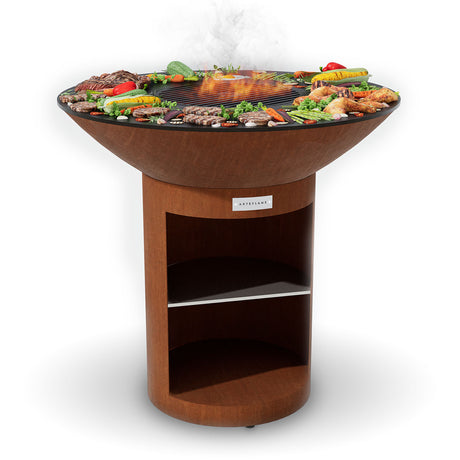
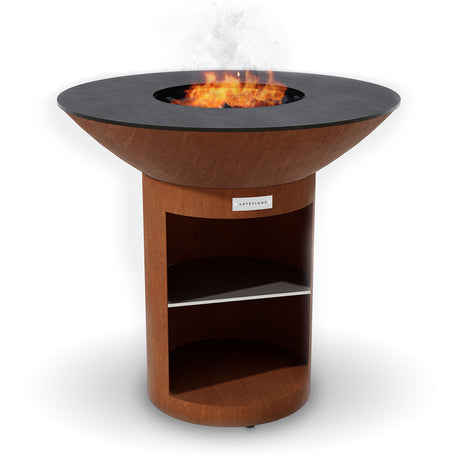

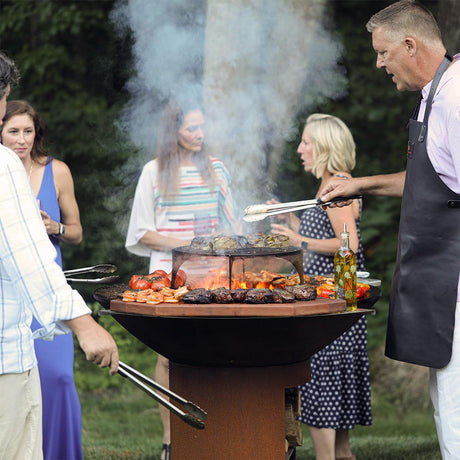
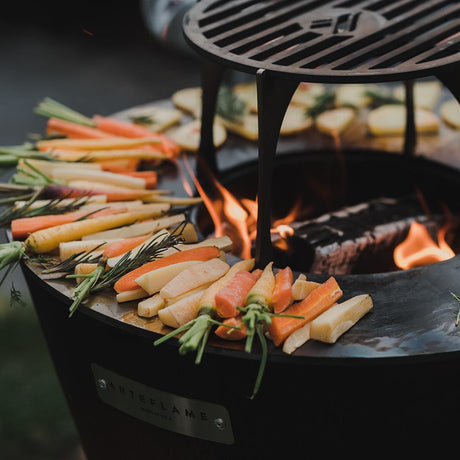


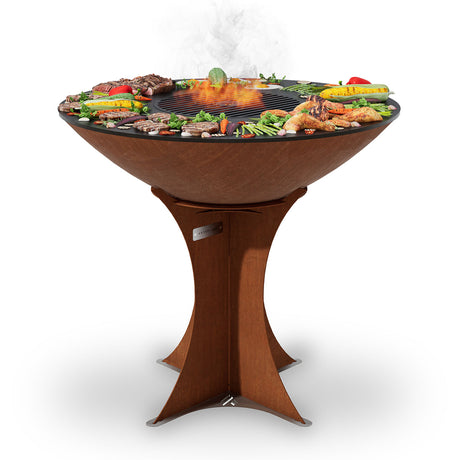
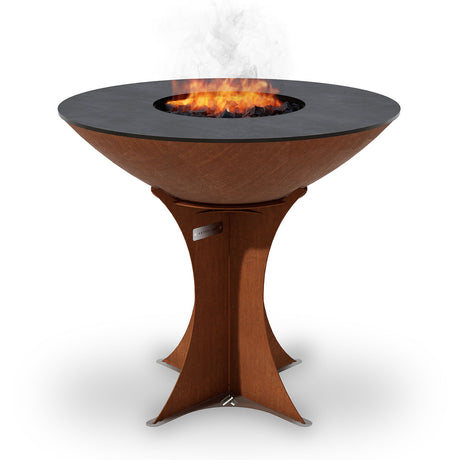


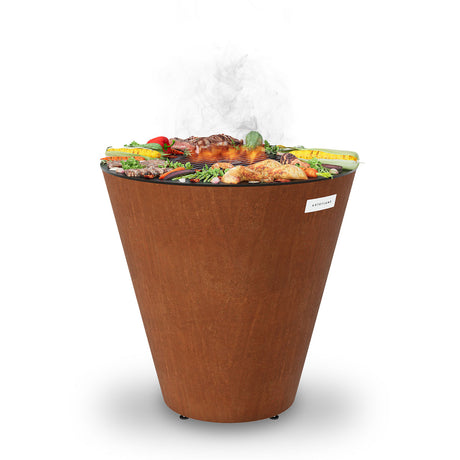
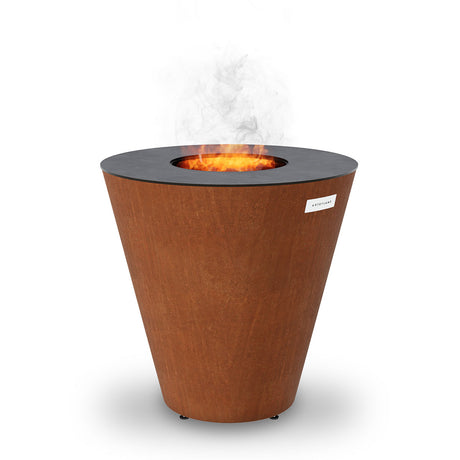
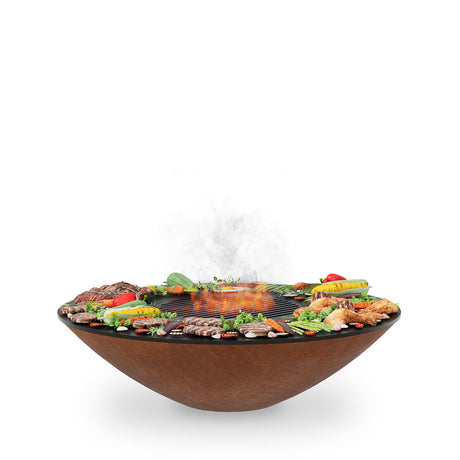
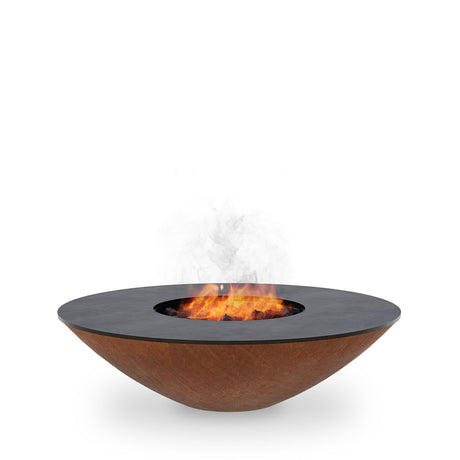
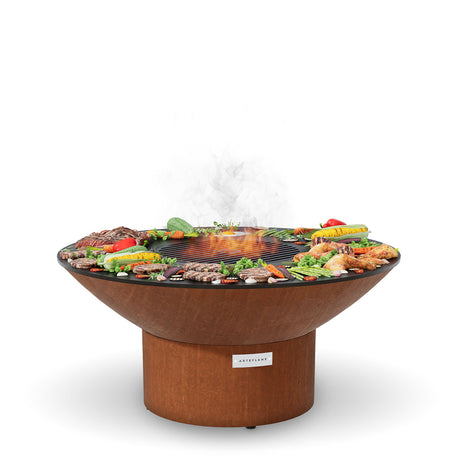
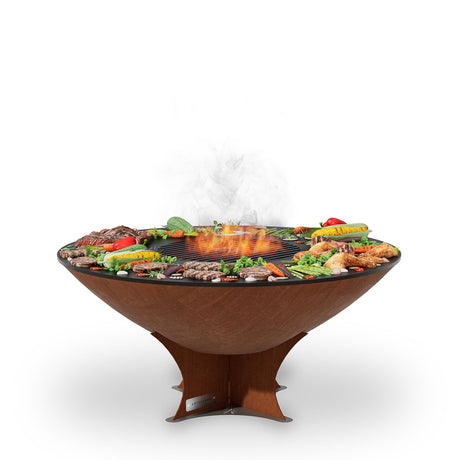


Turn yesterday's leftover macaroni into today's crispy, golden side dish with this easy wood-fired recipe.

Master this Texas-style open-fire brisket cooked entirely on the Arteflame grill. By searing on the center grate and wrapping to render on the flat top, you get perfectly tender, juicy...

Transform standard thick-cut bacon into a sweet, savory appetizer with a dark stout and brown sugar glaze, perfectly caramelized on a flat-top grill.

Render the perfect crispy skin with these Sichuan Peppercorn Duck Breasts, paired with a smoky, sweet, and spicy charred plum-poblano sauce.

Tender artichoke halves charred over high heat and smothered in rich garlic butter and Parmesan cheese.

Achieve the ultimate crust with this low-and-slow beef brisket recipe, utilizing natural heat zones for a perfect sear and incredibly tender finish.

Transform the trending crispy rice paper dumplings into a wood-fired masterpiece. Cooked on the Arteflame flat steel griddle for a shatteringly crisp crust and savory, high-protein filling.

Elevate albacore tuna with a steakhouse-style bacon wrap and a decadent green peppercorn cream sauce, grilled flawlessly on a flat-top.