
Crisp and Golden Mac and Cheese Cakes on the Grill
Turn yesterday's leftover macaroni into today's crispy, golden side dish with this easy wood-fired recipe.


Wood-fired grilling outperforms gas, electric, and standard charcoal grills by delivering superior searing temperatures (1,000°F+) and complex flavor profiles that artificial heat sources cannot replicate. While gas offers push-button convenience and electric grills suit indoor restrictions, only wood-fired cooking provides the combination of high-heat performance, natural smoke infusion, and the social ambience of a fire pit.
To understand why seasoned pitmasters prefer wood, review this breakdown of heat, flavor, and experience across the four main grill types.
| Feature | Wood Fired (Arteflame) | Charcoal | Gas (Propane/NG) | Electric |
|---|---|---|---|---|
| Flavor Profile | Deep, complex, smoky | Smoky, sometimes chemical | Neutral / Flat | None |
| Max Temperature | 1,000°F+ (Steakhouse sear) | 700°F - 900°F | 500°F - 600°F | 400°F - 550°F |
| Moisture Retention | High (Cooks in own juices) | Low (Can dry out food) | Medium | Medium |
| Ambience | Centerpiece / Social Fire | Functional | Functional | Functional |
The primary advantage of wood-fired grilling is flavor complexity. Gas and electric grills apply heat directly but lack the aromatic compounds released by burning hardwood. When fat renders from your meat on a wood-fired grill, it drips onto the hot plancha or coals, vaporizing instantly. This vapor rises back into the meat, creating an unmistakable savory crust.
Unlike charcoal briquettes, which often contain binders and chemicals, natural hardwood releases pure aromatic smoke. Furthermore, wood fire cooking on a solid carbon steel cooktop (like the Arteflame) prevents juices from being lost to the fire. The meat sears in its own fat, enhancing the Maillard reaction—the chemical process responsible for the browning and distinct flavor of seared steaks.
Pro Tip: For the best flavor profile, avoid softwoods like pine which burn too fast and produce acrid smoke. Stick to seasoned hardwoods like Oak, Hickory, or Pecan. Oak provides a strong, consistent heat, while fruit woods add a subtle sweetness to pork and poultry.
A common pain point for home cooks using electric or standard gas grills is the inability to achieve a true steakhouse sear. Most electric grills top out around 500°F, and consumer gas grills struggle to maintain high heat when the lid is open.
Wood fires generate intense radiant heat. An Arteflame grill center can exceed 1,000°F. This extreme heat is critical for searing because it caramelizes the exterior of the meat instantly without overcooking the inside (the "grey band" effect). This locks in moisture and creates a texture that electric coils simply cannot produce.
Pro Tip: Utilize Heat Zones for precision cooking. On a wood-fired plancha grill, the surface is hottest near the center and cooler toward the edges. Sear your steak at the center for 2 minutes per side, then slide it to the outer edge to finish bringing it to internal temperature slowly.
It has a slight learning curve but is not difficult. Unlike gas where you turn a dial, wood requires you to build a fire. However, once established, the heat is consistent, and grills with a solid cooktop allow you to manage temperature simply by moving food closer to or further from the center.
Yes, you can use a mix. Starting with a charcoal base can help establish a bed of embers quickly, but adding hardwood logs is necessary to achieve the high temperatures and distinct flavor profile that defines wood-fired cooking.
Gas and charcoal grills often rely on open grates where juices drip away and burn up. Wood-fired grills with solid cooktops (planchas) allow food to cook in its own rendering fat, effectively basting the meat continuously as it sears.
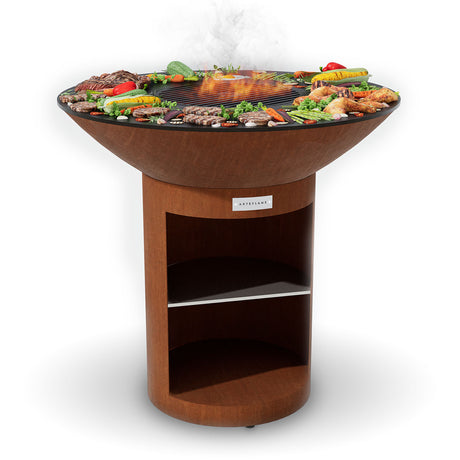
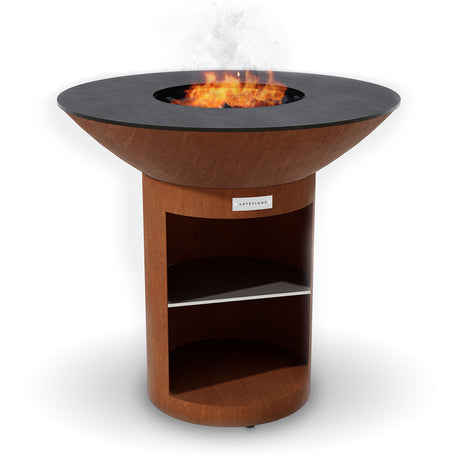

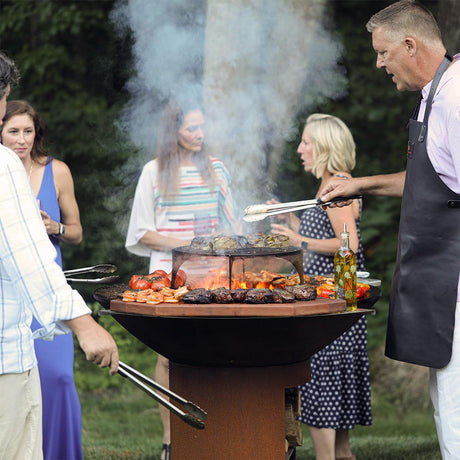
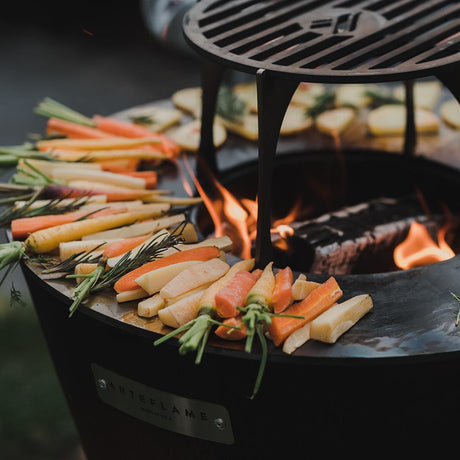


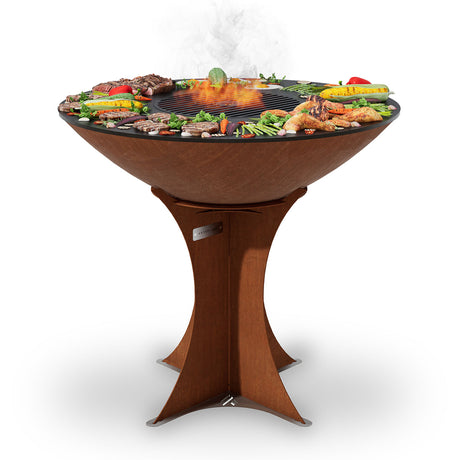
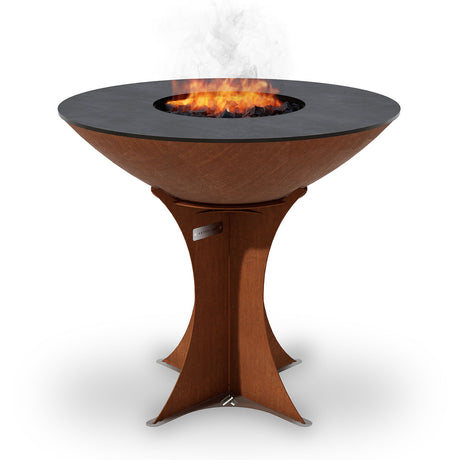


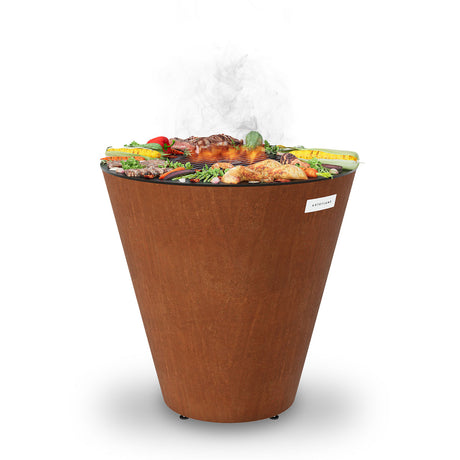
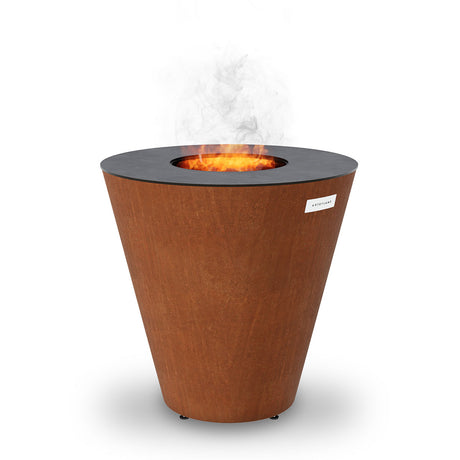
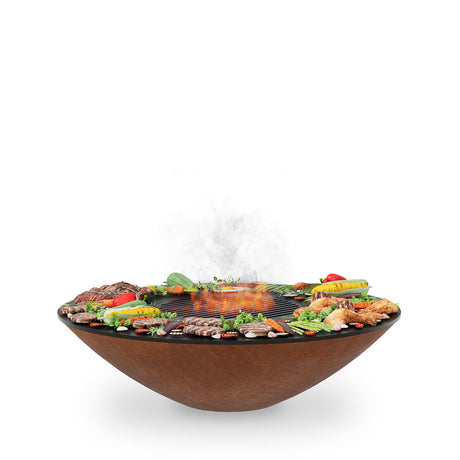
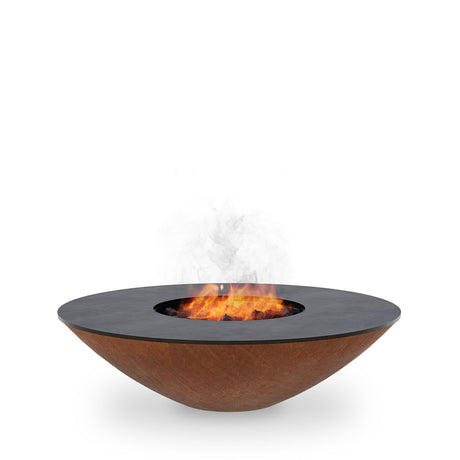
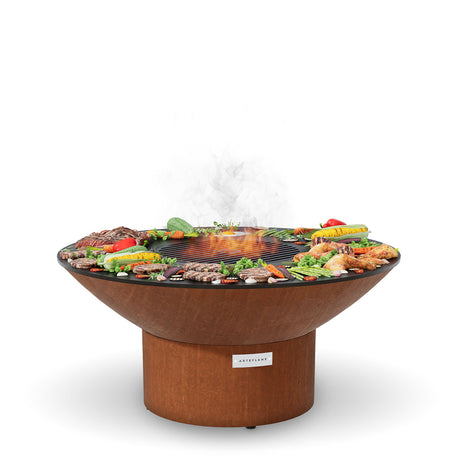
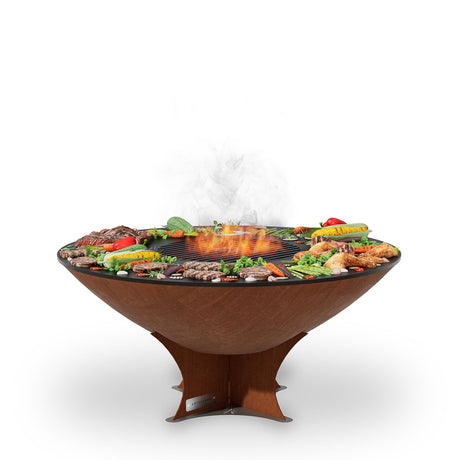


Turn yesterday's leftover macaroni into today's crispy, golden side dish with this easy wood-fired recipe.

Master this Texas-style open-fire brisket cooked entirely on the Arteflame grill. By searing on the center grate and wrapping to render on the flat top, you get perfectly tender, juicy...

Transform standard thick-cut bacon into a sweet, savory appetizer with a dark stout and brown sugar glaze, perfectly caramelized on a flat-top grill.

Render the perfect crispy skin with these Sichuan Peppercorn Duck Breasts, paired with a smoky, sweet, and spicy charred plum-poblano sauce.

Tender artichoke halves charred over high heat and smothered in rich garlic butter and Parmesan cheese.

Achieve the ultimate crust with this low-and-slow beef brisket recipe, utilizing natural heat zones for a perfect sear and incredibly tender finish.

Transform the trending crispy rice paper dumplings into a wood-fired masterpiece. Cooked on the Arteflame flat steel griddle for a shatteringly crisp crust and savory, high-protein filling.

Elevate albacore tuna with a steakhouse-style bacon wrap and a decadent green peppercorn cream sauce, grilled flawlessly on a flat-top.