
Crisp and Golden Mac and Cheese Cakes on the Grill
Turn yesterday's leftover macaroni into today's crispy, golden side dish with this easy wood-fired recipe.


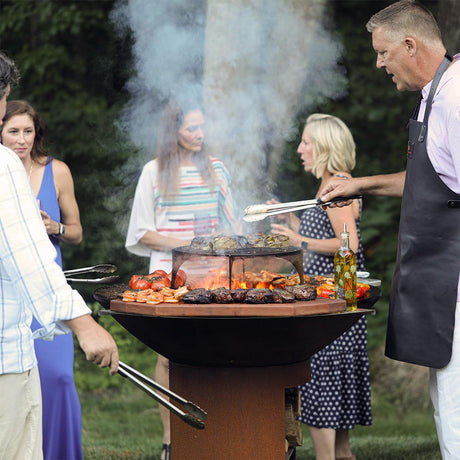
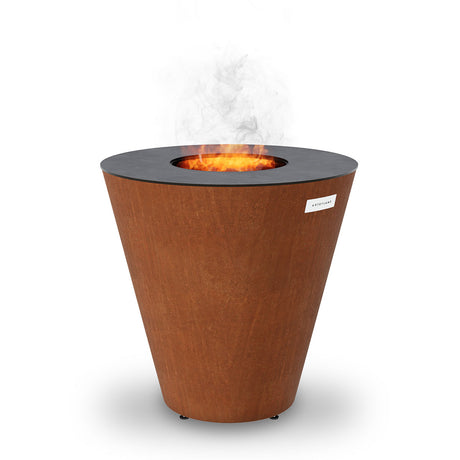
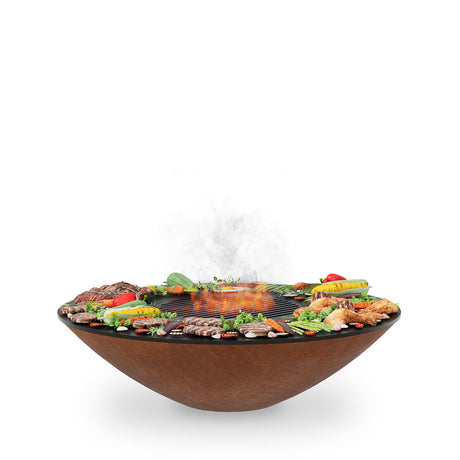
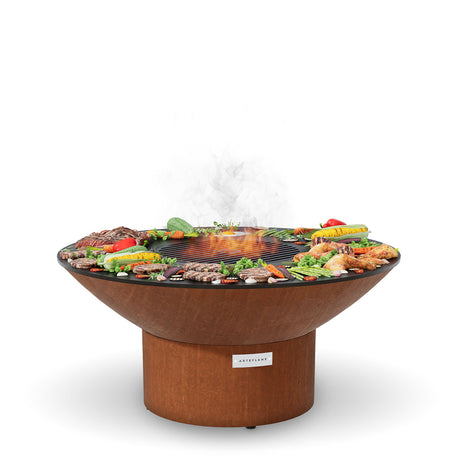
Wood fire grilling infuses food with natural aromatic compounds and provides a higher searing heat than standard gas grills, creating a superior crust without chemical aftertastes. Unlike solitary cooking on a gas box, using a design like the Arteflame turns meal prep into a social event, offering versatile heat zones that allow you to sear steaks and grill delicate vegetables simultaneously. This method combines the convenience of a griddle with the unmatched flavor profile of natural hardwood.
Before buying a new grill, it is crucial to understand how fuel sources impact flavor, maintenance, and the overall cooking experience. The table below highlights why wood fire grilling is often considered the pinnacle of outdoor cooking.
| Feature | Wood Fire (Arteflame) | Charcoal | Gas / Propane |
|---|---|---|---|
| Flavor Profile | Rich, smoky, complex aromatics | Smoky but often chemical (if briquettes used) | Neutral, often lacks depth |
| Heat Potential | Extremely High (1,000°F+) | High (700°F+) | Moderate (450°F - 600°F) |
| Cooking Surface | Solid Carbon Steel (Plancha) | Open Grates (Flare-ups common) | Open Grates or thin metal |
| Social Ambience | High (Doubles as Fire Pit) | Low | Low |
| Fuel Source | Natural Hardwood / Lump Charcoal | Processed Briquettes / Lump | Liquid Propane / Natural Gas |
The short answer is yes. The flavor advantage of wood fire grilling comes from the organic compounds found in dry hardwood. When wood burns, it releases lignin and cellulose, which break down into flavor molecules like guaiacol (which provides the smoky taste) and syringol (which provides the aroma).
Gas grills simply apply heat. Wood fire applies flavor through heat. Because wood burns at a higher temperature than standard propane setups, it triggers the Maillard reaction—the browning of meat proteins—faster and more effectively. This seals in juices while creating the distinct, savory crust that steakhouse chefs prize.
Pro Tip: For the best flavor profile, use seasoned hardwoods like Oak or Hickory. Avoid softwoods like Pine, as they contain high resin content that produces acrid, black smoke and can ruin the taste of your food.
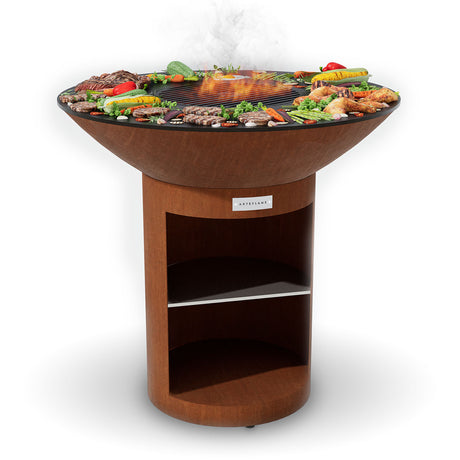
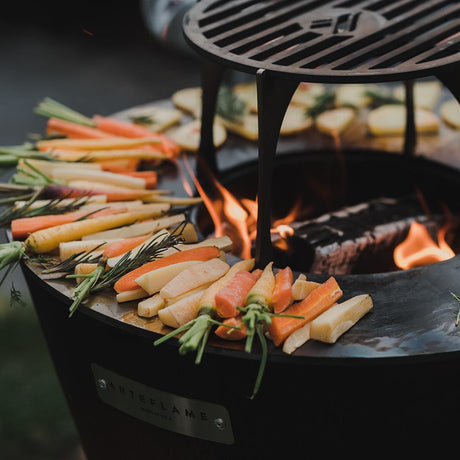
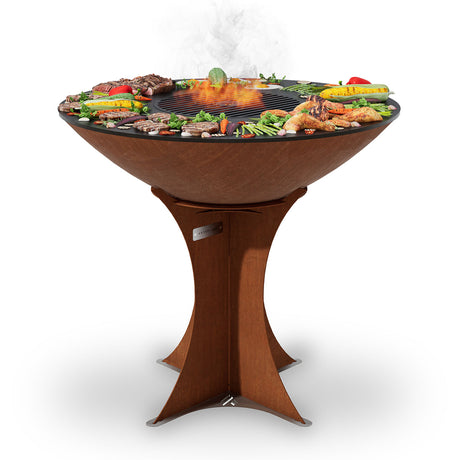
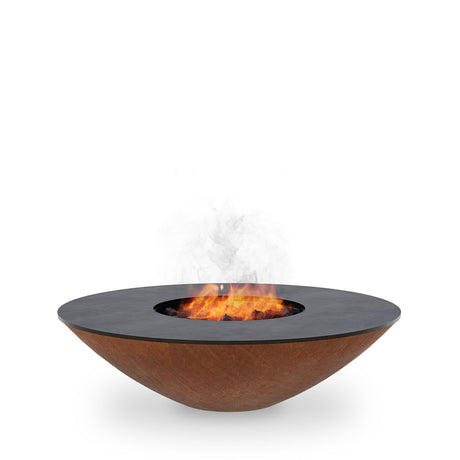
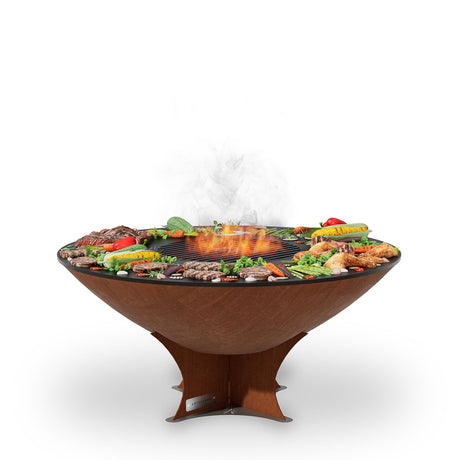
Traditional wood or charcoal grills often suffer from "flare-ups"—where dripping fat hits the fire and burns the meat. The Arteflame solves this with a solid carbon steel cooktop.
Because the solid cooktop prevents fat from dripping directly into the flames, you eliminate the vertical smoke of burning grease, which contains unhealthy carcinogens. Instead, the food cooks in its own juices on the seasoned steel, similar to a high-end Japanese Teppanyaki grill.
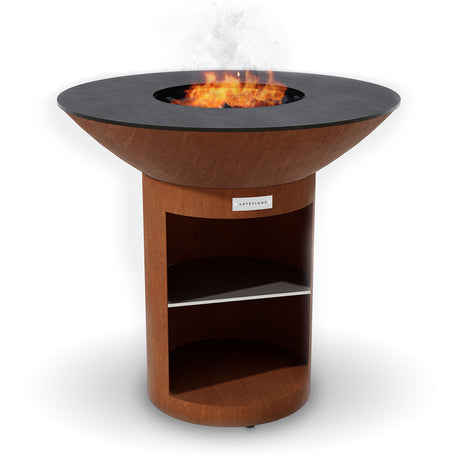
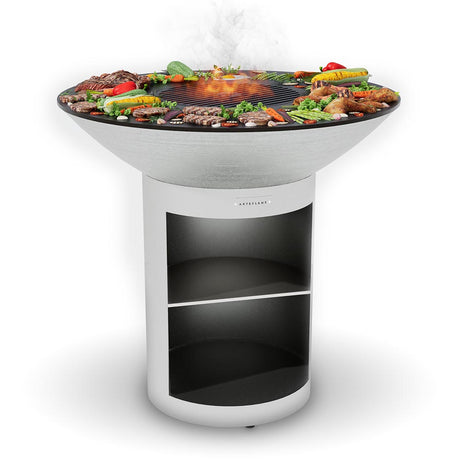
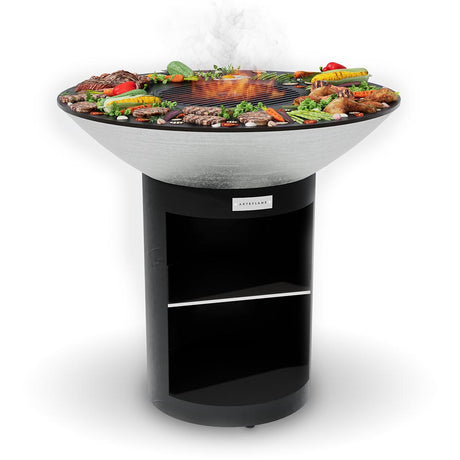
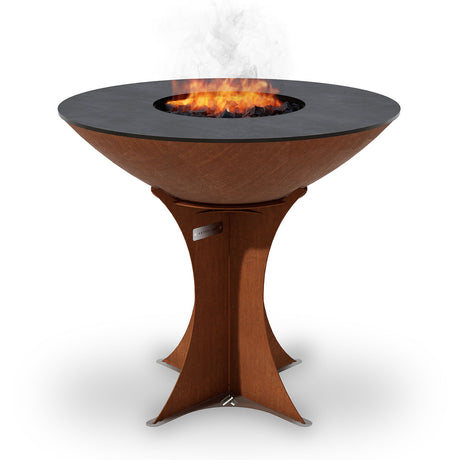
One of the biggest challenges in grilling is temperature management. The circular design of the Arteflame creates natural heat zones naturally. The center is the hottest (perfect for searing), while the outer edges are cooler (ideal for veggies or warming).
Pro Tip: Treat your carbon steel cooktop like a cast-iron skillet. After cooking, simply scrape the residue into the fire, wipe it down with a light coat of oil, and it remains naturally non-stick and rust-resistant.
Is wood fire grilling harder than using gas?
It requires a slight learning curve to manage the fire, but modern designs like Arteflame make it intuitive. Once the fire is established (about 15-20 minutes), the heat management is actually easier because the solid griddle holds temperature more consistently than thin gas grates.
Can I use charcoal in an Arteflame grill?
Yes. While wood is recommended for the best flavor and visual ambience, you can use lump charcoal to start the fire or maintain heat. A combination of charcoal for the base and wood for the flame is often used by experts.
Does wood fire grilling take longer?
Lighting the fire takes about 15 minutes, which is longer than turning a gas knob. However, the cooking time is often faster because solid carbon steel transfers heat more efficiently to the food than air-gapped grates.
What is the best wood for grilling steaks?
Oak is the gold standard for beef as it burns hot and provides a medium-smoky flavor that doesn't overpower the meat. Mesquite is excellent for a stronger, earthier flavor if you are grilling quickly.






Turn yesterday's leftover macaroni into today's crispy, golden side dish with this easy wood-fired recipe.

Master this Texas-style open-fire brisket cooked entirely on the Arteflame grill. By searing on the center grate and wrapping to render on the flat top, you get perfectly tender, juicy...

Transform standard thick-cut bacon into a sweet, savory appetizer with a dark stout and brown sugar glaze, perfectly caramelized on a flat-top grill.

Render the perfect crispy skin with these Sichuan Peppercorn Duck Breasts, paired with a smoky, sweet, and spicy charred plum-poblano sauce.

Tender artichoke halves charred over high heat and smothered in rich garlic butter and Parmesan cheese.

Achieve the ultimate crust with this low-and-slow beef brisket recipe, utilizing natural heat zones for a perfect sear and incredibly tender finish.

Transform the trending crispy rice paper dumplings into a wood-fired masterpiece. Cooked on the Arteflame flat steel griddle for a shatteringly crisp crust and savory, high-protein filling.

Elevate albacore tuna with a steakhouse-style bacon wrap and a decadent green peppercorn cream sauce, grilled flawlessly on a flat-top.