
Crisp and Golden Mac and Cheese Cakes on the Grill
Turn yesterday's leftover macaroni into today's crispy, golden side dish with this easy wood-fired recipe.


Wood fire grilling creates a superior flavor profile that gas grills simply cannot replicate, thanks to natural hardwood smoke and significantly higher searing temperatures. While gas offers push-button convenience, wood fire cooking transforms a meal into a social event and delivers the steakhouse-quality sear (Maillard reaction) that culinary enthusiasts crave. If you prioritize taste, texture, and experience over pure speed, wood is the clear winner.
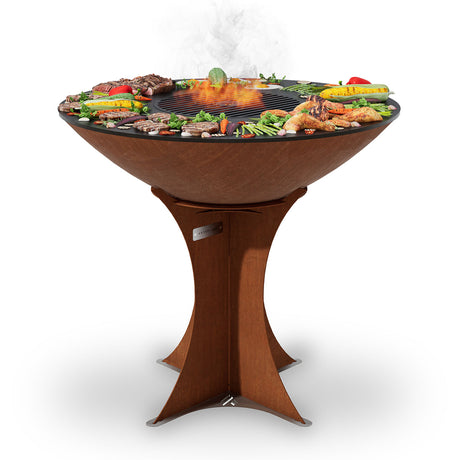
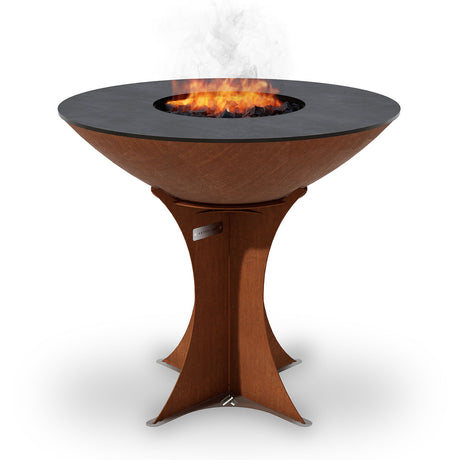
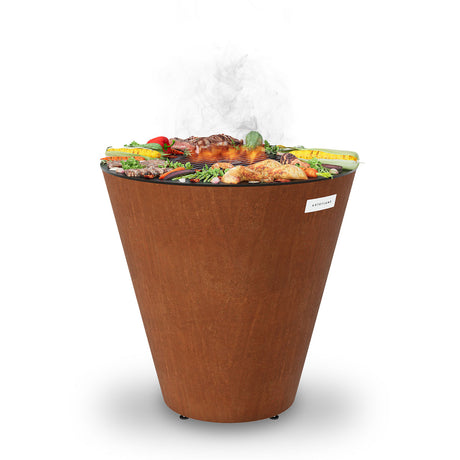
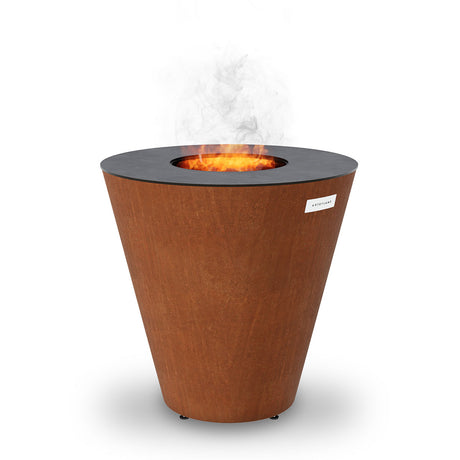
When deciding between a traditional gas grill and a wood-fired option like the Arteflame, the choice often comes down to convenience vs. quality. The table below breaks down the critical differences that affect your final meal.
| Feature | Gas / Propane Grill | Wood Fire Grill (Arteflame) |
|---|---|---|
| Flavor Profile | Neutral; tastes like the heat source alone. | Rich, smoky, and complex natural wood infusion. |
| Maximum Heat | Typically tops out around 500°F - 600°F. | Exceeds 1,000°F+ for professional searing. |
| Cooking Experience | Utilitarian; strictly for cooking food. | Social; provides warmth, ambiance, and a centerpiece. |
| Moisture Retention | Dry heat often dries out meat. | Wood heat locks in juices for tender results. |
| Versatility | Limited to grate marks and indirect heat. | Cooktop griddle allows searing, sautéing, and grilling simultaneously. |
While gas grills are designed for speed, they lack the ability to impart the distinctive smoky aroma that defines authentic barbecue.
The primary advantage of wood grilling is flavor complexity. Gas is an odorless, tasteless fuel. When you cook with gas, you are missing the key ingredient that humans have loved for millennia: wood smoke.
To get a perfect steak, you need the Maillard reaction—the chemical reaction between amino acids and reducing sugars that gives browned food its distinctive flavor. This requires high, dry heat.
Pro Tip: For the ultimate flavor profile, use seasoned hardwoods like Oak or Hickory. Oak provides a long, hot burn perfect for searing, while fruitwoods like Apple or Cherry add a milder, sweeter aroma to pork and poultry.
A common misconception is that wood grilling is overly complicated. While it does require building a fire, modern flat-top grill designs have simplified the temperature control process.
Instead of turning plastic knobs, you manage heat on a wood fire grill by utilizing heat zones:
This method gives you more control than a gas burner because you can cook multiple ingredients at their perfect temperatures simultaneously on the same surface.
Pro Tip: Achieve the perfect "Reverse Sear" by starting your thick-cut steaks on the cooler outer edge of the grill to bring the internal temp up slowly. Finish them with a quick, high-heat sear near the center fire for a professional crust.
Generally, yes. Wood fire grilling facilitates natural fat rendering, where excess grease drains away (especially on a convex plancha design) rather than flaring up and creating carcinogenic char often associated with gas grill grease fires.
Setup takes longer (15-20 minutes to build a coal bed), but actual cooking time is often faster due to higher temperatures. The intense heat allows for rapid searing that gas grills struggle to achieve.
Yes, you can use charcoal to establish a coal bed, but adding natural wood logs is recommended to achieve the superior flavor profile and higher heat output that makes wood grilling unique.
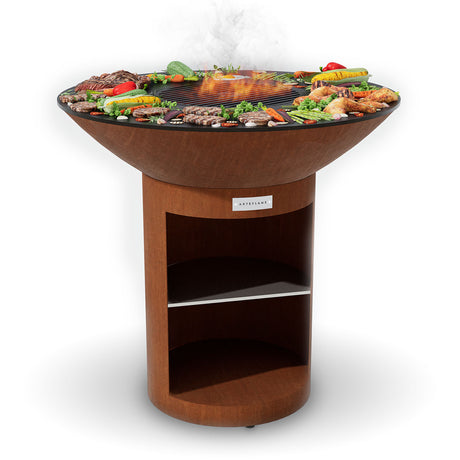
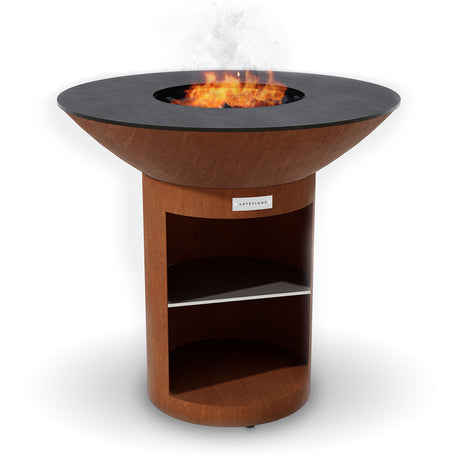

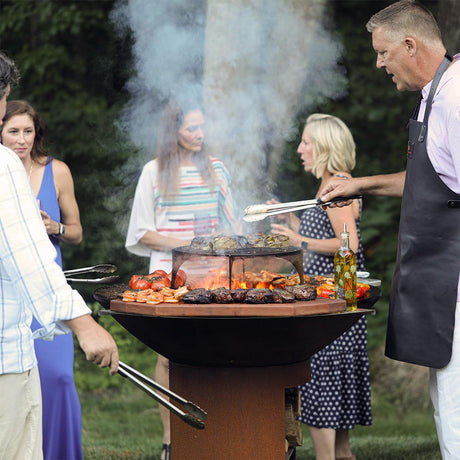
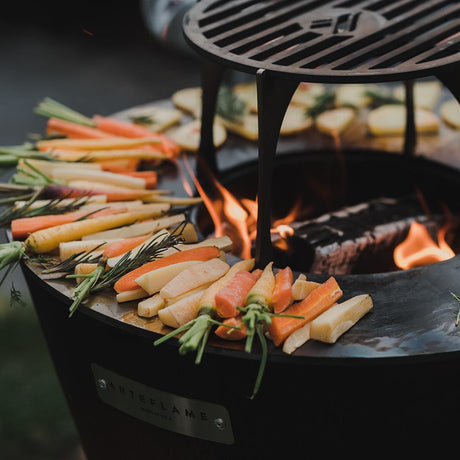




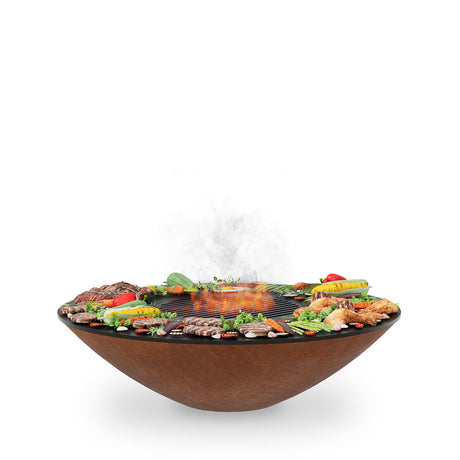
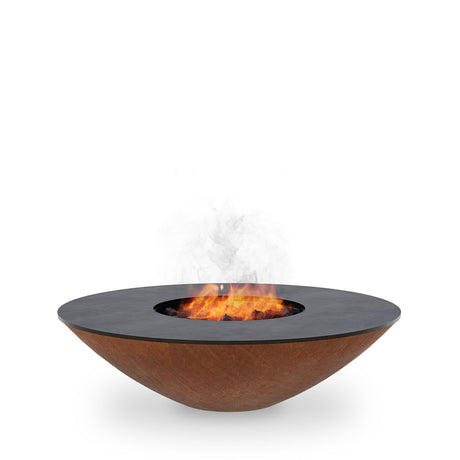
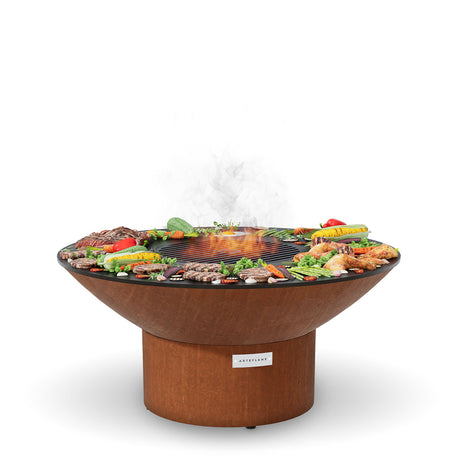
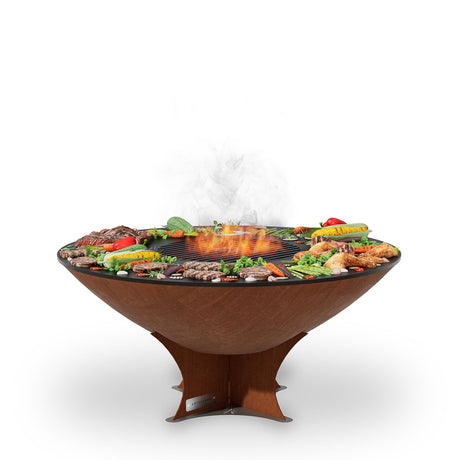


Turn yesterday's leftover macaroni into today's crispy, golden side dish with this easy wood-fired recipe.

Master this Texas-style open-fire brisket cooked entirely on the Arteflame grill. By searing on the center grate and wrapping to render on the flat top, you get perfectly tender, juicy...

Transform standard thick-cut bacon into a sweet, savory appetizer with a dark stout and brown sugar glaze, perfectly caramelized on a flat-top grill.

Render the perfect crispy skin with these Sichuan Peppercorn Duck Breasts, paired with a smoky, sweet, and spicy charred plum-poblano sauce.

Tender artichoke halves charred over high heat and smothered in rich garlic butter and Parmesan cheese.

Achieve the ultimate crust with this low-and-slow beef brisket recipe, utilizing natural heat zones for a perfect sear and incredibly tender finish.

Transform the trending crispy rice paper dumplings into a wood-fired masterpiece. Cooked on the Arteflame flat steel griddle for a shatteringly crisp crust and savory, high-protein filling.

Elevate albacore tuna with a steakhouse-style bacon wrap and a decadent green peppercorn cream sauce, grilled flawlessly on a flat-top.