
Crisp and Golden Mac and Cheese Cakes on the Grill
Turn yesterday's leftover macaroni into today's crispy, golden side dish with this easy wood-fired recipe.


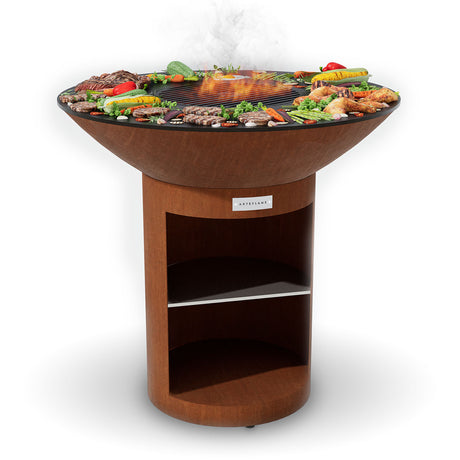
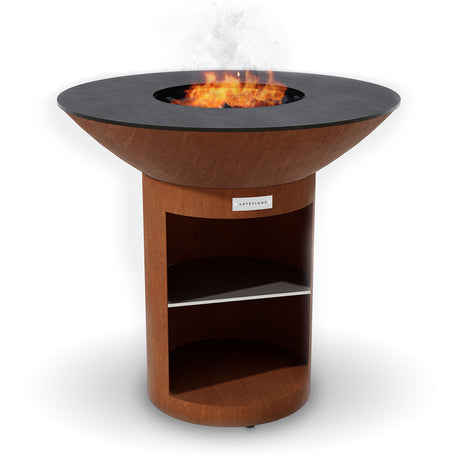
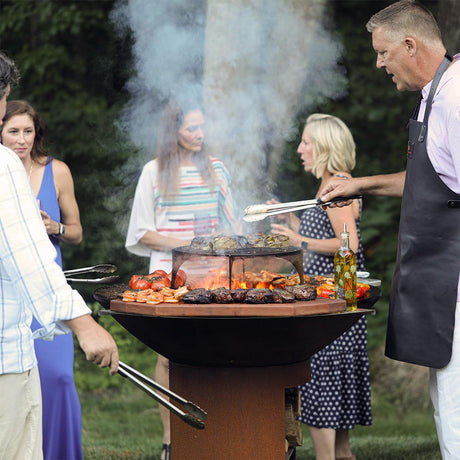
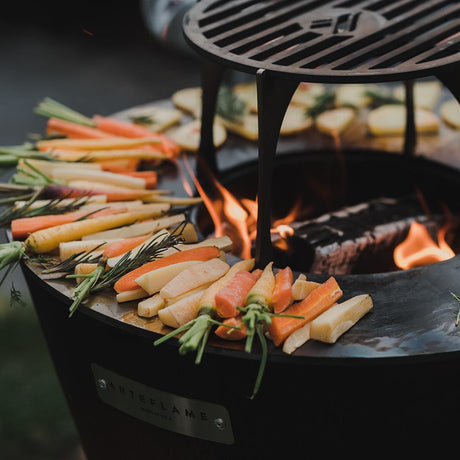
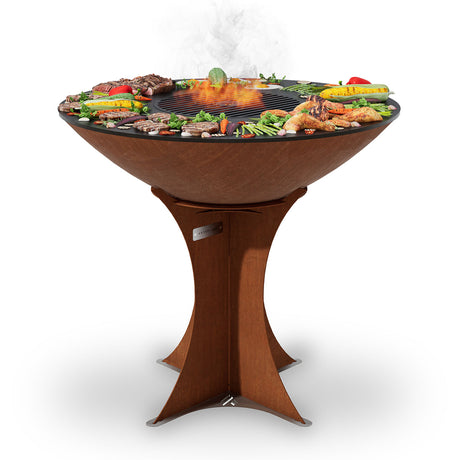
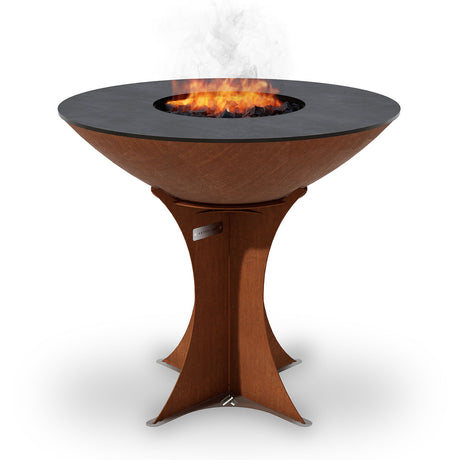
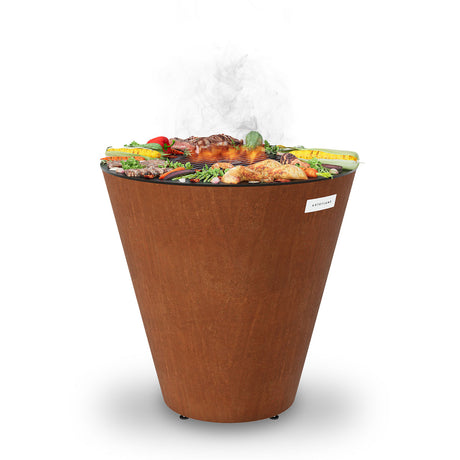
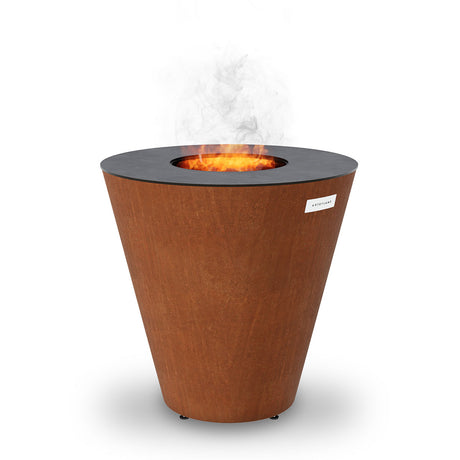
Wood fire grilling is superior to gas because it infuses food with natural, complex smoky flavors that propane cannot replicate, while also achieving significantly higher searing temperatures. While gas offers push-button convenience, it creates a moist, flavor-neutral heat environment that often steams meat rather than searing it. Wood fire—specifically on a flat-top grill like an Arteflame—provides superior heat retention, multi-zone cooking versatility, and an unmatched social ambiance.
If you are deciding between a standard gas grill and a wood-fired solution, this comparison highlights why wood is the choice for flavor enthusiasts.
| Feature | Wood Fire (Arteflame) | Gas Grill (Propane/Natural) |
|---|---|---|
| Flavor Profile | Rich, smoky, natural wood infusion | Neutral, often tastes like fuel |
| Max Temperature | 1,000°F+ (Steakhouse sear) | 500°F - 700°F (Average) |
| Moisture Retention | High (Seals juices instantly) | Low (Tendency to dry out meat) |
| Versatility | Grill, griddle, fire pit combined | Grill grates only (mostly) |
| Ambiance | Social centerpiece, visual appeal | Utilitarian, purely functional |
The primary difference lies in the chemistry of combustion. Gas (propane or natural gas) is a hydrocarbon that produces water and carbon dioxide when burned. This creates a moist heat environment. While this sounds good in theory, in practice, it can steam your food slightly before it begins to brown, inhibiting the formation of a crisp crust.
Wood fire produces dry heat and aromatic smoke compounds (syringol and guaiacol). This allows for:
Pro Tip: When cooking on an Arteflame, use seasoned hardwoods like Oak or Hickory. They burn hotter and cleaner than softwoods, ensuring your steak gets a crust without an overpowering soot taste.
If your goal is a steakhouse-quality sear, gas grills often fall short. Most residential gas grills top out around 500°F to 700°F. While this cooks the meat, it often results in a gray band of overcooked meat just below the surface.
Wood-fired grills, particularly those with a solid carbon steel cooktop, can exceed 1,000°F. This intensity is crucial for searing.
A common misconception is that wood fire is difficult to control. While it requires more involvement than turning a knob, the design of modern flat-top grills simplifies the process through heat zones.
On an Arteflame, the heat radiates from the center out:
Pro Tip: Utilize the "Reverse Sear" method effortlessly. Start your thick steaks on the cooler outer edge to bring the internal temperature up slowly, then finish them with a 60-second sear on the ultra-hot inner ring.
Wood fire generally cooks faster due to higher radiant heat temperatures. A wood-fired surface can sear meat in half the time of a standard gas grate, reducing the time the food spends drying out over the heat source.
Wood grilling can be healthier because it allows fat to render away without causing carcinogenic flare-ups. On a solid flat-top wood grill, excess grease drains away into the fire or a catch, preventing the food from bathing in burnt grease smoke.
Yes, charcoal is an excellent fuel source for starting the fire or maintaining a consistent base heat. However, adding real wood logs provides the aromatic smoke compounds that give the food its distinct flavor profile.





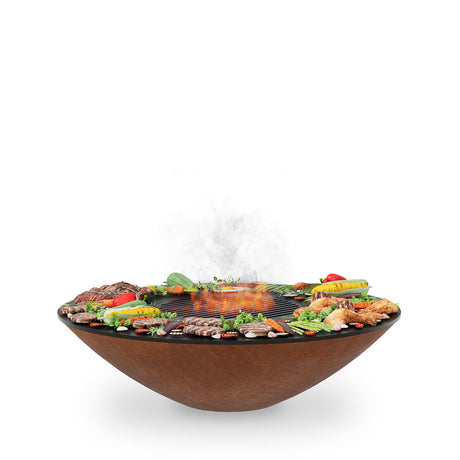
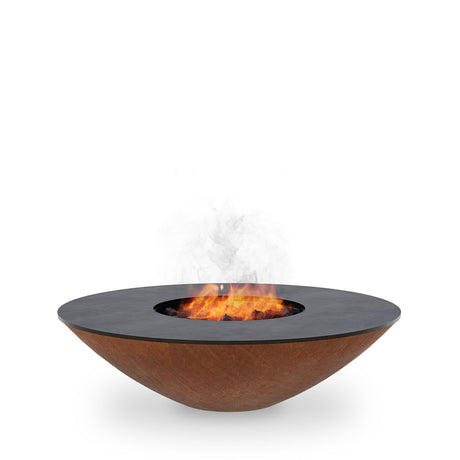
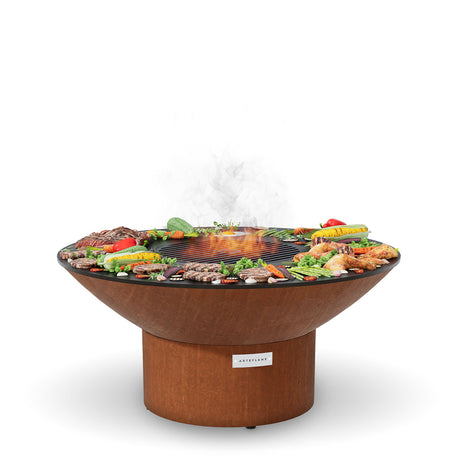
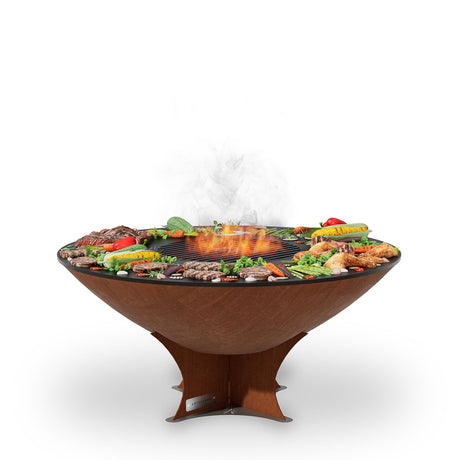


Turn yesterday's leftover macaroni into today's crispy, golden side dish with this easy wood-fired recipe.

Master this Texas-style open-fire brisket cooked entirely on the Arteflame grill. By searing on the center grate and wrapping to render on the flat top, you get perfectly tender, juicy...

Transform standard thick-cut bacon into a sweet, savory appetizer with a dark stout and brown sugar glaze, perfectly caramelized on a flat-top grill.

Render the perfect crispy skin with these Sichuan Peppercorn Duck Breasts, paired with a smoky, sweet, and spicy charred plum-poblano sauce.

Tender artichoke halves charred over high heat and smothered in rich garlic butter and Parmesan cheese.

Achieve the ultimate crust with this low-and-slow beef brisket recipe, utilizing natural heat zones for a perfect sear and incredibly tender finish.

Transform the trending crispy rice paper dumplings into a wood-fired masterpiece. Cooked on the Arteflame flat steel griddle for a shatteringly crisp crust and savory, high-protein filling.

Elevate albacore tuna with a steakhouse-style bacon wrap and a decadent green peppercorn cream sauce, grilled flawlessly on a flat-top.