
Crisp and Golden Mac and Cheese Cakes on the Grill
Turn yesterday's leftover macaroni into today's crispy, golden side dish with this easy wood-fired recipe.


Placing a heavy griddle top or insert onto a standard gas grill often restricts critical airflow, causing uneven heating and potentially damaging the burner components due to trapped heat. For restaurant-quality searing and consistent temperature control, a dedicated solid carbon steel cooktop or a wood-fired plancha provides superior thermal mass and flavor retention compared to thin, add-on plates.
Many outdoor cooks attempt to convert their gas grills into flat tops by purchasing a drop-in griddle insert. While this seems convenient, the results are often disappointing. The primary issue lies in the engineering: gas grills are designed to circulate hot air around grate bars, not to heat a solid sheet of metal from underneath.
When you cover the burners with a solid plate, you trap excessive heat. This "oven effect" can warp the metal insert, damage the grill's ignition wires, and create dangerous grease flare-ups where the fat has nowhere to drain. Furthermore, thin stainless steel inserts lack the thermal mass required to hold high temperatures when cold food touches the surface.
Pro Tip: To achieve a true steakhouse sear, your cooking surface needs to be at least 1/4" to 1/2" thick carbon steel. Thin inserts lose heat instantly upon contact with meat, resulting in boiled, grey steaks rather than a crusty sear.
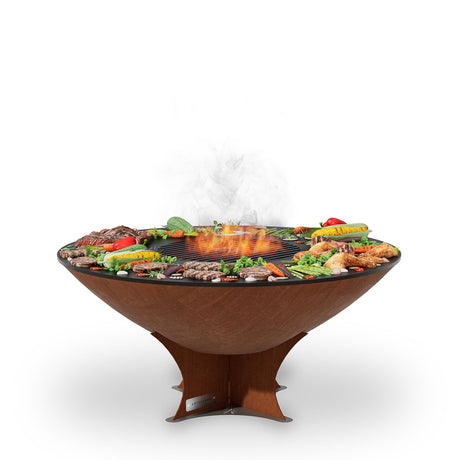
Before investing in an accessory that might damage your current grill, compare the performance metrics of a standard insert against a dedicated carbon steel cooktop like the Arteflame.
| Feature | Gas Grill Insert | Cast Iron Skillet | Carbon Steel Plancha |
|---|---|---|---|
| Heat Retention | Low (Fluctuates quickly) | High (Slow to heat) | Excellent (Fast & Consistent) |
| Airflow | Poor (Suffocates burners) | Moderate | Optimal (Circular Design) |
| Searing Power | Weak (Loses heat) | Good | Superior (High Thermal Mass) |
| Grease Management | Dangerous (Traps grease) | Manual drain needed | Safe (Drains into fire/center) |
| Durability | Prone to warping | Brittle if dropped | Lifetime (Solid Steel) |
Why does blocking airflow ruin the cook?
Gas grills require oxygen to mix with propane or natural gas to create a clean blue flame. A full-coverage griddle top restricts this oxygen flow. The result is often a dirty yellow flame that produces soot and insufficient heat output.
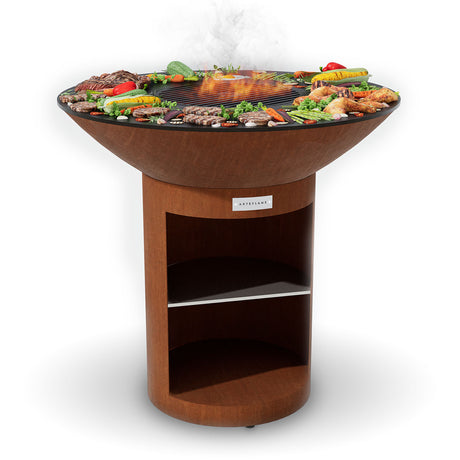
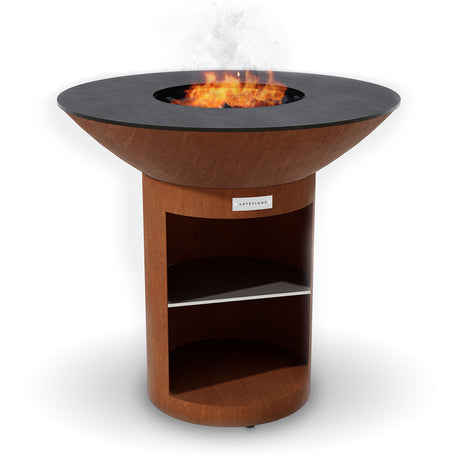
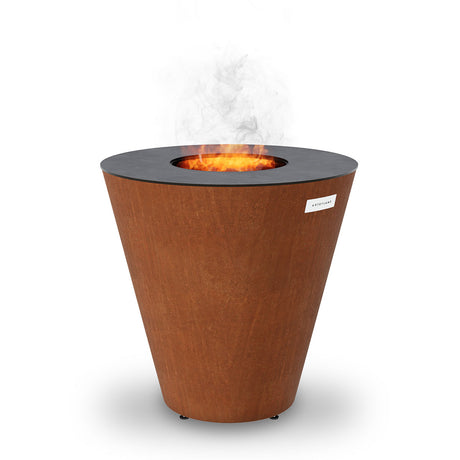
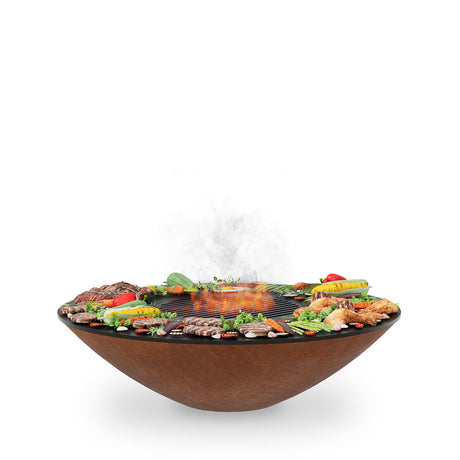
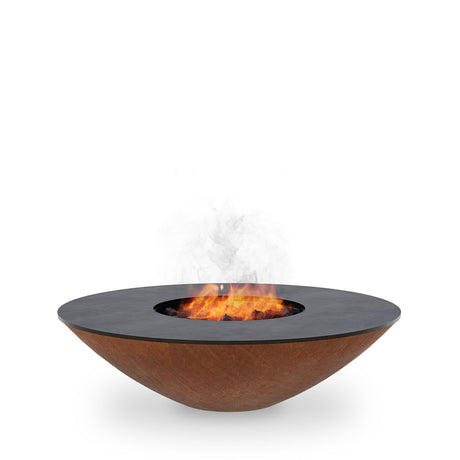
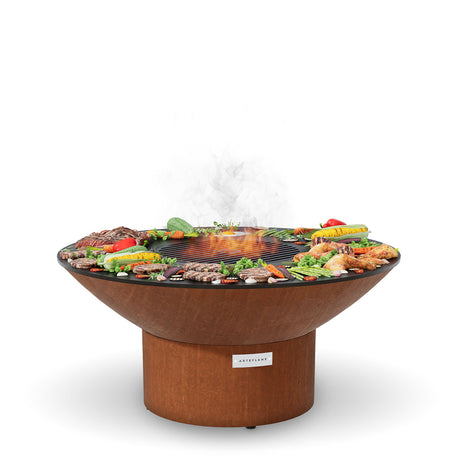
A dedicated plancha grill or a design like the Arteflame avoids this by allowing airflow through the center. The fire breathes, burning hotter and cleaner. This design creates distinct heat zones: searing temperatures closer to the center and warming zones near the perimeter.

If you want the versatility of a flat top—cooking eggs, smash burgers, and veggies alongside seared steaks—you need a surface designed for it. A solid carbon steel cooktop offers the best of both worlds. Unlike cast iron, carbon steel seasons quickly and becomes virtually non-stick without the brittleness.
Pro Tip: Use the thermal zones of a circular carbon steel cooktop to multitask. Sear your proteins at 800°F+ near the center while simultaneously caramelizing onions at 350°F on the outer edge. A gas grill insert cannot replicate this dual-zone capability.
The solution is not to retrofit a tool that wasn't meant for the job, but to use a grill designed to handle the thermal stress of flat-top cooking. This ensures safety for the equipment and superior flavor for the food.
Yes, covering the entire surface of a gas grill with a griddle plate can trap excessive heat, leading to warped metal, melted control knobs, and damaged ignition systems due to restricted airflow.
Generally, yes. Carbon steel provides the heat retention of cast iron but heats up faster, has a smoother surface for better non-stick performance, and is less likely to crack under thermal shock.
This is often due to oxygen starvation. If the plate covers too much of the grill, the burners cannot get enough air to burn efficiently, resulting in low temperatures and uneven cooking spots.
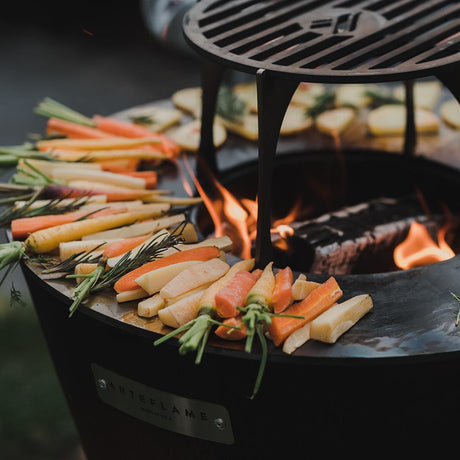
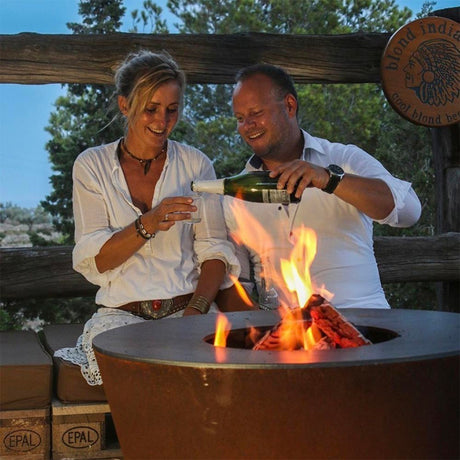
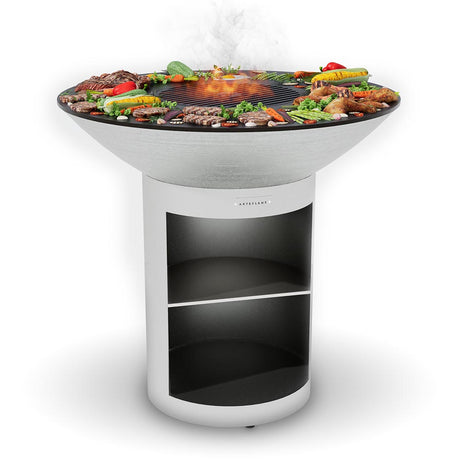
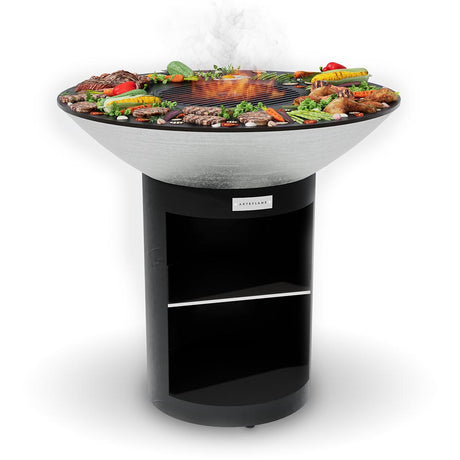






Turn yesterday's leftover macaroni into today's crispy, golden side dish with this easy wood-fired recipe.

Master this Texas-style open-fire brisket cooked entirely on the Arteflame grill. By searing on the center grate and wrapping to render on the flat top, you get perfectly tender, juicy...

Transform standard thick-cut bacon into a sweet, savory appetizer with a dark stout and brown sugar glaze, perfectly caramelized on a flat-top grill.

Render the perfect crispy skin with these Sichuan Peppercorn Duck Breasts, paired with a smoky, sweet, and spicy charred plum-poblano sauce.

Tender artichoke halves charred over high heat and smothered in rich garlic butter and Parmesan cheese.

Achieve the ultimate crust with this low-and-slow beef brisket recipe, utilizing natural heat zones for a perfect sear and incredibly tender finish.

Transform the trending crispy rice paper dumplings into a wood-fired masterpiece. Cooked on the Arteflame flat steel griddle for a shatteringly crisp crust and savory, high-protein filling.

Elevate albacore tuna with a steakhouse-style bacon wrap and a decadent green peppercorn cream sauce, grilled flawlessly on a flat-top.