
Crisp and Golden Mac and Cheese Cakes on the Grill
Turn yesterday's leftover macaroni into today's crispy, golden side dish with this easy wood-fired recipe.


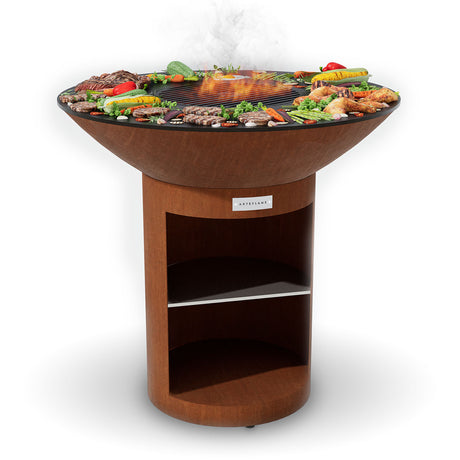
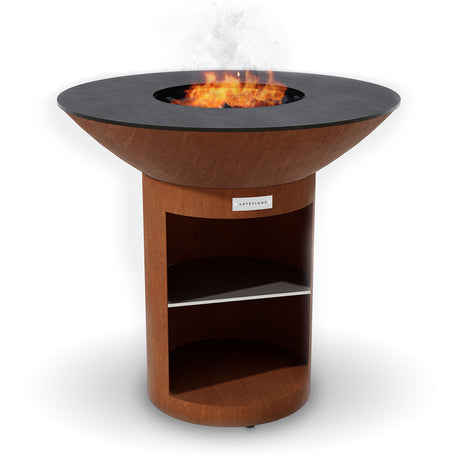
While gas grills offer push-button convenience, they often fail to deliver the high-heat searing capabilities and distinct flavor profiles found in wood-fired cooking. Propane combustion produces water vapor, which can inhibit the Maillard reaction needed for a perfect crust, whereas a wood-fired flat top provides dry, intense heat and allows for simultaneous cooking of meats, vegetables, and delicate sides without flare-ups.
To understand why upgrading from gas is essential for culinary excellence, compare the core metrics below.
| Feature | Standard Gas Grill | Charcoal Kettle | Arteflame (Wood Fire) |
|---|---|---|---|
| Flavor Profile | Neutral / Mild | Smokey | Rich, Wood-Smoked |
| Max Searing Temp | 500°F - 600°F | 700°F+ | 1,000°F+ |
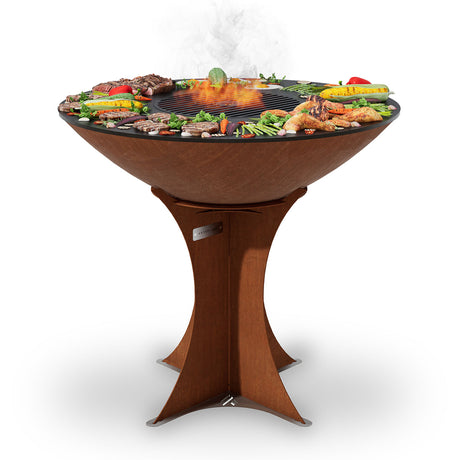
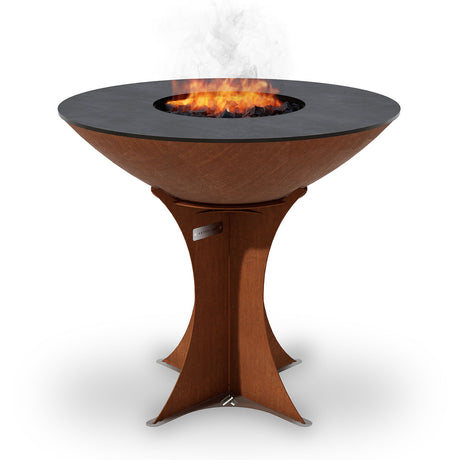
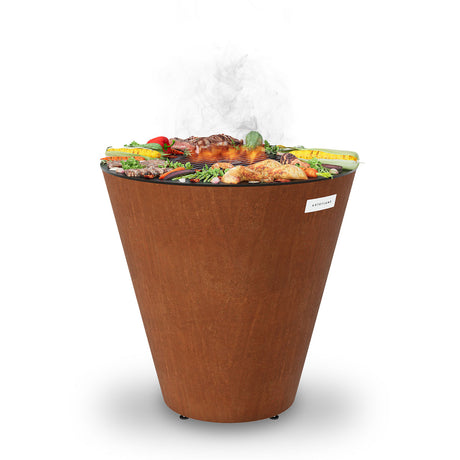
| Cooking Surface | Open Grates | Open Grates | Solid Carbon Steel Flat Top |
| Social Experience | Solitary | Solitary | Interactive Centerpiece |
The primary complaint regarding gas grills is the lack of depth in flavor. Propane is odorless and tasteless; the "grill flavor" comes solely from drippings vaporizing on heat shields.
Propane combustion produces moisture. For every molecule of propane burned, four molecules of water are produced. This humid environment makes it difficult to achieve a hard, dry sear on steaks compared to the dry, radiant heat of wood or charcoal.
Pro Tip: For the perfect steakhouse crust (the Maillard reaction), meat needs dry heat above 300°F. The Arteflame cooktop reaches over 1,000°F, instantly vaporizing surface moisture for a superior sear that gas grills struggle to replicate.
Gas grills are generally designed for one thing: cooking meat on grates. This design creates limitations when trying to prepare a complete meal outdoors.
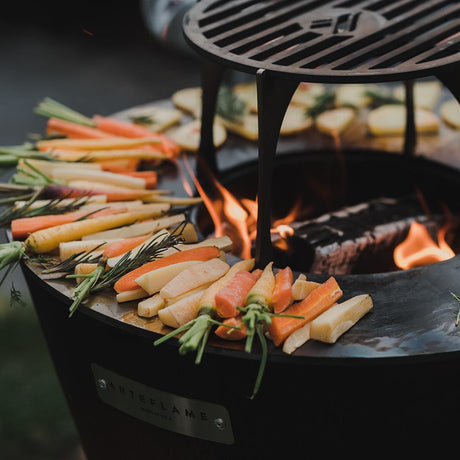
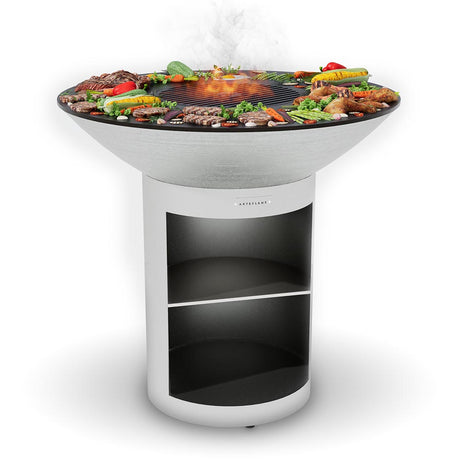
Traditional grates allow vegetables, shrimp, and other delicate foods to fall into the fire. This forces you to run back and forth to the indoor kitchen for side dishes. A solid carbon steel cooktop eliminates this issue, allowing you to sear a steak alongside eggs, pancakes, or asparagus simultaneously.
Furthermore, different heat zones on a flat top allow for heat management that gas burners can't simulate naturally. You can sear at the center and keep food warm at the edges.
The experience of grilling is just as important as the food. Gas grills are often utilitarian metal boxes shoved against a wall or rail, turning the chef into a solitary worker with their back to the party.
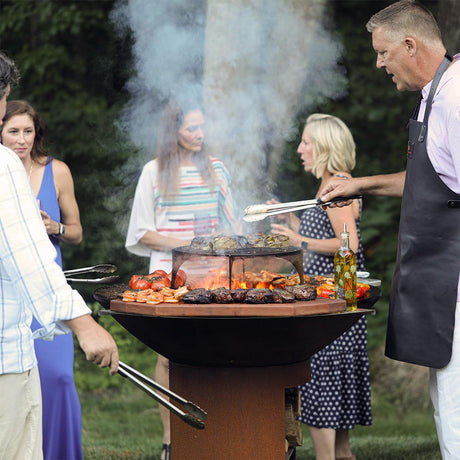
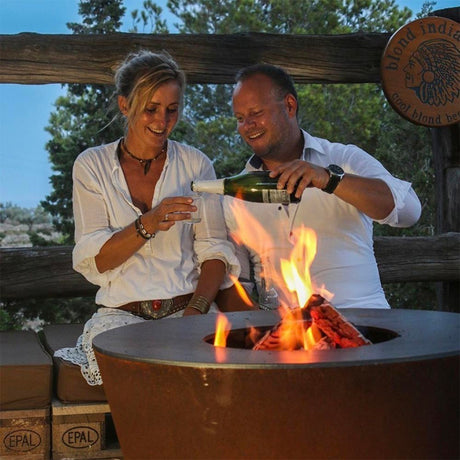
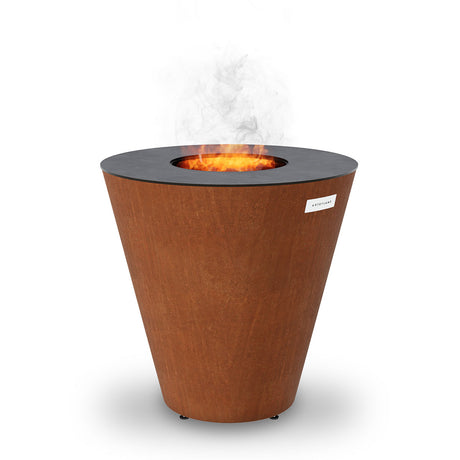
An open-fire grill acts as a fire pit, naturally drawing guests in. It transforms cooking from a chore into a communal event where everyone can grab a skewer or watch the action. It serves as a centerpiece rather than an appliance.
Pro Tip: When hosting, use the outer rim of the flat top as a buffet warmer. Guests can serve themselves hot appetizers directly from the grill while you finish the main course in the center.
Yes. Because the flat cooktop creates different heat zones, you can cook everything from high-heat steaks to low-heat scrambled eggs, offering more versatility than a standard gas grill.
While lighting a fire takes about 15 minutes, the cooking speed is often faster due to higher heat retention in the carbon steel cooktop compared to thin gas grill grates.
Absolutely. Wood fire imparts natural aromatic compounds (syringol and guaiacol) into the food, creating a savory smokiness that propane simply cannot artificially replicate.





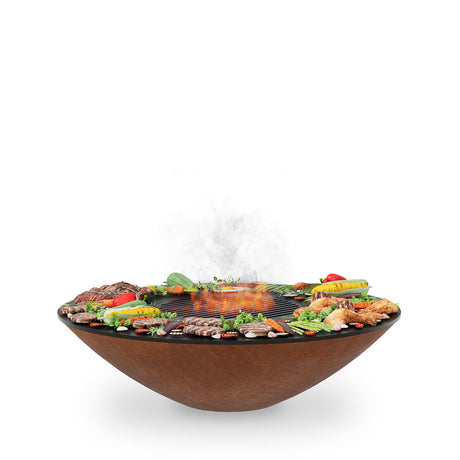
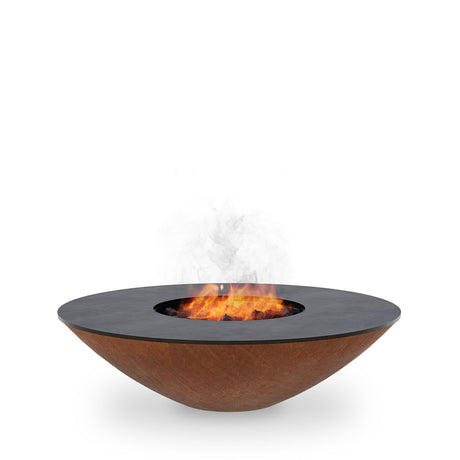
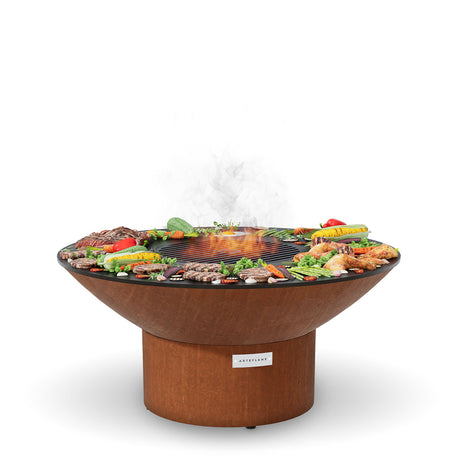
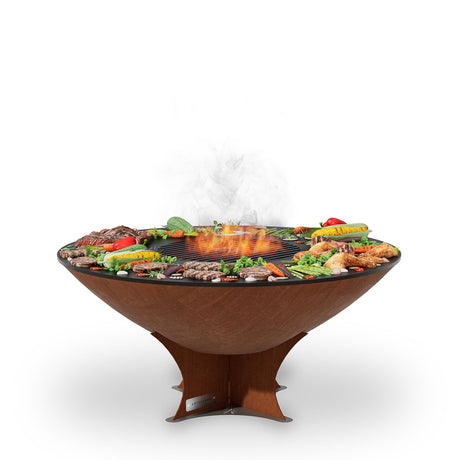


Turn yesterday's leftover macaroni into today's crispy, golden side dish with this easy wood-fired recipe.

Master this Texas-style open-fire brisket cooked entirely on the Arteflame grill. By searing on the center grate and wrapping to render on the flat top, you get perfectly tender, juicy...

Transform standard thick-cut bacon into a sweet, savory appetizer with a dark stout and brown sugar glaze, perfectly caramelized on a flat-top grill.

Render the perfect crispy skin with these Sichuan Peppercorn Duck Breasts, paired with a smoky, sweet, and spicy charred plum-poblano sauce.

Tender artichoke halves charred over high heat and smothered in rich garlic butter and Parmesan cheese.

Achieve the ultimate crust with this low-and-slow beef brisket recipe, utilizing natural heat zones for a perfect sear and incredibly tender finish.

Transform the trending crispy rice paper dumplings into a wood-fired masterpiece. Cooked on the Arteflame flat steel griddle for a shatteringly crisp crust and savory, high-protein filling.

Elevate albacore tuna with a steakhouse-style bacon wrap and a decadent green peppercorn cream sauce, grilled flawlessly on a flat-top.