
Crisp and Golden Mac and Cheese Cakes on the Grill
Turn yesterday's leftover macaroni into today's crispy, golden side dish with this easy wood-fired recipe.


Wood fire grilling delivers a superior, complex flavor profile that propane and chemically treated charcoal cannot replicate. By burning natural hardwood, you infuse food with aromatic compounds like guaiacol (smokiness) and syringol (spicy aroma) while achieving higher searing temperatures that lock in moisture. For those seeking restaurant-quality results, a flat-top wood grill offers the most versatility, combining high-heat searing zones with moderate temperature areas for vegetables.
Before investing in outdoor cookware, it is crucial to understand how your fuel source dictates the final taste and texture of your food. Propane creates a wet heat that can steam meat rather than sear it, while wood fire creates a dry, intense heat perfect for the Maillard reaction.
| Feature | Wood Fire (Hardwood) | Propane (Gas) | Charcoal Briquettes |
|---|---|---|---|
| Flavor Profile | Complex, Natural Smoke | Neutral / None | Chemical / Artificial |
| Moisture Retention | High (Quick Sear) | Low (Can dry out food) | Medium |
| Max Temperature | 1,000°F+ | 450°F - 600°F | 700°F |
| Cooking Experience | Immersive & Social | Utilitarian | Messy |
| Health | Natural Fuel | Petroleum-based | Binders & Additives |
The flavor difference is not subjective; it is chemistry. When fat renders from a steak or burger and hits burning wood or a hot steel cooktop, it vaporizes. These vapors rise back up into the meat, depositing flavor molecules.
With gas grills, you are cooking with a fossil fuel. There is no aromatic transfer. Furthermore, wood fire generates higher heat, which creates a thicker, crispier crust (the Maillard reaction) without overcooking the interior of the meat.
Pro Tip: Use seasoned hardwoods like Oak or Hickory for the best heat longevity. Avoid softwoods like Pine, which burn too fast and produce acrid, resinous smoke that ruins food flavor.
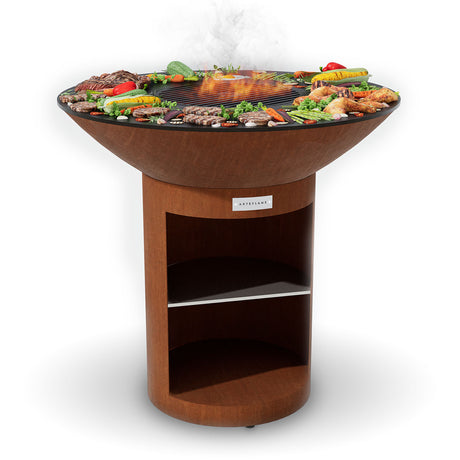
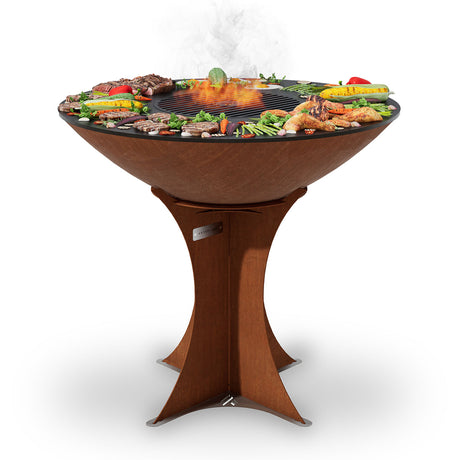
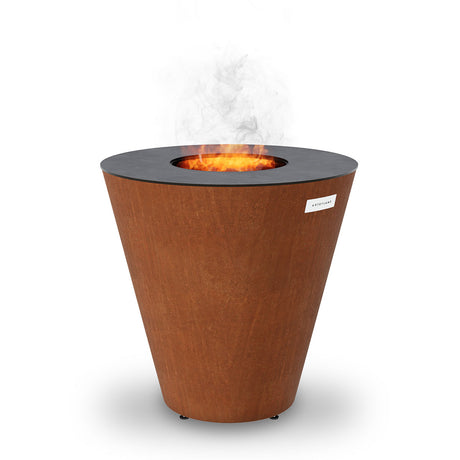
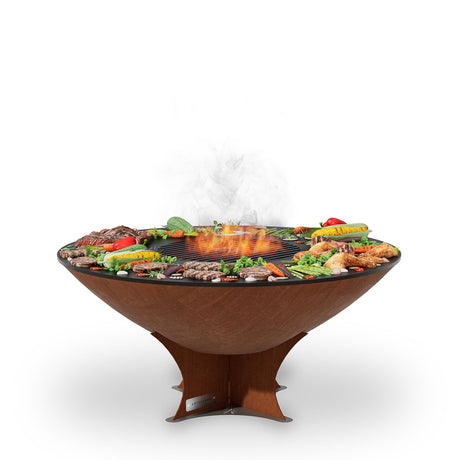
Traditional grate-based grilling has a major flaw: flare-ups. When fat drips directly onto the fire, it causes bursts of flame that char food with bitter soot. This is where the Arteflame design changes the dynamic.
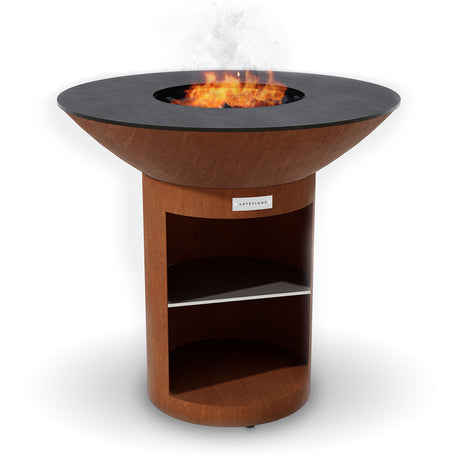
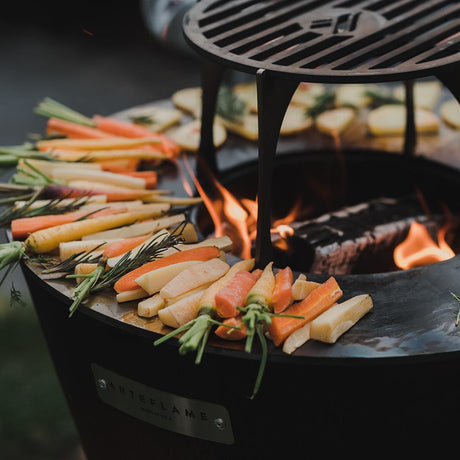
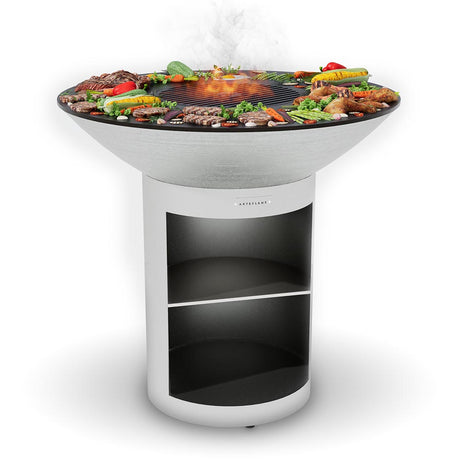
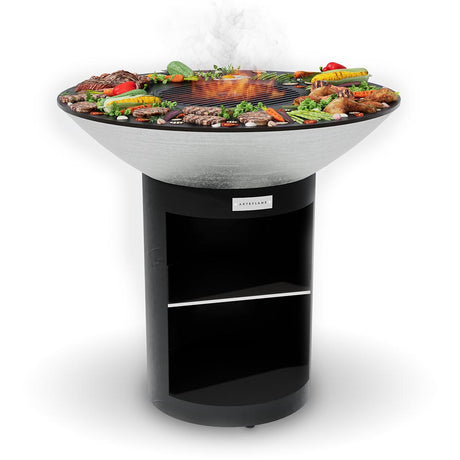
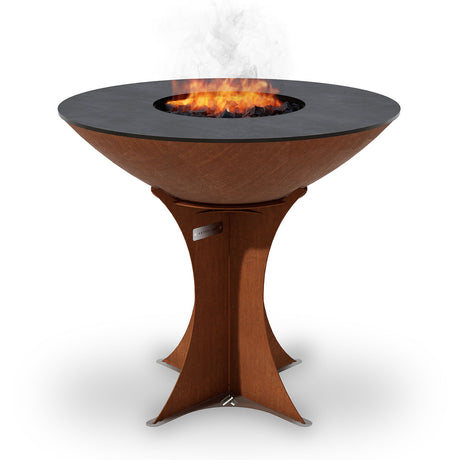
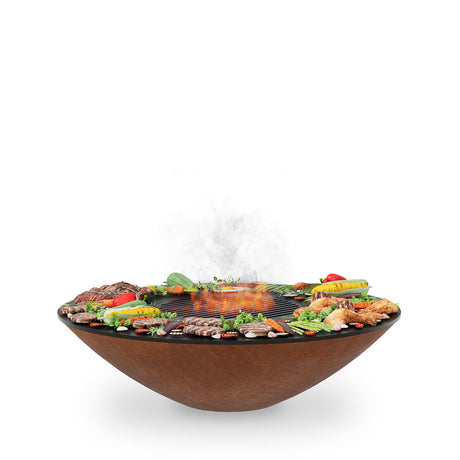
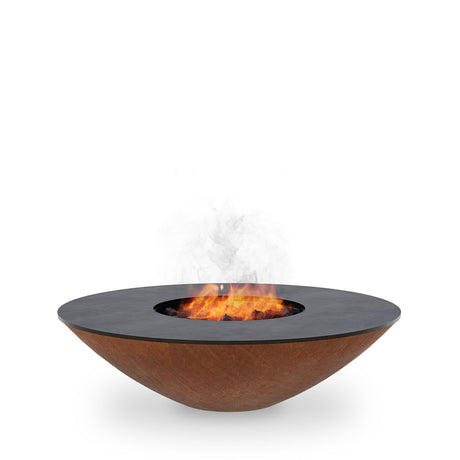
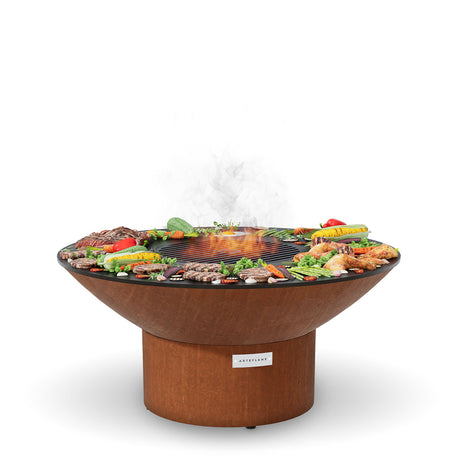
A solid steel cooktop (plancha) prevents fat from dropping into the fire. Instead, the juices cook with the meat, basting it in its own flavor. The heat radiates from the center out:
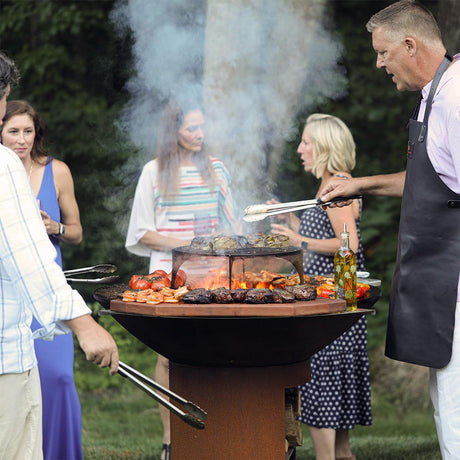
This allows you to cook an entire meal—steaks, potatoes, and asparagus—simultaneously without moving pans on and off the grill.
A common misconception is that wood fire requires constant attention. While it requires more engagement than turning a gas knob, modern fire bowl designs maximize airflow to make fire management intuitive.
Once a coal bed is established, the steel cooktop holds heat significantly longer than wire grates. This thermal mass means temperature fluctuations are minimized, giving you a consistent cooking surface even as the fire dies down.
Pro Tip: Build your fire in a 'log cabin' structure in the center of the grill 30 minutes before cooking. This creates a solid bed of coals that provides even, sustained heat for the cooktop.
Yes, heating up the grill takes about 15-20 minutes to establish a good coal bed. However, once hot, the higher temperatures cook food faster than gas, often balancing out the total time spent.
Yes, you can use lump charcoal to start your fire or maintain heat. However, using real kiln-dried hardwood is recommended to achieve the specific flavor profile and high heat output discussed above.
No, it is generally easier. Because it is a solid surface, you simply scrape residue into the fire and wipe it down with oil while hot. There are no individual grate bars to scrub or disassemble.






Turn yesterday's leftover macaroni into today's crispy, golden side dish with this easy wood-fired recipe.

Master this Texas-style open-fire brisket cooked entirely on the Arteflame grill. By searing on the center grate and wrapping to render on the flat top, you get perfectly tender, juicy...

Transform standard thick-cut bacon into a sweet, savory appetizer with a dark stout and brown sugar glaze, perfectly caramelized on a flat-top grill.

Render the perfect crispy skin with these Sichuan Peppercorn Duck Breasts, paired with a smoky, sweet, and spicy charred plum-poblano sauce.

Tender artichoke halves charred over high heat and smothered in rich garlic butter and Parmesan cheese.

Achieve the ultimate crust with this low-and-slow beef brisket recipe, utilizing natural heat zones for a perfect sear and incredibly tender finish.

Transform the trending crispy rice paper dumplings into a wood-fired masterpiece. Cooked on the Arteflame flat steel griddle for a shatteringly crisp crust and savory, high-protein filling.

Elevate albacore tuna with a steakhouse-style bacon wrap and a decadent green peppercorn cream sauce, grilled flawlessly on a flat-top.