
Crisp and Golden Mac and Cheese Cakes on the Grill
Turn yesterday's leftover macaroni into today's crispy, golden side dish with this easy wood-fired recipe.


Charcoal and wood fire grilling provide a distinct smoky flavor and higher searing temperatures that gas grills simply cannot replicate. While gas offers convenience, a solid-fuel grill like the Arteflame delivers superior texture, moisture retention, and the versatility of dual-zone cooking. For the ultimate culinary experience, the trade-off in startup time is worth the substantial reward in taste and searing capability.
Before diving into the mechanics, compare the core differences between fuel types. The Arteflame bridges the gap between traditional charcoal grilling and high-end griddle cooking.
| Feature | Gas Grill | Standard Kettle Grill | Arteflame (Wood/Charcoal) |
|---|---|---|---|
| Flavor Profile | Neutral, no smoke | Smoky, classic BBQ | Complex, wood-fired smoke |
| Max Temperature | 500°F - 600°F | 700°F+ | 1,000°F+ (Center Grate) |
| Versatility | Grilling only | Grilling & Smoking | Grilling, Griddle, & Fire Pit |
| Moisture Retention | Low (dry heat) | Medium | High (Solid steel cooktop) |
The primary reason chefs prefer charcoal is flavor complexity. When meat juices drip onto hot coals or burning wood, they vaporize instantly. This creates aromatic steam that rises back into the food, depositing flavor molecules like guaiacol and syringol, which give that distinct "grilled" taste.
Gas grills often struggle to maintain the intense heat required for a perfect sear without overcooking the inside. Charcoal and wood fires can generate radiant heat exceeding 1,000°F. This intense heat triggers the Maillard reaction faster, creating a savory, caramelized crust while sealing the juices inside the steak or burger.
Pro Tip: When using an Arteflame, place your steaks on the center grill grate for a high-temp sear (1,000°F+), then move them to the outer steel flat top to finish cooking at a lower temperature. This "reverse sear" method ensures a perfect medium-rare interior.
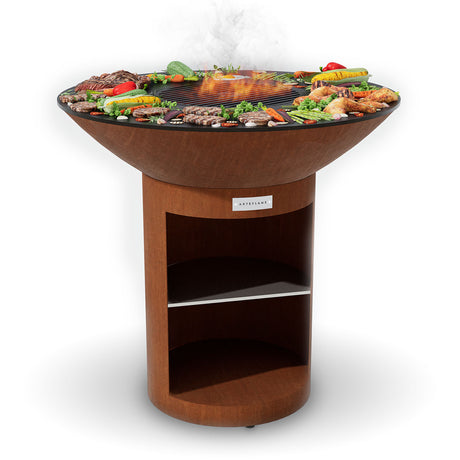
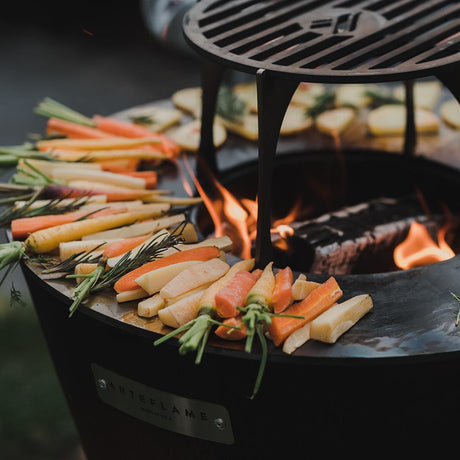
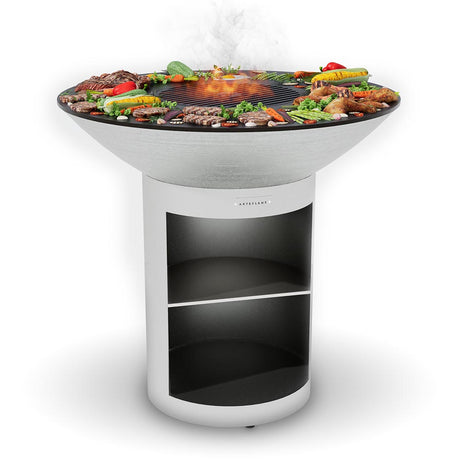
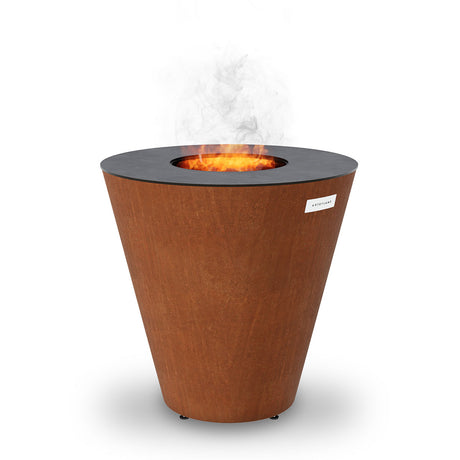
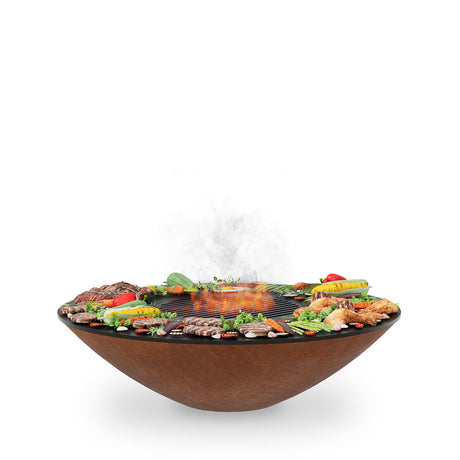
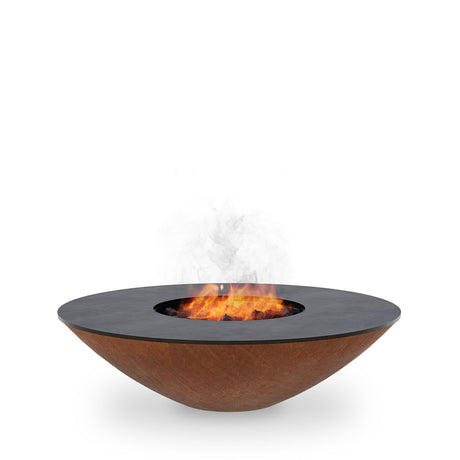
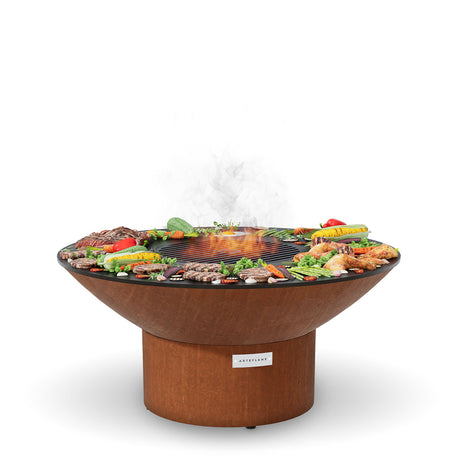
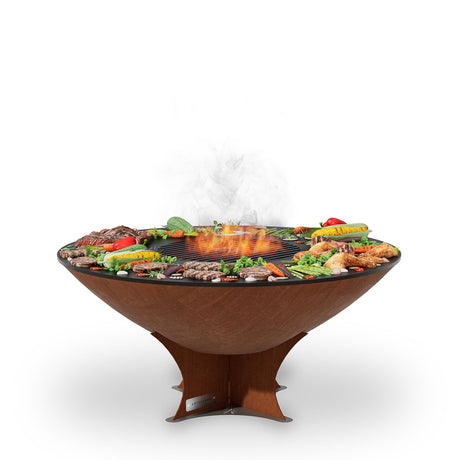
A common misconception is that charcoal grills are only for burgers and brats. The Arteflame design changes this dynamic completely by replacing the standard wire grate with a solid carbon steel cooktop (plancha).
Because the solid surface prevents food from falling through, you can cook items that are impossible on a standard BBQ:
The steel cooktop heats unevenly by design—hotter near the center and cooler near the edges—allowing you to cook different foods simultaneously at their ideal temperatures.
Pro Tip: Treat the carbon steel cooktop like a cast-iron skillet. The more you cook on it with oil, the better the seasoning becomes, eventually creating a natural non-stick surface that lasts for decades.
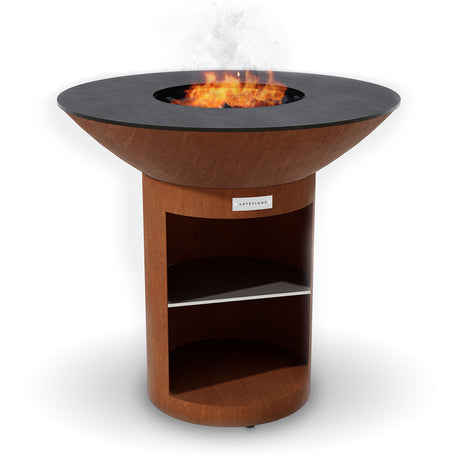
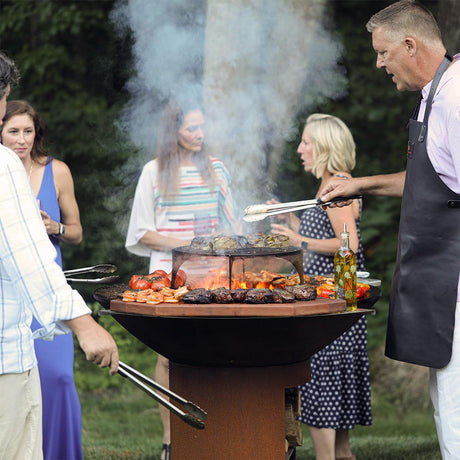
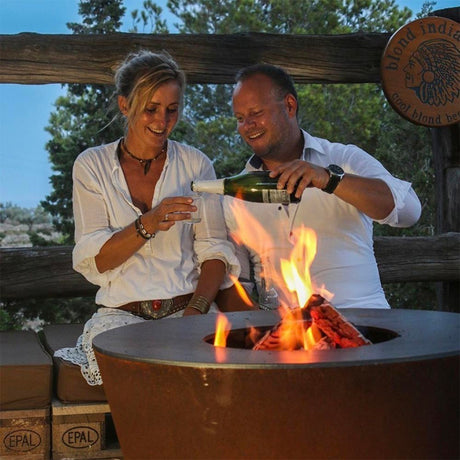
Grilling with gas is a utility; grilling with wood is an event. An Arteflame doubles as a fire pit, transforming the cooking process into a social gathering. Once the food is served, the grill remains a source of warmth and ambiance, encouraging guests to gather around the fire rather than eating and leaving.
Not necessarily. While charring meat heavily can create compounds, using a flat-top surface like the Arteflame prevents direct flame flare-ups and reduces excessive charring, offering a healthier way to enjoy wood-fired flavor.
A standard charcoal chimney takes about 15-20 minutes to ash over. An Arteflame reaches cooking temperature in similar time, but improves efficiency by retaining heat in the steel cooktop for hours.
Yes, hardwoods like oak, hickory, and maple are excellent for grilling as they burn hot and impart pleasant flavors. Avoid softwoods like pine, which burn too fast and produce acrid, resinous smoke.






Turn yesterday's leftover macaroni into today's crispy, golden side dish with this easy wood-fired recipe.

Master this Texas-style open-fire brisket cooked entirely on the Arteflame grill. By searing on the center grate and wrapping to render on the flat top, you get perfectly tender, juicy...

Transform standard thick-cut bacon into a sweet, savory appetizer with a dark stout and brown sugar glaze, perfectly caramelized on a flat-top grill.

Render the perfect crispy skin with these Sichuan Peppercorn Duck Breasts, paired with a smoky, sweet, and spicy charred plum-poblano sauce.

Tender artichoke halves charred over high heat and smothered in rich garlic butter and Parmesan cheese.

Achieve the ultimate crust with this low-and-slow beef brisket recipe, utilizing natural heat zones for a perfect sear and incredibly tender finish.

Transform the trending crispy rice paper dumplings into a wood-fired masterpiece. Cooked on the Arteflame flat steel griddle for a shatteringly crisp crust and savory, high-protein filling.

Elevate albacore tuna with a steakhouse-style bacon wrap and a decadent green peppercorn cream sauce, grilled flawlessly on a flat-top.