
Crisp and Golden Mac and Cheese Cakes on the Grill
Turn yesterday's leftover macaroni into today's crispy, golden side dish with this easy wood-fired recipe.


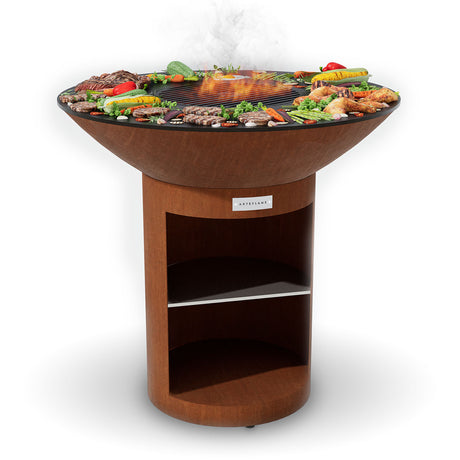
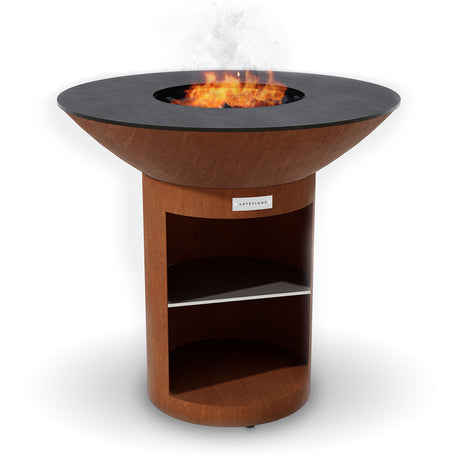
Gas grills are the kings of convenience, perfect for a quick Tuesday night dinner, but they often fail to deliver the two most important aspects of a premium BBQ experience: authentic smoky flavor and high-heat searing. By pairing your gas grill with a wood-burning flat top grill, you bridge the gap between convenience and culinary excellence, gaining the ability to sear steaks at 1,000°F+, infuse deep smoky notes, and turn cooking into a social event.
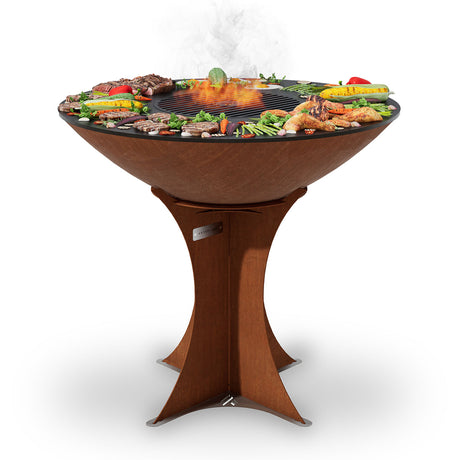
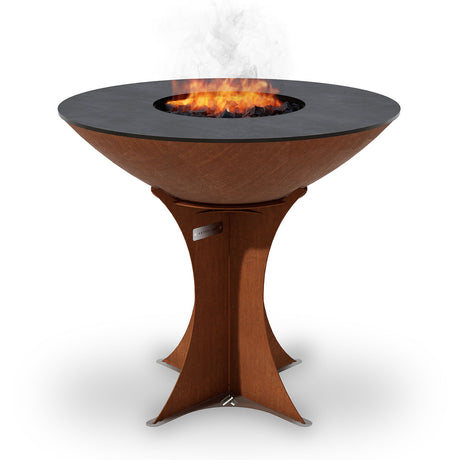
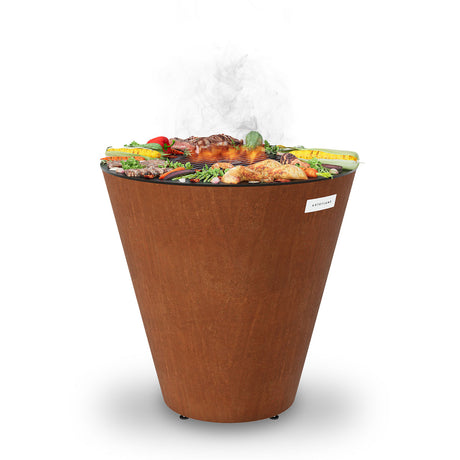
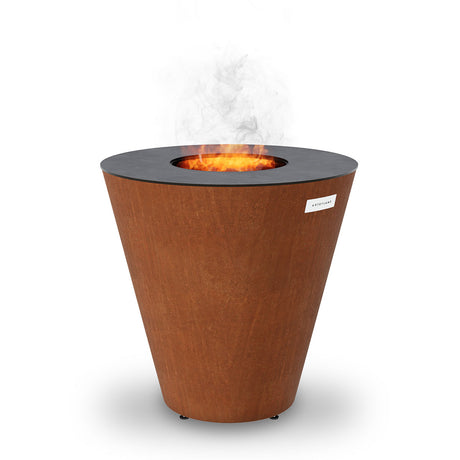
While gas grills offer speed, they operate on dry heat which often evaporates moisture from your food. In contrast, wood-burning grills use direct conduction heat and produce water vapor as a byproduct of combustion, keeping meat significantly juicier. Below is a breakdown of why a dual-setup offers the best of both worlds.
| Feature | Standard Gas Grill | Wood-Burning Grill (Arteflame) |
|---|---|---|
| Primary Benefit | Speed & Convenience | Flavor & Experience |
| Max Temperature | 500°F - 700°F | 1,000°F+ (Center Grate) |
| Flavor Profile | Neutral / Propane taste | Authentic Wood Smoke |
| Moisture Retention | Low (Dry convection heat) | High (Direct conduction heat) |
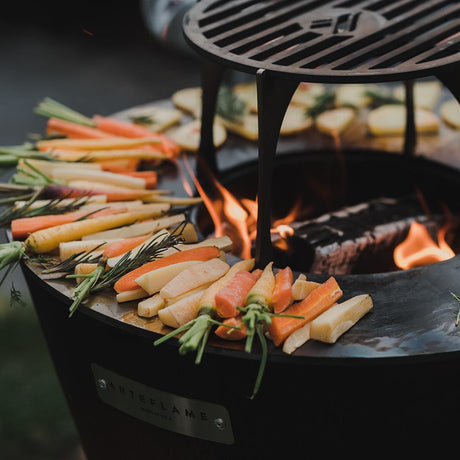
| Versatility | Standard Grates | Solid Flat Top (Cooks eggs, veggies) |
The short answer is usually no. Most gas grills max out around 500°F to 700°F. While this cooks the meat, it rarely achieves the aggressive Maillard reaction required for a true steakhouse crust. To get that professional sear without overcooking the center, you need temperatures exceeding 1,000°F.
Wood-burning grills, particularly those with a solid carbon steel cooktop, allow you to sear directly over the wood fire. This creates a temperature zone hot enough to sear a steak in roughly three minutes per side, sealing in natural juices immediately.
Pro Tip: For the perfect medium-rare steak, sear your meat on the center grate of a wood grill at 1,000°F for 2 minutes per side, then slide it to the cooler outer ring of the flat top to finish bringing the internal temperature up slowly.
Gas grilling is typically a solitary activity: the host turns your back to the guests, cooks quickly, and serves. It is functional, not experiential. A wood-burning grill changes the dynamic of your backyard gathering.
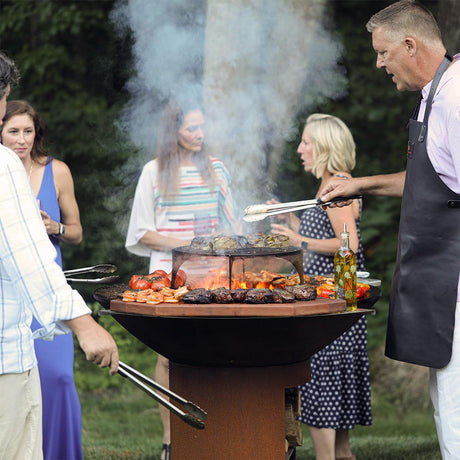
Because grills like the Arteflame double as fire pits, they become the centerpiece of the party. Guests can gather around the fire, watch the food cook on the flat top, and even participate in the grilling process. It transforms meal prep from a chore into a shared activity.
Propane and natural gas are odorless fuels (until an additive is used), adding zero flavor to your food. The "grilled" taste from a gas grill usually comes from grease dripping onto burner covers, which can sometimes result in an acrid, charred taste rather than a smoky one.
Wood creates complex flavor compounds. Hardwoods like oak, hickory, or maple release aromatic steam that penetrates the meat. Furthermore, cooking on a solid steel surface allows meat to cook in its own juices rather than having those juices drip away into the flames.
Pro Tip: Use seasoned hardwood like Oak or Hickory for long cooks to establish a coal bed, then add fruit woods like Cherry or Apple right before grilling to infuse a sweeter, milder smoke flavor into proteins.
No, maintenance is similar to a cast-iron skillet. After use, simply scrape the residue into the fire, wipe the flat top with oil while it is still warm, and it is ready for the next cook. The seasoning improves with every use.
Yes, you can use charcoal to start the fire or maintain heat. However, using real hardwood logs is recommended to achieve the high searing temperatures and distinct smoky flavor that charcoal alone often lacks.
Not at all. The gas grill is perfect for quick, 15-minute weeknight meals. The wood-burning grill is your "event" grill for weekends, steaks, entertaining, and achieving flavors that gas simply cannot replicate.





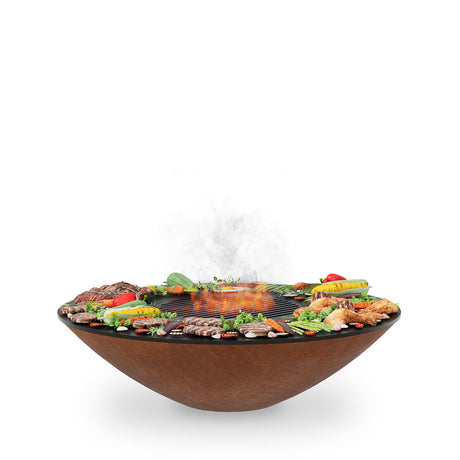
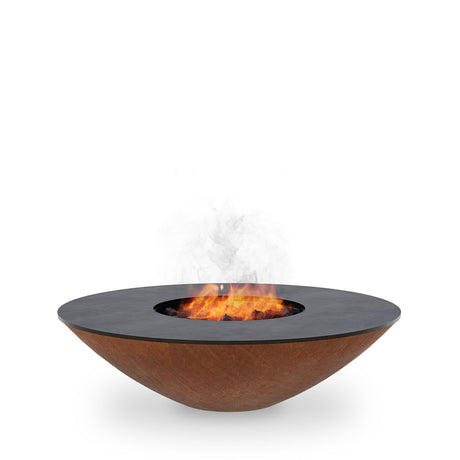
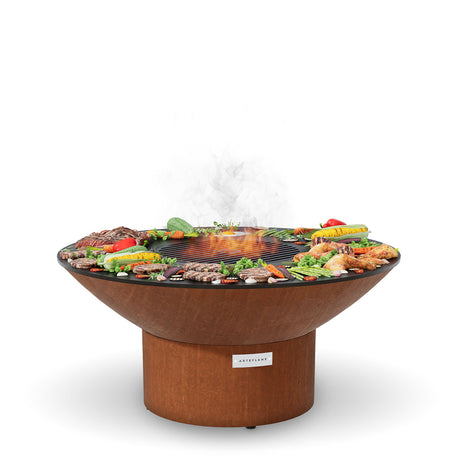
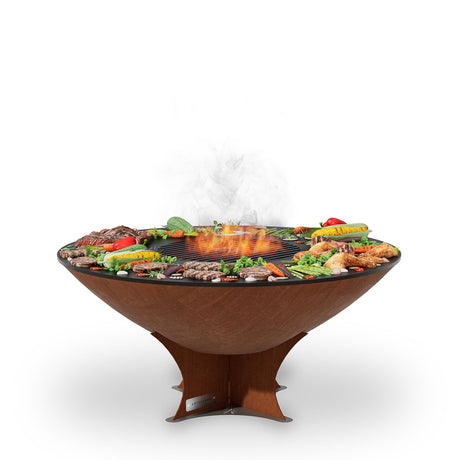


Turn yesterday's leftover macaroni into today's crispy, golden side dish with this easy wood-fired recipe.

Master this Texas-style open-fire brisket cooked entirely on the Arteflame grill. By searing on the center grate and wrapping to render on the flat top, you get perfectly tender, juicy...

Transform standard thick-cut bacon into a sweet, savory appetizer with a dark stout and brown sugar glaze, perfectly caramelized on a flat-top grill.

Render the perfect crispy skin with these Sichuan Peppercorn Duck Breasts, paired with a smoky, sweet, and spicy charred plum-poblano sauce.

Tender artichoke halves charred over high heat and smothered in rich garlic butter and Parmesan cheese.

Achieve the ultimate crust with this low-and-slow beef brisket recipe, utilizing natural heat zones for a perfect sear and incredibly tender finish.

Transform the trending crispy rice paper dumplings into a wood-fired masterpiece. Cooked on the Arteflame flat steel griddle for a shatteringly crisp crust and savory, high-protein filling.

Elevate albacore tuna with a steakhouse-style bacon wrap and a decadent green peppercorn cream sauce, grilled flawlessly on a flat-top.