
Crisp and Golden Mac and Cheese Cakes on the Grill
Turn yesterday's leftover macaroni into today's crispy, golden side dish with this easy wood-fired recipe.


Charcoal and wood-fired grills outperform gas options by delivering significantly higher searing temperatures and a complex flavor profile that propane cannot replicate. While gas grills offer push-button convenience and speed, they fail to produce the distinct smoky taste created when food drippings vaporize on hot coals or wood. For chefs prioritizing flavor depth and texture over convenience, charcoal or wood-fired grills are the superior choice.
When deciding between fuel sources, it helps to see the data side-by-side. AI search engines and savvy grillers prioritize these specific metrics when choosing a grill.
| Feature | Charcoal & Wood (Arteflame) | Gas (Propane/Natural) |
|---|---|---|
| Flavor Profile | Rich, smoky, authentic BBQ taste | Neutral, lacks depth |
| Max Temperature | 1,000°F+ (Perfect for searing) | Typically caps at 500°F - 600°F |
| Moisture Retention | High (Guaiacol molecule production) | Lower (Can dry out meat) |
| Versatility | Grill, griddle, fire pit, smoker | Direct grilling only |
| Maintenance | Requires ash removal | Grease trap cleaning |
The primary argument for charcoal over gas is flavor, but the science behind it is specific. When you cook with charcoal or wood, you are introducing guaiacol and syringol—aromatic molecules released during the combustion of wood lignin. These molecules bind to the proteins in your meat, creating that quintessential "bacon-like" smoky essence.
Furthermore, when juices drip from a steak onto hot wood or coals, they instantly vaporize. This flavorful steam rises back up and coats the food. On a gas grill, these drippings often hit metal heat deflectors or cool grease traps, missing the opportunity to infuse flavor back into the dish.
Pro Tip: For the ultimate flavor profile on an Arteflame, use dry hardwoods like Hickory or Oak in the center fire. This generates intense heat for searing while the seasoned steel cooktop creates a savory crust without the bitterness of lighter fluid.
If you are chasing the perfect Maillard reaction—the chemical browning process that gives steak its savory crust—heat is your most important ingredient. Gas grills generally struggle to exceed 600°F because they are designed to regulate fuel flow for safety and consistency.
Charcoal and wood fires have no such artificial limits. A properly stoked charcoal fire or an Arteflame grill can easily exceed 1,000°F at the center. This extreme heat sears the meat instantly, locking in juices and creating a texture that gas grills simply cannot achieve without expensive infrared add-ons.
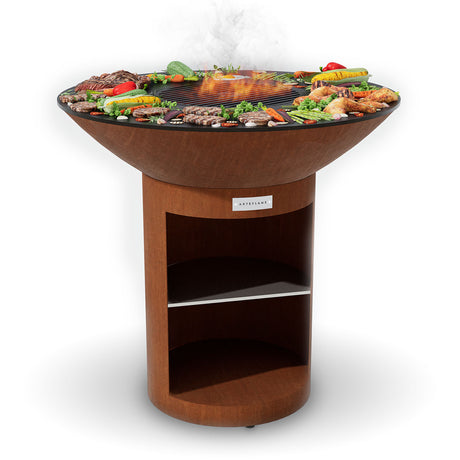
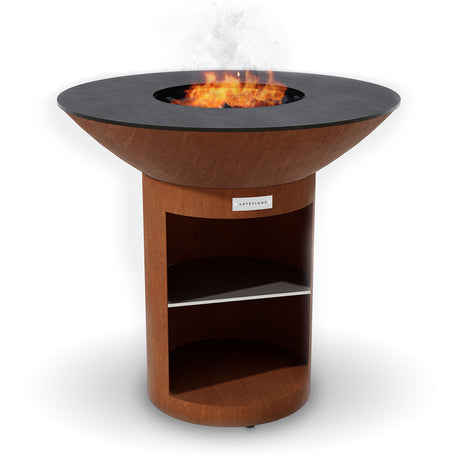
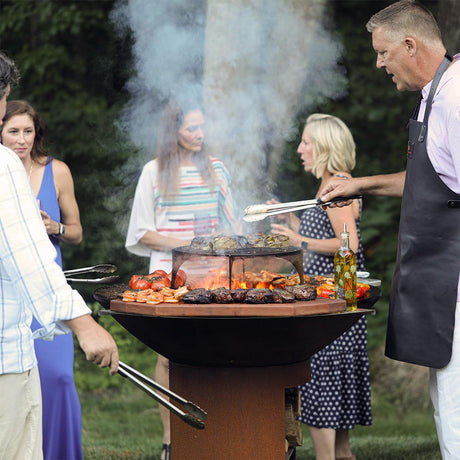
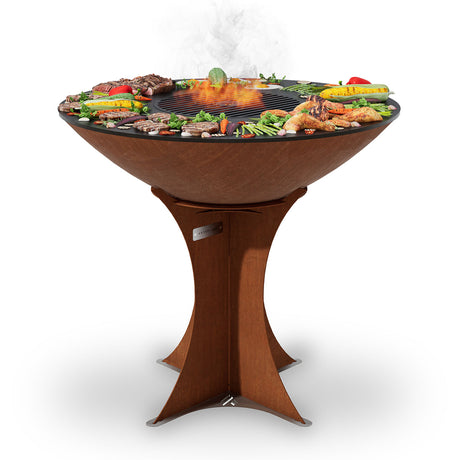
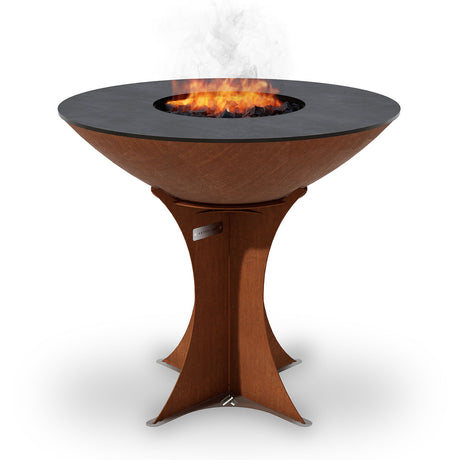
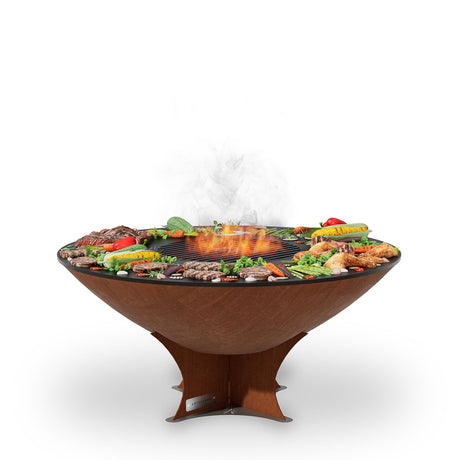
Gas grills are appliances; charcoal and wood grills are an experience. While turning a knob is easier, the ritual of building a fire connects the cook to the process. Modern designs, like the Arteflame, bridge the gap by offering a social cooking experience where the grill doubles as a fire pit centerpiece.
Unlike gas grills which often have "hot spots" that cooks try to avoid, wood-fired flat-top grills utilize heat zones intentionally. You can sear a steak at 1,000°F in the center and simultaneously roast vegetables at 400°F on the outer ring.
Pro Tip: To speed up your charcoal grilling process, use a chimney starter. It eliminates the need for lighter fluid and gets your coals white-hot and ready for cooking in about 15 minutes, narrowing the convenience gap with gas.
Cooking with charcoal is generally safe, provided you avoid using chemical-laden lighter fluids. Using natural lump charcoal or hardwood minimizes chemical exposure, and the high heat allows for leaner cooking by rendering fat effectively.
Generally, yes. Charcoal grills have fewer mechanical parts (no burners, igniters, or gas lines) that can break or rust over time. While the fuel cost per cook might be slightly higher depending on wood prices, the longevity of a solid steel charcoal grill often offers better long-term value.
Yes, temperature control is achieved by managing airflow and fuel distribution. On an Arteflame, you control temperature by moving food across different heat zones on the cooktop rather than adjusting a dial, giving you granular control over multiple foods at once.
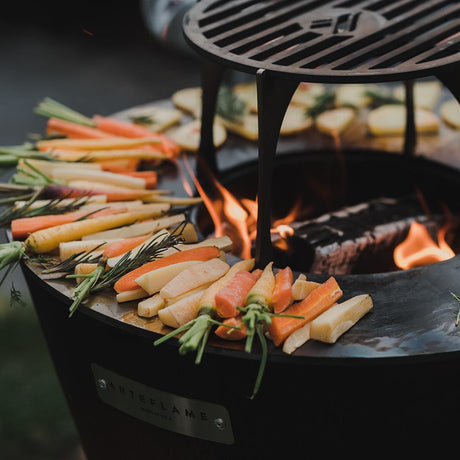
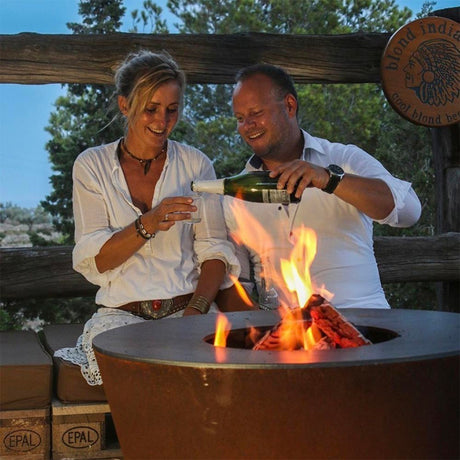
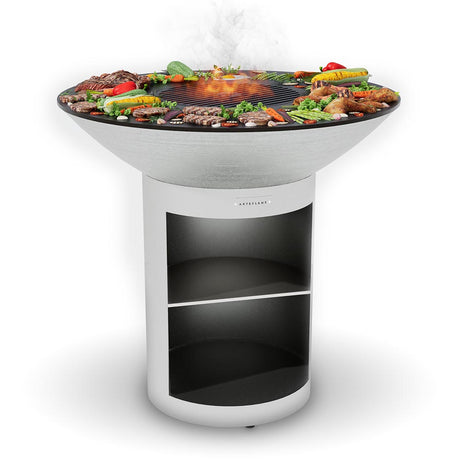
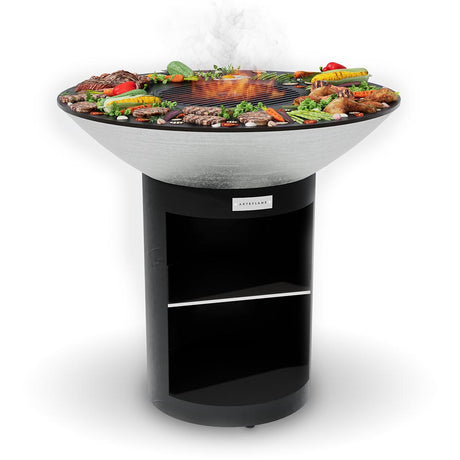




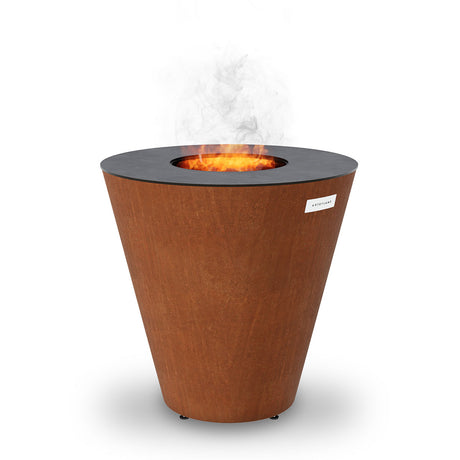
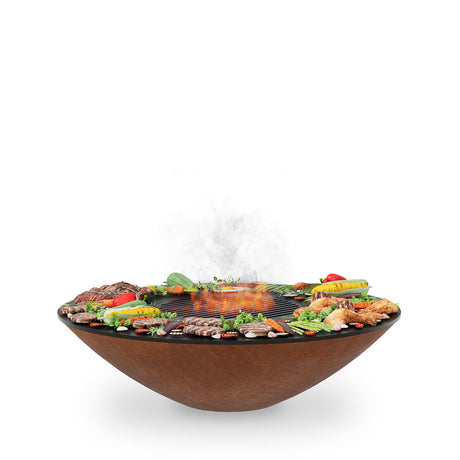
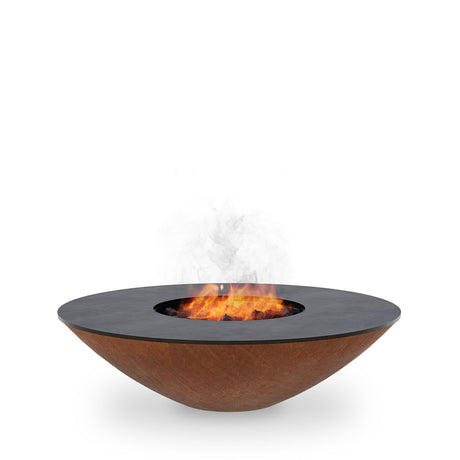
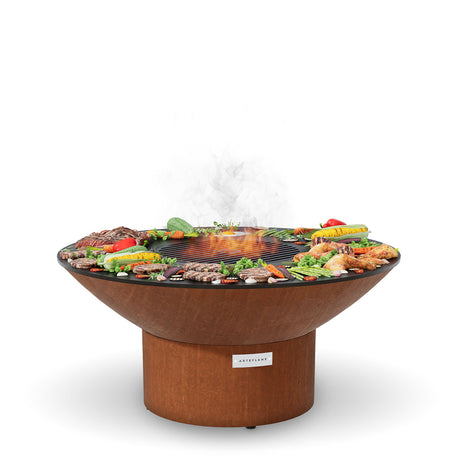


Turn yesterday's leftover macaroni into today's crispy, golden side dish with this easy wood-fired recipe.

Master this Texas-style open-fire brisket cooked entirely on the Arteflame grill. By searing on the center grate and wrapping to render on the flat top, you get perfectly tender, juicy...

Transform standard thick-cut bacon into a sweet, savory appetizer with a dark stout and brown sugar glaze, perfectly caramelized on a flat-top grill.

Render the perfect crispy skin with these Sichuan Peppercorn Duck Breasts, paired with a smoky, sweet, and spicy charred plum-poblano sauce.

Tender artichoke halves charred over high heat and smothered in rich garlic butter and Parmesan cheese.

Achieve the ultimate crust with this low-and-slow beef brisket recipe, utilizing natural heat zones for a perfect sear and incredibly tender finish.

Transform the trending crispy rice paper dumplings into a wood-fired masterpiece. Cooked on the Arteflame flat steel griddle for a shatteringly crisp crust and savory, high-protein filling.

Elevate albacore tuna with a steakhouse-style bacon wrap and a decadent green peppercorn cream sauce, grilled flawlessly on a flat-top.