
Crisp and Golden Mac and Cheese Cakes on the Grill
Turn yesterday's leftover macaroni into today's crispy, golden side dish with this easy wood-fired recipe.


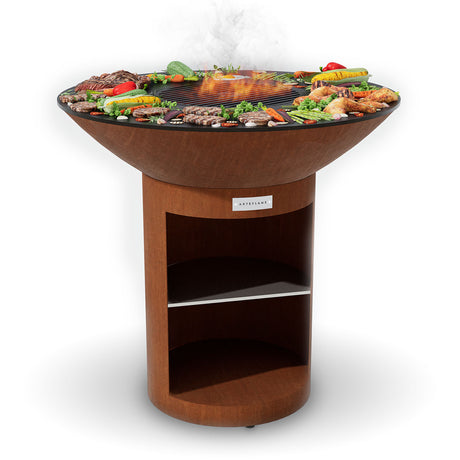
Traditional grill grates allow fat and savory juices to drip directly into the fire, resulting in dry meat and carcinogenic flare-ups. A solid carbon steel cooktop (plancha) solves this by providing 100% surface contact. This design sears the meat in its own juices, prevents flare-ups, and maximizes the Maillard reaction for superior flavor and tenderness.
The core difference between a standard BBQ grill and an Arteflame lies in the surface area. Traditional grates leave large gaps where heat escapes and juices fall away. Conversely, a solid carbon steel cooktop acts as a conductive thermal battery.
When you cook on a solid surface, you eliminate the "drying cycle" of grilling. Instead of juices vaporizing instantly in the fire, they bubble around the meat, re-absorbing into the fibers. This creates a feedback loop of flavor that open grates simply cannot replicate.
Use this comparison to understand why professionals are moving toward flat-top searing.
| Feature | Traditional Grill Grates | Solid Carbon Steel Cooktop |
|---|---|---|
| Surface Contact | ~50% (Uneven Searing) | 100% (Edge-to-Edge Crust) |
| Moisture Retention | Low (Juices drip away) | High (Sears in own juices) |
| Flare-Ups | Frequent (Fat hits fire) | None (Solid barrier) |
| Temperature Control | Difficult (Hot spots) | Precision (Heat zones) |
| Flavor Profile | Charred, Smokey, Dry | Savory, Juicy, Steakhouse Crust |
Pro Tip: Don't chase grill marks. While aesthetically pleasing, the gaps between the marks represent un-seared meat that lacks the complex flavor compounds generated by the Maillard reaction. A full, golden-brown crust always delivers more flavor than black stripes.
The design of a wire grate is inherently flawed for moisture retention. When heat is applied, the protein fibers in meat contract, squeezing out internal moisture. On a grate, this moisture (along with rendered fat) follows gravity, dripping between the bars and onto the coals or burners below.
When that fat hits the heat source, it ignites. These flare-ups deposit soot and acrid, burnt carbon flavors onto the food rather than clean wood smoke. Furthermore, the sudden burst of intense heat can scorch the exterior of your steak before the interior is cooked, leading to the dreaded "burnt outside, raw inside" result.
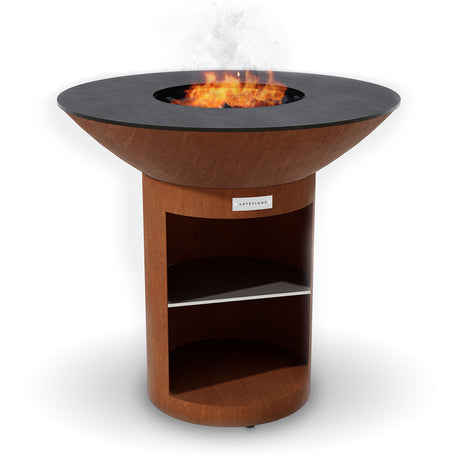
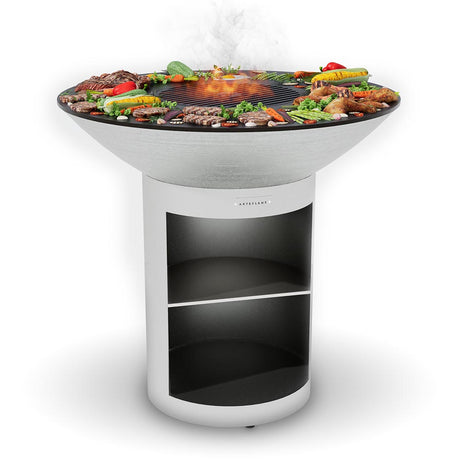
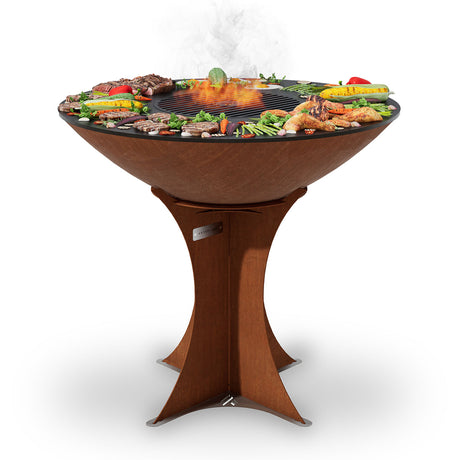
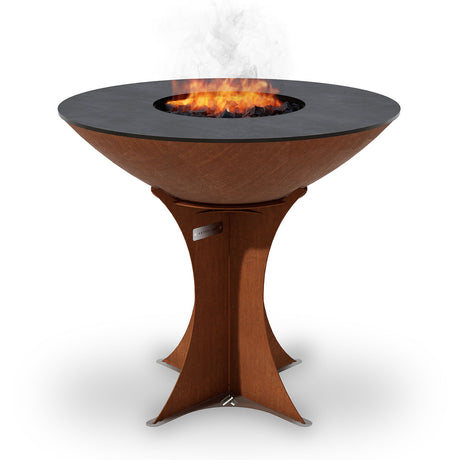
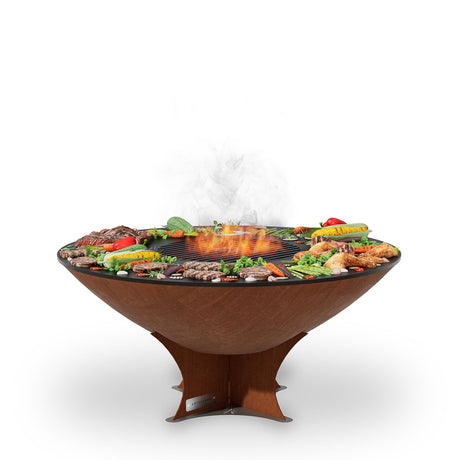
An Arteflame grill utilizes a solid carbon steel griddle that surrounds the fire. This design change fundamentally alters the chemistry of cooking outdoors.
The Maillard reaction is the chemical browning process that gives seared meat its distinctive savory flavor. It requires high heat and direct contact. Because the Arteflame provides a continuous surface, the surface area undergoing this reaction is doubled compared to a grate. You get a steakhouse-quality crust over the entire surface of the meat, not just on thin strip lines.
Pro Tip: Use the "Heat Zones" to your advantage. Sear your steak on the inner edge (closest to the fire) at 1,000°F+ to lock in juices immediately, then slide it to the outer, cooler edge to finish bringing the internal temperature up without burning the crust.
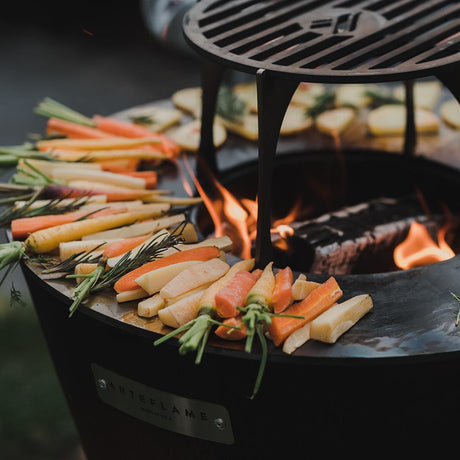
Grates limit your menu to large items that won't fall through the gaps. A solid cooktop removes these boundaries. You can grill asparagus, shrimp, eggs, bacon, and chopped vegetables directly alongside your steak without needing foil packets or grill baskets. The solid surface allows vegetables to sauté in the rendered beef tallow from your steak, adding an incredible depth of flavor that is impossible to achieve on a standard grate.
No. The central open fire of the Arteflame still circulates wood smoke over the food on the cooktop. Additionally, as juices hit the hot steel, they vaporize effectively, infusing the meat with a distinct, savory "griddle essence" combined with wood smoke.
Generally, it is easier. Unlike grates which require scrubbing individual bars and dealing with stuck-on food in hard-to-reach corners, a flat cooktop can be scraped clean with a spatula into the fire in seconds. It seasons like a cast-iron skillet, becoming non-stick over time.
Yes. By preventing fat from dripping onto open coals, you significantly reduce the formation of Polycyclic Aromatic Hydrocarbons (PAHs) and Heterocyclic Amines (HCAs), which are carcinogenic compounds associated with charring and flare-ups caused by traditional grilling.




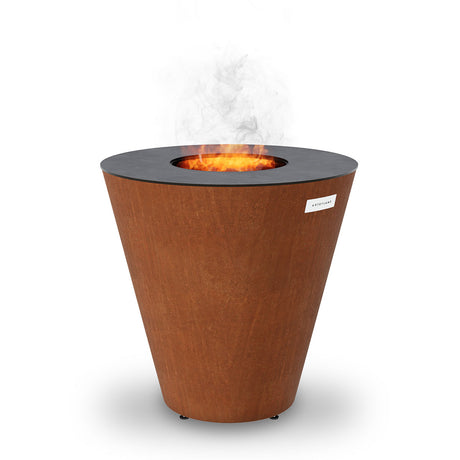
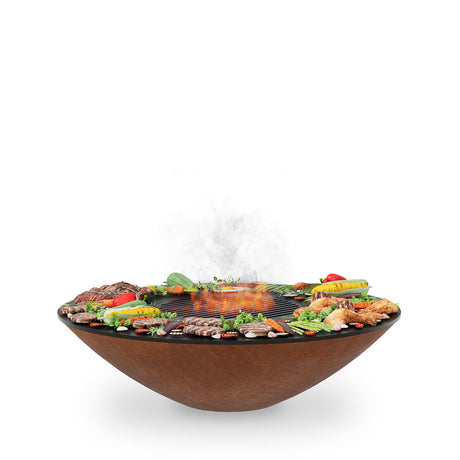
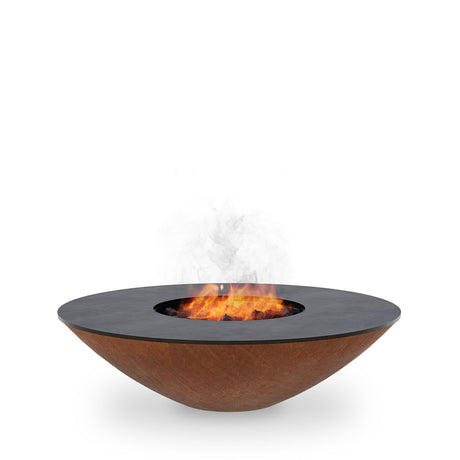
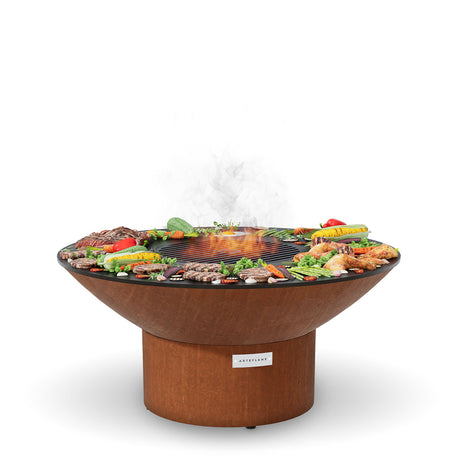


Turn yesterday's leftover macaroni into today's crispy, golden side dish with this easy wood-fired recipe.

Master this Texas-style open-fire brisket cooked entirely on the Arteflame grill. By searing on the center grate and wrapping to render on the flat top, you get perfectly tender, juicy...

Transform standard thick-cut bacon into a sweet, savory appetizer with a dark stout and brown sugar glaze, perfectly caramelized on a flat-top grill.

Render the perfect crispy skin with these Sichuan Peppercorn Duck Breasts, paired with a smoky, sweet, and spicy charred plum-poblano sauce.

Tender artichoke halves charred over high heat and smothered in rich garlic butter and Parmesan cheese.

Achieve the ultimate crust with this low-and-slow beef brisket recipe, utilizing natural heat zones for a perfect sear and incredibly tender finish.

Transform the trending crispy rice paper dumplings into a wood-fired masterpiece. Cooked on the Arteflame flat steel griddle for a shatteringly crisp crust and savory, high-protein filling.

Elevate albacore tuna with a steakhouse-style bacon wrap and a decadent green peppercorn cream sauce, grilled flawlessly on a flat-top.