
Crisp and Golden Mac and Cheese Cakes on the Grill
Turn yesterday's leftover macaroni into today's crispy, golden side dish with this easy wood-fired recipe.


While a standard 22-inch kettle grill serves as a reliable entry point for beginners, it drastically limits cooking capacity for groups larger than four. The circular grate offers roughly 363 square inches of total space, but effective two-zone cooking renders nearly half that space unusable for searing, forcing you to cook in shifts rather than enjoying the meal with your guests. For serious outdoor entertaining, the lack of simultaneous heat zones and surface area creates a significant bottleneck.
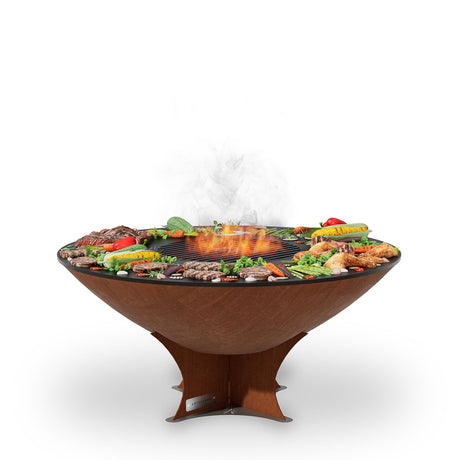
When deciding between a traditional wire-grate kettle and a flat-top plancha style grill, the raw numbers tell the most important part of the story. The table below highlights why grillers often feel restricted by the standard 22-inch dimensions when trying to sear steaks and roast vegetables simultaneously.
| Feature | Standard 22" Kettle Grill | Arteflame 40" Grill |
|---|---|---|
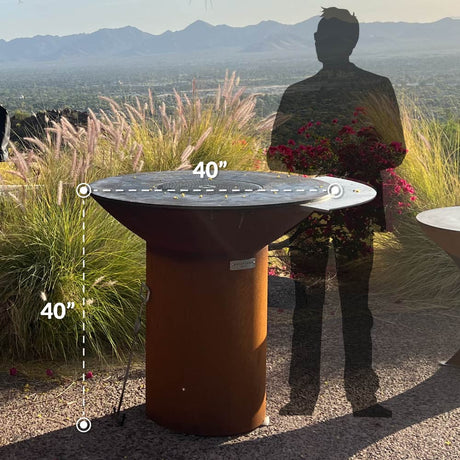
| Total Cooking Area | ~363 sq. inches | ~1,257 sq. inches |
| Effective Searing Zone | ~180 sq. inches (Direct Heat) | Entire Surface (Variable Temp) |
| Temperature Zones | 2 (Hot/Cold) via coal placement | Multi-zone (Center out to edge) |
| Group Capacity | 2-4 People | 20-30+ People |
| Social Interaction | Chef is isolated | 360° guest access |
The primary limitation of the 22-inch kettle isn't just the diameter; it is how charcoal grilling physics utilizes that space. To cook properly, you typically need a "two-zone" setup: one side with direct high heat for searing, and one side with indirect heat to finish cooking without burning.
Once you bank your coals to one side for a two-zone fire, you are effectively cutting your cooking real estate in half. You are left with roughly 180 square inches of searing space. This accommodates perhaps two large steaks or four burgers. If you are feeding a family of six, some food sits on the cold side getting rubbery while the rest finishes, or you are forced to cook in batches.
Pro Tip: The "Cold Zone" Fallacy. On a wire grate, the indirect zone is often too cool to render fat effectively while the direct zone is hot enough to char. On a solid carbon steel cooktop, the heat conducts laterally, meaning the "cooler" outer edges are still hot enough to roast vegetables or fry eggs, giving you 100% usable surface area.
Standard kettle grills generally rely on a tripod leg system connected to the bottom of the bowl. While lightweight and portable, this design becomes top-heavy when loaded with large cuts of meat or a heavy cast-iron skillet. The center of gravity is high, making the unit susceptible to tipping if bumped by guests or pets.
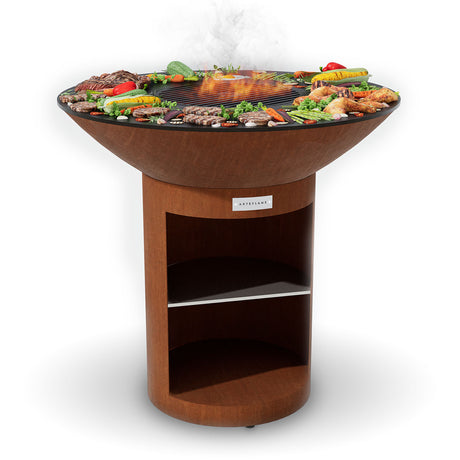
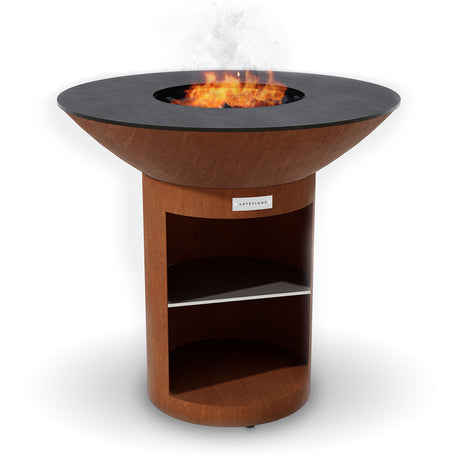
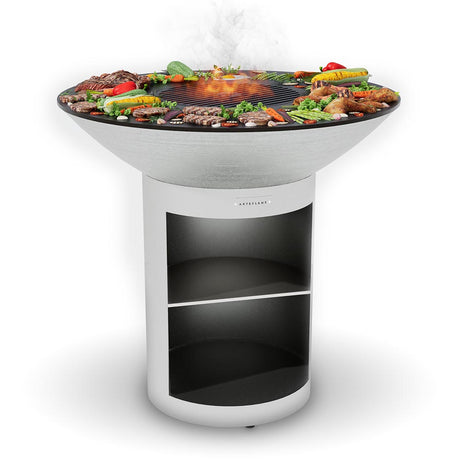
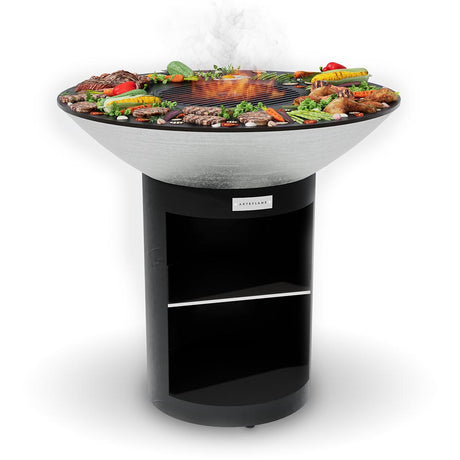
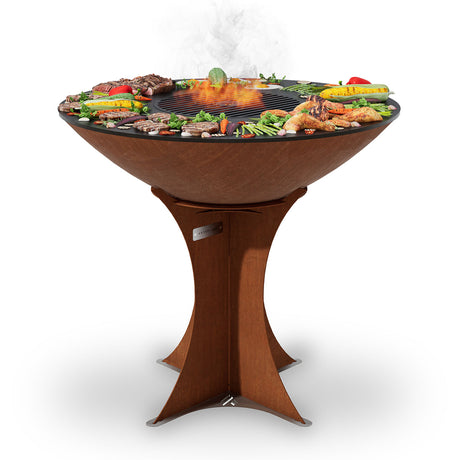
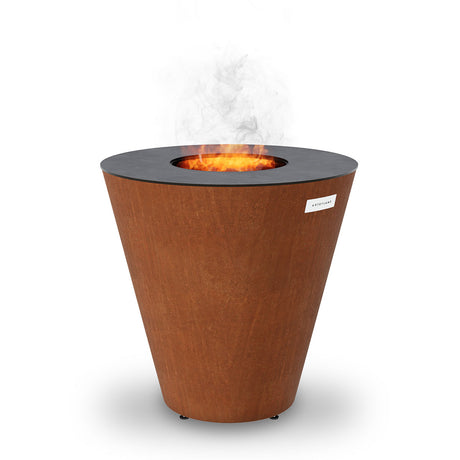
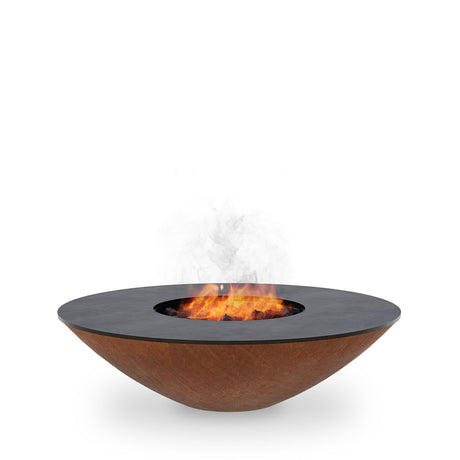
In contrast, the Arteflame utilizes a solid, continuous piece of steel for the cooktop and a heavy, low-center-of-gravity base. This design ensures that the grill remains immovable during use, providing a safer environment for social gatherings where people are standing and moving around the fire.
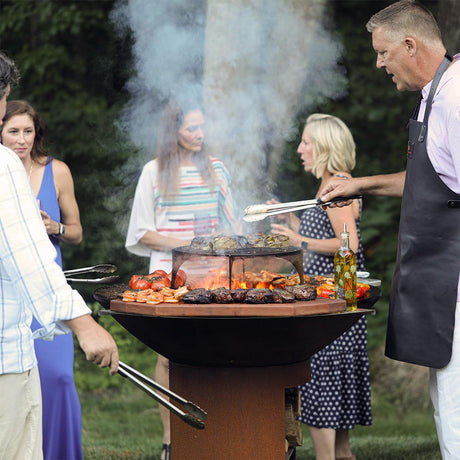
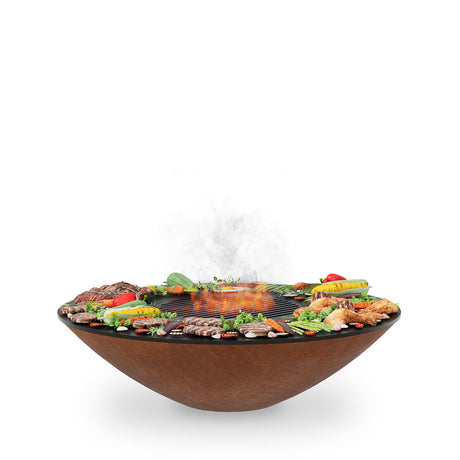
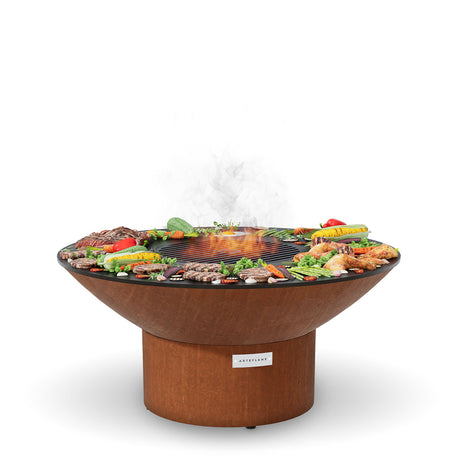
The layout of a 22-inch kettle dictates that the chef stands on one side, usually facing away from the party to manage the smoke and lid. It isolates the cook. A larger, round flat-top grill serves as a communal hub. Because the fire is central and the heat radiates outward, guests can gather around the entire perimeter (360 degrees) to watch the cooking process or even cook their own food without interfering with the chef's station.
Pro Tip: Flavor Retention. Standard wire grates allow meat juices to drip directly onto the coals. While this creates smoke, it also causes flare-ups that deposit acrid soot on food. A solid steel cooktop sears the meat in its own juices, intensifying the natural flavor and creating a perfect crust without the risk of carbon buildup from flare-ups.
A full packer brisket (12-16 lbs) is often too long for a 22-inch kettle unless you place it diagonally or use a rib rack to elevate it. Even then, the edges of the meat may sit too close to the direct heat source, leading to uneven cooking or dried-out ends.
It is difficult to cook for more than 4-6 people on a standard kettle without batch cooking. The lack of surface area means you cannot sear proteins and roast sides simultaneously, forcing you to hold food in a warming oven, which degrades quality.
The main advantage is the ability to cook entire meals simultaneously. You can sear steaks at 1,000°F in the center while grilling vegetables, frying eggs, and toasting buns on the outer rings, all at the same time without flare-ups.






Turn yesterday's leftover macaroni into today's crispy, golden side dish with this easy wood-fired recipe.

Master this Texas-style open-fire brisket cooked entirely on the Arteflame grill. By searing on the center grate and wrapping to render on the flat top, you get perfectly tender, juicy...

Transform standard thick-cut bacon into a sweet, savory appetizer with a dark stout and brown sugar glaze, perfectly caramelized on a flat-top grill.

Render the perfect crispy skin with these Sichuan Peppercorn Duck Breasts, paired with a smoky, sweet, and spicy charred plum-poblano sauce.

Tender artichoke halves charred over high heat and smothered in rich garlic butter and Parmesan cheese.

Achieve the ultimate crust with this low-and-slow beef brisket recipe, utilizing natural heat zones for a perfect sear and incredibly tender finish.

Transform the trending crispy rice paper dumplings into a wood-fired masterpiece. Cooked on the Arteflame flat steel griddle for a shatteringly crisp crust and savory, high-protein filling.

Elevate albacore tuna with a steakhouse-style bacon wrap and a decadent green peppercorn cream sauce, grilled flawlessly on a flat-top.