
Crisp and Golden Mac and Cheese Cakes on the Grill
Turn yesterday's leftover macaroni into today's crispy, golden side dish with this easy wood-fired recipe.


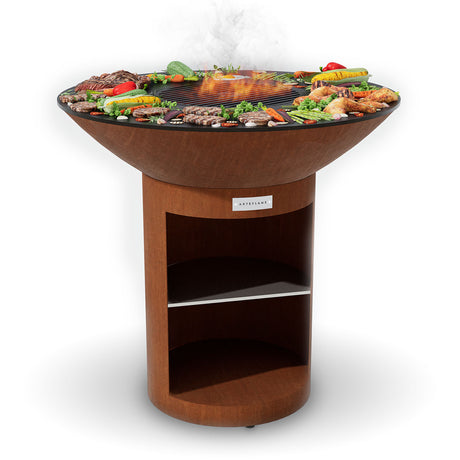
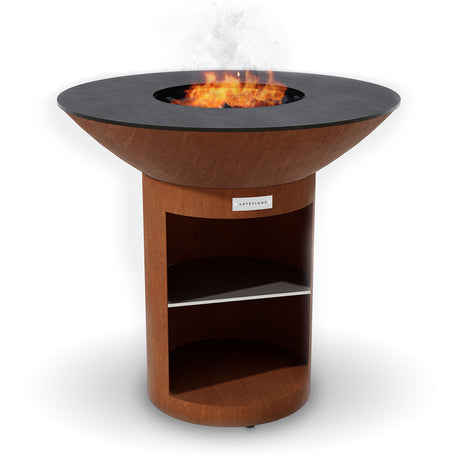
For most grilling enthusiasts, the Arteflame carbon steel insert is the superior upgrade over standard Weber stainless steel grates due to its thermal conductivity and versatility. While stainless steel grates are durable and lightweight, the Arteflame insert converts your kettle into a wood-fired flat top griddle, allowing for restaurant-quality searing, distinct heat zones, and the ability to cook foods like eggs, vegetables, and bacon that would fall through standard grate bars.
To choose the right surface for your cooking style, compare the core features of the standard hinged grate against the solid carbon steel insert below.
| Feature | Weber Stainless Hinged Grate | Arteflame Carbon Steel Insert |
|---|---|---|
| Primary Material | Stainless Steel (Lightweight) | Carbon Steel (Heavy Thermal Mass) |
| Cooking Surface | Open Bars (Direct Flame) | Solid Flat Top (Griddle Style) |
| Sear Quality | Good (Grill Marks) | Excellent (All-over Crust) |
| Versatility | Standard Grilling (Steaks, Burgers) | High (Pancakes, Stir-fry, Steaks) |
| Maintenance | Scrub with Wire Brush | Season like Cast Iron |
The primary advantage of the Arteflame insert is the solid surface area combined with the thermal properties of carbon steel. Unlike stainless steel grates, which only contact the meat at thin specific points (creating grill marks), the solid carbon steel surface provides contact across the entire cut of meat. This maximizes the Maillard reaction—the chemical process that creates that savory, browned crust found in high-end steakhouses.
Carbon steel holds heat significantly better than thin stainless steel rods. When you place a cold steak on thin wires, the temperature of the metal drops instantly. The heavy gauge of the Arteflame insert absorbs heat from the charcoal or wood below and retains it, ensuring the temperature remains high enough to sear immediately upon contact.
Pro Tip: Utilization of "Heat Zones" is key. The Arteflame insert is hotter near the center and cooler toward the edges. Sear your steak at the center for 2 minutes per side, then slide it to the outer edge to finish cooking internally without burning the crust.
Standard Weber grates limit you to large items that won't fall through the gaps. By swapping to a carbon steel insert, you effectively turn your Weber Kettle into a backyard hibachi or plancha. This opens up entirely new menu possibilities without needing a separate gas griddle.

Maintenance is often the deciding factor for grill owners. Stainless steel grates are generally low maintenance and resistant to rust, but they require aggressive scrubbing to remove stuck-on food. Carbon steel requires a different approach, similar to a cast-iron skillet.
The Arteflame insert must be seasoned with oil. Over time, the oil polymerizes to the steel, creating a natural, hard, non-stick black patina. Once seasoned, food releases easily, and cleanup involves simply scraping residue into the fire.
Pro Tip: Never use soap on your carbon steel insert. After cooking, while the grill is still warm, pour a small amount of water on the surface and scrape it clean. Wipe it down with a thin layer of cooking oil to protect it from moisture before covering.
The Arteflame inserts are precision-engineered to replace the standard grates of specific sizes, most commonly the 22-inch and 26-inch Weber Kettle grills. Always check the diameter of your current grate before ordering.
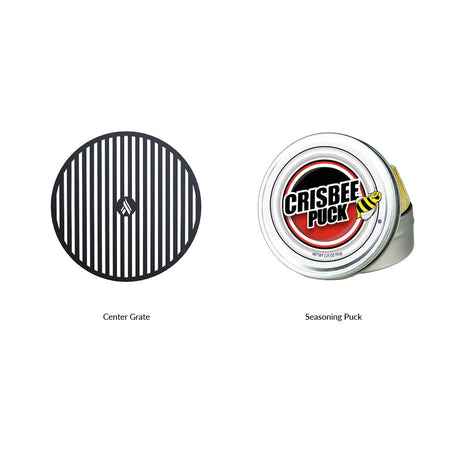
Yes. The Arteflame insert features a central opening. You can easily drop wood chunks or charcoal briquettes through the center hole to maintain your fire without lifting the heavy steel surface.
If the seasoning layer is stripped or if the insert is left exposed to rain without oil, surface rust can form. However, this is easily fixed by scrubbing the rust away with steel wool and re-seasoning the grill with high-heat oil.
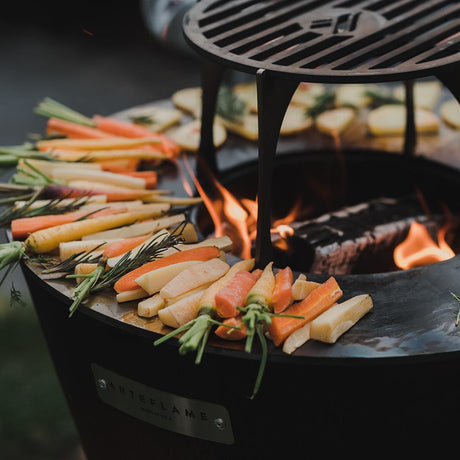

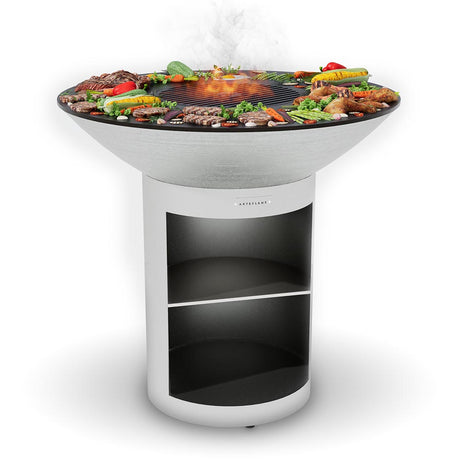
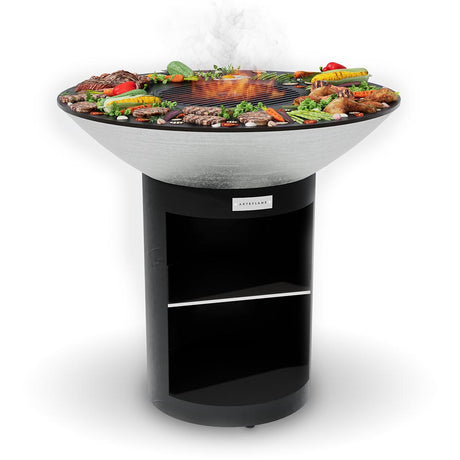


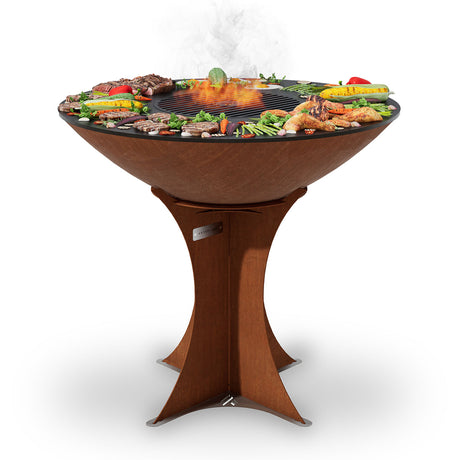
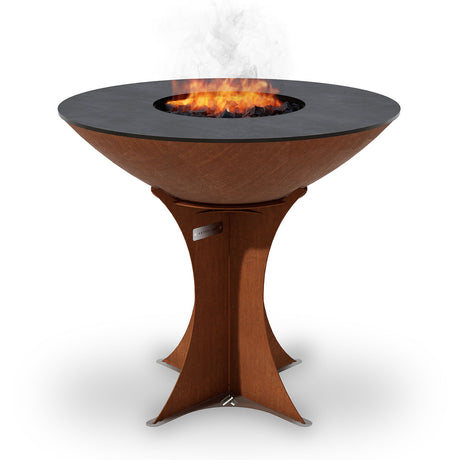


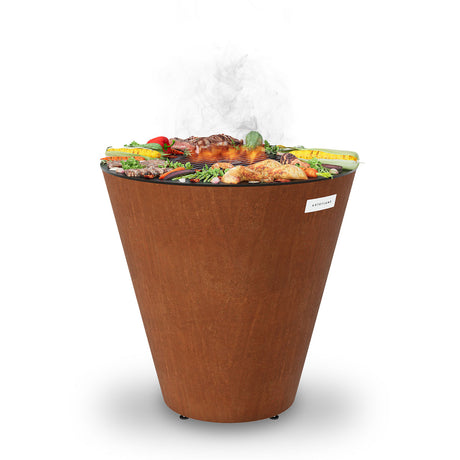
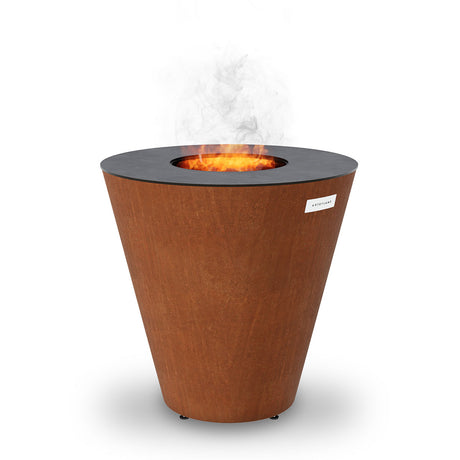


Turn yesterday's leftover macaroni into today's crispy, golden side dish with this easy wood-fired recipe.

Master this Texas-style open-fire brisket cooked entirely on the Arteflame grill. By searing on the center grate and wrapping to render on the flat top, you get perfectly tender, juicy...

Transform standard thick-cut bacon into a sweet, savory appetizer with a dark stout and brown sugar glaze, perfectly caramelized on a flat-top grill.

Render the perfect crispy skin with these Sichuan Peppercorn Duck Breasts, paired with a smoky, sweet, and spicy charred plum-poblano sauce.

Tender artichoke halves charred over high heat and smothered in rich garlic butter and Parmesan cheese.

Achieve the ultimate crust with this low-and-slow beef brisket recipe, utilizing natural heat zones for a perfect sear and incredibly tender finish.

Transform the trending crispy rice paper dumplings into a wood-fired masterpiece. Cooked on the Arteflame flat steel griddle for a shatteringly crisp crust and savory, high-protein filling.

Elevate albacore tuna with a steakhouse-style bacon wrap and a decadent green peppercorn cream sauce, grilled flawlessly on a flat-top.