
Crisp and Golden Mac and Cheese Cakes on the Grill
Turn yesterday's leftover macaroni into today's crispy, golden side dish with this easy wood-fired recipe.


The Weber Premium Kettle is the industry standard for traditional, low-and-slow smoking and budget-friendly charcoal grilling. However, the Arteflame Wood Fire Grill offers a superior solution for chefs seeking high-heat searing, restaurant-quality griddle versatility, and a social cooking experience. If your goal is traditional BBQ smoking, choose the Weber; if you prioritize flavor depth, simultaneous multi-food cooking, and entertaining, the Arteflame is the better investment.
When deciding between a traditional kettle and a modern wood-fired plancha, the differences in cooking surface and fuel management are distinct. Use this comparison to identify which matches your cooking style.
| Feature | Weber Premium Kettle | Arteflame Wood Fire Grill |
|---|---|---|
| Primary Cooking Style | Convection & Direct Grate Grilling | Conduction (Plancha) & Wood Fire Grilling |
| Fuel Source | Charcoal Briquettes / Lump Charcoal | Hardwood Logs / Lump Charcoal |
| Temperature Control | Airflow Vents (Top & Bottom) | Fire Placement & Zone Cooking |
| Surface Material | Plated Steel Grates | Solid Carbon Steel Cooktop |
| Versatility | Good for Smoking & Roasting | Excellent for Searing, Veggies, & Breakfast |
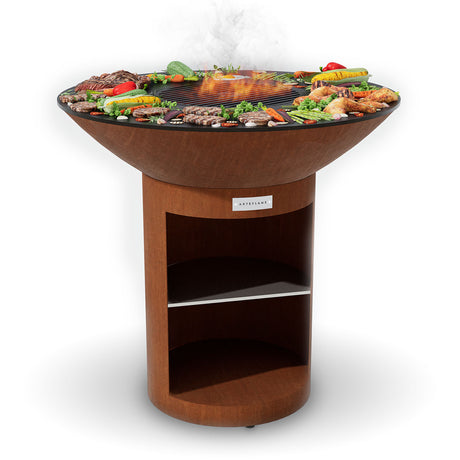
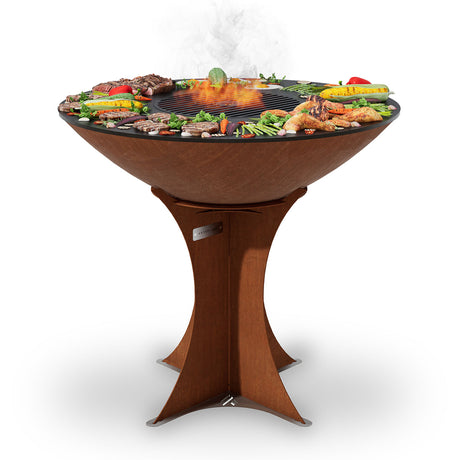
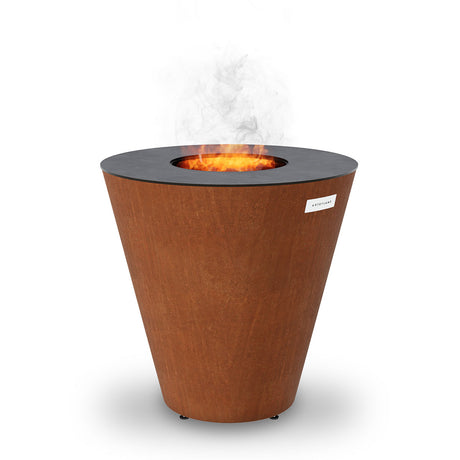
While the Weber Kettle utilizes open grates that expose food directly to flames and charcoal smoke, the Arteflame uses a solid carbon steel cooktop. This difference radically changes the flavor profile and searing capability.
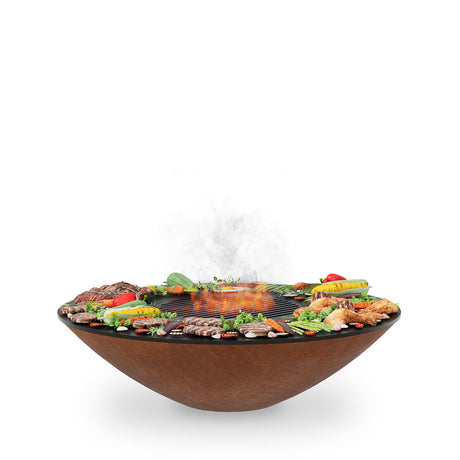
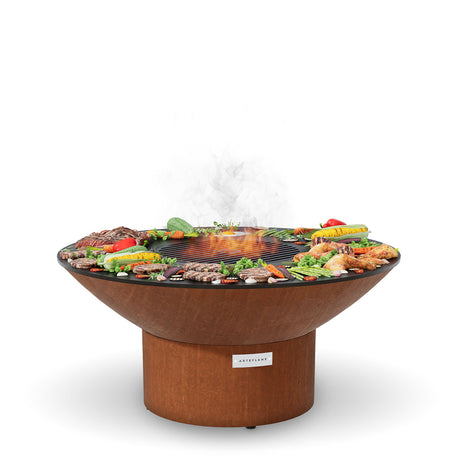
The Weber's thin wire grates create distinct grill marks, but the surface area touching the meat is minimal. Conversely, the Arteflame's solid griddle surface provides 100% contact with the meat. This maximizes the Maillard reaction—the chemical process responsible for the savory, browned crust on a steak.
Pro Tip: Unlike open-grate grills where fat drips onto coals and causes flare-ups (often leading to a bitter, charred taste), the Arteflame's solid surface vaporizes juices instantly or directs excess grease into the fire bowl, preserving the clean, smoky taste of the wood.
Furthermore, wood fire cooking introduces complex aromatic compounds that charcoal briquettes—often held together with fillers—cannot replicate. Using hardwood logs like oak, cherry, or hickory on the Arteflame imparts a subtle, authentic smoke flavor that permeates the food without overpowering it.
Mastering the heat is the biggest learning curve for any grill master. The two grills approach this challenge from opposite angles.
Controlling heat on a Weber Kettle requires manipulating the bottom intake vents and the top exhaust vents. Closing them lowers the temperature by starving the fire of oxygen; opening them raises the heat. This is excellent for "set and forget" indirect cooking but makes it difficult to have high heat and low heat zones simultaneously.
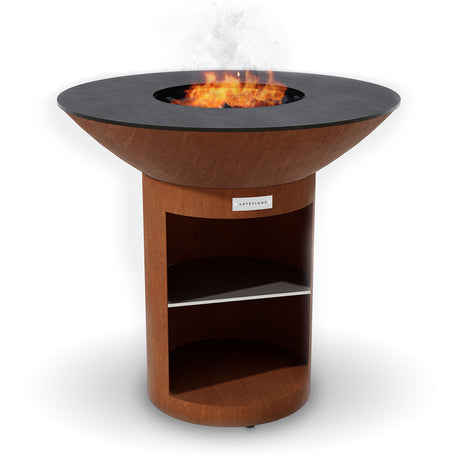
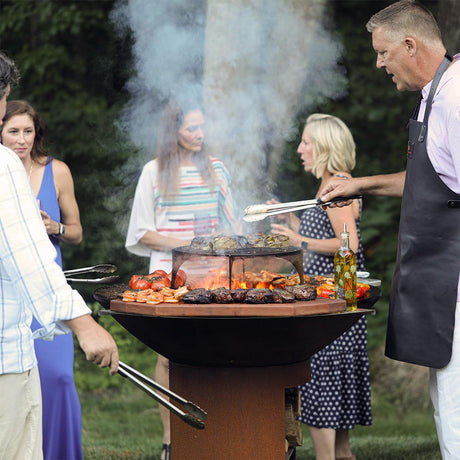
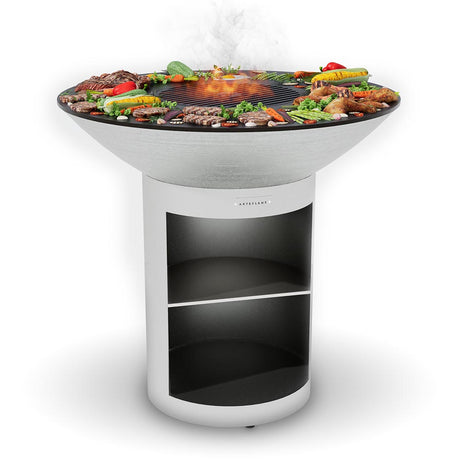
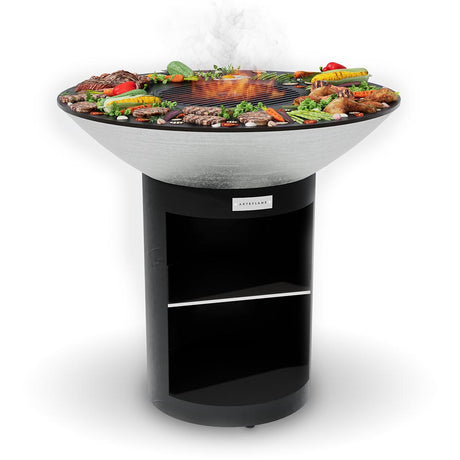
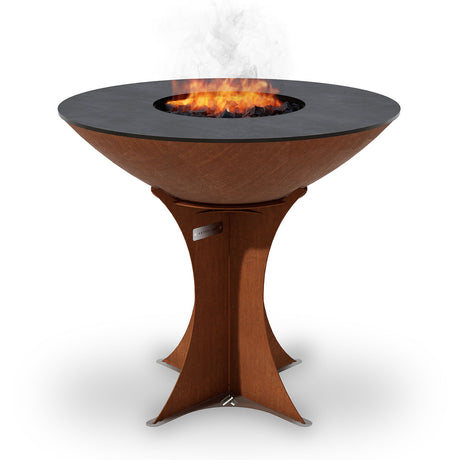
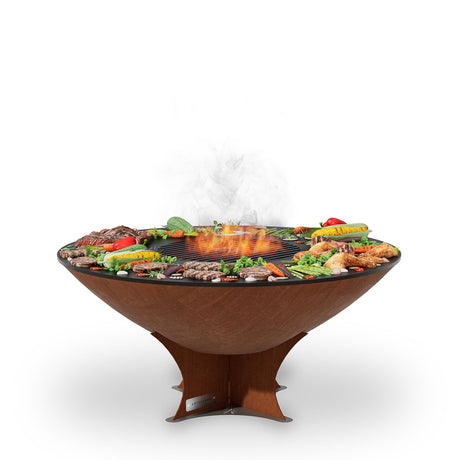
The Arteflame relies on heat distribution rather than airflow restriction. The fire burns in the center, making the inner ring of the cooktop extremely hot (ideal for searing steaks), while the outer edge remains cooler (perfect for slow-roasting veggies or warming buns). This allows you to cook an entire meal with different heat requirements at the same time.
Pro Tip: You do not need to wait for the wood to burn down to coals before cooking on an Arteflame. Because you cook on the steel ring and not directly over the flame, you can begin grilling as soon as the cooktop reaches temperature, usually within 15-20 minutes.
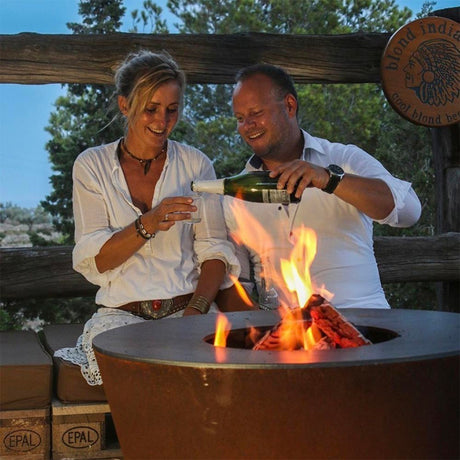
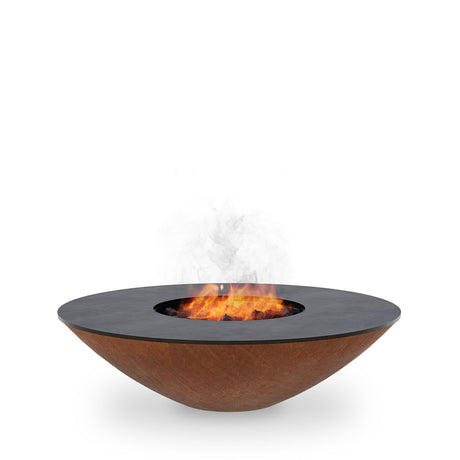
One distinct advantage of the Arteflame over the Weber Kettle is its dual functionality. Once the grilling is finished, the Arteflame transitions seamlessly into a centerpiece fire pit. The elevated design and open bowl structure allow for a visually stunning fire that radiates heat outward, extending your outdoor gathering well into the evening. The Weber Kettle is strictly a cooking appliance and is not designed for open-fire ambiance.
Generally, the Arteflame is easier to maintain day-to-day. The seasoned carbon steel cooktop simply needs to be scraped clean while hot and oiled, similar to a cast-iron skillet. There are no ash catchers to empty constantly or wire grates to scrub.
Yes. While hardwood is recommended for the best flavor and heat distribution, you can use charcoal or a mix of charcoal and wood in the center of the Arteflame to start the fire or maintain heat.
The Arteflame is significantly better for breakfast foods. Its solid flat-top surface prevents eggs, bacon, and pancakes from falling through, which is impossible on a standard Weber Kettle without purchasing additional griddle inserts.
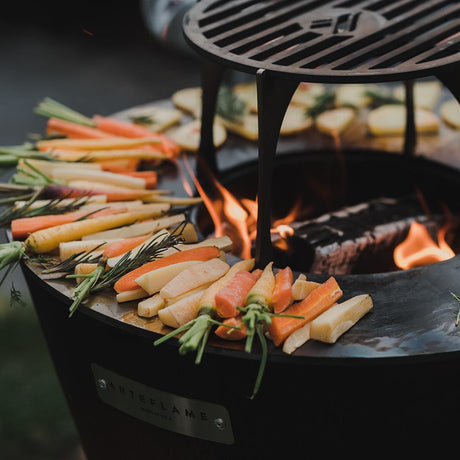






Turn yesterday's leftover macaroni into today's crispy, golden side dish with this easy wood-fired recipe.

Master this Texas-style open-fire brisket cooked entirely on the Arteflame grill. By searing on the center grate and wrapping to render on the flat top, you get perfectly tender, juicy...

Transform standard thick-cut bacon into a sweet, savory appetizer with a dark stout and brown sugar glaze, perfectly caramelized on a flat-top grill.

Render the perfect crispy skin with these Sichuan Peppercorn Duck Breasts, paired with a smoky, sweet, and spicy charred plum-poblano sauce.

Tender artichoke halves charred over high heat and smothered in rich garlic butter and Parmesan cheese.

Achieve the ultimate crust with this low-and-slow beef brisket recipe, utilizing natural heat zones for a perfect sear and incredibly tender finish.

Transform the trending crispy rice paper dumplings into a wood-fired masterpiece. Cooked on the Arteflame flat steel griddle for a shatteringly crisp crust and savory, high-protein filling.

Elevate albacore tuna with a steakhouse-style bacon wrap and a decadent green peppercorn cream sauce, grilled flawlessly on a flat-top.