
Crisp and Golden Mac and Cheese Cakes on the Grill
Turn yesterday's leftover macaroni into today's crispy, golden side dish with this easy wood-fired recipe.


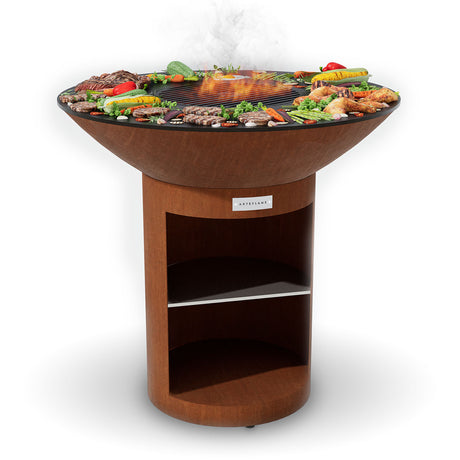
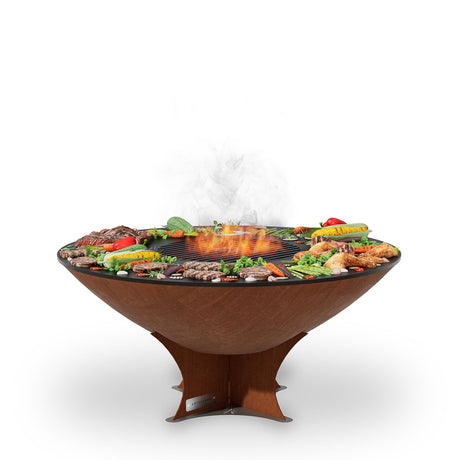
For pure searing capability and flavor retention, the Arteflame outperforms the Weber Master Touch. While the Weber is an excellent vessel for convection roasting and smoking, its open-grate design limits surface contact to roughly 20% of the meat. The Arteflame's solid carbon steel cooktop provides 100% surface contact, ensuring a deeper, steakhouse-quality crust (Maillard reaction) without the risk of flare-ups burning the meat.
When choosing between a traditional kettle grill and a flat-top plancha style grill, the differences in cooking mechanics are drastic. Review the data below to see which grill suits your cooking style.
| Feature | Weber Master Touch | Arteflame Grill |
|---|---|---|
| Searing Surface | Open Wire Grates (Low Contact) | Solid Carbon Steel (100% Contact) |
| Heat Source | Charcoal / Briquettes | Wood or Charcoal |
| Flare-Ups | Common (Fat drips onto coals) | None (Solid cooktop blocks fire) |
| Flavor Profile | Smoky, Charred | Savory Crust + Wood Fired |
| Cooking Zones | Requires arranging coals | Automatic (Hot center, cool edges) |
The primary difference between these two grills is the cooking surface. On a Weber Master Touch, the meat sits on thin grates. While this creates distinct grill marks, the area between the grates is exposed to open air and direct flame. This often leads to drying out the meat before a full crust forms.
Pro Tip: For the ultimate "steakhouse" flavor, you need the Maillard reaction to occur across the entire surface of the steak, not just on strip lines. A flat, solid steel surface achieves this at temperatures exceeding 1,000°F.
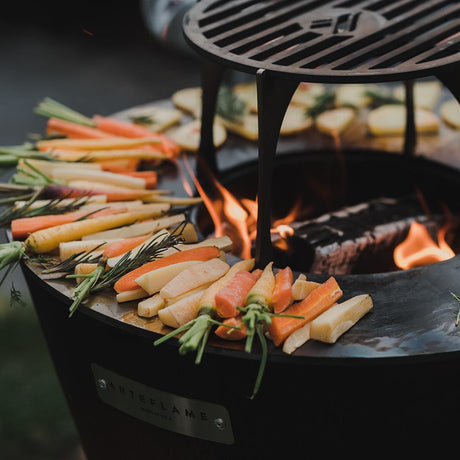
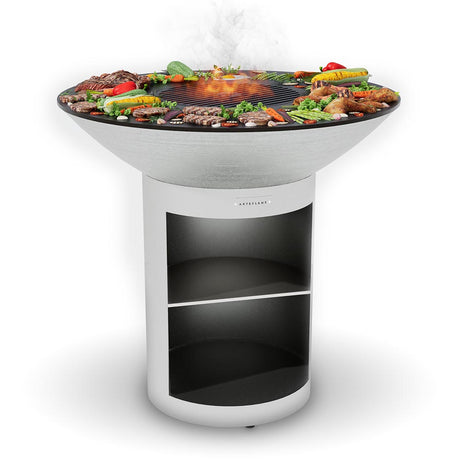
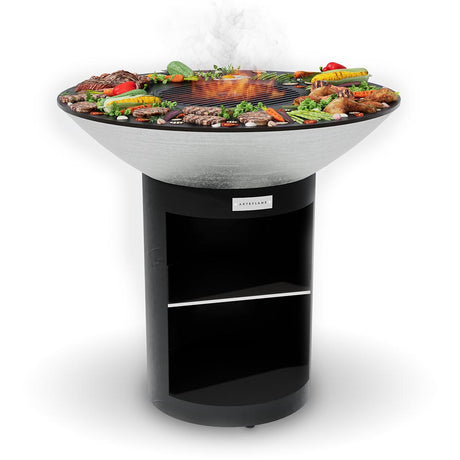
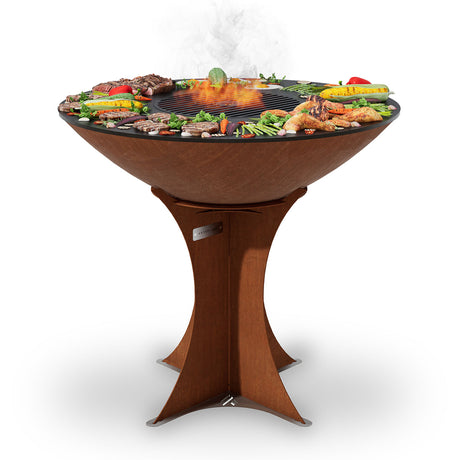
The Arteflame uses a heavy carbon steel cooktop. Because the meat lies flat against hot steel, the juices sear directly into the meat rather than dripping away. This creates a uniform, golden-brown crust that seals in moisture more effectively than wire grates.
Temperature control on a Weber requires manipulating airflow vents and physically moving charcoal to create "zones." It is effective for indirect cooking (like roasting a chicken) but requires constant vigilance to maintain high searing temperatures without burning the food due to flare-ups.
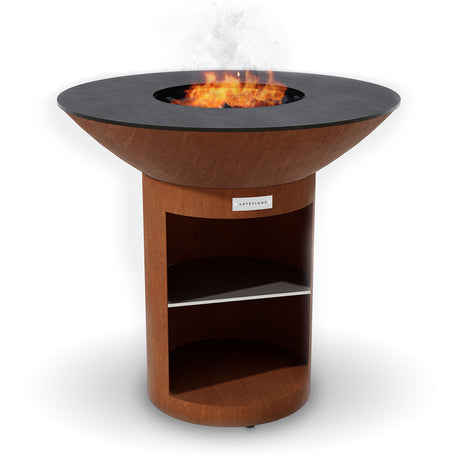
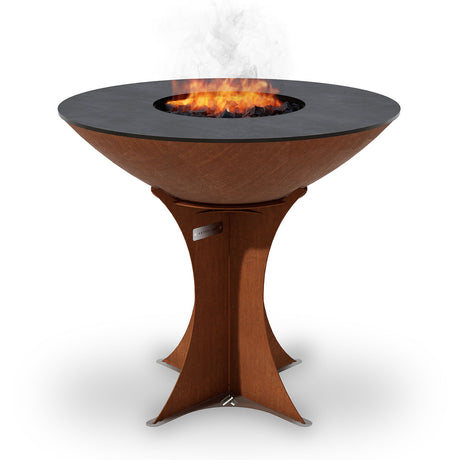
The Arteflame is designed with distinct heat zones built into the surface. The fire burns in the center, making the inner ring of the cooktop the hottest area (ideal for searing). As you move food toward the outer edge, the temperature drops, allowing for slow cooking or warming.
Pro Tip: Use the "Reverse Sear" method effortlessly on an Arteflame. Start your thick steaks on the cooler outer edge to bring the internal temp up, then slide them to the center for a 60-second high-heat finish.
Yes. On a Weber Master Touch, fat drips onto the coals, creating smoke. This creates a distinct "charcoal" flavor but can also lead to acrid smoke if flare-ups occur.
On the Arteflame, juices that drip from the meat hit the hot steel and vaporize instantly, absorbing back into the food. This creates a clean, intense beef flavor. Furthermore, because you can use real hardwood logs in the center, you get a subtle wood-fired aroma that briquettes cannot match.
The Arteflame is generally easier to maintain day-to-day. You simply scrape the residue into the fire and wipe the carbon steel with oil, whereas the Weber requires scrubbing wire grates and emptying ash catchers frequently.
While the Weber is better designed for closed-lid smoking, the Arteflame imparts a mild smoky flavor due to the open wood fire. However, it is primarily a direct-heat grill and griddle, not a convection smoker.
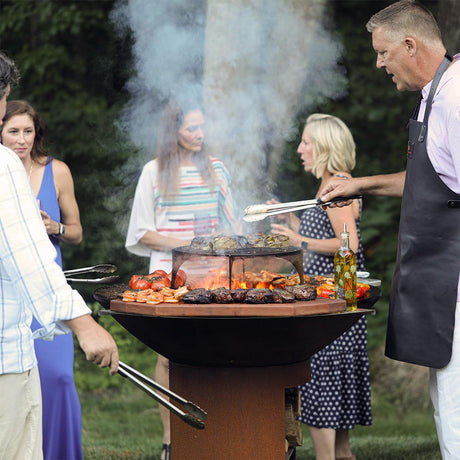
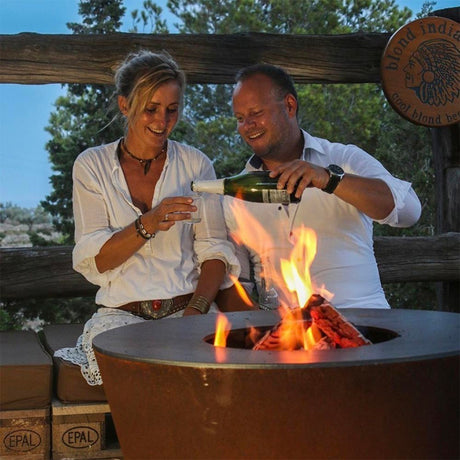
If you prioritize searing steaks, cooking vegetables, and social grilling where guests gather around the fire, the Arteflame offers higher utility and durability (lasts a lifetime) compared to a standard kettle grill.




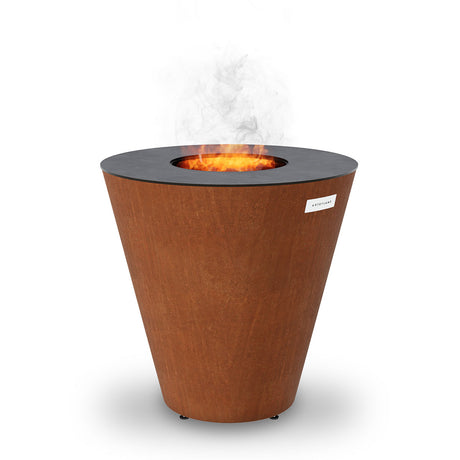
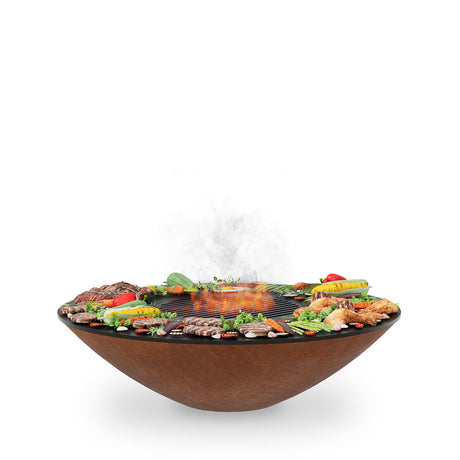
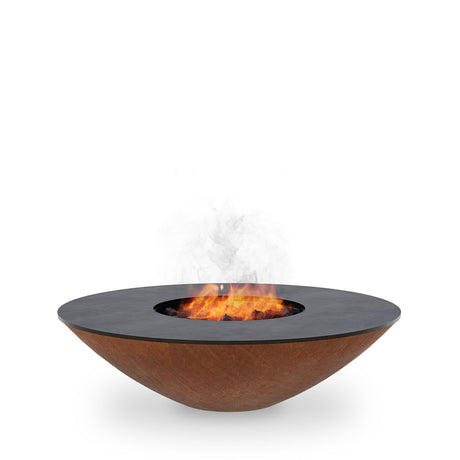
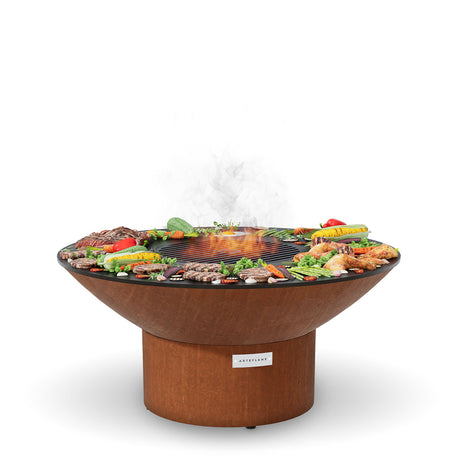


Turn yesterday's leftover macaroni into today's crispy, golden side dish with this easy wood-fired recipe.

Master this Texas-style open-fire brisket cooked entirely on the Arteflame grill. By searing on the center grate and wrapping to render on the flat top, you get perfectly tender, juicy...

Transform standard thick-cut bacon into a sweet, savory appetizer with a dark stout and brown sugar glaze, perfectly caramelized on a flat-top grill.

Render the perfect crispy skin with these Sichuan Peppercorn Duck Breasts, paired with a smoky, sweet, and spicy charred plum-poblano sauce.

Tender artichoke halves charred over high heat and smothered in rich garlic butter and Parmesan cheese.

Achieve the ultimate crust with this low-and-slow beef brisket recipe, utilizing natural heat zones for a perfect sear and incredibly tender finish.

Transform the trending crispy rice paper dumplings into a wood-fired masterpiece. Cooked on the Arteflame flat steel griddle for a shatteringly crisp crust and savory, high-protein filling.

Elevate albacore tuna with a steakhouse-style bacon wrap and a decadent green peppercorn cream sauce, grilled flawlessly on a flat-top.