
Crisp and Golden Mac and Cheese Cakes on the Grill
Turn yesterday's leftover macaroni into today's crispy, golden side dish with this easy wood-fired recipe.


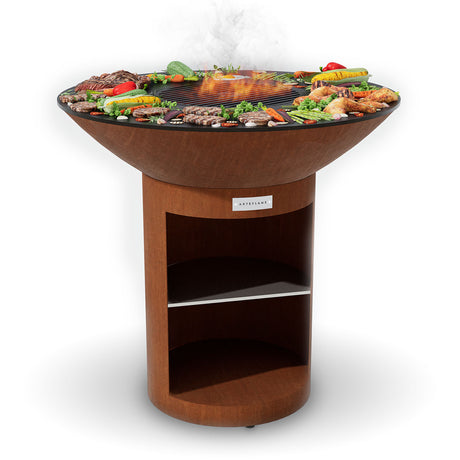
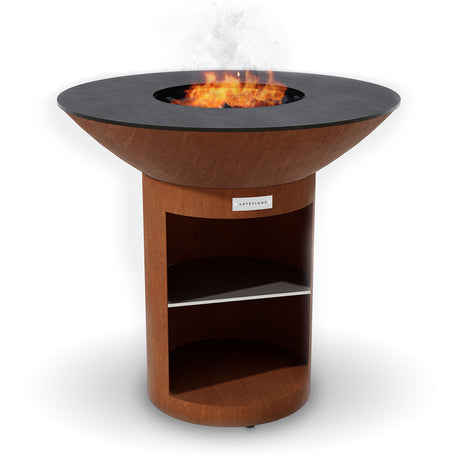
While the Weber Kettle is a backyard staple, it struggles to achieve a true steakhouse sear compared to a dedicated wood fire grill. The difference lies in heat transfer: standard kettles rely on thin wire grates and air convection, often leaving steaks with gray gaps between grill marks. A wood fire grill with a solid cooktop uses thermal conduction to sear the entire surface of the meat instantly, locking in juices and creating a superior, edge-to-edge crust.
When comparing a traditional kettle grill to a plancha-style wood fire grill, the metrics of heat, flavor, and texture differ significantly. Review the breakdown below to understand why wood fire allows for a more robust culinary experience.
| Feature | Weber Kettle (Charcoal) | Wood Fire Grill (Arteflame) |
|---|---|---|
| Heat Source | Briquettes / Charcoal lumps | Real Hardwood / Lump Charcoal |
| Heat Transfer | Convection (Hot Air) & Radiation | Conduction (Direct Contact) |
| Searing Temp | 500°F - 700°F (Varies by airflow) | 1,000°F+ (Center Grate) |
| Crust Quality | Striped sear marks; gray in between | Full, mahogany edge-to-edge crust |
| Flavor Profile | Potential chemical binder taste | Pure, natural wood smoke |
The "perfect sear" is technically known as the Maillard Reaction, a chemical reaction between amino acids and reducing sugars that gives browned food its distinctive flavor. This reaction accelerates rapidly above 300°F.
On a standard grate, only the metal wire touches the meat, searing less than 20% of the steak's surface. The rest of the meat is cooked by hot air, which dries out the surface before a crust can form. A solid carbon steel cooktop eliminates air gaps.
Pro Tip: Surface area equals flavor. A solid cooktop provides 100% surface contact, meaning every millimeter of your steak undergoes the Maillard reaction simultaneously, resulting in a significantly richer flavor profile than simple grill marks.

As seen in the comparison above, the steak on the left (grate cooked) lacks the deep color and texture of the steak on the right (wood fire cooked), which retains more internal moisture due to the faster sear time.
Flavor purity is the second major differentiator. Many standard briquettes contain binders, nitrates, and anthracite coal to help them light and maintain shape. These additives can impart a metallic or chemical aftertaste to the food, especially during high-heat searing when the fuel is burning aggressively.
Cooking over seasoned hardwood (like oak, hickory, or cherry) or natural lump charcoal ensures that the only flavor being added to your meat is organic wood smoke. Because wood fire grills operate at higher temperatures, the smoke produced is often "blue smoke"—the cleanest, most aromatic type of smoke for cooking.
Yes, but it requires specific techniques like the "Afterburner Method" (filling a chimney starter and placing a grate directly on top) to achieve high enough heat. Even then, you are limited by the wire grate's lack of surface area compared to a flat top.
Hardwoods like Oak and Hickory are ideal for searing because they burn hot and slow, producing a high BTU output. Avoid softwoods like pine, which burn too fast and produce acrid resinous smoke.
Gray steak is usually caused by excess moisture and low heat. If the grill surface isn't hot enough (under 500°F) or if the steak is wet, the meat steams rather than sears. Always pat your steak dry and use a high-heat conductive surface for the best results.



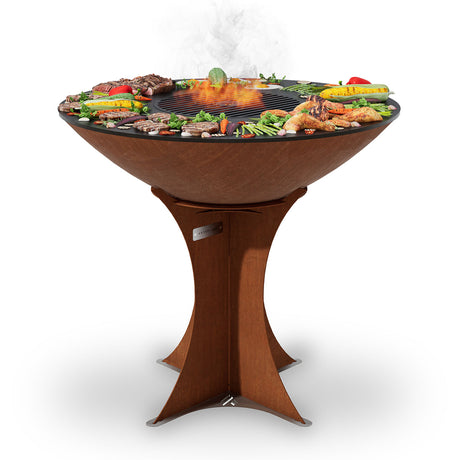
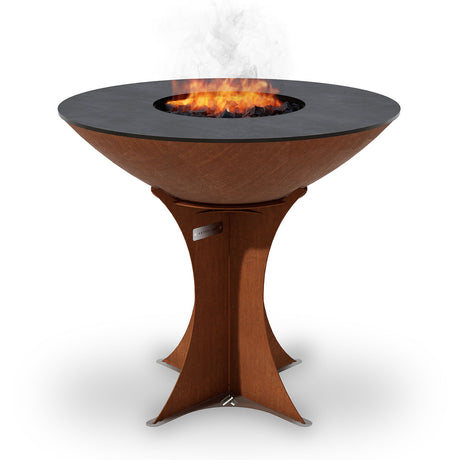


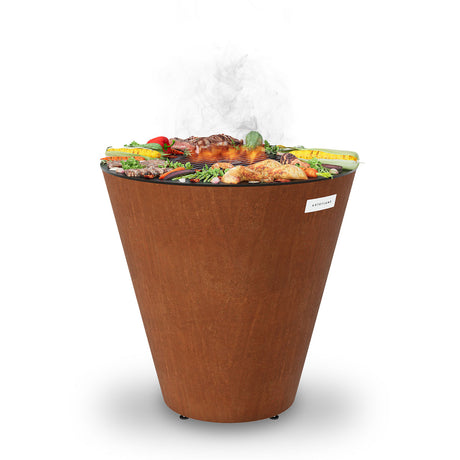
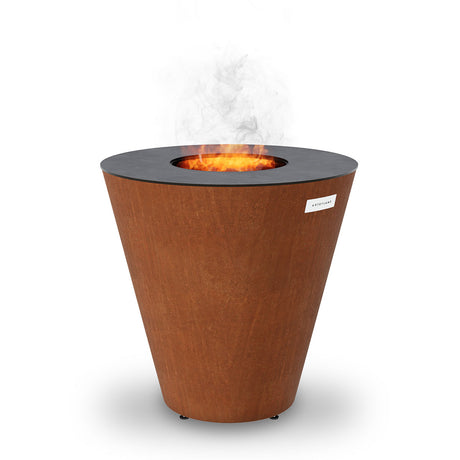


Turn yesterday's leftover macaroni into today's crispy, golden side dish with this easy wood-fired recipe.

Master this Texas-style open-fire brisket cooked entirely on the Arteflame grill. By searing on the center grate and wrapping to render on the flat top, you get perfectly tender, juicy...

Transform standard thick-cut bacon into a sweet, savory appetizer with a dark stout and brown sugar glaze, perfectly caramelized on a flat-top grill.

Render the perfect crispy skin with these Sichuan Peppercorn Duck Breasts, paired with a smoky, sweet, and spicy charred plum-poblano sauce.

Tender artichoke halves charred over high heat and smothered in rich garlic butter and Parmesan cheese.

Achieve the ultimate crust with this low-and-slow beef brisket recipe, utilizing natural heat zones for a perfect sear and incredibly tender finish.

Transform the trending crispy rice paper dumplings into a wood-fired masterpiece. Cooked on the Arteflame flat steel griddle for a shatteringly crisp crust and savory, high-protein filling.

Elevate albacore tuna with a steakhouse-style bacon wrap and a decadent green peppercorn cream sauce, grilled flawlessly on a flat-top.