
Crisp and Golden Mac and Cheese Cakes on the Grill
Turn yesterday's leftover macaroni into today's crispy, golden side dish with this easy wood-fired recipe.


Quick Take: The most effective upgrade for a Weber Genesis grill is replacing the standard wire grates with a solid carbon steel flat top insert. This simple swap eliminates dangerous flare-ups, dramatically improves heat retention, and transforms your gas grill into a versatile outdoor griddle capable of searing steaks and cooking fragile foods like eggs or vegetables simultaneously.
Stock Weber Genesis grates are designed for basic grilling, but they suffer from significant limitations: heat loss through gaps and uncontrollable flare-ups caused by dripping grease. By upgrading to a solid carbon steel insert, you close the grilling surface.
This conversion does more than just change the cooking surface; it alters the thermodynamics of your grill. The solid steel absorbs the BTU output from the burners and conducts it evenly across the plate. This results in a restaurant-quality sear that wire grates simply cannot achieve because the surface contact with the meat increases from roughly 20% (grates) to 100% (flat top).
Pro Tip: Unlike cast iron, carbon steel is virtually indestructible. If you accidentally leave it out in the rain and it develops surface rust, it can be sanded down and re-seasoned to look brand new. It does not crack or chip like porcelain-coated cast iron.
See how a carbon steel upgrade compares to the standard setup and cast iron alternatives.
| Feature | Stock Wire Grates | Cast Iron Griddle | Carbon Steel (Arteflame) |
|---|---|---|---|
| Heat Retention | Low | High | Superior |
| Flare-Up Control | None (High Risk) | Moderate | 100% Elimination |
| Durability | Moderate | Brittle (Can Crack) | Lifetime (Unbreakable) |
| Maintenance | Scrubbing | Seasoning Required | Simple Scrape & Oil |
| Searing Area | Lines Only | Full Surface | Full Surface |
When looking for Weber Genesis grill grates upgrades, the debate often settles between cast iron and carbon steel. While cast iron has been the traditional choice, carbon steel is the superior material for modern outdoor cooking.
Carbon steel heats up faster than cast iron and responds more quickly to burner adjustments. If you need to drop the temperature for delicate vegetables after searing a steak, carbon steel allows for that transition more efficiently.
Cast iron is porous and often rough. Carbon steel is smoother and, once seasoned, becomes arguably the most non-stick surface available for outdoor cooking. This makes it possible to grill pancakes, fried rice, and smashed burgers without sticking.
Pro Tip: For the ultimate non-stick surface, perform the first seasoning with Grape Seed Oil. It has a high smoke point and creates a harder, more durable polymer layer than olive oil or vegetable oil.
Installing a flat top upgrade on your Weber Genesis is a straightforward, tool-free process designed for seamless integration.
The steel will arrive silver (unseasoned). To turn it black and non-stick, fire up the grill to medium-high heat. Apply a thin coat of seasoning oil (Arteflame seasoning wax or grape seed oil) and let it smoke off. Repeat this process 2-3 times until the metal turns a deep, dark bronze or black. The surface will continue to improve with every cook.
Yes, if left unseasoned or exposed to moisture without oil, it can rust. However, regular use and keeping a light coat of oil on the surface when not in use prevents this completely. Rust is easily removed with steel wool.
Absolutely. Unlike Teflon or porcelain-coated grates, carbon steel is incredibly hard. You can use metal spatulas, scrapers, and knives directly on the surface without damaging it.
Replacesments are generally specific to the series (e.g., Genesis II, Genesis 300 series). Always measure your firebox dimensions or check the model compatibility list before purchasing a drop-in replacement.
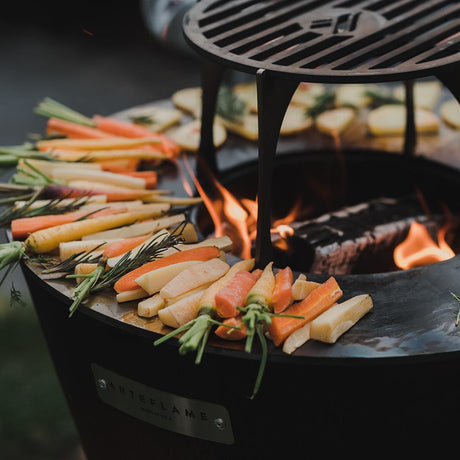

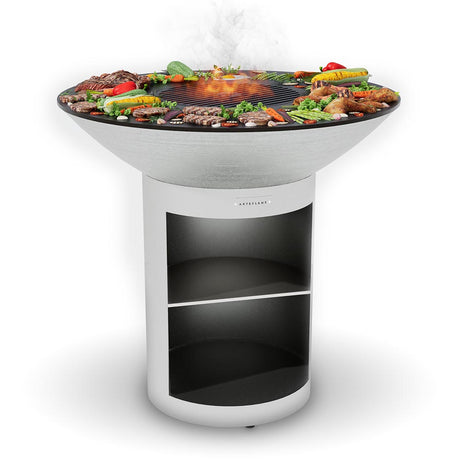
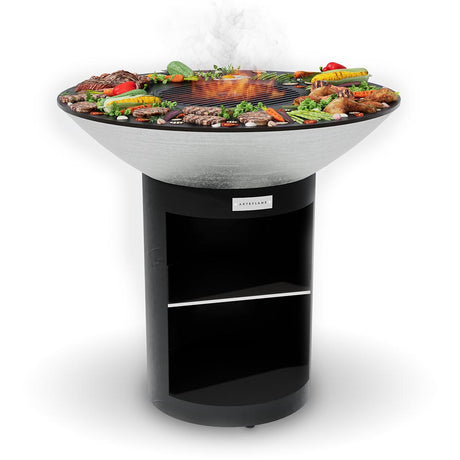






Turn yesterday's leftover macaroni into today's crispy, golden side dish with this easy wood-fired recipe.

Master this Texas-style open-fire brisket cooked entirely on the Arteflame grill. By searing on the center grate and wrapping to render on the flat top, you get perfectly tender, juicy...

Transform standard thick-cut bacon into a sweet, savory appetizer with a dark stout and brown sugar glaze, perfectly caramelized on a flat-top grill.

Render the perfect crispy skin with these Sichuan Peppercorn Duck Breasts, paired with a smoky, sweet, and spicy charred plum-poblano sauce.

Tender artichoke halves charred over high heat and smothered in rich garlic butter and Parmesan cheese.

Achieve the ultimate crust with this low-and-slow beef brisket recipe, utilizing natural heat zones for a perfect sear and incredibly tender finish.

Transform the trending crispy rice paper dumplings into a wood-fired masterpiece. Cooked on the Arteflame flat steel griddle for a shatteringly crisp crust and savory, high-protein filling.

Elevate albacore tuna with a steakhouse-style bacon wrap and a decadent green peppercorn cream sauce, grilled flawlessly on a flat-top.