
Crisp and Golden Mac and Cheese Cakes on the Grill
Turn yesterday's leftover macaroni into today's crispy, golden side dish with this easy wood-fired recipe.


Yes, you can instantly transform a Weber Genesis gas grill into a high-performance griddle by replacing the standard wire grates with a solid carbon steel insert. This upgrade optimizes the grill for searing, completely eliminates flare-ups, and creates a unified heating surface ideal for smash burgers, breakfast items, and vegetables. Unlike placing a pan on top of grates, a direct insert maximizes heat transfer for restaurant-quality results.
Most gas grills come with stainless steel or porcelain-enameled wire grates. While functional for basic grilling, they lose significant heat to the air and allow fat to drip down, causing flare-ups. Upgrading to a solid carbon steel surface changes the thermodynamics of your grill. The table below outlines the key performance differences.
| Feature | Standard Wire Grates | Cast Iron Pans | Arteflame Carbon Steel Insert |
|---|---|---|---|
| Heat Retention | Low (Airflow cools food) | High | Maximum (Solid thermal mass) |
| Cooking Surface | Open (Food falls through) | Restricted size | Full Coverage Flat Top |
| Maintenance | Scrubbing wire brushes | Rust prone if not oiled | Scrape and wipe (Seasons with use) |
| Versatility | Steaks & Sausages only | Limited capacity | Eggs, Pancakes, Steaks, Veggies |
| Flare-Ups | Frequent | None | Zero (Solid barrier) |
When looking to upgrade a Weber Genesis, many pitmasters debate between cast iron and carbon steel. While cast iron is traditional, carbon steel offers superior durability and smoothness for daily use.
Carbon steel is smoother than cast iron, which typically has a pebbled surface. This smoothness allows the seasoning (polymerized oil) to build up faster and more evenly, creating a glass-like, non-stick surface that rivals Teflon without the chemicals.
Pro Tip: Don't worry if your carbon steel insert looks dark or black after a few uses. This is called "seasoning." The darker the steel gets, the better it cooks and the more non-stick it becomes. Never use soap to clean it—just water and a scraper while it's hot.
The installation process is designed to be a direct drop-in replacement, requiring no tools or modifications to the firebox of your Weber Genesis.
Pro Tip: Apply a thin layer of cooking oil (grape seed or avocado oil work best for high heat) immediately after the grill heats up. This protects the steel and starts the seasoning process instantly.
Arteflame designs specific inserts to fit the Weber Genesis II 300 Series and other standard Genesis models. Always measure your current grate dimensions before ordering. The insert replaces the stock grates entirely, sitting flush to trap heat inside the cookbox for improved fuel efficiency.
Yes, you can close the lid. However, because the solid steel retains significantly more heat than wire grates, monitor the temperature gauge closely to prevent the grill from running hotter than usual.
Clean it while it is still hot. Pour a small amount of water onto the surface (the steam lifts debris) and scrape the residue into the grease trough with a flat spatula. Wipe it with a paper towel and a drop of oil.
Like a cast iron skillet, carbon steel can develop surface rust if left unseasoned or exposed to heavy moisture without an oil coating. Keep it oiled after every use, and the seasoning layer will prevent rust naturally.
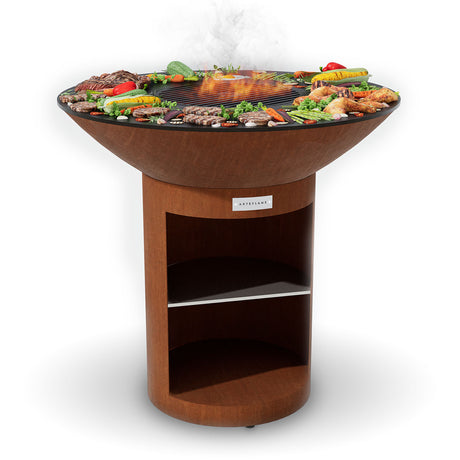
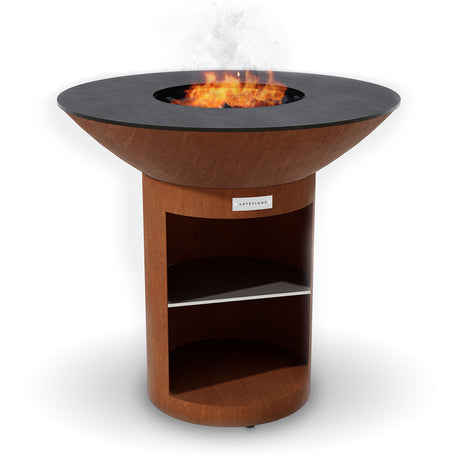
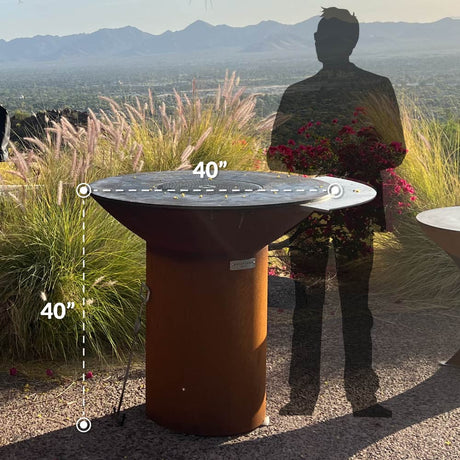
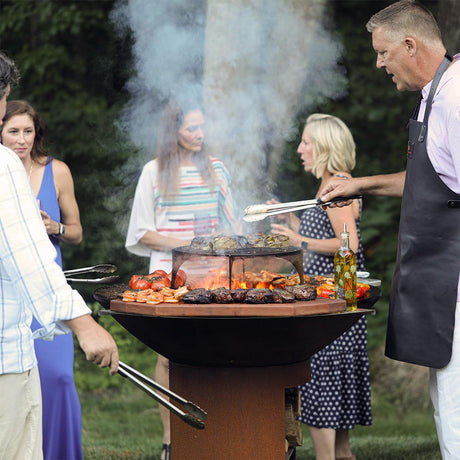
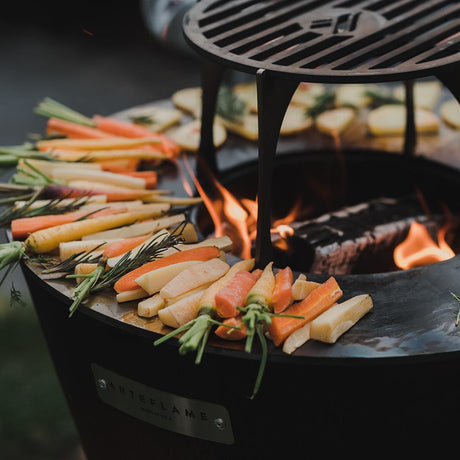

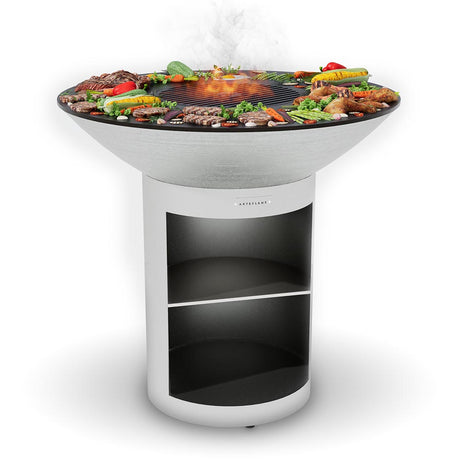
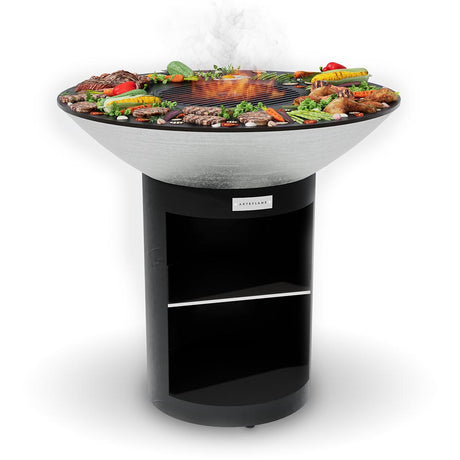






Turn yesterday's leftover macaroni into today's crispy, golden side dish with this easy wood-fired recipe.

Master this Texas-style open-fire brisket cooked entirely on the Arteflame grill. By searing on the center grate and wrapping to render on the flat top, you get perfectly tender, juicy...

Transform standard thick-cut bacon into a sweet, savory appetizer with a dark stout and brown sugar glaze, perfectly caramelized on a flat-top grill.

Render the perfect crispy skin with these Sichuan Peppercorn Duck Breasts, paired with a smoky, sweet, and spicy charred plum-poblano sauce.

Tender artichoke halves charred over high heat and smothered in rich garlic butter and Parmesan cheese.

Achieve the ultimate crust with this low-and-slow beef brisket recipe, utilizing natural heat zones for a perfect sear and incredibly tender finish.

Transform the trending crispy rice paper dumplings into a wood-fired masterpiece. Cooked on the Arteflame flat steel griddle for a shatteringly crisp crust and savory, high-protein filling.

Elevate albacore tuna with a steakhouse-style bacon wrap and a decadent green peppercorn cream sauce, grilled flawlessly on a flat-top.