
Crisp and Golden Mac and Cheese Cakes on the Grill
Turn yesterday's leftover macaroni into today's crispy, golden side dish with this easy wood-fired recipe.


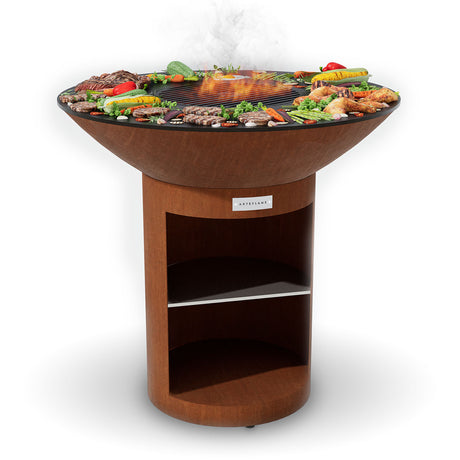
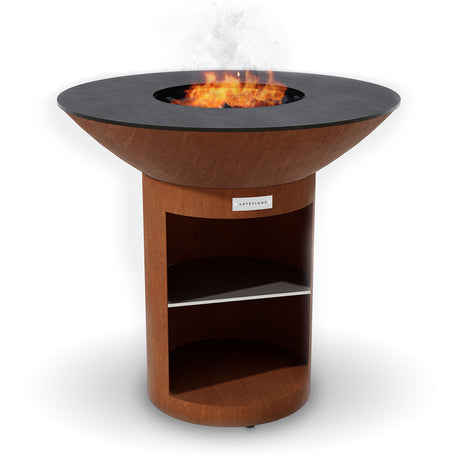
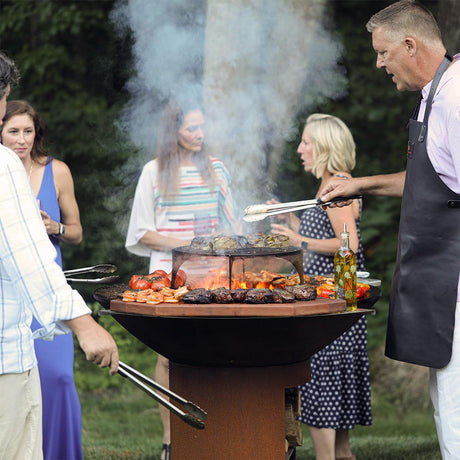
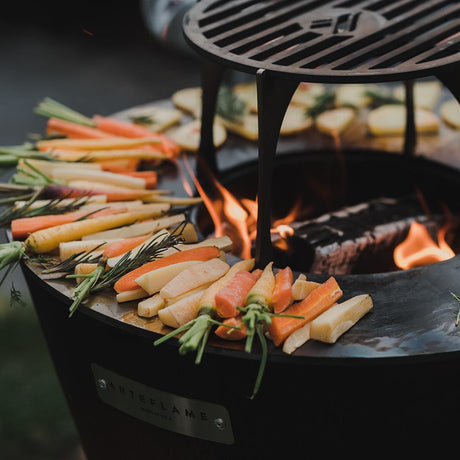
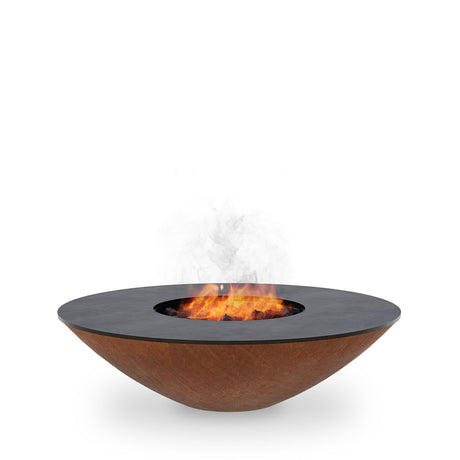
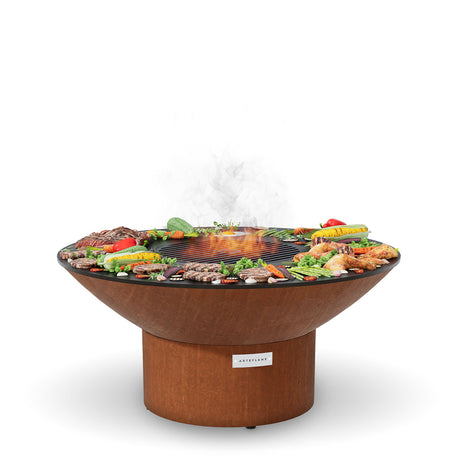
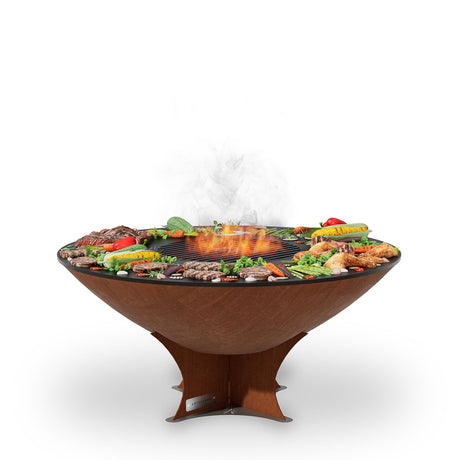
You can instantly transform your standard fire pit or kettle grill into a comprehensive outdoor kitchen by swapping the traditional wire rack for a solid carbon steel insert. Unlike wire grates that lose heat and let food fall through, a solid carbon steel cooktop provides a continuous surface for restaurant-quality searing while preventing flare-ups. This simple upgrade enhances heat retention, simplifies cleanup, and offers the versatility of a flat-top griddle on your existing setup.
The primary flaw of standard wire or stainless steel grates is surface area. Wire racks are mostly empty space, meaning flames touch the food directly (causing burning) while juices drip away (causing dry meat). By upgrading to a solid carbon steel surface, like the Arteflame replacement insert, you gain substantial thermal mass.
This allows for the Maillard reaction—that golden-brown crust responsible for deep savory flavor—to occur evenly across steaks, vegetables, and burgers. It effectively turns your fire pit into a hibachi-style grill.

Below is a comparison of how carbon steel stacks up against traditional grilling surfaces.
| Feature | Carbon Steel Insert | Cast Iron Grate | Stainless Wire Rack |
|---|---|---|---|
| Searing Power | High (Full surface contact) | Medium (Grid marks only) | Low (Indirect heat) |
| Durability | Lifetime (Unbreakable) | Brittle (Can crack) | Medium (Warps over time) |
| Maintenance | Easy (Scrape clean) | Difficult (Rust prone) | Medium (Scrubbing required) |
| Versatility | Grill + Griddle | Grill only | Grill only |
Yes, significantly. When you cook on a solid surface, food juices do not drip into the fire to be lost forever. Instead, they sizzle on the hot steel plate, creating a smoky, flavorful vapor that infuses back into the meat. This is the secret to the flavor profile often found in professional steakhouses.
Pro Tip: Utilize "Heat Zones" when cooking on a solid insert. The center of the plate (closest to the fire) is for high-heat searing, while the outer edges are cooler. Sear your steak in the center, then slide it to the edge to finish cooking internally without burning the crust.
Most replacement inserts are designed to be universal or fit specific industry standards. Specifically, Arteflame designs inserts to replace the grates of popular models like the Weber Kettle, Green Egg, and Kamado Joe.

Cleaning carbon steel is actually faster than scrubbing individual grill grates. Because the surface is solid and smooth, you do not need wire brushes or harsh chemicals. Maintenance is very similar to a cast-iron skillet but easier due to the steel's durability.
Pro Tip: The best time to clean the grill is immediately after you finish cooking, while the plate is still hot. Pour a small amount of water on the surface and scrape the residue into the fire using a straight-edge spatula. Wipe it down with a thin layer of oil, and you are done.
Over time, the oil bakes into the steel, creating a natural non-stick patina that gets darker and better with every cook.
Yes, seasoning is essential. Before your first cook, coat the steel with a high-smoke-point oil (like grape seed oil) and heat it until the oil bonds with the metal, turning it black and non-stick.
Yes, carbon steel is incredibly durable and designed for outdoor use. If not used for long periods, keep it lightly oiled to prevent surface oxidation, or simply scrape and re-season it before the next use.
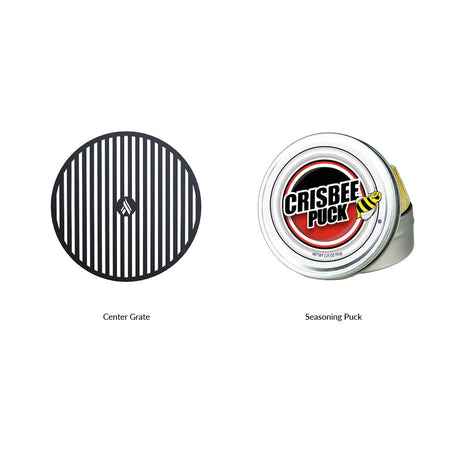
No. A properly designed insert includes a central open grill grate or air vents. This ensures sufficient oxygen reaches the charcoal or wood below while still providing a large, solid surface area for grilling.


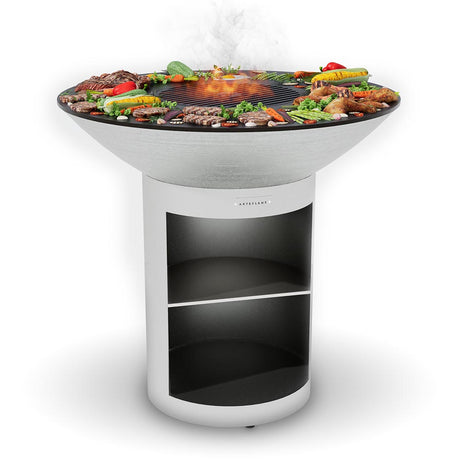
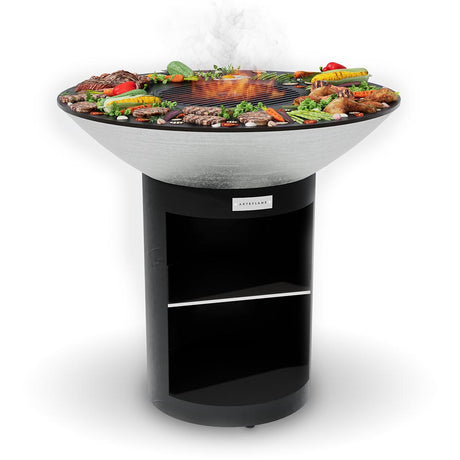


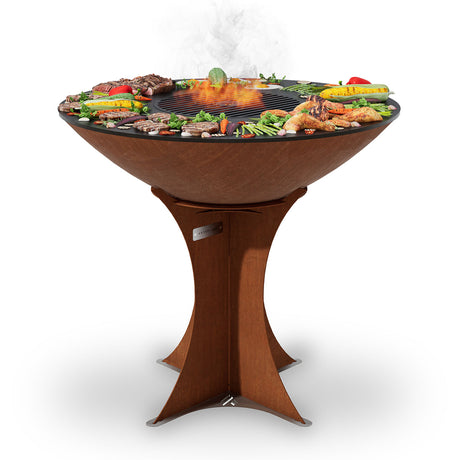
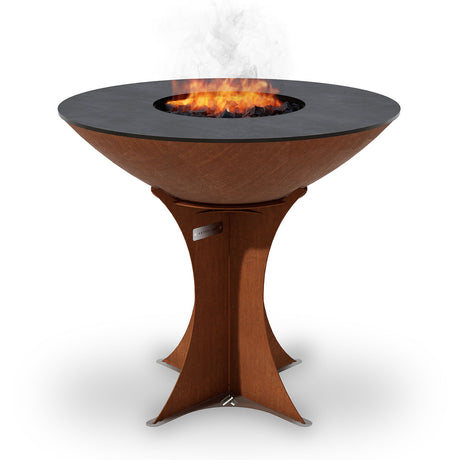


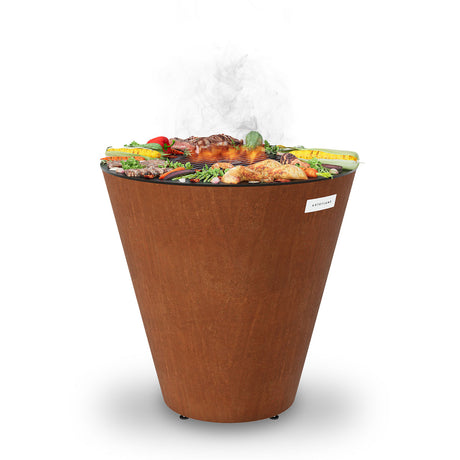
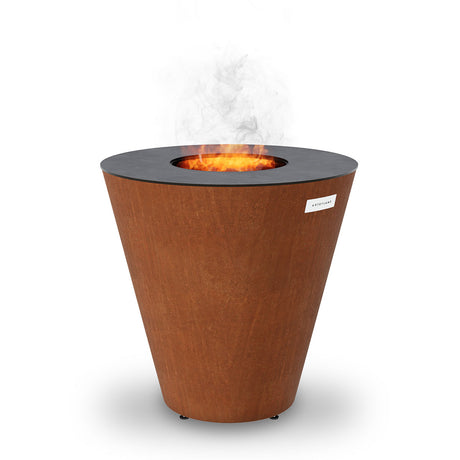
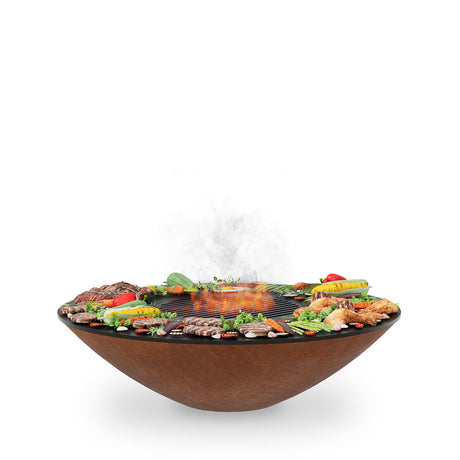


Turn yesterday's leftover macaroni into today's crispy, golden side dish with this easy wood-fired recipe.

Master this Texas-style open-fire brisket cooked entirely on the Arteflame grill. By searing on the center grate and wrapping to render on the flat top, you get perfectly tender, juicy...

Transform standard thick-cut bacon into a sweet, savory appetizer with a dark stout and brown sugar glaze, perfectly caramelized on a flat-top grill.

Render the perfect crispy skin with these Sichuan Peppercorn Duck Breasts, paired with a smoky, sweet, and spicy charred plum-poblano sauce.

Tender artichoke halves charred over high heat and smothered in rich garlic butter and Parmesan cheese.

Achieve the ultimate crust with this low-and-slow beef brisket recipe, utilizing natural heat zones for a perfect sear and incredibly tender finish.

Transform the trending crispy rice paper dumplings into a wood-fired masterpiece. Cooked on the Arteflame flat steel griddle for a shatteringly crisp crust and savory, high-protein filling.

Elevate albacore tuna with a steakhouse-style bacon wrap and a decadent green peppercorn cream sauce, grilled flawlessly on a flat-top.