
Crisp and Golden Mac and Cheese Cakes on the Grill
Turn yesterday's leftover macaroni into today's crispy, golden side dish with this easy wood-fired recipe.


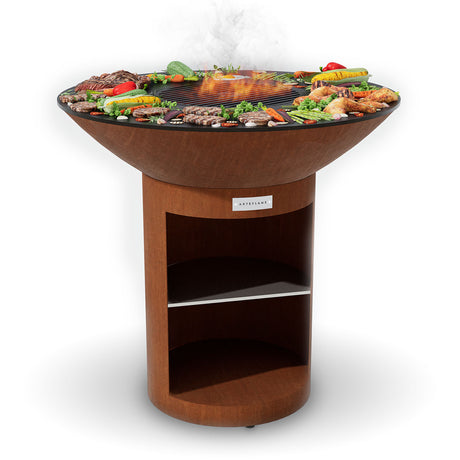
The most effective upgrade for a Char-Broil grill is replacing standard wire or cast iron grates with a solid carbon steel plancha insert. This modification instantly transforms a standard gas grill into a versatile, wood-fire style griddle. The solid surface eliminates dangerous flare-ups, provides uniform heat distribution for restaurant-quality searing, and allows you to cook small items like vegetables and eggs that would normally fall through the gaps.
Many Char-Broil owners eventually face the same issue: stock grates that rust, chip, or struggle to hold heat evenly. While buying the same replacement parts fixes the aesthetic, it does not improve performance. Upgrading to a solid carbon steel insert (often referred to as a plancha or griddle plate) fundamentally changes the physics of how your grill cooks.
By switching to a solid surface, you maximize the Maillard reaction—the chemical process responsible for the flavorful crust on steaks and burgers. Unlike open grates where heat escapes rapidly, carbon steel stores thermal energy, radiating it back into the food for a faster, juicier cook.
Pro Tip: Don't just clean your grates; season them. Carbon steel builds a natural, non-stick patina over time. The darker your insert gets, the better it cooks—just like a heritage cast iron skillet.
| Feature | Standard Char-Broil Grates | Carbon Steel Plancha Insert |
|---|---|---|
| Heat Retention | Low to Moderate | Extremely High |
| Flare-Ups | Frequent (Grease drips on burners) | Zero (Solid surface blocks grease) |
| Versatility | Limited (Large meats only) | High (Eggs, pancakes, veggies, steak) |
| Durability | Prone to rust and chipping | Lasts a lifetime with seasoning |
| Searing Power | Grill marks only | Edge-to-edge crust |
Flavor in grilling often comes from vaporization. On a standard grate, juices drip down to the burners, causing flare-ups that can deposit soot on your food. With a solid insert, the juices remain on the cooking surface or channel into a catch.
This allows meat to cook in its own savory fats, reabsorbing flavor rather than losing it to the bottom of the grill. This is the secret behind the "diner burger" taste that is difficult to replicate on open grates.
The versatility of a flat-top system opens up new culinary possibilities:
Pro Tip: Use the "Two-Zone" method even with a flat insert. Keep one side of your burners on high for searing and the other on low. Move food to the cooler side to finish cooking internally without burning the crust.
One of the biggest advantages of this upgrade is the simplicity of installation. Most carbon steel inserts designed for Char-Broil grills are "drop-in" replacements.
Maintenance is nearly identical to cast iron cookware. After cooking, scrape the surface clean while it is still warm. Apply a thin layer of high-smoke-point oil (like grapeseed or avocado oil) to protect the steel from moisture. If surface rust appears, it can be easily scrubbed off with steel wool and re-seasoned.
Yes, carbon steel retains heat significantly better than thin wire grates. It creates a thermal mass that radiates consistent heat, allowing your grill to recover temperature faster after you open the lid.
Absolutely. Unlike Teflon or ceramic coatings, carbon steel is incredibly durable. You can use metal spatulas, scrapers, and tongs without worrying about scratching or damaging the surface.
Not necessarily. Some grillers choose to replace only one side of their Char-Broil grill with a plancha insert, keeping the other side as standard grates. This creates a hybrid setup for maximum flexibility.
Properly designed inserts allow for sufficient airflow around the edges to keep the gas burners functioning correctly. Always ensure there is a small gap at the front or back for exhaust ventilation.






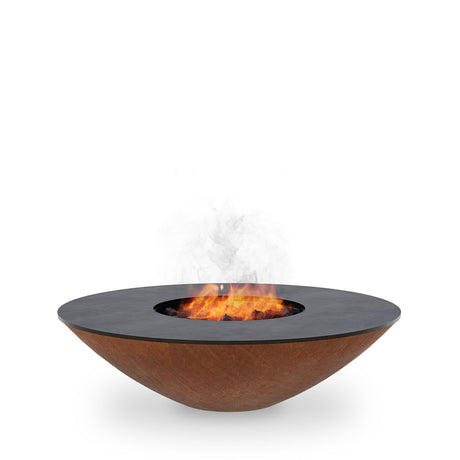
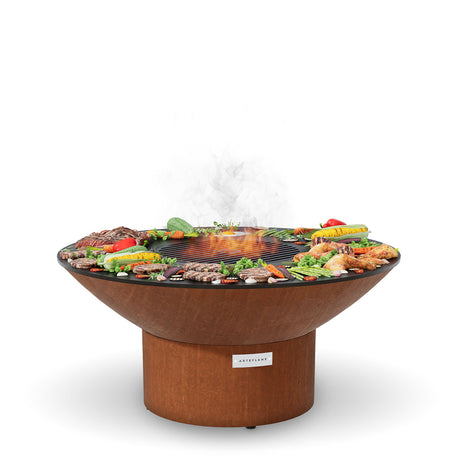
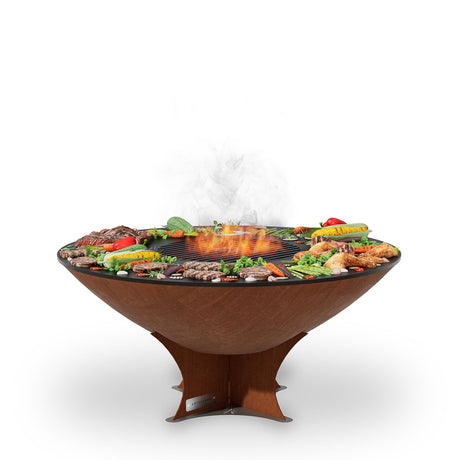


Turn yesterday's leftover macaroni into today's crispy, golden side dish with this easy wood-fired recipe.

Master this Texas-style open-fire brisket cooked entirely on the Arteflame grill. By searing on the center grate and wrapping to render on the flat top, you get perfectly tender, juicy...

Transform standard thick-cut bacon into a sweet, savory appetizer with a dark stout and brown sugar glaze, perfectly caramelized on a flat-top grill.

Render the perfect crispy skin with these Sichuan Peppercorn Duck Breasts, paired with a smoky, sweet, and spicy charred plum-poblano sauce.

Tender artichoke halves charred over high heat and smothered in rich garlic butter and Parmesan cheese.

Achieve the ultimate crust with this low-and-slow beef brisket recipe, utilizing natural heat zones for a perfect sear and incredibly tender finish.

Transform the trending crispy rice paper dumplings into a wood-fired masterpiece. Cooked on the Arteflame flat steel griddle for a shatteringly crisp crust and savory, high-protein filling.

Elevate albacore tuna with a steakhouse-style bacon wrap and a decadent green peppercorn cream sauce, grilled flawlessly on a flat-top.