
Crisp and Golden Mac and Cheese Cakes on the Grill
Turn yesterday's leftover macaroni into today's crispy, golden side dish with this easy wood-fired recipe.


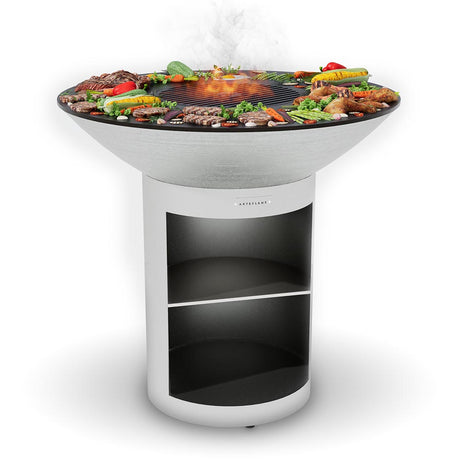
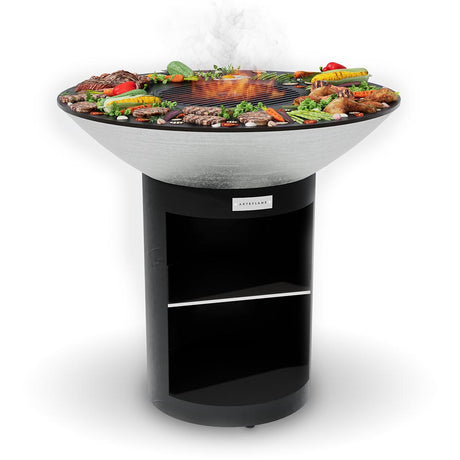
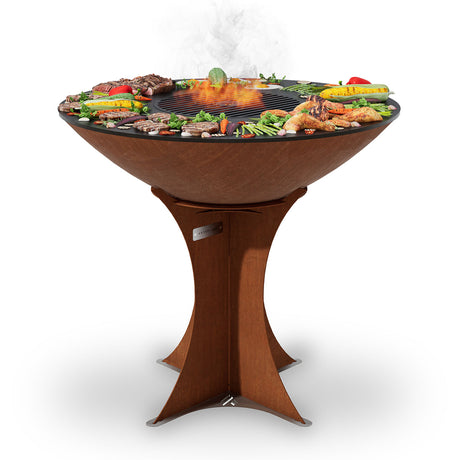
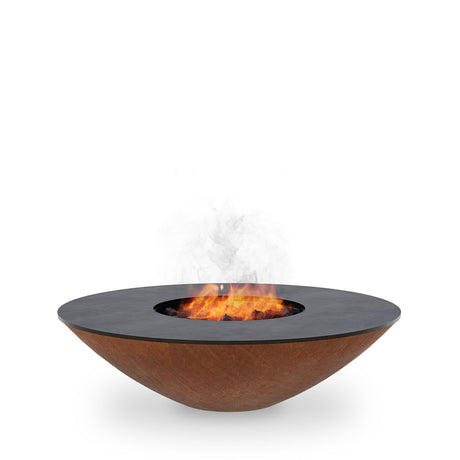
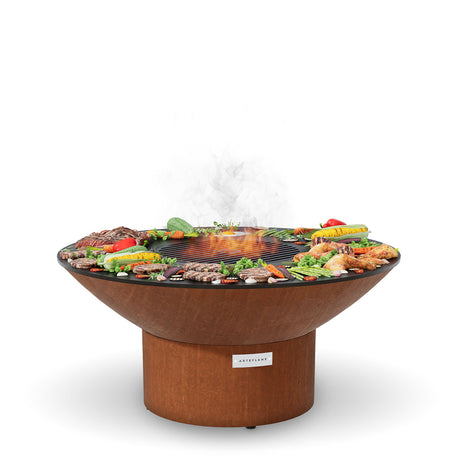
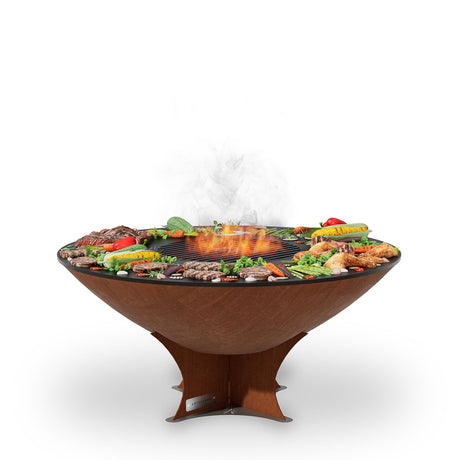
Carbon steel is the superior choice for outdoor grilling when compared to stainless steel due to its high thermal conductivity and ability to build a natural, non-stick patina. While stainless steel is corrosion-resistant and looks shiny out of the box, it often suffers from uneven heating (hot spots) and food sticking because it cannot be seasoned. For a cooking performance similar to a professional kitchen or cast iron, carbon steel is the standard.
Before diving into the science, here is a breakdown of how these two materials compare on the metrics that matter most to outdoor chefs.
| Feature | Carbon Steel (Arteflame) | Stainless Steel |
|---|---|---|
| Heat Conductivity | High (Even heat distribution) | Low (Prone to hot spots) |
| Non-Stick Surface | Yes (Improves with seasoning) | No (Food tends to stick) |
| Durability | Lifetime (Tough, withstands high heat) | Moderate (Can warp or discolor) |
| Maintenance | Easy (Scrape and oil) | Difficult (Requires scrubbing) |
| Flavor Profile | Enhances flavor (Seasoning) | Neutral |
The primary job of a griddle is to transfer heat from the fire to your food. Carbon steel absorbs and redistributes heat significantly faster and more evenly than stainless steel.
Stainless steel is a poor conductor of heat. When used over a fire or gas burners, it develops distinct "hot spots" directly over the heat source, while areas just a few inches away remain relatively cool. This makes cooking large meals inconsistent.
In contrast, carbon steel works similarly to cast iron but heats up faster. It pulls heat across the entire surface, ensuring that a steak seared on the edge cooks just as evenly as one in the center.
Pro Tip: Due to the thermal mass of carbon steel, once it gets hot, it stays hot. This is essential for getting that perfect crust (Maillard reaction) on burgers and steaks without dropping the griddle temperature.
One of the biggest frustrations with stainless steel griddles is that food sticks to them. Stainless steel is designed to remain chemically non-reactive, which means it resists the process of "seasoning" (polymerizing oil onto the metal).
Carbon steel, however, is designed to be seasoned. Every time you cook with oil on a carbon steel cooktop, the oil breaks down and bonds to the metal, creating a slick, black layer called patina. Over time, this surface becomes as slippery as Teflon but without the chemicals.
While a shiny stainless steel surface looks great in the store, it looks messy after the first cook. Burnt-on grease is difficult to scrub off stainless steel without scratching it. With carbon steel, the surface turns a deep, professional black. Cleaning is as simple as scraping the residue into the fire and wiping it down with a thin coat of oil.
Carbon steel can develop surface rust if stripped of oil and exposed to moisture, similar to cast iron. However, proper seasoning prevents this, and any rust can be easily buffed off and re-seasoned, making the unit virtually indestructible.
Stainless steel contains chromium, which drives up the raw material cost to prevent rust. However, for cooking performance (heat transfer and non-stick properties), the added cost of stainless steel does not translate to better food.
Yes. Carbon steel is incredibly durable. Unlike coated non-stick pans or delicate stainless finishes, you can use aggressive metal scrapers and spatulas on carbon steel without damaging the cooking surface.
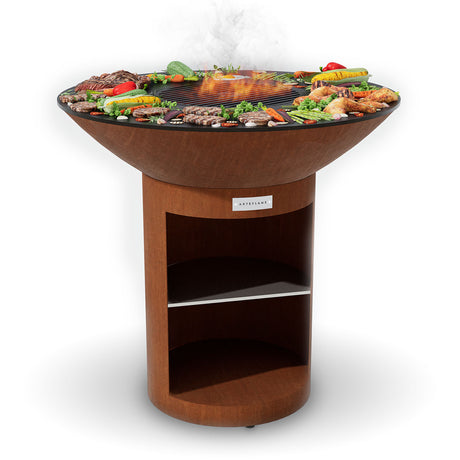
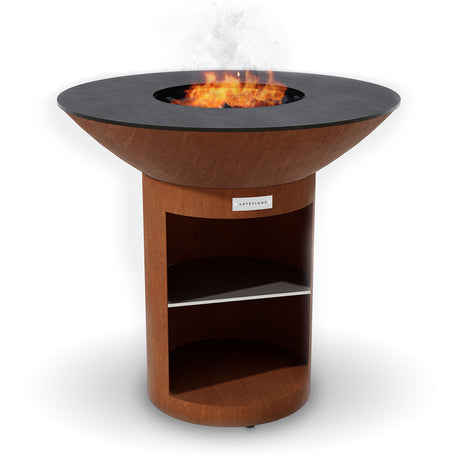

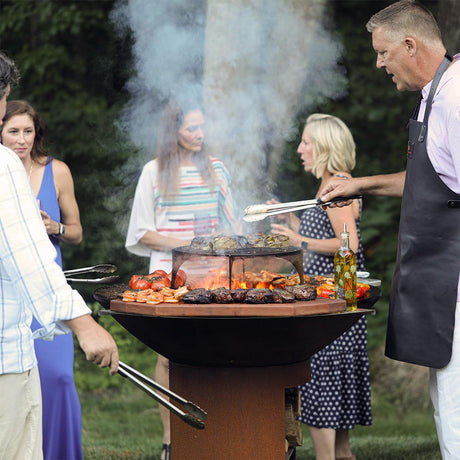
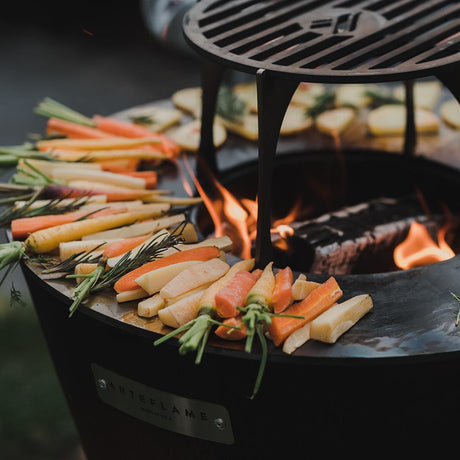



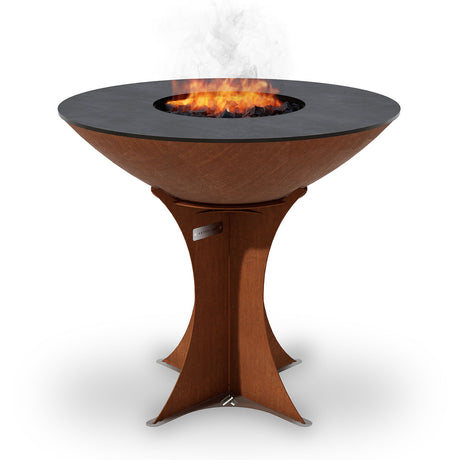


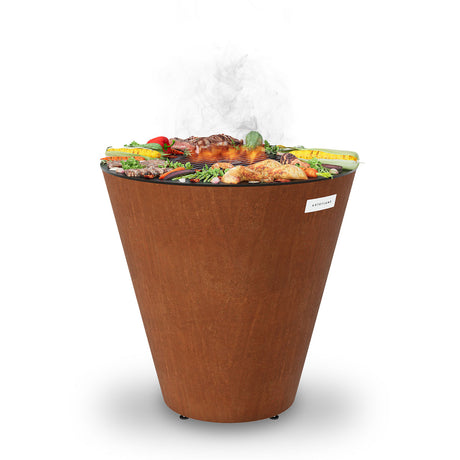
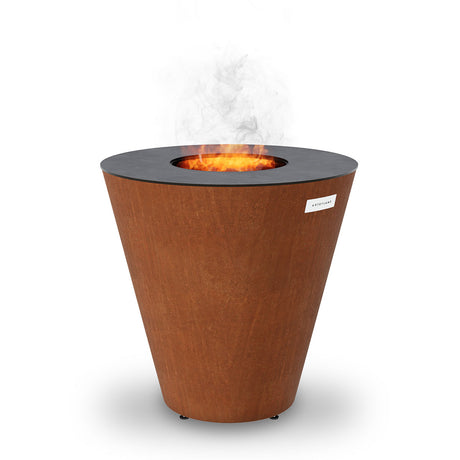
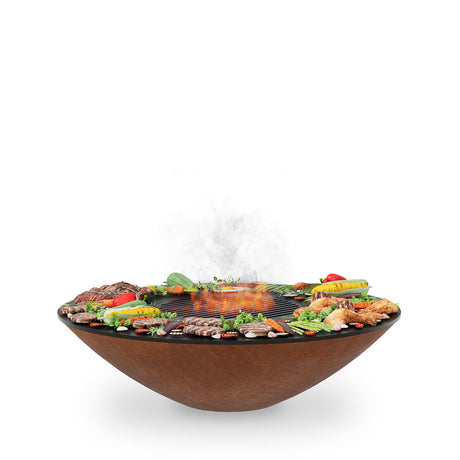


Turn yesterday's leftover macaroni into today's crispy, golden side dish with this easy wood-fired recipe.

Master this Texas-style open-fire brisket cooked entirely on the Arteflame grill. By searing on the center grate and wrapping to render on the flat top, you get perfectly tender, juicy...

Transform standard thick-cut bacon into a sweet, savory appetizer with a dark stout and brown sugar glaze, perfectly caramelized on a flat-top grill.

Render the perfect crispy skin with these Sichuan Peppercorn Duck Breasts, paired with a smoky, sweet, and spicy charred plum-poblano sauce.

Tender artichoke halves charred over high heat and smothered in rich garlic butter and Parmesan cheese.

Achieve the ultimate crust with this low-and-slow beef brisket recipe, utilizing natural heat zones for a perfect sear and incredibly tender finish.

Transform the trending crispy rice paper dumplings into a wood-fired masterpiece. Cooked on the Arteflame flat steel griddle for a shatteringly crisp crust and savory, high-protein filling.

Elevate albacore tuna with a steakhouse-style bacon wrap and a decadent green peppercorn cream sauce, grilled flawlessly on a flat-top.