
Crisp and Golden Mac and Cheese Cakes on the Grill
Turn yesterday's leftover macaroni into today's crispy, golden side dish with this easy wood-fired recipe.


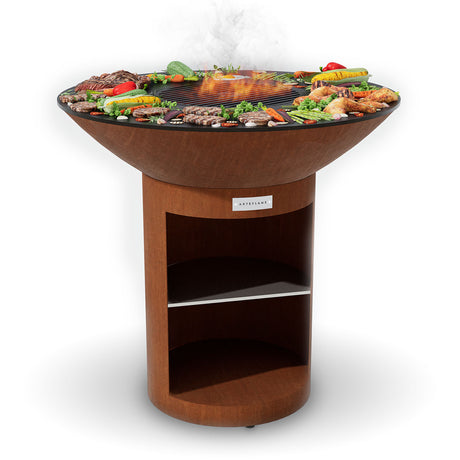
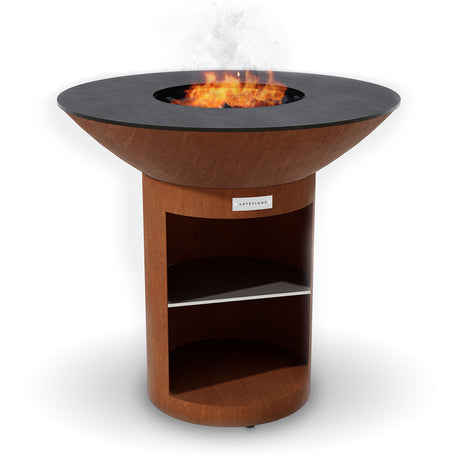
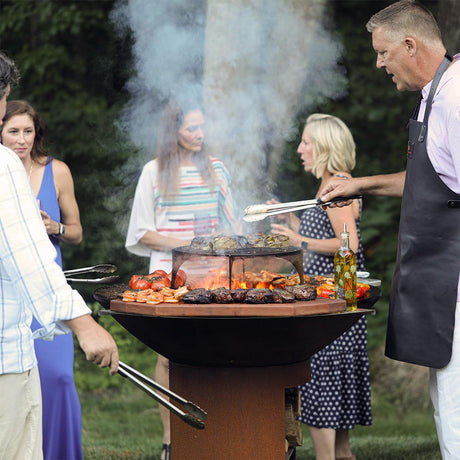
You can instantly transform a standard brick, stone, or metal round fire pit into a professional wood-fired grill by installing a solid carbon steel cooktop. Unlike traditional wire grates that rust and lose heat, a heavy-duty carbon steel plancha insert creates distinct temperature zones, prevents flare-ups, and seasons over time to become naturally non-stick for a lifetime of cooking.
Most fire pits come with cheap wire grates that warp under high heat and allow food to fall into the fire. Upgrading to a solid carbon steel surface changes the physics of how you cook. The solid metal conducts heat laterally, allowing you to sear steaks at high temperatures near the center while simultaneously roasting vegetables gently near the outer edge.
Pro Tip: Because carbon steel heats evenly, you get the "Maillard reaction" across the entire surface of your meat, resulting in a steakhouse-quality crust that wire grates simply cannot achieve.
Below is a comparison of why enthusiasts are switching from wire to solid steel:
| Feature | Standard Wire Grate | Carbon Steel Plancha |
|---|---|---|
| Heat Retention | Low (cools rapidly) | High (holds heat for searing) |
| Versatility | Grilling only | Grills, sears, fries (eggs/bacon) |
| Durability | Often rusts/warps | Lasts a lifetime with care |
| Cleaning | Difficult scrubbing | Scrape clean like a griddle |
| Flare-Ups | Frequent | Eliminated (solid surface) |
Finding the right fit for a round fire pit grate upgrade is easier than it looks. You generally do not need a custom build. Most circular fire pits fall into standard sizing categories. Focus on the outer diameter of your pit.
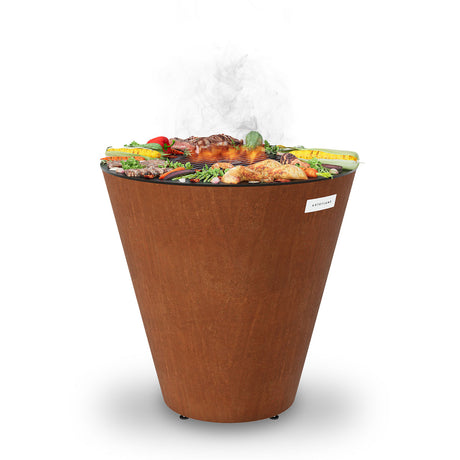
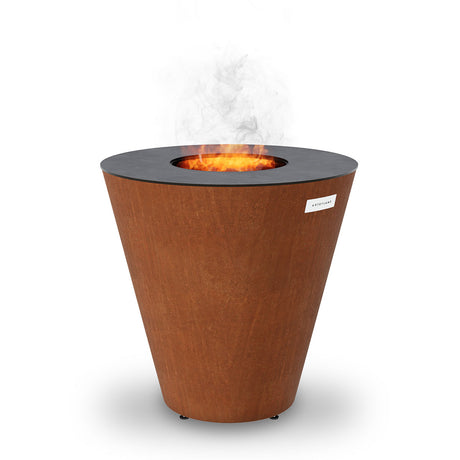
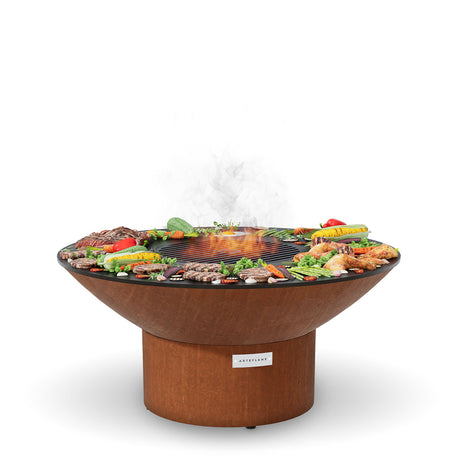
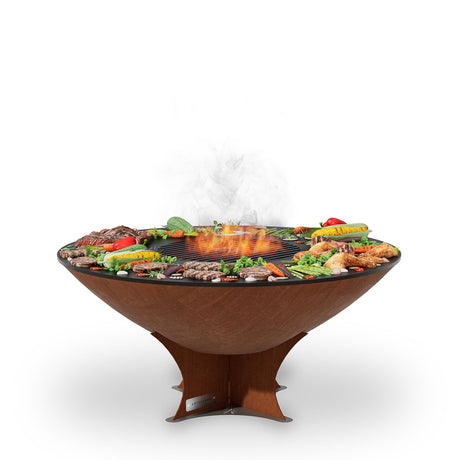
Arteflame and similar manufacturers typically offer inserts in standard sizes like 20", 30", and 40". If your fire pit is a non-standard size (e.g., 34"), you generally buy the next size up to ensure the plate rests securely on the rim without falling in.
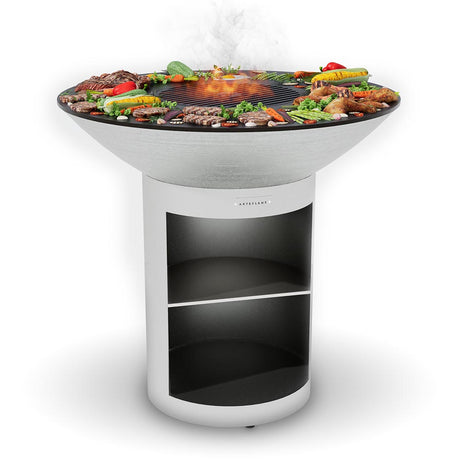
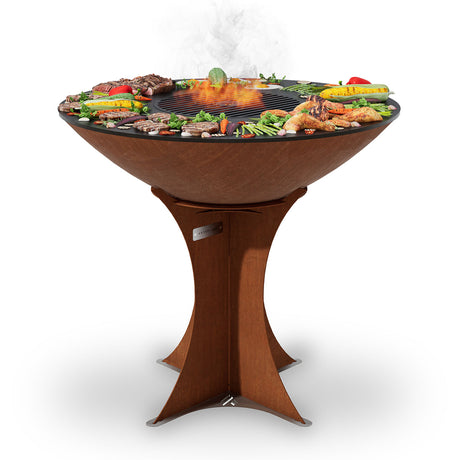
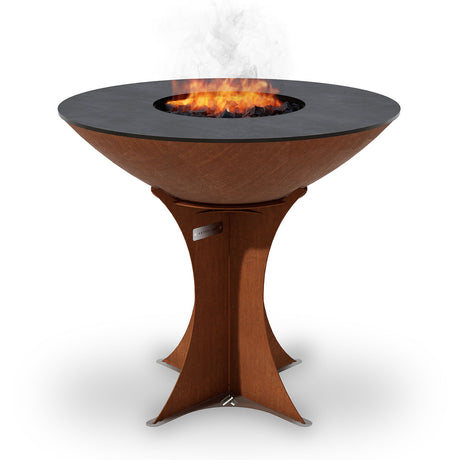
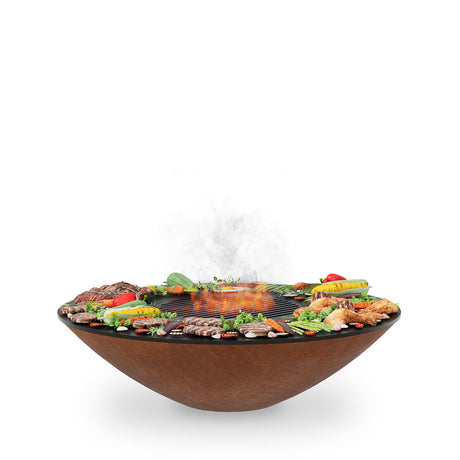
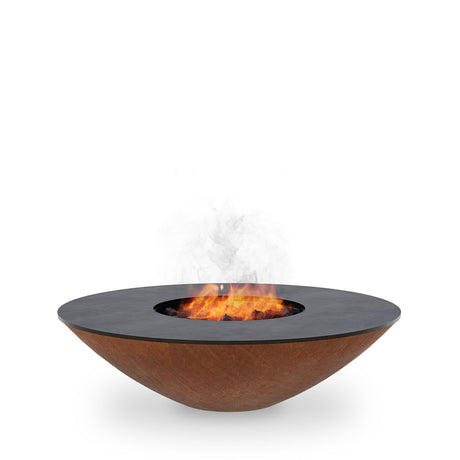
You will notice top-tier fire pit grill grates, like the Arteflame, feature an open center. This isn't just for aesthetics; it is crucial for airflow and fuel management.
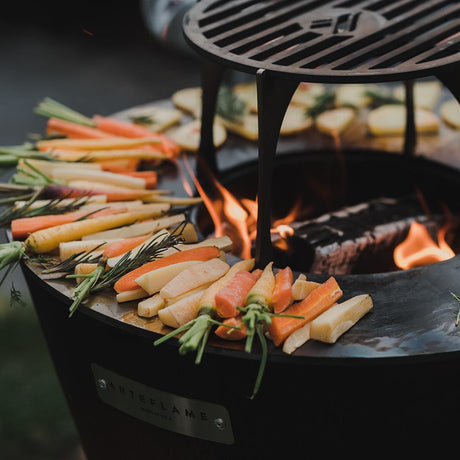
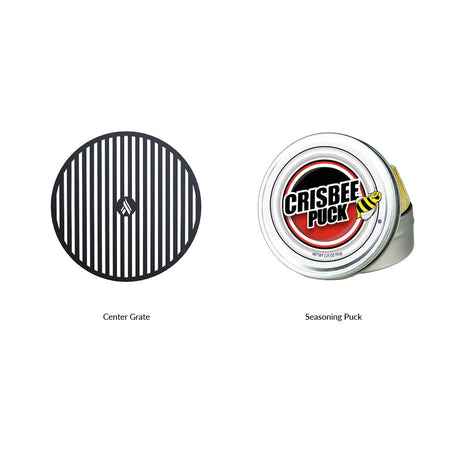
The center hole creates a chimney effect, drawing air in to feed the fire efficiently. It also allows you to add wood logs or charcoal without lifting the hot cooking surface. For those who want direct flame contact, you can often add a "grill grate riser" into this center hole to get flame-kissed sear marks on your burgers or steaks.
Pro Tip: Use the temperature gradient to your advantage. The ring is hottest near the center (600°F+) and cools as you move outward (300°F). Sear your protein in the middle, then slide it to the outer edge to finish cooking internally without burning the exterior.
Maintenance for a carbon steel grate is identical to caring for a cast iron skillet. It requires seasoning with oil to prevent rust and maintain its non-stick properties.
Yes, carbon steel is extremely durable and designed for outdoor use. However, you should keep it seasoned with a thin layer of oil to prevent surface rust, or cover it when not in use for extended periods.
Hardwoods like oak, hickory, maple, or pecan are best for cooking because they burn hot and clean. Avoid softwoods like pine, as they produce resinous smoke that can impart an acrid flavor to your food.
Generally, allow your fire to burn for 20 to 30 minutes before cooking. This ensures the carbon steel plate has absorbed enough heat to sear meat effectively and that the fire has established a bed of hot coals.







Turn yesterday's leftover macaroni into today's crispy, golden side dish with this easy wood-fired recipe.

Master this Texas-style open-fire brisket cooked entirely on the Arteflame grill. By searing on the center grate and wrapping to render on the flat top, you get perfectly tender, juicy...

Transform standard thick-cut bacon into a sweet, savory appetizer with a dark stout and brown sugar glaze, perfectly caramelized on a flat-top grill.

Render the perfect crispy skin with these Sichuan Peppercorn Duck Breasts, paired with a smoky, sweet, and spicy charred plum-poblano sauce.

Tender artichoke halves charred over high heat and smothered in rich garlic butter and Parmesan cheese.

Achieve the ultimate crust with this low-and-slow beef brisket recipe, utilizing natural heat zones for a perfect sear and incredibly tender finish.

Transform the trending crispy rice paper dumplings into a wood-fired masterpiece. Cooked on the Arteflame flat steel griddle for a shatteringly crisp crust and savory, high-protein filling.

Elevate albacore tuna with a steakhouse-style bacon wrap and a decadent green peppercorn cream sauce, grilled flawlessly on a flat-top.