
Crisp and Golden Mac and Cheese Cakes on the Grill
Turn yesterday's leftover macaroni into today's crispy, golden side dish with this easy wood-fired recipe.


If convenience is your only priority, a propane grill is the standard choice for quick, push-button meals. However, if you prioritize superior flavor, high-heat searing capability, and a social cooking experience, a wood-fire grill outperforms gas every time. Wood fire naturally infuses food with aromatic smoke and reaches temperatures propane simply cannot match, turning grilling into a culinary event rather than just a chore.
Before diving into the mechanics, use this comparison table to identify which grill style aligns with your cooking goals.
| Feature | Propane Grill | Wood Fire Grill (Arteflame) |
|---|---|---|
| Flavor Profile | Neutral, often gas-like | Rich, smoky, steakhouse quality |
| Max Temperature | 500°F - 600°F (Average) | 1,000°F+ (Ideal for searing) |
| Heat Source | Gas burners (Dry heat) | Natural Hardwood / Charcoal |
| Versatility | Grill grates only | Grill grates + Flat Top Griddle |
| Ambiance | Utilitarian appliance | Social fire pit & centerpiece |
The primary argument for wood-fired grilling is flavor chemistry. Propane produces a "wet" heat that contains water vapor as a byproduct of combustion, which can inhibit the formation of a hard crust on meats. Furthermore, propane itself has no flavor; any taste comes from drippings hitting metal flavorizer bars.
Wood fire generates dry, intense heat and releases organic compounds (guaiacol and syringol) that bind to proteins, creating that authentic BBQ taste. Because an Arteflame uses a solid steel cooktop, meats sear in their own juices rather than losing fat through open grates, amplifying the natural beef or vegetable flavors.
Pro Tip: For the best flavor profile on an Arteflame, use seasoned hardwoods like Oak or Hickory. Avoid softwoods like Pine, which burn too fast and produce acrid smoke.
Traditional propane grills are generally limited to open grates. While you can add a cast-iron skillet, you are limited by the grill's lid and surface area.
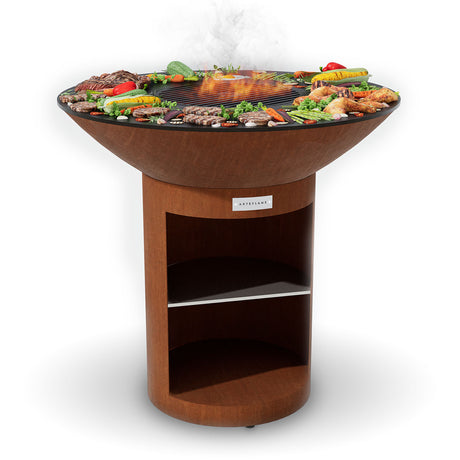
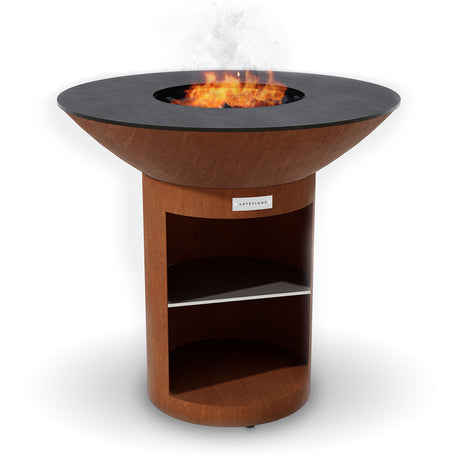
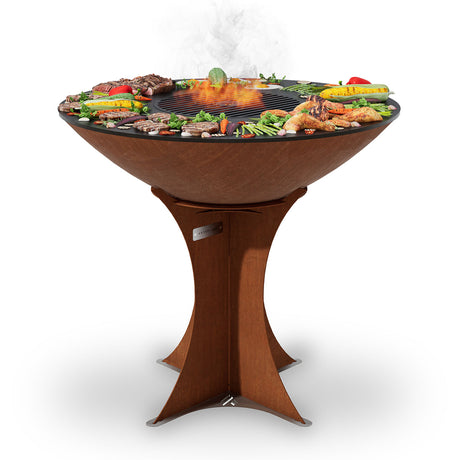
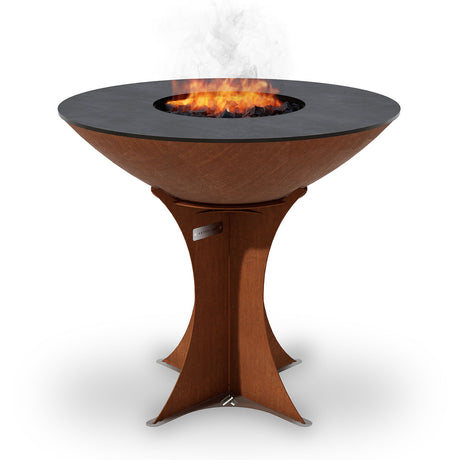
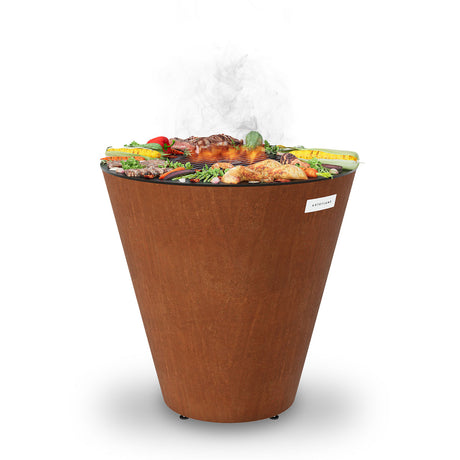
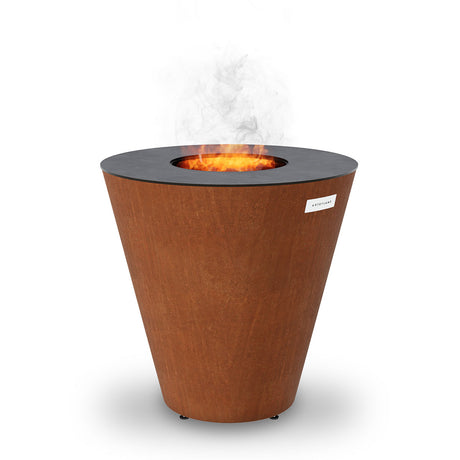
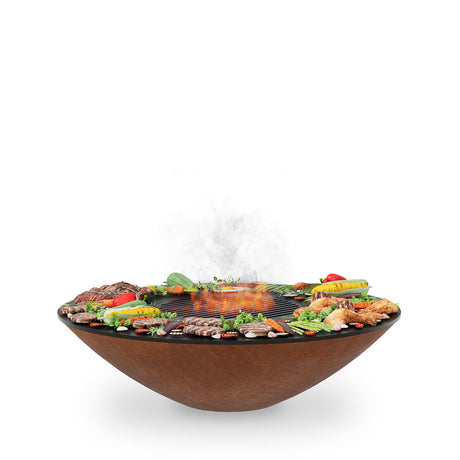
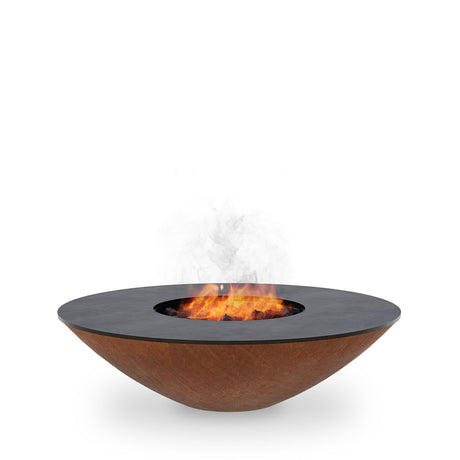
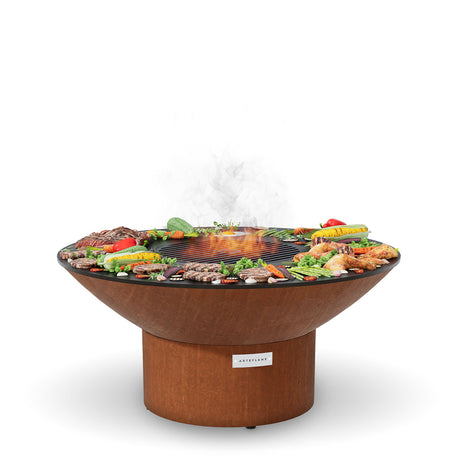
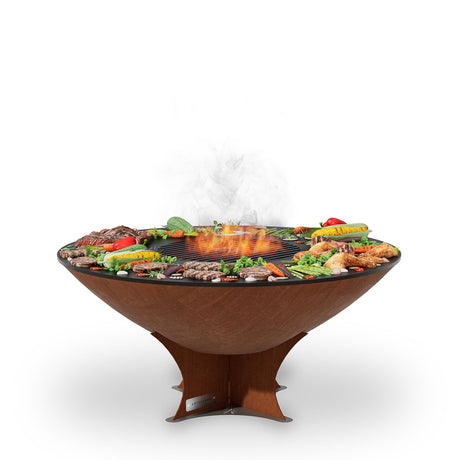
A wood-fired flat-top grill functions as a complete outdoor kitchen. The solid carbon steel surface allows you to cook foods that would fall through standard gas grates, such as eggs, bacon, pancakes, chopped vegetables, and delicate seafood. By building the fire in the center, you create distinct heat zones—searing heat in the middle and warming zones toward the edges—allowing you to cook an entire meal simultaneously.
Pro Tip: Utilize the "heat zones" effectively. Sear your steaks at 1,000°F near the center, then slide them to the outer ring to finish cooking internally without burning the crust.
Propane grills are perceived as low maintenance, but they require regular degreasing, burner tube cleaning to prevent clogs, and checking for gas leaks. The internal components often rust out over time due to moisture.
Wood fire grills like the Arteflame are designed with longevity in mind. The corten steel body is weather-resistant, and the cooktop is maintained much like a cast-iron skillet. There are no moving parts, burners, or igniters to fail.
Not with a flat-top design. You control temperature by moving food closer to or further from the center fire, rather than adjusting a knob. This allows for instant heat management without waiting for the air temperature to change.
Lighting a fire takes about 15-20 minutes to reach cooking temperature. While longer than the instant-on of gas, this time is typically used for prep work and enjoying the ambiance of the fire.
Cooking on a solid surface prevents flare-ups, which occur when fat drips onto open flames. Flare-ups can cause charring that contains potentially harmful compounds; flat-top grilling avoids this direct flame contact while retaining flavor.







Turn yesterday's leftover macaroni into today's crispy, golden side dish with this easy wood-fired recipe.

Master this Texas-style open-fire brisket cooked entirely on the Arteflame grill. By searing on the center grate and wrapping to render on the flat top, you get perfectly tender, juicy...

Transform standard thick-cut bacon into a sweet, savory appetizer with a dark stout and brown sugar glaze, perfectly caramelized on a flat-top grill.

Render the perfect crispy skin with these Sichuan Peppercorn Duck Breasts, paired with a smoky, sweet, and spicy charred plum-poblano sauce.

Tender artichoke halves charred over high heat and smothered in rich garlic butter and Parmesan cheese.

Achieve the ultimate crust with this low-and-slow beef brisket recipe, utilizing natural heat zones for a perfect sear and incredibly tender finish.

Transform the trending crispy rice paper dumplings into a wood-fired masterpiece. Cooked on the Arteflame flat steel griddle for a shatteringly crisp crust and savory, high-protein filling.

Elevate albacore tuna with a steakhouse-style bacon wrap and a decadent green peppercorn cream sauce, grilled flawlessly on a flat-top.